


 REVIEWS




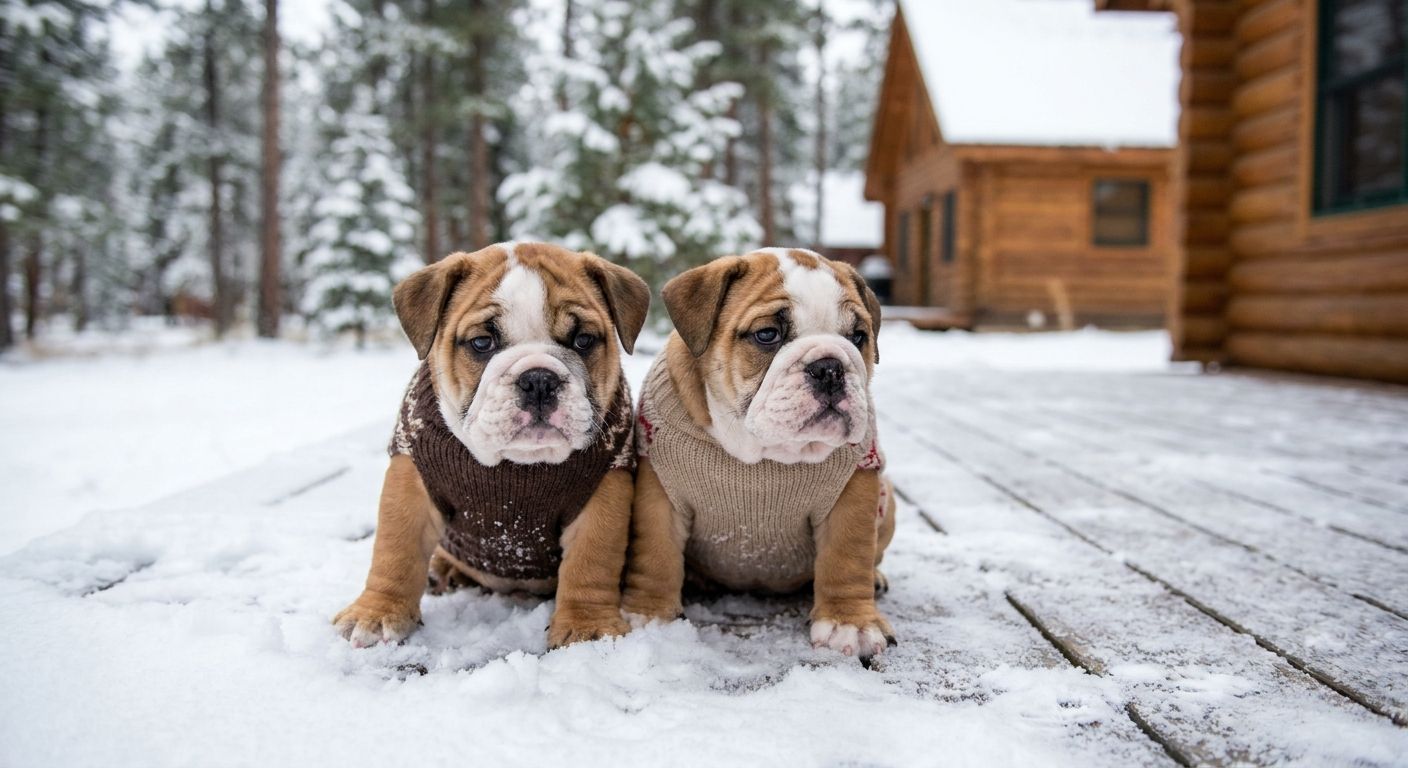
Snow country and English Bulldogs don't sound like a natural match, but the breed handles cold better than most people expect, as long as you pick the right dog and manage the risks. This guide breaks down what a cold-climate buyer should look for, which builds hold up best, and what to skip entirely.
- A well-built english bulldog for cold climates needs body mass, not a heavier coat — the breed is single-coated regardless of color.
- XL English Bulldog puppies from Shrinkabulls carry more insulating body fat and handle short outdoor stints better — Buy.
- Skip any bulldog with visible skull-and-jaw compromise — restricted airways make cold-air breathing markedly harder.
- Gray English Bulldog puppies suit families who want a steady, cold-tolerant companion for yard time in 2026 winters — Buy.
- Budget-focused Black English Bulldog picks work fine for first-time owners, but expect shorter outdoor windows — Consider.
Why this matters
English Bulldogs are brachycephalic, which means restricted airways and less efficient panting — a trait everyone associates with heat problems. What gets missed is that the same short muzzle and dense chest actually work in the bulldog's favor in the cold, since heat loss through breathing is lower than in longer-snouted breeds. The real cold-weather risk isn't the coat. It's the combination of low body fat in poorly bred individuals and any existing skull or jaw restriction, which is why checking a puppy's skull and jaw health before buying matters more in a cold climate than in a mild one.
A healthy adult English Bulldog can handle short walks in freezing temperatures without a coat. A poorly structured one, or a puppy with breathing restriction, struggles the moment the mercury drops. That distinction is the whole guide.
Who this is for
This is written for buyers in northern states, mountain regions, or anywhere winters regularly drop below freezing, who want an English Bulldog and need to know which puppies, builds, and colors actually cope with the season. It's not for buyers expecting a dog that thrives unattended outdoors — no bulldog does that, cold climate or not.
What to look for in an English Bulldog for cold climates
Body mass and muscle, not coat color
Coat color has zero bearing on cold tolerance in this breed — gray, black, or fawn, they're all single-coated. What matters is body condition. A puppy with solid muscle and healthy weight retains heat far better than a lean or underweight littermate, so ask breeders about growth rate and current weight relative to age.
Airway clearance
Cold, dry air is harder to breathe through a restricted airway than warm humid air. Puppies with visibly pinched nostrils or a very flat, compressed face will labor in freezing temperatures faster than a moderately built bulldog. This is the single biggest cold-weather disqualifier in the breed.
Paw and pad condition
Salt, ice, and rock salt crystals crack bulldog paw pads quickly since the breed doesn't have the naturally tough pads of working breeds. Ask whether the breeder has already started pad conditioning or nail trims that reduce ice-ball buildup between toes.
Skin fold maintenance history
Wet, cold conditions trap moisture in facial and tail folds just as easily as summer humidity does, and a fold that stays damp through a winter walk turns into a hot spot fast. Buyers should ask how the breeder cleans and dries folds, since that habit needs to continue at home.
Energy level and exercise tolerance
Bulldogs are not high-endurance dogs in any climate, and cold weather shortens their stamina further. A puppy from lines bred for a calmer, lower-drive temperament adjusts more easily to short, controlled winter walks than one bred for high energy.
Delivery logistics if you're not local
If you're buying from a breeder in a different climate zone, ask how the puppy will travel to your home. A cross-country flight nanny delivery that's planned around weather windows avoids shipping a young puppy into a cold snap before it's acclimated.
Top picks for cold-climate homes
The sturdy pick: XL English Bulldog
XL-line English Bulldogs run heavier in bone and muscle mass than standard littermates, and that extra body mass is a real insulation advantage once temperatures drop below 40°F. Owners in snow-heavy states consistently report these dogs tolerating short yard sessions and driveway walks better than leaner bulldogs. Verdict: Buy if you're in a genuinely cold region and want a dog with a bigger cold-weather buffer — see the XL English Bulldog puppies line for current availability.
The family favorite: Gray English Bulldog
Gray English Bulldogs carry the same structure as any standard-color bulldog, but this line tends to come from calmer, lower-drive litters that suit families wanting short, predictable winter walks rather than long outdoor sessions. That lower energy output actually helps in the cold since the dog isn't pushing itself into overexertion in freezing air. Verdict: Buy for a household with kids that wants a steady cold-weather companion — check the gray English Bulldog puppies for families page.
The budget-friendly classic: Black English Bulldog
Black English Bulldogs are a standard, widely available color without the premium pricing of rare color lines, which makes them a sensible entry point for a first-time owner. They handle cold the same as any well-built bulldog, but first-timers should expect a learning curve on fold care and cold-air walk timing. Verdict: Consider if budget matters more than build specialization — see Black English Bulldog puppies for first-time owners.
“If your bulldog’s paws are lifting off the pavement to avoid the cold, the walk is already too long.”
What to avoid
- Extremely flat-faced "exotic" builds that look striking in photos but come with compressed airways — cold, dry air makes an already-labored breather work harder.
- Underweight or small-for-age puppies marketed as "petite" — lower body fat means faster heat loss on any outdoor outing below freezing.
- Any puppy from a breeder who can't answer fold-care and coat questions directly — winter fold maintenance is not optional in a cold climate, and a breeder who glosses over it hasn't thought about your winters.
Browse available bulldog puppies
See current English Bulldog litters and reserve early for 2026 placement.
Verdict comparison
| Pick | Best For | Build | Cold-Weather Verdict |
|---|---|---|---|
| XL English Bulldog | Snow/ice regions, longer outdoor tolerance | Heavier bone and mass | Buy |
| Gray English Bulldog | Families wanting a calm companion | Standard, lower-drive lines | Buy |
| Black English Bulldog | First-time owners on a budget | Standard build | Consider |
| Flat-faced "exotic" builds | No one in a cold climate | Compressed airway | Skip |
FAQ
Are English Bulldogs good in cold weather?
Healthy, well-built English Bulldogs tolerate short cold-weather exposure reasonably well because their short muzzle actually reduces heat loss through breathing. The bigger risk is airway restriction, not the cold itself, which is why build quality matters more than coat.
Do English Bulldogs need coats in winter?
Most English Bulldogs benefit from a coat once temperatures drop toward freezing, since the breed is single-coated with no undercoat insulation. A coat isn’t mandatory for a quick yard trip, but it helps on longer winter walks.
What temperature is too cold for an English Bulldog?
Many veterinary cold-weather guidelines flag temperatures below 20°F as risky for short-coated breeds, English Bulldogs included. Below that, outdoor time should be limited to brief bathroom breaks rather than extended walks.
Can English Bulldogs live outside in winter?
No. English Bulldogs are not built for full-time outdoor living in any season, and winter conditions make it worse due to skin fold and airway sensitivity. They need to live indoors with supervised outdoor time.
Is an English Bulldog better than a French Bulldog in cold climates?
Both breeds are brachycephalic and single-coated, so cold tolerance is similar between them. The English Bulldog’s larger body mass gives it a slight edge in heat retention over the smaller French Bulldog frame.
How do I keep my English Bulldog warm in winter?
Use a properly fitted dog coat for walks below freezing, dry skin folds immediately after any wet outdoor time, and keep outdoor sessions short and supervised. Paw balm also helps prevent salt and ice cracking on winter sidewalks.
Do English Bulldogs like snow?
Many English Bulldogs enjoy short bursts of play in snow, though their tolerance for extended cold exposure is limited compared to double-coated breeds. Watch for shivering or lifted paws as signs it’s time to head inside.
One last thing
The detail most cold-climate buyers skip: it's not the coat color or the breeder's marketing photos that determine how a bulldog handles winter, it's the airway. Two puppies from the same litter, same color, same price, can have completely different cold-weather tolerance if one has a more open nasal passage than the other. Ask the breeder directly about breathing at rest before you ask about anything else.
Related guides
- Merle bulldog price guide — what rare color puppies really cost
- How to prepare your home for a new French Bulldog puppy
- Best health testing panels to request from a bulldog breeder
- How to read a bulldog puppy health guarantee before signing
