


 REVIEWS




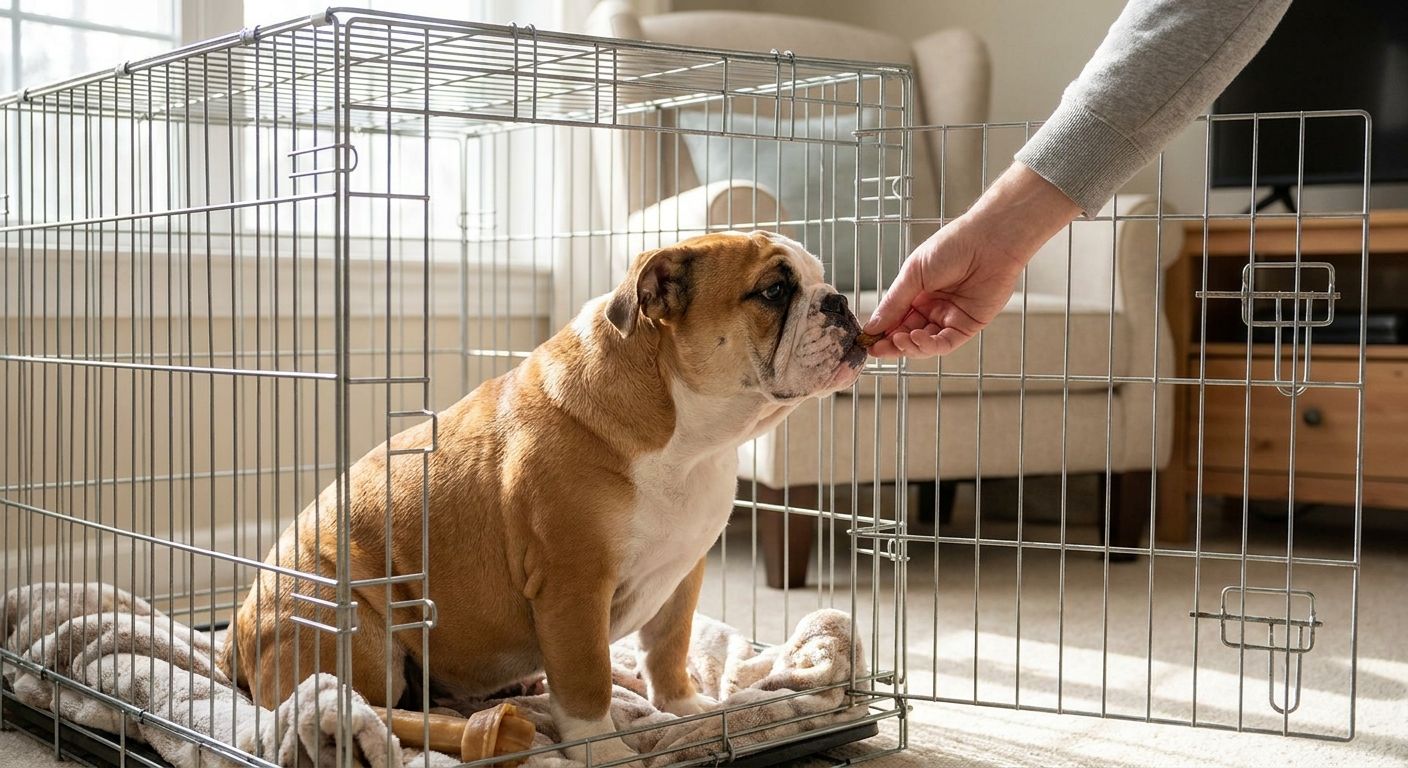
Crate training an English Bulldog puppy takes about 2 to 4 weeks of short, consistent sessions when you start the day your puppy comes home, usually around 8 weeks old. Bulldogs are food-motivated and want to please you, but their short muzzles and heat sensitivity mean crate placement and airflow matter more than they do for most breeds. Skip the guesswork and follow the age-based schedule below — most puppies treat the crate as a den, not a punishment, within the first two weeks.
- English Bulldog crate training takes 2 to 4 weeks with short, food-reward sessions starting at 8 to 12 weeks old.
- Cap daytime crating at 3-4 hours even for adult English Bulldogs; overnight tops out around 6-8 hours.
- Never place the crate near a heat vent, radiator, or direct sun — brachycephalic dogs overheat fast.
- Wire crates with a divider panel beat plastic bins for airflow during English Bulldog crate training.
- Feed meals inside the crate for the first two weeks to build a positive association before closing the door.
Why crate training matters for English Bulldog puppies
A crate isn't a cage — it's a den, and Bulldogs are den animals whether they're 8 weeks or 8 years old. Crate training speeds up housebreaking because a puppy won't soil the space it sleeps in, and it keeps a teething, chewing puppy safe when you can't watch every move. The same discipline that makes crate training work also underpins our guide on how to house train a French Bulldog puppy — the schedule logic transfers across both breeds we raise here at Shrinkabulls.
English Bulldogs also carry more separation anxiety than people expect from a breed with such a laid-back reputation. A properly crate-trained Bulldog settles faster when you leave the house in 2026 than one who's never had a den of its own. Get the home setup right before the puppy arrives and this whole process moves faster — our checklist on how to prepare your home for a new bulldog puppy covers the room-by-room basics.
How to crate-train an English Bulldog puppy
Follow these steps in order. Don't skip ahead to closed-door naps before the puppy eats meals happily inside the crate with the door open.
- Pick a wire crate with a divider panel, sized for the adult dog, not the puppy. English Bulldogs run 40 to 50 pounds full grown, so a 30-inch crate is standard — the divider shrinks the space down for a small puppy and grows with them. Check the starter supplies checklist for what else belongs in that crate zone.
- Place the crate somewhere temperature-controlled, away from vents, radiators, and direct sun. Overheating is the single biggest crate-training mistake owners make with a brachycephalic breed.
- Leave the door open for the first 3 days. Toss treats inside, let the puppy wander in and out on its own terms — no forcing, no closing the door yet.
- Feed every meal inside the crate for two weeks straight. This single habit does more for crate acceptance than any command you'll teach.
- Close the door for 5-to-10-minute stretches once the puppy naps calmly inside with food. Stay in the room the first few times.
- Extend duration gradually by age — see the breakdown below. Don't jump from a 10-minute nap to an 8-hour overnight stay; that's how you get a puppy who screams and associates the crate with abandonment.
- Add overnight crating once daytime naps stick without whining. Most puppies are ready for this by week two if you've been consistent.
8 to 12 weeks: keep sessions under 10 minutes
A puppy this young has a bladder that can't hold much longer than an hour or two anyway, so long crate stretches aren't realistic yet. Keep sessions under 10 minutes at first, always paired with a treat or a stuffed chew, and never crate a puppy this age as punishment. The verdict: short and boring beats long and stressful at this stage — a bored, sleepy puppy learns faster than an anxious one.
3 to 6 months: stretch daytime crating to 2-4 hours
By 3 months, bladder control improves enough to stretch daytime crating to 2 to 4 hours at a time, matched to how often you can realistically let the puppy out. This is also the stage where the "teenage" regression hits — don't panic if a puppy who was doing great at 10 weeks suddenly whines again at 4 months. Stay on schedule and it resolves in a week or two.
6 months and older: overnight crating up to 6-8 hours
Once house training is solid and the puppy has full bladder control, overnight crating can run 6 to 8 hours without a bathroom break. English Bulldogs sleep hard and heavy once they're settled, so most owners find the overnight stretch is actually easier than the mid-day one. Buy into overnight crating at this stage — it's the safest arrangement for a breed prone to chewing cords and getting into trouble unsupervised.
Why English Bulldogs need a different crate-training approach
The standard puppy crate-training advice you'll find online doesn't account for a few Bulldog-specific traits:
- Brachycephalic airway structure means poor heat tolerance — a crate that's fine for a Labrador can overheat a Bulldog in the same room. If you live somewhere warm, read our notes on raising a Bulldog in a hot climate before you finalize crate placement.
- Independent, sometimes stubborn temperament — Bulldogs don't respond well to force. Coaxing with food works; dragging a puppy into a crate sets training back weeks.
- Low exercise needs mean a Bulldog puppy tires out fast, which actually works in your favor for daytime crate naps.
- Multi-pet households need a slower crate introduction if there's already a resident dog or cat competing for attention — see how to introduce a new bulldog puppy to resident pets for the sequencing.
- Snoring and heavy breathing are normal for the breed and shouldn't be mistaken for crate-related distress — that's just how a Bulldog sleeps.
Should the crate go in the bedroom or the living room?
Bedroom placement works best for the first month — a Bulldog puppy that can hear and smell you settles faster and cries less overnight. Move the crate to a common living space once the puppy sleeps through the night without whining, usually somewhere around the 3-month mark.
What happens if my English Bulldog puppy refuses to go into the crate?
Stop closing the door and go back to open-door, food-only sessions for another week — forcing the issue almost always makes refusal worse. A puppy that won't enter a crate on its own yet isn't ready for a closed door, no matter how many weeks have passed on the calendar.
Bringing home an English Bulldog puppy?
See available AKC-registered English Bulldog puppies before you build out the nursery.
FAQ
What size crate does an English Bulldog puppy need?
A 30-inch wire crate with a divider panel fits most adult English Bulldogs, who typically weigh 40 to 50 pounds. Use the divider to shrink the space down for a young puppy so it doesn’t feel like an empty room.
How long can I crate an English Bulldog puppy during the day?
Cap daytime crating at 3 to 4 hours for a puppy over 3 months old, and no more than 1-2 hours for one under 12 weeks. Longer stretches risk accidents and stress before bladder control develops.
Is crate training cruel for English Bulldogs?
No — a properly introduced crate functions as a den, not a cage, and most Bulldogs choose to nap in an open crate on their own. Forcing a puppy inside or using the crate as punishment is what causes distress, not the crate itself.
Should I crate my English Bulldog puppy at night?
Yes, once house training is solid, overnight crating for 6 to 8 hours is the safest overnight arrangement for a Bulldog puppy. It prevents nighttime accidents and keeps a chew-prone puppy away from cords and furniture while you sleep.
What if my English Bulldog puppy cries in the crate?
Check that the crying isn’t a bathroom need first, then ignore short whining rather than letting the puppy out immediately. Letting a crying puppy out teaches it that crying works, which extends the training timeline well past the typical 2 to 4 weeks.
Can I skip crate training and use a playpen instead?
A playpen works for daytime containment but doesn’t teach bladder control the way a crate does, since a puppy will happily soil a corner of a large pen. Most breeders recommend combining both: crate for sleep and unsupervised time, playpen for supervised play.
What type of crate is best for an English Bulldog?
A wire crate with a divider panel is best for English Bulldogs because it maximizes airflow, which matters for a brachycephalic breed that overheats easily. Plastic travel crates work for short trips but trap heat during long stretches at home.
One last thing
Most English Bulldog puppies hit a crate-training regression around 4 to 5 months old — the same stretch when teething peaks and independence kicks in. Owners assume they did something wrong when a puppy who slept fine at 10 weeks starts whining again at 4 months, but it's a normal developmental stage, not a training failure. Keep the exact same schedule through it and most puppies snap back within a week or two, right on the 2026 timeline breeders and trainers have been citing for years.
Related guides
- How to house train a French Bulldog puppy
- How to prepare your home for a new bulldog puppy
- How to vet an English Bulldog breeder before you buy
- How to verify AKC registration papers on a bulldog puppy
- Best health testing panels to request from a bulldog breeder

One thought on “English Bulldog Crate Training: 2-4 Week Plan for 2026”