


 REVIEWS




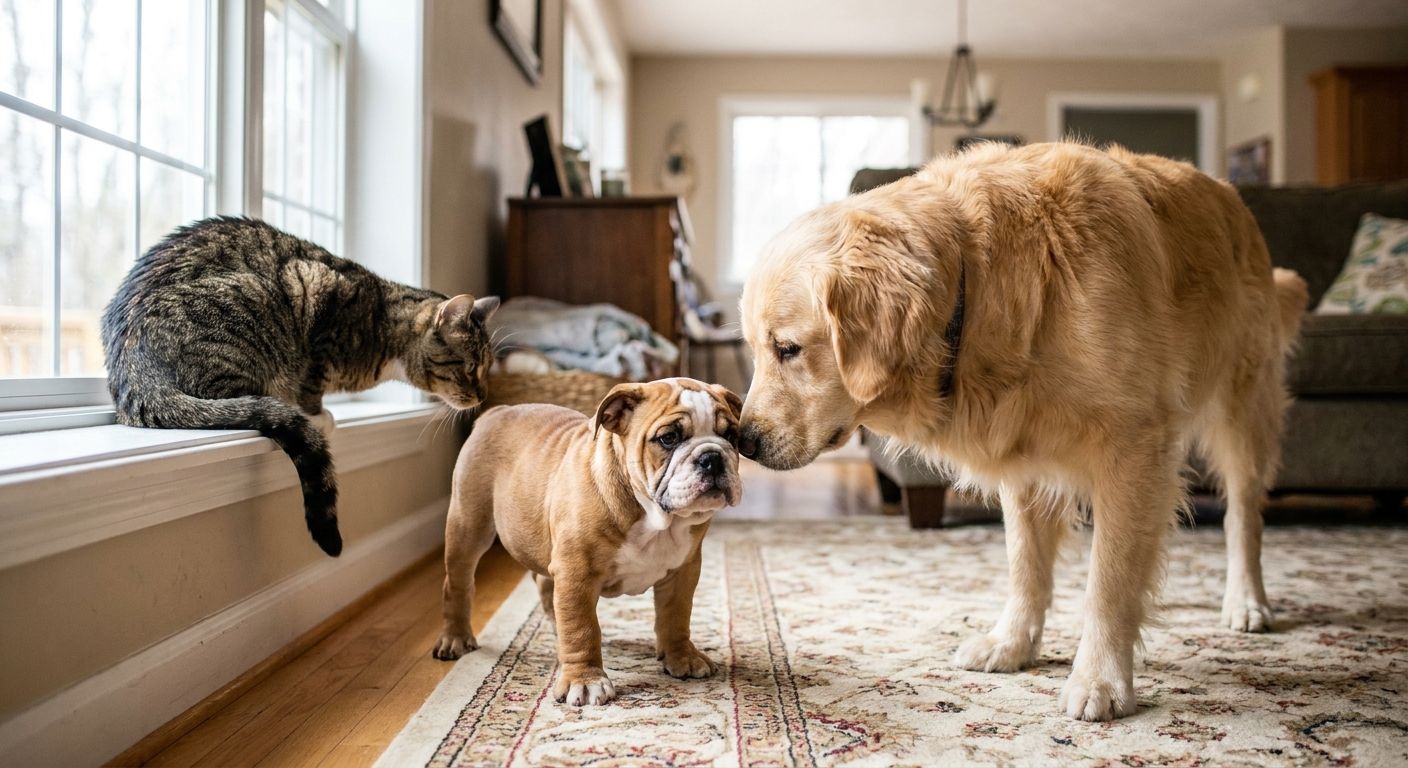
Introducing a bulldog puppy to other pets works best when the first meeting happens on neutral ground, stays short, and lets the resident animal control the pace — most bulldog puppies settle into a home with dogs, cats, or kids within one to two weeks when you slow the process down. The part people skip is separating feeding areas and sleep spaces for that same window, because food guarding and territorial bed disputes cause more fights than the actual first hello.
- Introducing a bulldog puppy to other pets works best with a short, supervised meeting on neutral ground in 2026.
- Resident dogs usually accept a bulldog puppy within 1-2 weeks; cats can take 3-4 weeks to relax.
- Separate feeding stations and crate space until both animals stop tensing up around each other.
- Rushing the first face-to-face meeting is the leading cause of failed introductions between a bulldog puppy and resident pets.
Why this matters
A bulldog puppy is stocky, low to the ground, and reads as clumsy to a resident cat or an older dog that hasn't lived with a puppy before. That mismatch in body language — a bulldog's flat face limits its ability to signal the way longer-nosed breeds do — means the resident animal is doing more interpreting than usual in those first days.
Get the introduction wrong and you're managing a fear response or a resource-guarding habit for months. Get it right and the two animals are sharing a couch by week three. Before the puppy even comes home, prepare your home before the puppy arrives so the resident pet's routine, feeding spot, and sleeping area stay untouched — new smells and new furniture on top of a new animal is too much change at once.
How to introduce a new bulldog puppy to resident pets
Follow this sequence in order. Skipping steps to "just see how they do" is the single most common reason introductions fail.
- Scent-swap first. Before any face-to-face meeting, let the resident pet sniff a blanket or towel that carried the puppy's scent, and vice versa. Do this for 24 to 48 hours.
- Meet on neutral territory. A backyard, a quiet room the resident pet doesn't claim, or a hallway works. Never stage the first meeting in the resident animal's bed or favorite spot.
- Keep the puppy leashed, the resident pet loose. A bulldog puppy has almost no bite inhibition yet and no sense of personal space — the leash lets you pull back before a nip escalates.
- Cap the first session at 5-10 minutes. Watch for loose, wiggly body language on both sides. End the session the moment either animal stiffens, freezes, or fixates.
- Feed and sleep separately for at least two weeks. Two food bowls in the same room, even six feet apart, is enough to start a guarding problem in a bulldog puppy.
- Increase supervised time daily, not all at once. Add 10-15 minutes per day rather than jumping to free-roam access after one good session.
- Only allow unsupervised time once both animals ignore each other calmly. Boredom with each other's presence is the actual finish line, not tail-wagging excitement.
“If a resident dog stiffens and holds a stare for more than three seconds, end the introduction immediately.”
Introducing a bulldog puppy to a resident dog
Most resident dogs adjust to a bulldog puppy faster than any other pet type, usually within 1-2 weeks, because dog-to-dog body language translates directly even across breeds. The risk is size and play style: an adult dog that plays rough can injure a bulldog puppy's joints before growth plates close, and a bulldog puppy's flat face means it can't always signal "that's too much" the way a longer-muzzled dog can.
- Match play sessions to the smaller animal's stamina, not the bigger dog's.
- Interrupt wrestling every few minutes to check both dogs are still loose and relaxed.
- Keep the resident dog's walk schedule and one-on-one time with you unchanged so jealousy doesn't build.
Verdict: safe to attempt at home with a leash and short sessions, best for owners with an even-tempered resident dog under close supervision.
Introducing a bulldog puppy to a resident cat
Cats take longer — plan on 3-4 weeks minimum before you expect calm coexistence, and some cats simply tolerate a dog rather than bond with one. Give the cat a vertical escape route (a cat tree or shelf) in every room the puppy will access, and never force a face-to-face meeting by holding either animal.
- Feed the cat above ground level so the puppy can't approach the bowl.
- Let the cat initiate contact; a bulldog puppy chasing a retreating cat teaches the wrong lesson fast.
- Watch for the cat swatting with claws sheathed — that's a warning, not an attack, and it's normal in week one.
Verdict: doable, but slower than dog-to-dog introductions — patient households with a confident cat do best here.
Introducing a bulldog puppy to kids and small pets
Kids under six should never be left to supervise the introduction themselves; a bulldog puppy's mouthing habit reads as aggression to a small child even when it isn't. With birds, rabbits, or other small animals, keep the enclosure inaccessible entirely for the first month rather than attempting a supervised meeting — prey drive in a bulldog puppy shows up early and isn't something training reverses in week one.
Why introductions go wrong
- Meeting in the resident pet's territory instead of neutral ground.
- Skipping the scent-swap step, so the first meeting is also the first exposure to smell.
- Letting the first session run too long past the point either animal gets overstimulated.
- Feeding both animals in the same space before trust is established.
- Forcing physical contact by holding a cat close to the puppy or vice versa.
- Inconsistent supervision — one good day doesn't mean unsupervised time is safe yet.
How long does it take for a resident dog to accept a new puppy?
Most resident dogs accept a bulldog puppy within 1-2 weeks of consistent, short supervised sessions. Dogs that were raised with other dogs as puppies themselves tend to adjust faster than dogs that have only ever lived as an only pet.
Should you introduce a bulldog puppy to a cat before the dog?
Introduce the lower-energy animal first when you have a choice, which usually means the cat meets the puppy in a separate, calmer session before the resident dog does. This keeps the cat's stress response from stacking on top of a second new introduction the same day.
Can you leave a new bulldog puppy alone with resident pets right away?
No — wait until both animals ignore each other calmly during supervised time, which typically takes at least two weeks even in easy cases. Leaving them alone before that point is how minor scuffles turn into lasting fear or aggression.
Once the introduction period is behind you, the next stretch of work is house training. Set up a house training schedule that runs alongside the pet introduction — a puppy on a consistent potty routine is calmer around resident animals because it isn't anxious or holding it. Stock the right gear before the puppy comes home too; a puppy starter supplies list that includes a separate crate, a baby gate, and two full feeding setups makes the two-week separation period much easier to manage. Families weighing a Shrinkabulls puppy against their current household setup should factor resident pets into the timeline before bringing a new bulldog home in 2026 — it's a manageable process, but it isn't a same-day event.
Bringing home a first bulldog puppy?
See what a first-time bulldog household needs before puppy arrives.
FAQ
How do you introduce a bulldog puppy to other pets safely?
Introduce a bulldog puppy to other pets on neutral ground with the puppy leashed and sessions capped at 5-10 minutes. Scent-swap for 24-48 hours beforehand and keep feeding areas separate for at least two weeks.
How long does it take for a cat to accept a bulldog puppy?
A cat typically takes 3-4 weeks to accept a bulldog puppy, longer than most resident dogs need. Give the cat a vertical escape route in every shared room during that period.
Is it better to get a puppy or a kitten if you already have a bulldog?
A kitten generally adjusts to a resident bulldog faster than an adult cat because kittens haven’t built territorial habits yet. Either way, keep the first meetings short and supervised for at least two weeks.
Can bulldogs get along with cats long-term?
Yes, bulldogs commonly live peacefully with cats once the introduction period is handled with separate feeding and gradual supervised time. Many bulldogs are lower-energy as adults, which helps long-term cohabitation with cats.
Should you crate a new bulldog puppy away from resident pets at night?
Yes, crate the new bulldog puppy separately from resident pets at night for at least the first two weeks. Unsupervised overnight time together before trust is established is a common cause of fights.
What are signs an introduction between a bulldog puppy and a resident dog is going badly?
Stiff body posture, prolonged staring past three seconds, raised hackles, and growling that doesn’t stop when you interrupt are signs the introduction is going badly. End the session immediately and reset with shorter, more gradual meetings.
Do bulldog puppies have a strong prey drive around small pets?
Bulldog puppies can show prey drive toward small animals like rabbits or birds even though the breed isn’t known for high energy. Keep small pet enclosures fully inaccessible for at least the first month rather than attempting supervised meetings.
One last thing
The two-week feeding separation is the step almost everyone shortens, and it's the one that causes the most callbacks to breeders and trainers months later. A bulldog puppy that learns to guard its bowl at 10 weeks old carries that habit into adulthood — it's far easier to prevent in week two than to retrain at eight months.
Related guides

One thought on “Introducing a Bulldog Puppy to Other Pets (2026 Guide)”