

 REVIEWS




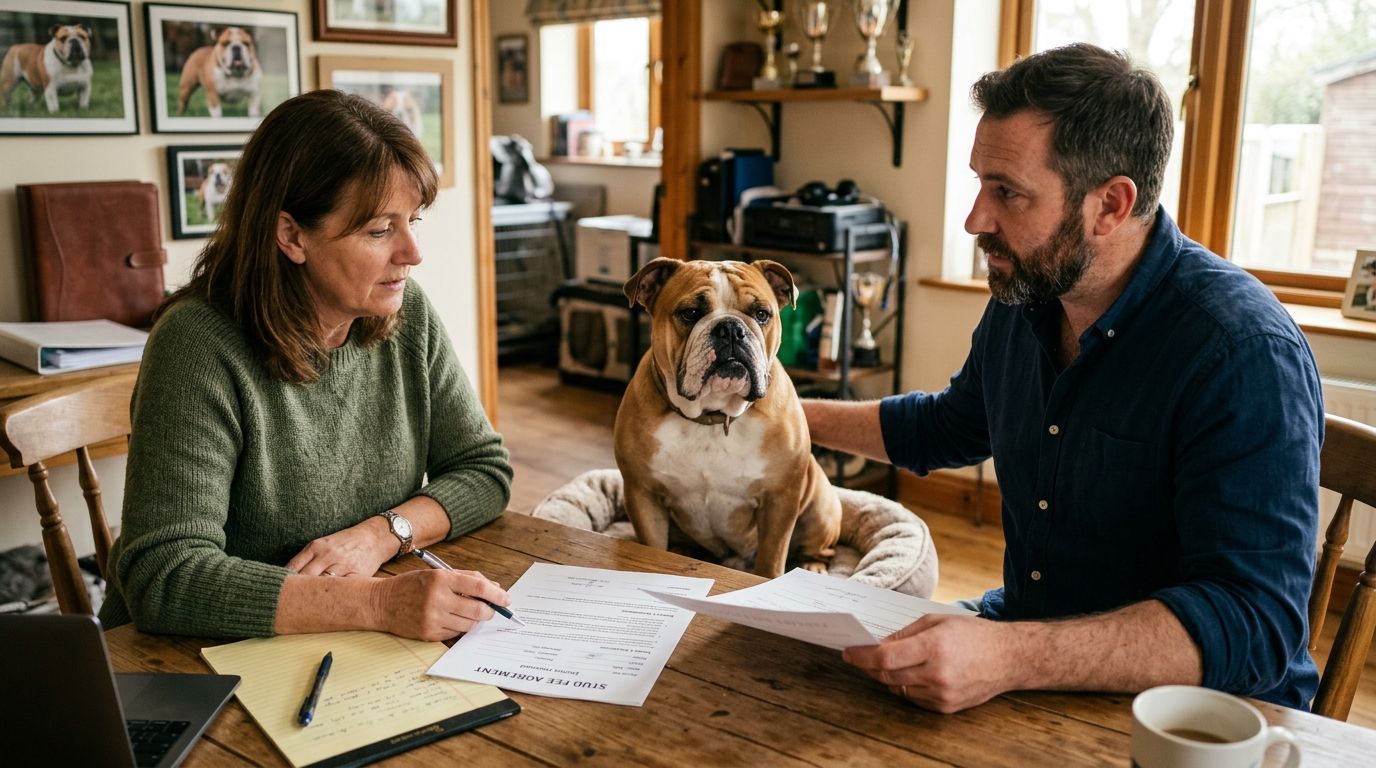
Negotiating a bulldog stud fee comes down to three decisions made before the first breeding attempt: how the stud owner gets paid, what health clearances protect both dogs, and what's written into a signed bulldog stud fee contract that spells out who owns what if the litter doesn't go as planned.
- A bulldog stud fee contract settles on one of three payment structures: cash, pick of the litter, or a puppy-back split.
- Health clearances for hips, patellas, cardiac, and tracheal grading belong in the contract before breeding, not after a litter is born.
- Merle, lilac, and blue bulldog programs should add DNA color panels and AKC registration checks to the negotiation.
- A repeat breeding clause protects both owners if the first attempt doesn’t produce a live litter in 2026.
- Shrinkabulls treats every stud fee contract as a two-way health check first, a payment discussion second.
Why This Matters
Bulldogs aren't an easy breed to negotiate around. English Bulldogs often need artificial insemination and a scheduled C-section to deliver safely, and French Bulldogs frequently face the same structural limits. That reality changes what a fair stud fee contract looks like compared to a breed that whelps naturally.
A fee negotiated without a written contract puts both dogs at risk. If a stud owner and a dam owner only shake hands, there's no record of what happens when a breeding fails, when a puppy is stillborn, or when a color result doesn't match what the dam owner expected. Choosing a bulldog stud for your breeding program starts the process — the contract is what protects it once the stud is chosen.
How Do You Negotiate a Bulldog Stud Fee?
Most bulldog stud fee negotiations settle into one of three structures. Each shifts risk differently between the stud owner and the dam owner, and each belongs in writing before breeding happens.
| Structure | How It Works | Best For |
|---|---|---|
| Cash stud fee | Stud owner is paid regardless of litter size or outcome | Stud owners who want predictable income and no stake in the puppies |
| Pick of the litter | Stud owner selects one puppy instead of cash payment | Stud owners actively building or expanding their own breeding program |
| Puppy-back guarantee | Partial payment now plus a puppy from a future litter | Owners who want some cash flow immediately but also want breeding stock |
The right structure depends on what the stud owner actually needs — cash now, a puppy for their own program, or a mix of both. Negotiate the structure before discussing the amount.
Cash Stud Fee: Paid Before or At Breeding
A cash stud fee is the simplest structure and the easiest to enforce. The stud owner is paid in full, has no ownership claim on any puppy, and the dam owner keeps the entire litter.
This works well when the stud owner isn't running their own breeding program or doesn't want the responsibility of raising another puppy. Verdict: Buy — it's the cleanest structure for a dam owner who wants full control of the litter.
Pick of the Litter: Fee Paid in Puppies
Pick of the litter means the stud owner selects one puppy from the resulting litter instead of receiving cash. This structure only makes sense when the stud's color or bloodline is valuable enough that the stud owner would rather own a puppy than take a payment.
It shifts real risk onto the stud owner — if the litter is small, or if the color outcome (merle, lilac, blue) doesn't land in their favor, they may not get the puppy they wanted. Verdict: Hold — only agree to this if the contract specifies pick order and a fallback if the litter is smaller than expected.
Puppy-Back Guarantee: A Hybrid Approach
A puppy-back guarantee blends the two: a partial payment changes hands up front, and the stud owner also receives a puppy from a future litter, sometimes from a repeat breeding rather than the first one. This spreads risk more evenly than a pure pick-of-the-litter deal.
It requires the most detailed contract language of the three, since it involves two separate transactions stretched over time. Verdict: Buy — for stud owners and dam owners who both want a stake in the outcome, this is the fairest middle ground.
“A bulldog stud fee contract works best when it protects the puppies first and the payment second.”
What Goes Into a Bulldog Breeding Contract
A verbal agreement on price isn't a contract. A real bulldog stud fee contract in 2026 should include:
- Health clearances required before breeding — hip and patella evaluations, cardiac clearance, and tracheal grading where applicable
- AKC registration verification for both dogs, confirmed before any breeding attempt
- DNA color panel results when merle, lilac, or blue is part of the pairing, since color outcomes affect value and health risk
- A live litter guarantee clause defining what counts as a successful breeding
- A repeat breeding clause allowing another attempt at no added stud fee if the first breeding doesn't produce a live litter
- Pick order and timing if the payment structure includes pick of the litter or a puppy-back arrangement
- Whelping location and vet-of-record agreed on in advance, since English Bulldogs frequently require a scheduled C-section
Before signing anything, confirm both dogs' paperwork independently rather than taking a breeder's word for it — verifying AKC registration papers takes minutes and prevents disputes months later.
Why Bulldog Stud Fees Vary
Stud fees swing widely across bulldog breeding programs, and the variation almost always traces back to a handful of factors:
- Color rarity — merle, lilac, blue, and isabella bulldogs command more negotiating leverage than standard colors
- Proven litter history — a stud with a track record of live, healthy litters is worth more than an unproven one
- Championship or conformation titles — AKC conformation titles add weight to a stud's value
- Breed differences — French Bulldogs almost always require artificial insemination, which adds a cost and logistics layer that English Bulldog breedings may not need
- Health clearance completeness — a stud with a full panel of clearances is a safer bet and typically negotiates from a stronger position
- Geographic demand — regional scarcity of a specific color or bloodline shifts leverage toward the stud owner
Anyone weighing a merle pairing specifically should look at what rare-color puppies actually cost before finalizing a fee structure, since color rarity is one of the biggest swing factors in any negotiation.
Do You Pay a Stud Fee Before or After Breeding?
Most contracts split the payment: a portion is paid to hold the stud's time before breeding, and the remainder is due only after a veterinarian confirms a live litter. This protects the dam owner from paying in full for a breeding that never produces puppies, while still compensating the stud owner for the dog's time and health screening.
What Happens If the Breeding Doesn't Produce a Litter?
A repeat breeding clause is the standard fix — most bulldog stud fee contracts allow a second attempt at no additional fee if the first breeding fails to produce a live litter. Without that clause written in, the dam owner has no recourse if the pairing doesn't take.
Can a First-Time Breeder Negotiate a Lower Stud Fee?
A first-time breeder can sometimes negotiate a reduced cash portion in exchange for a stronger puppy-back guarantee, since the stud owner takes on more of the long-term stake. It comes down to whether the stud owner values cash now or breeding stock later — that's a negotiating point, not a fixed rule.
Considering a Stud Service in 2026?
Rare-color programs need a contract built around color genetics and health clearances.
FAQ
What is a fair stud fee structure for a bulldog in 2026?
A fair structure is one where the payment method matches what the stud owner actually needs — cash for owners who aren’t breeding themselves, pick of the litter or a puppy-back guarantee for owners building their own program. Fairness comes from clear contract terms, not a specific dollar figure.
Is pick of the litter better than cash for a stud fee?
Pick of the litter isn’t inherently better, it shifts risk onto the stud owner since litter size and color outcomes aren’t guaranteed. Cash is more predictable; pick of the litter only makes sense when the bloodline or color is valuable enough to justify the risk.
Do bulldog stud contracts need AKC paperwork?
Yes, AKC registration for both dogs should be verified before any breeding attempt and referenced in the contract. Unregistered or unverifiable paperwork is one of the most common sources of stud fee disputes.
What health tests should a stud dog have before breeding?
A stud dog should have hip and patella evaluations, cardiac clearance, and tracheal grading completed before breeding. Merle, lilac, or blue pairings should also include a DNA color panel to confirm the genetic outcome.
Does artificial insemination change a stud fee negotiation?
Yes, artificial insemination adds a logistics and veterinary layer that natural breeding doesn’t require, and French Bulldogs almost always need it. That added complexity is a common negotiating point in the contract, separate from the base stud fee.
What is a puppy-back guarantee in a bulldog contract?
A puppy-back guarantee combines a partial cash payment with a puppy owed from a future litter, often a repeat breeding rather than the first one. It spreads the financial risk between both owners instead of putting it all on one side.
Should a repeat breeding clause always be included?
Yes, a repeat breeding clause should be standard in any bulldog stud fee contract because it protects the dam owner if the first attempt doesn’t produce a live litter. Without it, a failed breeding leaves the dam owner with no recourse.
How do color genetics affect a bulldog stud fee negotiation?
Merle, lilac, and blue bulldogs carry more negotiating leverage because of color rarity and demand, which often pushes stud owners toward pick-of-the-litter or puppy-back structures instead of a flat cash fee. A DNA color panel before breeding confirms what outcomes are actually possible.
One Last Thing
Most disputes over a bulldog stud fee contract in 2026 don't come from the payment amount — they come from missing health guarantee language. Read a health guarantee before signing anything, not after a litter is already on the ground, since that's the document that decides who's responsible when a puppy develops a genetic issue later. Shrinkabulls builds every stud arrangement around that order: health clearances first, contract terms second, payment structure last.
Related Guides
- Read a bulldog puppy health guarantee before signing
- Best health testing panels to request from a bulldog breeder

One thought on “Bulldog Stud Fee Contract: How to Negotiate It in 2026”