


 REVIEWS




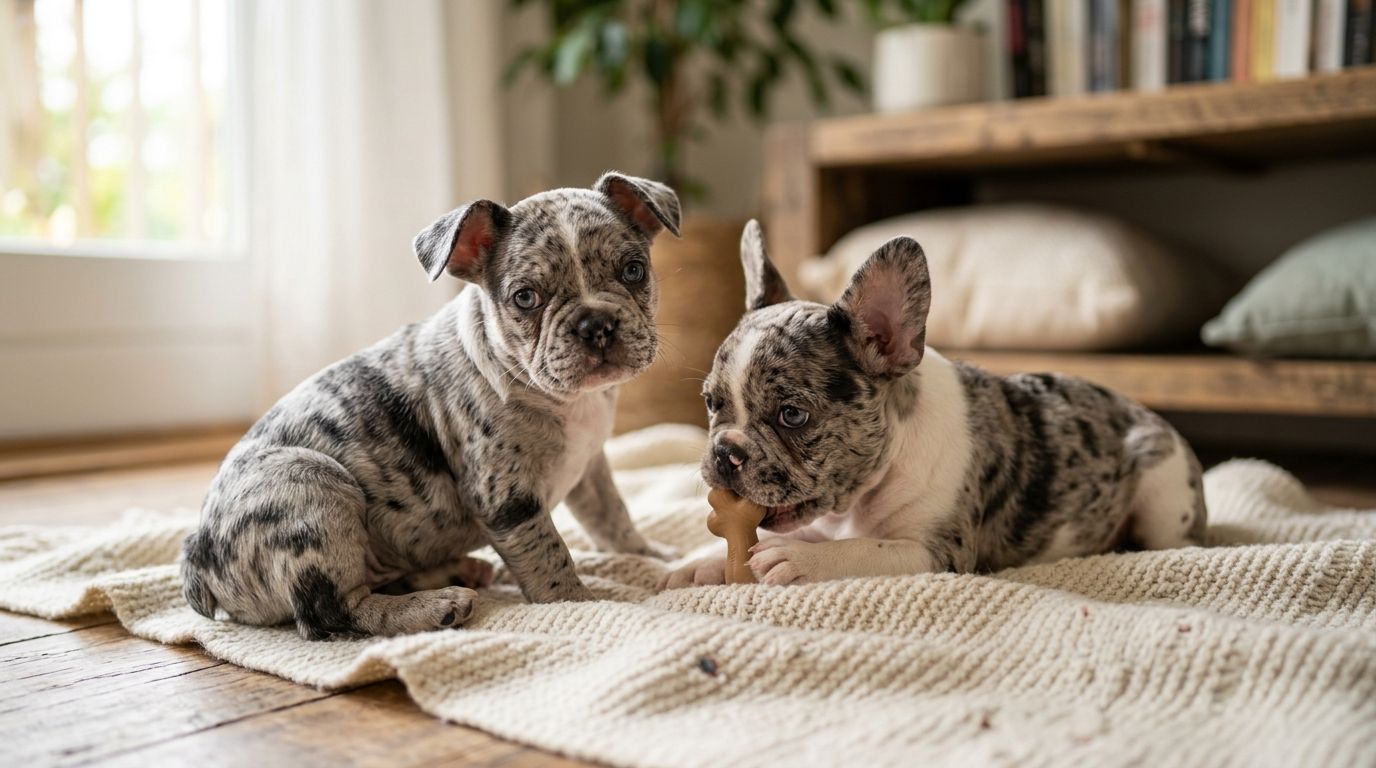
Merle pied French Bulldog puppies for pattern lovers stack two rare coat traits into one dog: merle's marbled, mottled base and pied's bold white patches over color. For a buyer chasing pattern above almost everything else, that combination is the rarest visual payoff in the breed right now, and it comes with genetics you need to understand before you fall for a photo.
- Merle pied French Bulldog puppies combine merle mottling with pied white patching, making each dog’s pattern genuinely one-of-one.
- Never pair two merle carriers — double merle puppies face real vision and hearing defects, not just a color risk.
- Ask for a DNA color panel on both parents before you commit to a deposit, not after the puppy is already picked out.
- Pied placement varies litter to litter, so photos and video of the actual puppy matter more than the parents’ coats.
- Shrinkabulls breeds merle pied pairings around structure and health testing first, pattern second.
Why pattern matters this much to merle pied buyers
Solid-color French Bulldogs are common. Merle pied dogs are not, and that scarcity is exactly why pattern collectors gravitate toward them — no two merle pied puppies lay out their patches and mottling the same way, so the dog you bring home really is unrepeatable.
That rarity cuts both ways, though. Because merle is a dominant gene layered onto a recessive pied pattern, breeding for both traits at once takes deliberate pairing, and it opens the door to shortcuts from breeders chasing a look instead of a healthy litter. Pattern lovers who understand the genetics ask sharper questions and end up with better puppies.
If you're weighing a pied French Bulldog puppies for pattern collectors against a merle pied combination, the difference comes down to how much visual complexity you actually want — pied alone gives you clean patches, merle pied gives you patches plus marbling underneath.
How to shop for merle pied French Bulldog puppies the right way
Verify the genetics before you fall for the coat
A merle pied puppy's pattern is a genetic outcome, not a stylistic choice a breeder makes at will. You want proof of what's actually being paired, not just a description.
- Ask for a DNA color panel showing both the merle locus and the pied (S locus) results on sire and dam
- Confirm neither parent is a hidden or "cryptic" merle carrier with minimal visible patches
- Request the panel from a named lab, not a verbal assurance
- Cross-check the panel results against the puppy's own coat once photos are available
Ask about the double merle risk directly
This is the single most important question a pattern lover can ask, and it's non-negotiable. Merle-to-merle breeding produces double merle puppies at a predictable rate on a standard genetics cross, and those puppies commonly carry vision and hearing defects tied directly to the double copy of the gene.
- Ask flat out: "Is either parent merle, and if so, is the other parent merle-free?"
- Walk away from any breeder pairing merle to merle, no matter how the coat photos look
- Read up on the topic through a dedicated double merle health risks resource before you sign anything
- Ask whether the breeding program has ever produced a double merle litter, and how it was disclosed
Check the breeder's pattern combinations across multiple litters
A breeder who's actually planned for merle pied outcomes over several litters will have a track record you can look at, not just one lucky puppy.
- Ask to see photos of past litters with the merle pied combination, not just the current one
- Look for consistency in structure and bite across those litters, not just varied coats
- Ask how many generations the color line has been tracked
- Compare that history against a merle French Bulldog puppies for first-time owners litter to see how solid merle differs from merle pied in practice
Compare pied placement and merle mottling in photos and video
Because pied patches move around on every puppy, no two littermates look identical even from the same merle pied pairing.
- Request video, not just still photos, since coat pattern reads differently in motion and light
- Ask for close-up shots of the eyes — merle can carry blue or partial-blue eye color, which some buyers want and others don't
- Get updated photos at 6-8 weeks since merle pigment can shift slightly as puppies mature
- Ask whether the ears and nose leather show merle mottling too, since some buyers care about full-body pattern consistency
Vet the health testing tied to the coat genes
Color genetics testing and general health testing are two different things, and pattern lovers sometimes only ask about one.
- Confirm hip and patella screening exists independent of the color panel
- Ask about BOAS (breathing) screening given the breed's brachycephalic structure
- Request documentation of eye exams, since merle carriers warrant extra scrutiny here
- Ask whether skin fold and ear canal checks were part of the puppy's wellness exam
Confirm registration and color documentation
Merle and pied are recognized color/pattern descriptions, but registration paperwork should match what the DNA panel says.
- Cross-check the AKC paperwork's stated color against the DNA test results
- Ask for a copy of the pedigree showing color genetics across at least two generations
- Confirm the litter registration number matches the specific puppy you're reserving
Budget honestly for a rare pattern combination
Merle pied puppies sit at the rarer end of the color spectrum, and rarity in this breed tracks directly with demand. Before you commit, look at what rare-color pricing actually reflects industry-wide by reading what rare color puppies really cost, so you're evaluating any quote against a real baseline instead of a guess.
“If a breeder is pairing merle to merle to chase a rarer pattern, that’s a double merle litter waiting to happen — not a deal worth taking.”
Comparing coat options for pattern-focused buyers
| Coat option | Best for | Key limitation |
|---|---|---|
| Merle pied | Buyers who want maximum pattern complexity and a truly one-off coat | Requires strict merle-safe pairing; pattern placement is unpredictable litter to litter |
| Solid merle | Buyers who want marbling without white patching | Same double merle pairing risk applies; less visual variation than merle pied |
| Solid pied | Buyers who want clean white-and-color patches without merle genetics | Lower genetic complexity means less pattern rarity than merle pied |
| Standard fawn or brindle | First-time owners who want a predictable, well-documented coat | No pattern novelty for buyers specifically chasing rarity |
Merle pied is the right call for a buyer who wants maximum pattern rarity and is willing to vet genetics carefully. It's the wrong call for anyone unwilling to ask hard questions about parent pairings first.
Common mistakes pattern lovers make
- Chasing pattern over structure. A dramatic coat on a puppy with poor hip or bite conformation is still a puppy with poor hips or bite.
- Skipping the double merle math. Some buyers get so focused on pattern they forget to ask whether both parents carry merle at all.
- Trusting coat photos over DNA panels. A cryptic merle parent can look nearly solid-colored and still pass on the gene.
- Assuming merle pied puppies are interchangeable with solid pied. The genetics, health considerations, and pattern variability are meaningfully different.
- Not asking for updated photos closer to pickup. Merle mottling and pied placement can shift as a puppy matures past 6 weeks.
Reserve your merle pied puppy early
Rare color litters fill fast — see how the deposit process works before you commit.
FAQ
What makes a French Bulldog merle pied instead of just merle or just pied?
A merle pied French Bulldog carries both the merle gene, which creates marbled mottling, and the pied pattern, which adds white patches over color. The combination produces a coat where mottled color and white patching appear together, and the exact layout varies puppy to puppy.
Is a merle pied French Bulldog puppy healthy?
A merle pied puppy from a single-merle-parent pairing carries no more health risk from the color itself than any other French Bulldog. The risk only appears when both parents carry merle, producing double merle puppies with documented vision and hearing concerns.
How can I tell if a breeder is pairing two merle dogs?
Ask directly whether both the sire and dam carry the merle gene, and request DNA color panel results for each. A responsible breeder will have this documentation ready before you ask.
Does pied placement stay the same as a puppy grows?
Pied patch boundaries are largely set at birth, but merle mottling and pigment can shift subtly through 6 to 8 weeks. Ask for updated photos close to pickup rather than relying only on early puppy pictures.
Are merle pied French Bulldogs rarer than solid merle or solid pied?
Yes, because the puppy needs to inherit both the merle gene and the pied pattern simultaneously, which narrows the pool of qualifying litters. That combined rarity is why demand for merle pied puppies tends to run higher than for either trait alone.
What’s the difference between merle pied and platinum or lilac patterns?
Merle pied describes a pattern (mottling plus white patching), while platinum and lilac describe base coat color genetics. A puppy can theoretically show merle pied patterning on top of different base colors, so the two classifications aren’t mutually exclusive.
Can eye color differ in merle pied French Bulldog puppies?
Merle genetics frequently produce blue or partial-blue eyes, which can appear in merle pied puppies as well. Not every merle pied puppy will have blue eyes, so ask for close-up eye photos if that detail matters to you.
What should I ask a breeder before reserving a merle pied puppy?
Ask for DNA color panel results on both parents, confirm neither is a hidden merle carrier, and request health testing documentation separate from the color panel. A breeder unwilling to provide any of these should be a hard pass.
One last thing
Here's the detail most buyers never hear until it's too late: a merle parent doesn't always look merle. "Cryptic" or "phantom" merle dogs can carry the gene while showing barely any visible mottling, which means two apparently normal-coated parents can still produce a litter of double merle puppies if both happen to be hidden carriers. The only way to rule this out is a DNA color panel on both parents, every single time — not a visual check, not a breeder's word, the actual test result. In 2026, that panel is a standard, accessible tool, and any breeding program working with merle pied French Bulldog puppies should be running it as a matter of course.
Related guides
