


 REVIEWS




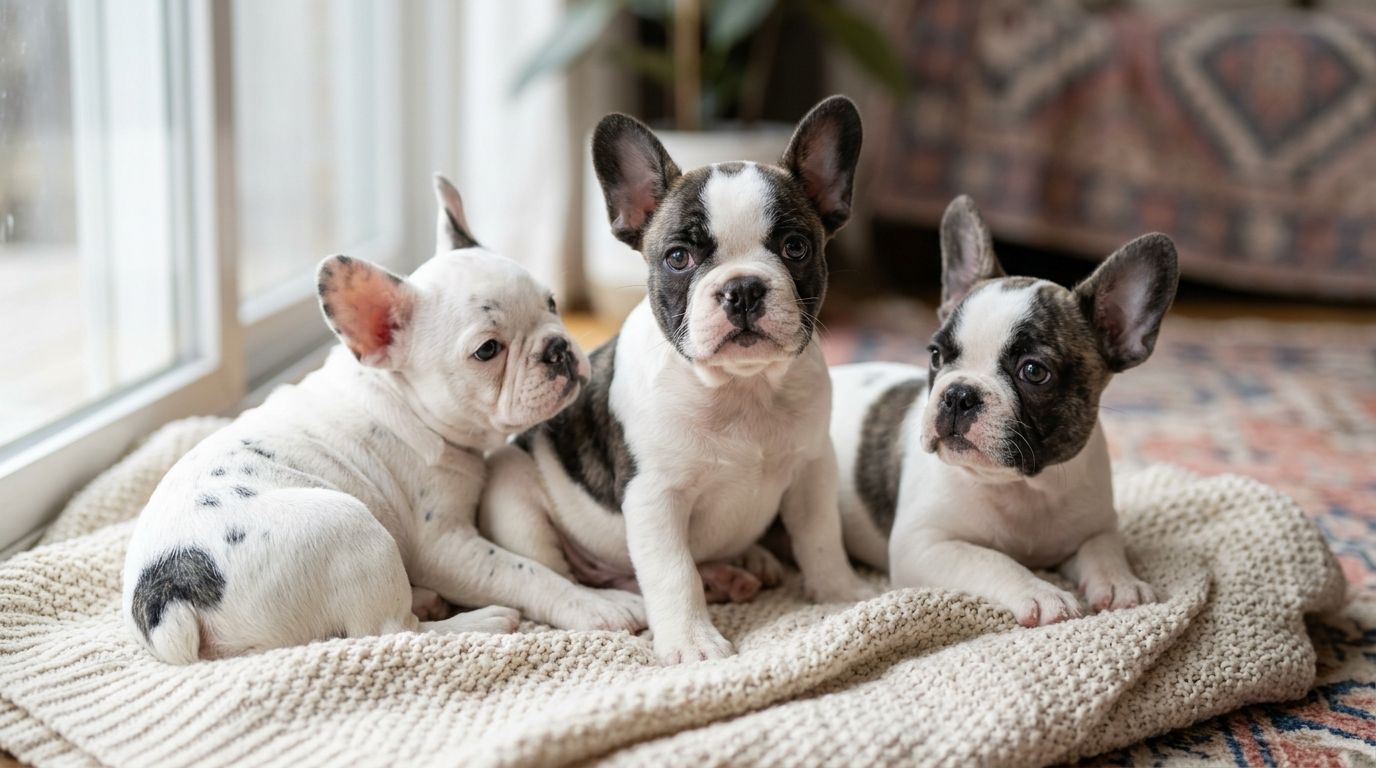
Pattern collectors buying pied French Bulldog puppies want one thing above coat color: a patch layout no other litter will ever repeat. Standard-color buyers pick a shade and move on; pattern collectors study placement, symmetry, and how much white sits against how much color, because that's the trait that makes a pup unrepeatable in 2026 litters.
- Pied French Bulldog puppies get their white-and-color map from the piebald gene, a different mechanism than merle dilution.
- Shrinkabulls treats pattern documentation (parent photos, prior litters) as a buying requirement, not a nice-to-have.
- Patch placement and symmetry vary litter to litter, so no two pied puppies wear the same markings.
- AKC registration verification matters more for pattern buyers because pattern claims get exaggerated in casual listings.
- Reserve early with a deposit before birth if you want first pick of a specific patch layout.
Why pied patterns matter for pattern collectors
Pied comes from the piebald (S-locus) gene, which is a separate mechanism from the merle dilution gene that produces blue merle and lilac merle French Bulldogs. That distinction matters for collectors because a litter bred for standard fawn or brindle can still throw a pied puppy, while a litter bred specifically for merle needs at least one merle parent to produce merle offspring at all.
Collectors chasing patterns instead of straight colors are shopping a smaller, less predictable pool. A breeder who tracks parent patterns across multiple litters can tell you what patch distribution to expect; a breeder who can't isn't tracking the trait you're paying extra for. If you're weighing pied against other rare patterns, the sable French Bulldog puppies for pattern enthusiasts page walks through how sable's brindle-tipped hairs read differently than a pied patch map.
Why this matters
A pied French Bulldog puppy isn't rarer because it's prettier — it's rarer because the trait needs the recessive gene from both parents to show up reliably, and patch placement isn't something a breeder can engineer litter to litter. Shrinkabulls treats pied French Bulldog puppies as a documented pattern, not a marketing label, which is the difference between a collector-grade puppy and a puppy that happens to have some white on it.
Study the litter's parent patterns first
Before you ask about a specific puppy, ask about the parents' pattern history.
- Request photos of the dam and sire, not just the puppies
- Ask whether either parent has produced pied offspring before, and how many per litter
- Note whether the breeder can show prior litters with pattern variety, not just a single lucky pup
- Ask if the pied gene is confirmed through prior litters or just visually assumed
Learn to read patch placement before you buy
Patch placement is the entire point of buying a pied French Bulldog, so learn the vocabulary before you shop.
- Eye patches (one or both eyes ringed in color) read as the most collector-prized layout
- Ear patches and saddle patches (a solid block across the back) are common and still striking
- Full-body speckling versus large solid patches changes the puppy's look dramatically as it matures
- Ask for updated photos at 6, 8, and 10 weeks, since patch edges sharpen as puppies grow out of newborn coat
Compare pied against other rare patterns before deciding
Pied isn't the only pattern collectors chase in 2026, and it's worth comparing before you commit to one litter over another. Merle, lilac, and blue all carry different genetics and different health considerations, and the how to choose between a merle, lilac, or blue bulldog puppy guide breaks down how those traits differ from a piebald pattern at the gene level.
- Merle carries a dilution gene tied to eye and ear health risks in double-merle pairings
- Lilac and blue are solid dilute colors, not patterns, so they don't compete directly with pied for a collector chasing patch variety
- Pied carries no known dilution-linked health risk, since it's a pigment distribution trait, not a dilution trait
- A reputable breeder should be able to explain this distinction without hedging
Verify papers and pattern documentation before you pay
Pattern claims get exaggerated more than color claims because "rare pattern" sounds like a bigger upsell than "rare color." Confirm everything on paper.
- Check that AKC registration lists the puppy's actual markings, not a generic color code
- Ask to see the litter registration alongside the individual puppy's paperwork
- Cross-reference parent registration numbers against the puppies being sold
- The how to verify AKC registration papers on a bulldog puppy guide covers exactly what to check line by line
Budget for temperament and health, not just the coat
A patch map is cosmetic. Hip, airway, and palate health are structural, and collectors who skip this step end up with a puppy they love the look of and worry about for years.
- Ask for hip and airway screening results on both parents
- Ask how the breeder handles brachycephalic airway risk in whelping and early weeks
- Confirm a health guarantee is in writing before any deposit changes hands
- Get a straight answer on vet visit history for the specific puppy you're considering
Reserve early since pattern litters move fast
A litter with two or three pied puppies gets claimed faster than a same-size litter of solid fawn, because collectors specifically watch for pattern announcements. Waiting until photos post publicly usually means your top pick is already spoken for.
Reserve your pied puppy before birth
Lock in a specific patch layout with a deposit ahead of the litter’s public listing.
Pattern options compared for collectors
| Option | Best for | Key limitation |
|---|---|---|
| Pied French Bulldog | Collectors who want maximum patch variation, litter to litter | Placement can't be guaranteed before birth |
| Merle French Bulldog | Collectors comfortable researching dilution-linked health screening | Double-merle pairings carry known eye/ear risk |
| Sable French Bulldog | Collectors who prefer a subtler, brindle-tipped pattern over hard patches | Sable reads closer to standard brindle in low light |
| Solid rare colors (lilac, blue) | Buyers who want a rare shade without pattern unpredictability | Not a pattern trait, so it won't satisfy a true pattern collector |
Verdict: pied French Bulldog puppies win for collectors who specifically want unrepeatable patch maps, but only from a breeder tracking pattern lineage across litters, not one selling a single lucky pup as a marketing hook.
“A patch is cosmetic. A puppy’s hips, palate, and airway are structural, and collectors who forget that end up choosing a coat over a dog.”
Common mistakes pattern collectors make
- Buying on a single photo — patch layout shifts as coat fills in through 6 to 10 weeks, so one early photo isn't the final map
- Confusing pied with merle — the two come from different genes with different health implications, and mixing them up leads to the wrong questions at the wrong breeder
- Skipping health screening because the pattern is exciting — a rare patch doesn't offset a missed hip or airway check
- Assuming pattern equals price premium equals quality — documentation and parent history matter more than the sticker on the listing
- Waiting too long to reserve — pattern litters get claimed before public posting more often than solid-color litters
FAQ
What makes a French Bulldog pied instead of just white-marked?
A pied French Bulldog carries the piebald gene, which produces distinct white-and-color patches rather than a light color fading into white. The pattern is genetically separate from merle dilution, so a pied pup doesn’t carry merle’s dilution-linked risks.
Is a pied French Bulldog rarer than a merle French Bulldog?
Rarity depends on the breeding program, since both traits require specific parent genetics to appear reliably. A litter tracked for pied history and a litter tracked for merle history each produce their pattern at different, program-specific rates.
Can two non-pied French Bulldogs produce a pied puppy?
Yes, if both parents carry the recessive piebald gene without showing it visually. This is why parent pattern history matters more than a parent’s own visible coat when shopping for pied puppies.
How much does a pied French Bulldog puppy cost in 2026?
Pricing varies by breeder, litter, and specific patch layout, so check current listings directly rather than relying on a fixed figure. Rare-pattern litters typically price above standard-color litters within the same program.
Does a pied pattern affect a French Bulldog’s health?
Pied is a pigment distribution trait, not a dilution trait, and it isn’t linked to the eye or ear risks associated with double-merle pairings. Health screening should still cover standard brachycephalic concerns like hips, airway, and palate regardless of coat pattern.
Should I choose a pied puppy based on photos alone?
No. Patch placement sharpens and shifts as a puppy’s coat fills in between 6 and 10 weeks, so request updated photos across that window before committing. A single early photo doesn’t show the final pattern map.
How do I verify a pied French Bulldog’s papers are legitimate?
Cross-reference the puppy’s AKC registration against the litter registration and confirm parent registration numbers match what the breeder states. Markings listed on the paperwork should match what you’re actually seeing on the puppy.
One last thing
Pied patches keep shifting shape through the first ten weeks as coat fills in around the base color, so the puppy you reserve at four weeks won't look exactly like the puppy that comes home at twelve. Ask for a photo update near pickup, not just at reservation, and judge the final pattern then.
Related guides
- Merle bulldog price: what rare-color puppies really cost
- Best questions to ask a French Bulldog breeder before buying

One thought on “Pied French Bulldog Puppies for Pattern Collectors (2026)”