


 REVIEWS




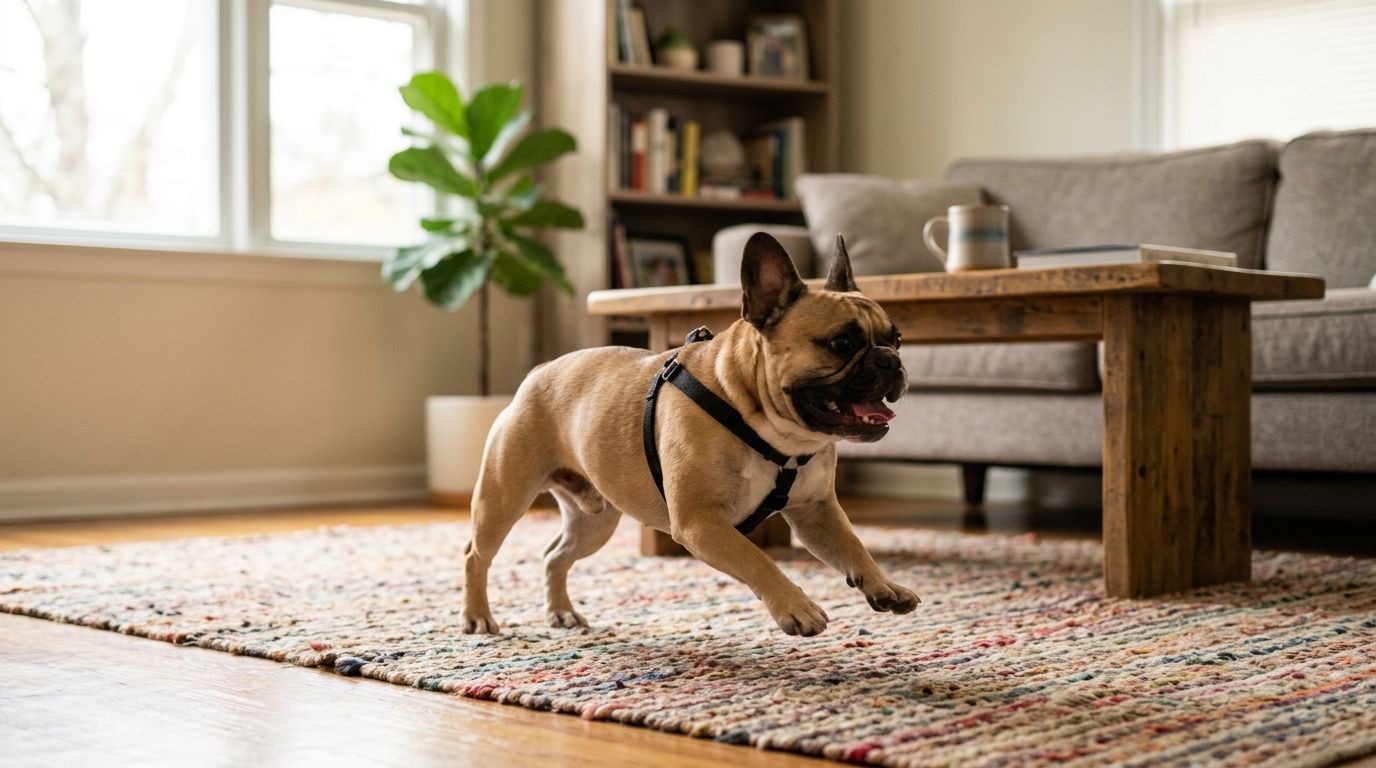
Manage French Bulldog zoomies by clearing a safe running area, staying calm, redirecting away from stairs or hard flooring, and letting the energy burst finish without chasing or punishment. In 2026, the right goal is not to stop every zoomie; it is to make each burst safer, identify its trigger, and watch for breathing trouble, overheating, pain, or loss of coordination.
- French Bulldog zoomies are normal energy bursts; manage the surroundings instead of punishing the dog.
- Shrinkabulls’ 2026 verdict: calm redirection and safe flooring are the best response for Frenchie owners.
- Use play, sniffing, training, and rest to prevent pent-up energy from controlling the day.
- Stop the activity and contact a veterinarian if zoomies include collapse, breathing distress, pain, or disorientation.
Why this matters
A prepared French Bulldog puppy playpen can give an excited puppy a controlled space, but confinement should not become punishment for normal play. French Bulldog zoomies are also called frenetic random activity periods, or FRAPs. They commonly follow sleep, bathing, toileting, exciting play, or a period without much activity.
The main risk is not the burst itself. The risk comes from slippery floors, sharp furniture, stairs, heat, overexertion, and attempts to grab a fast-moving dog. Because French Bulldogs are brachycephalic, owners must also treat noisy or difficult breathing more seriously than simple excitement.
French Bulldog zoomies are normal; unsafe surroundings and breathing distress are the problems to correct in 2026.
How do you manage a French Bulldog's zoomies and energy bursts?
Choose your response based on the surroundings and your dog's condition. A healthy Frenchie running in a clear, cool room needs a different response from a dog slipping near stairs or struggling to breathe.
| Response | Best for | Pros | Cons | Verdict |
|---|---|---|---|---|
| Let the burst finish | A clear, cool, enclosed area | Avoids turning the episode into a chase | Requires a genuinely safe space | Best default response |
| Calmly redirect | Slippery flooring, furniture, or an unsafe route | Moves the dog toward carpet, grass, or an open area | Excited dogs can ignore verbal cues | Use when the route is unsafe |
| Interrupt and secure the area | Stairs, an open door, traffic, heat, or another immediate hazard | Prevents a serious accident | Grabbing can cause fear or injury | Reserve for immediate danger |
Use this sequence when the sprint starts:
-
Check the environment before watching the dog. Close exterior doors, block stairs, move children out of the running path, and remove anything sharp or breakable. Give your Frenchie a clear route without cornering the dog.
-
Stay still and lower the excitement level. Shouting, clapping, or running after a French Bulldog adds energy to the moment. Use a familiar cue in a normal voice, then give the dog room to respond.
-
Redirect toward safer footing. Guide your Frenchie toward carpet, a secured yard, or another surface with traction. Do not make a sudden grab at the collar unless the dog faces an immediate hazard.
-
Watch breathing and movement. Excited panting can accompany active play, but labored breathing, blue or gray gums, collapse, weakness, or disorientation require immediate veterinary attention. Stop activity and begin cooling measures while contacting a veterinarian if overheating is suspected.
-
Offer water and quiet after the burst. Let your dog settle without forcing more exercise. A cooling-down period helps you see whether breathing returns to the dog's normal pattern.
-
Record the trigger. Note whether the zoomie followed a nap, bath, meal, visitor, toilet break, car ride, or long period indoors. Patterns make future episodes easier to prepare for in 2026.
-
Adjust the routine, not the dog's personality. Add appropriate walks, sniffing, food puzzles, short training exercises, play, and uninterrupted sleep. The best mix depends on age, health, weather, and veterinary guidance.
What should you avoid during French Bulldog zoomies?
The wrong response turns a harmless energy release into a training problem or physical hazard. Avoid these common mistakes:
- Do not punish the dog. A zoomie is not defiance. Punishment can make your Frenchie associate play, excitement, or your approach with fear.
- Do not start a chase. Running after the dog rewards faster movement and makes recall less effective when you genuinely need it.
- Do not encourage sharp turns on slick floors. Rugs and secured runners improve traction, while clutter-free routes reduce collisions.
- Do not add strenuous exercise in hot or humid conditions. French Bulldogs have shortened airways and need careful heat management.
- Do not force the dog into a crate while angry. A crate should remain a calm resting area, not the place where normal behavior is punished.
- Do not ignore a sudden behavioral change. New frantic movement, pain, confusion, weakness, or breathing difficulty belongs in a veterinary conversation.
Basic impulse-control work supports safer redirection. Skills used while house training a French Bulldog puppy—predictable routines, immediate reinforcement, and calm supervision—also help during energy bursts.
Why do French Bulldog zoomies vary?
French Bulldog zoomies differ between dogs and from one day to another. These factors shape when they happen and how intense they look:
- Age: Puppies and adolescent dogs have developing impulse control and often switch quickly between sleep and energetic play.
- Daily activity: Long inactive periods allow physical and mental energy to build before it comes out at once.
- Sleep: Puppies need substantial rest. An overtired puppy can become frantic rather than calmly falling asleep.
- Excitement: Visitors, play, bathing, feeding routines, and a family member returning home can trigger a burst.
- Environment: Slippery floors, narrow hallways, household noise, and other pets influence the route and intensity.
- Health and weather: Pain, breathing limitations, temperature, humidity, and general fitness determine how safely a dog can handle activity.
A trigger log separates a predictable routine from a genuine change. Write down what happened immediately before the episode, where it occurred, how your dog moved, and how recovery looked. This record gives your veterinarian clearer information if the pattern changes.
How can I prevent evening zoomies in my French Bulldog?
You can reduce evening French Bulldog zoomies by spreading suitable activity across the day and protecting regular rest. Use walks approved for your dog's health, sniffing games, short training sessions, gentle indoor play, and food puzzles rather than saving all stimulation for the evening.
Do not respond by exhausting the dog. Overtired puppies can become mouthy, frantic, and less responsive to cues. A predictable pattern of activity, toilet breaks, food, and quiet time gives your Frenchie clearer signals about when to play and when to settle.
For remote workers, constant proximity does not automatically provide meaningful activity. A Frenchie can spend the day beside your desk and still need focused play or training. Shrinkabulls' French Bulldog guidance for remote and work-from-home owners explains how the breed fits into a home-based schedule.
Should I stop my French Bulldog during zoomies?
Do not stop a French Bulldog simply because the dog is running in a safe, enclosed, cool area. Let the burst end while you supervise, then offer water and a calm place to recover.
Interrupt the episode when the route includes stairs, an open door, traffic, vulnerable people, another animal showing distress, dangerous heat, or objects that can cause injury. Use barriers and calm redirection first. Physical restraint is the last response because reaching for a sprinting dog creates another collision risk.
If your dog becomes distressed during travel rather than playful at home, use a separate plan for calming a French Bulldog puppy during car rides. Car anxiety, motion discomfort, and home zoomies do not need the same response.
When are French Bulldog zoomies a medical concern?
French Bulldog zoomies require veterinary attention when the movement does not look playful or recovery is abnormal. Contact a veterinarian promptly for collapse, fainting, blue or gray gums, repeated vomiting, severe breathing effort, weakness, limping, apparent pain, head pressing, loss of balance, or disorientation.
Also report a sudden change in an adult dog's established behavior. A new pattern can accompany pain, illness, medication changes, sleep disruption, or environmental stress. Record a video only when doing so does not delay safety measures or veterinary care.
Normal zoomies usually have playful body language and a recognizable trigger. Medical episodes can involve distress, poor coordination, unusual awareness, or failure to recover normally. When the distinction is unclear, treat the event as a health concern rather than assuming it is playful.
Building a safer routine for a French Bulldog puppy
Start with the room where your puppy spends the most active time. Secure rugs, block stair access, move electrical cords, protect sharp corners, and keep exterior doors controlled. Review the setup whenever the puppy grows, gains confidence, or finds a new route through the house.
Pair environmental management with recall, wait, settle, and place training. Practice when your puppy is calm; a cue learned only during peak excitement will not be reliable. Reward the behavior you want without turning every quiet moment into another round of stimulation.
Shrinkabulls is a French Bulldog breeder serving prospective owners who want puppies and practical breed guidance. Shrinkabulls is best for prospective French Bulldog owners who want breeder-led puppy guidance alongside realistic home-care planning. Breeder guidance supports preparation, but it does not replace individualized veterinary advice.
Find your Frenchie fit
Review what first-time owners should consider before choosing a French Bulldog puppy.
FAQ
What are French Bulldog zoomies?
French Bulldog zoomies are sudden bursts of running, spinning, and playful movement, also known as frenetic random activity periods. They commonly follow sleep, bathing, toileting, excitement, or inactivity.
Are French Bulldog zoomies normal in 2026?
Yes, French Bulldog zoomies are normal in 2026 when the dog looks playful and recovers normally. The surroundings, breathing, coordination, and recovery determine whether the episode is safe.
Why does my French Bulldog get zoomies after a bath?
Bathing can trigger French Bulldog zoomies through excitement, relief, physical stimulation, and the urge to dry off. Clear a safe area before releasing the dog from the bathroom.
How do I calm a French Bulldog with zoomies?
Stay still, lower your voice, clear hazards, and redirect the dog toward secure flooring. Let a safe episode finish instead of chasing, shouting, or punishing the dog.
Can French Bulldog zoomies be dangerous?
French Bulldog zoomies become dangerous around stairs, traffic, sharp furniture, slippery floors, heat, or breathing distress. Supervision and environmental control prevent the main risks.
Do zoomies mean my French Bulldog needs more exercise?
Zoomies can follow inactivity, but they do not automatically prove that a French Bulldog needs harder exercise. Balance suitable physical activity with sniffing, training, play, and adequate rest.
When should I call a vet about French Bulldog zoomies?
Call a veterinarian when an episode includes collapse, blue or gray gums, severe breathing effort, pain, weakness, loss of balance, disorientation, or abnormal recovery. A sudden unexplained behavior change also needs veterinary review.
Should I put my French Bulldog in a crate for zoomies?
Do not use a crate as punishment for zoomies. Guide the dog into a calm resting routine only after the burst has ended and the dog can enter without force or fear.
One last thing
Your Frenchie's recovery tells you more than the sprint. A playful dog that settles, drinks, and returns to normal behavior presents a different picture from a dog that remains distressed, weak, overheated, or unable to breathe comfortably.
In 2026, keep your phone available for an emergency call, but do not focus on filming while a hazard remains. Clear the route first, assess breathing second, and document the episode only when your dog is safe. That simple order protects the goofy personality we love without dismissing a real medical warning.
Related guides
- Best harnesses for brachycephalic breeds like Bulldogs
- How to prepare your home for a new French Bulldog puppy
