


 REVIEWS




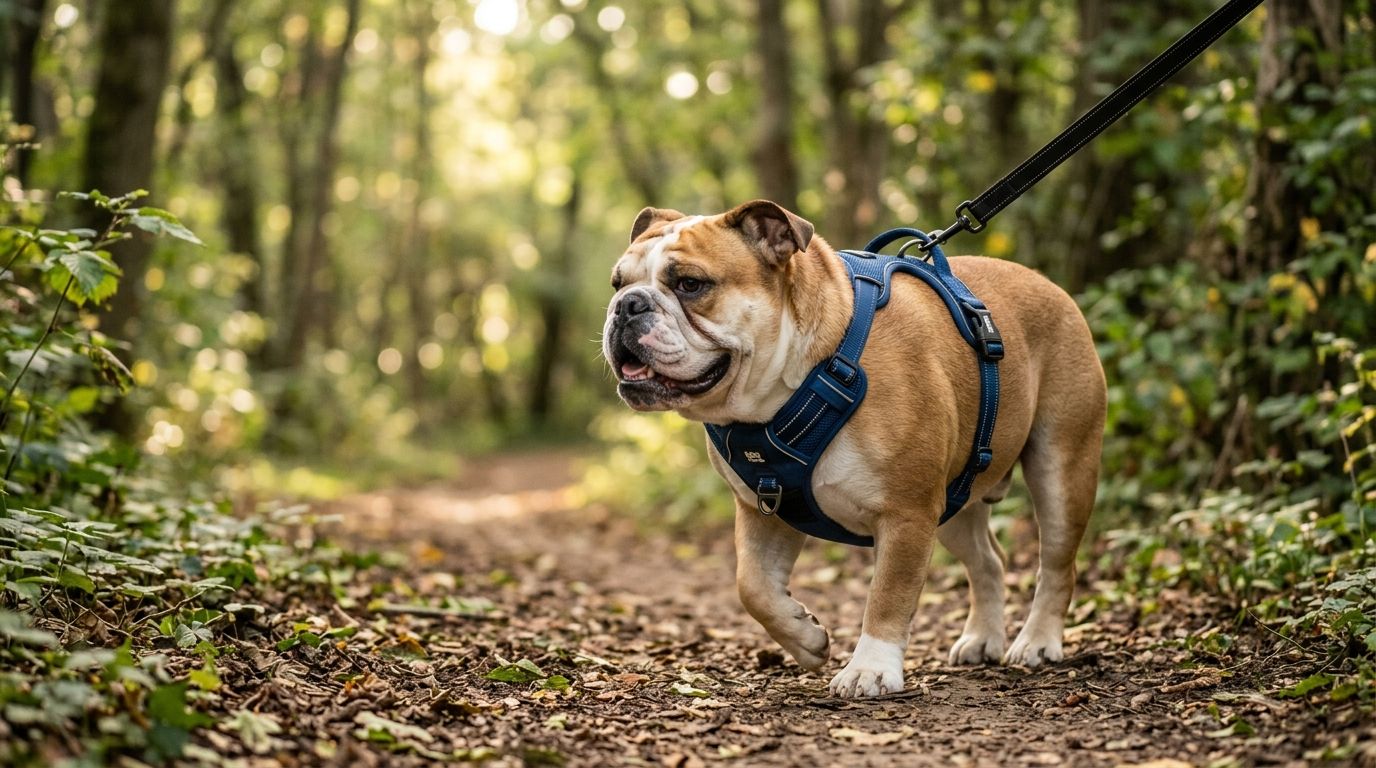
Choosing the best harness for bulldog puppies and adults is a safety decision, not a style one — bulldogs have short muzzles, narrow tracheas, and barrel chests that make a standard collar or a poorly-shaped harness dangerous. Here's the ranked breakdown of harness types that actually fit brachycephalic anatomy, straight from the Shrinkabulls family who fits these squishy-faced sweethearts every single day in 2026.
- Julius-K9 IDC Powerharness is the best harness for bulldog owners who want one overall daily pick in 2026.
- Ruffwear Front Range suits first-time bulldog owners who want a simple, no-fuss everyday walk.
- Kurgo Tru-Fit is the strongest choice for car rides and back-seat restraint.
- Voyager Step-in Mesh Harness breathes best for bulldogs living in hot climates.
- PetSafe 3-in-1 gives new owners an affordable no-pull option for leash training sessions.
Why this matters
A bulldog's windpipe sits closer to the surface than in longer-nosed breeds, and any pressure across the throat can trigger coughing, gagging, or worse during a walk. If you've already noticed labored breathing or snorting that seems worse than normal, read our guide on early signs of brachycephalic breathing issues before you shop for gear.
The wrong harness compounds the problem. A collar-style lead, or a harness with a strap that crosses the neck, puts direct force on an airway that's already working harder than it should. The right harness moves all pressure to the chest and shoulders, where a bulldog's build can actually handle it.
What makes the best harness for bulldog breeds
- Y-front or H-front chest plate that clears the throat entirely, never crossing over the windpipe.
- Wide, padded straps — thin nylon digs into loose skin folds and short fur.
- Adjustable girth on at least two points to fit a barrel chest that's wider than the shoulders.
- Breathable mesh or airflow channels, since bulldogs overheat faster than almost any other breed.
- A sturdy top handle for lifting a dog into a car or up a step without grabbing the collar.
- A front clip option for leash-pulling puppies, without sacrificing chest coverage.
Harnesses at a glance
| Harness | Best for | Standout feature | Key limitation |
|---|---|---|---|
| Julius-K9 IDC Powerharness | Overall daily wear | Y-front chest plate, no throat contact | Bulkier profile, slower to put on |
| Ruffwear Front Range | First-time bulldog owners | Simple two-buckle design | Less structure for heavy pullers |
| Kurgo Tru-Fit | Car travel and restraint | Seatbelt-tether attachment point | Not built for long daily walks |
| Voyager Step-in Mesh | Hot-climate bulldogs | Open mesh panels for airflow | Less padding on bony chest points |
| PetSafe 3-in-1 | Budget-friendly leash training | Front-clip no-pull ring | Chest strap runs narrower than ideal |
1. Julius-K9 IDC Powerharness: best harness for bulldog owners who want one do-it-all pick
This harness uses a Y-front design that splits pressure across the chest and shoulders instead of the throat, which is exactly what a bulldog's compressed airway needs. The handle on top doubles as a lift point for getting a stiff-hipped senior bulldog into the car.
Julius-K9 IDC Powerharness pros:
- Chest plate never touches the neck or windpipe
- Handle works for lifting and quick control
- Girth strap adjusts wide enough for a deep, barrel-shaped chest
Julius-K9 IDC Powerharness cons:
- Takes longer to buckle than a step-in style
- Bulkier look isn't for owners who want something minimal
Best for: owners who want a single harness that handles walks, vet visits, and car lifts. Verdict: Buy.
2. Ruffwear Front Range: best harness for bulldog first-timers who want simple everyday walks
This is the harness we point new Shrinkabulls owners toward when they call asking "which one do I even buy?" Two buckles, a padded chest panel, and a front-clip ring cover most of what a casual daily walker needs without a learning curve.
Ruffwear Front Range pros:
- Easy on and off with two side release buckles
- Padded panel sits flat against loose bulldog skin
- Front clip discourages pulling on leash
Ruffwear Front Range cons:
- Less structure for a strong adult English Bulldog who lunges hard
- Fewer adjustment points than the Julius-K9
Best for: first-time bulldog owners who want a no-drama everyday harness. Verdict: Buy.
3. Kurgo Tru-Fit: best harness for bulldog car travel and back-seat restraint
A harness built with a seatbelt-tether loop changes how safely your bulldog rides in the car, and that matters more with a brachycephalic breed than most people realize — a sudden stop puts direct stress on a short neck and compressed airway. Pair it with our notes on traveling safely with an English Bulldog puppy by car before a long drive.
Kurgo Tru-Fit pros:
- Front and back attachment points for both leash and seatbelt tether
- Padded chest plate reduces rub during long rides
- Reflective stitching helps at gas station stops after dark
Kurgo Tru-Fit cons:
- Not designed for miles of daily walking
- Some owners find the buckles stiff at first
Best for: road trips, vet transport, and everyday car rides. Verdict: Buy for travel, skip as your only harness.
4. Voyager Step-in Mesh Harness: best harness for bulldog owners in hot climates
Bulldogs regulate heat poorly because they can't pant efficiently through a short muzzle, so a harness that traps warmth against the chest is working against the dog. The open mesh panels on this step-in design let air move where a solid vest harness would hold heat. Combine it with a cooling vest for hot weather on days above 80 degrees.
Voyager Step-in Mesh pros:
- Mesh panels move air across the chest
- Step-in design skips fumbling with buckles near the head
- Lightweight for summer walks
Voyager Step-in Mesh cons:
- Less padding over bony chest points on lean bulldogs
- Not rated for heavy pulling control
Best for: summer walks and warm-climate households. Verdict: Buy for hot months.
5. PetSafe 3-in-1: best harness for bulldog puppies starting leash training
A front-clip ring gives a puppy that's still learning leash manners a built-in correction without any pressure near the throat. It's a reasonable starting harness before you know exactly what fit your dog will need as an adult.
PetSafe 3-in-1 pros:
- Front clip discourages pulling during early training
- Multiple attachment points for leash or car seatbelt
- Straightforward buckle system for new owners
PetSafe 3-in-1 cons:
- Chest strap runs narrower than the Julius-K9 or Ruffwear
- Less padding for a dog that's already a strong puller
Best for: puppy leash training in the first several months. Verdict: Buy as a starter, upgrade later.
How we ranked these
Every harness on this list was scored against the six criteria above: throat clearance, strap width and padding, chest adjustability, breathability, lift-handle presence, and front-clip availability. None of them scored perfectly across all six — that's normal, and it's why the list splits by use case instead of naming one "winner."
“If any part of the harness crosses your bulldog’s throat, it’s the wrong harness — full stop.”
Which harness should you choose?
For most bulldog households in 2026, the Julius-K9 IDC Powerharness is the safest default because it clears the throat entirely and doubles as a lift handle. If you're brand new to the breed, start with the Ruffwear Front Range for its simplicity, then add the Kurgo Tru-Fit once car rides become routine. Owners in hot regions should treat the Voyager Step-in Mesh as a summer rotation piece rather than a replacement.
Looking for your next bulldog family member?
See available English and French Bulldog puppies from Shrinkabulls.
FAQ
What’s the best harness for bulldog puppies?
A front-clip harness with a Y-front chest plate, like the Julius-K9 IDC Powerharness or PetSafe 3-in-1, works best for bulldog puppies still learning leash manners. Avoid anything that crosses the throat.
Is a harness better than a collar for a bulldog?
Yes, a properly fitted harness is safer than a collar for bulldogs in 2026 because it moves pressure to the chest instead of the compressed airway. Collars can worsen breathing issues common to the breed.
How much does a bulldog harness cost?
Prices vary by brand and retailer, so check current listings directly on the manufacturer’s site or a pet retailer before buying. Focus on fit and throat clearance over price alone.
Do bulldogs need a special size harness?
Bulldogs need a harness with extra girth adjustment because their chest is significantly wider than their shoulders. Standard breed-neutral sizing charts often run too narrow across the chest strap.
Can a harness help with breathing problems in bulldogs?
A well-fitted harness reduces added strain on the airway compared to a collar, but it does not treat underlying brachycephalic breathing issues. If your bulldog struggles to breathe on walks, that’s a conversation for your veterinarian.
Should I buy a step-in harness or an overhead harness for my bulldog?
Step-in harnesses avoid pulling anything over a bulldog’s sensitive head and eyes, which many owners prefer. Overhead designs like the Ruffwear Front Range are still safe as long as the chest panel clears the throat.
What harness works best for a bulldog that overheats easily?
A mesh step-in harness, such as the Voyager Step-in Mesh Harness, allows more airflow across the chest than a padded vest style. Pair it with shade breaks and a cooling vest on hot days.
One last thing
Most owners fit a harness once at the pet store and never check it again — but bulldog puppies change chest shape fast in the first year, and a harness that fit at 12 weeks can start pressing on the throat by 6 months. Recheck the fit every few weeks until your bulldog's growth plateaus, usually somewhere around 12 to 18 months.
Related guides
- Best ramps for bulldog puppies with joint sensitivity
- Merle bulldog price: what rare color puppies really cost

One thought on “Best Harness for Bulldog Breeds 2026: Ranked Picks”