


 REVIEWS




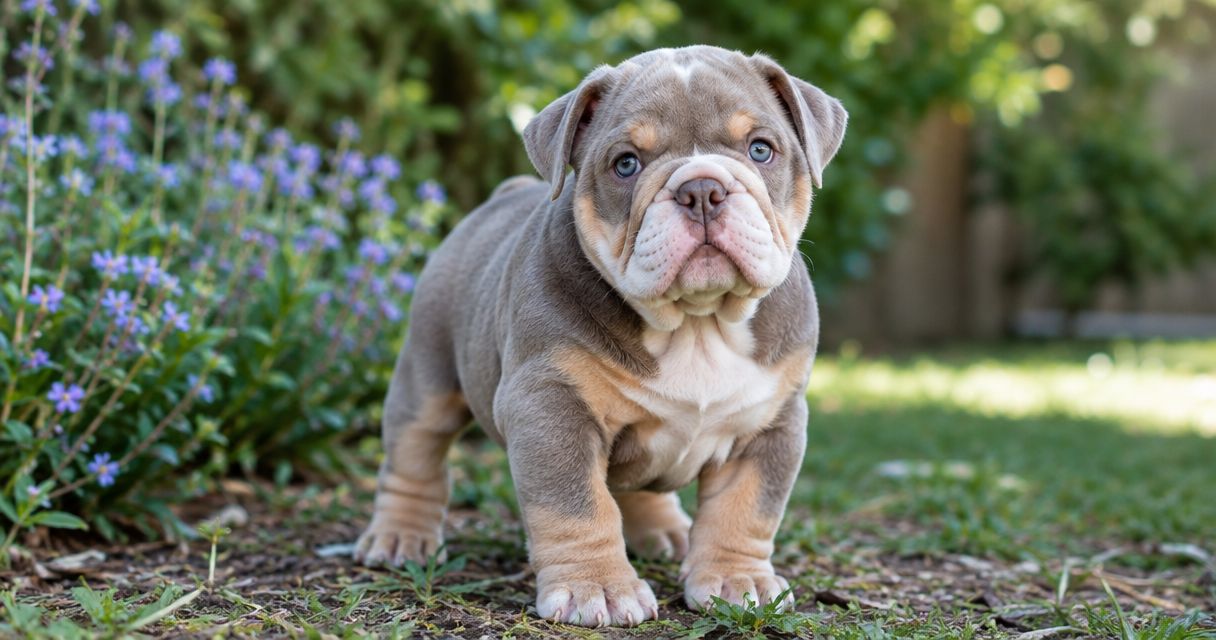
Yes—a lilac tri English Bulldog is generally described as a rare, nonstandard color combination, but that label does not establish how frequently it occurs across the breed. In 2026, the useful distinction is that lilac coloring and tan-point markings require a particular combination of inherited traits. Rarity does not prove health, purebred status, or suitability for your home.
- Is a lilac tri English Bulldog rare? Yes, but rare is a description, not a verified population percentage.
- Lilac coat color and tan-point markings involve separate genetic requirements; photographs alone cannot confirm the full genotype.
- AKC registration does not mean a lilac tri English Bulldog meets the Bulldog color standard.
- Shrinkabulls serves prospective English Bulldog owners interested in rare colors; assess health and temperament separately from color.
Why this matters
That soft lilac coat and those little tan eyebrows are easy to fall for! Your puppy's breathing, movement, comfort, and temperament matter much more once you bring your bulldog home. A color description answers what a dog looks like—not how comfortably that dog will live.
Before you compare puppies, understand how to verify AKC registration papers on a Bulldog puppy. Registration, coat-color testing, and veterinary assessment answer different questions, and none replaces the others.
Is a lilac tri English Bulldog rare?
Yes, in the everyday language of rare-color Bulldog breeding; no, that wording does not provide a measured rarity rate. Lilac tri combines diluted brown pigmentation with tan-point markings. Breeders also use the word tri to describe the combination of the base color, tan points, and white markings.
The genetic explanation supports why this is a specific combination rather than a basic coat-color label. It does not establish that a puppy is one in a particular number of Bulldogs, or that one breeder's description is more accurate than another's.
For your 2026 puppy search, use the following evidence rather than the word rare alone:
| Question | Useful evidence | What it does not establish |
|---|---|---|
| Is the base color genetically lilac? | A laboratory report covering brown pigmentation and dilution | Overall health or temperament |
| Does the puppy have tan points? | Clear photographs, examination, and relevant color-genetics results | Purebred status |
| Is the puppy an AKC-registered Bulldog? | Registration documentation tied to the puppy | Conformity to every breed-standard requirement |
| Is the puppy a suitable companion? | Veterinary findings, behavior, and an honest discussion of your household | A guarantee of lifelong health |
There is no reason to choose between enjoying a beautiful coat and asking careful questions. You can love the color and still insist on evidence.
What makes an English Bulldog lilac tri?
Lilac describes the appearance produced when brown pigmentation combines with dilution. In conventional canine color-genetics notation, this is commonly written as b/b d/d. Tan-point expression adds another layer of inheritance; white markings contribute to the appearance breeders call tri.
The brown and dilution traits each generally require 2 inherited copies of the relevant recessive variants, one from each parent. That means the basic lilac explanation involves 2 genetic loci, commonly called the B locus and D locus. Tan-point expression involves additional coat-pattern genetics, including interactions at the A and K loci.
These are useful shorthand descriptions, not a reason to interpret a laboratory report without context. Laboratories test specified variants, and their reports explain what their results cover. A veterinarian or qualified canine genetics professional can help connect those results to the dog's appearance.
Lilac tri is not simply a pale blue coat
Lighting changes how a Bulldog looks in photographs. Warm indoor light, shade, camera settings, and editing all affect the apparent coat color. A gray-looking puppy in a picture is not automatically genetically blue or lilac.
Ask for unfiltered daylight photographs and the actual color report when genetic confirmation matters to your decision. Eye color, nose color, and a seller's caption are not substitutes for testing.
Tri and merle describe different things
Tri describes a color-and-marking combination, while merle describes a separate pattern of pigment distribution. A lilac tri Bulldog does not automatically carry merle merely because the coat has several colors.
If a puppy is also described as merle, ask for the relevant testing and an explanation of the parents' results. Do not infer merle status from the word tri.
How do lilac tri, blue tri, and chocolate tri differ?
The difference is primarily the base pigmentation beneath the tan points and white markings. These names describe appearance and genetics—not different breeds, personality types, or levels of quality.
| Color description | Main distinction | Best for | Appeal | Limitation |
|---|---|---|---|---|
| Lilac tri | Brown pigmentation combined with dilution, plus tan points | Owners who specifically prefer a diluted brown appearance | A distinctive, softer-looking base color | Appearance alone does not confirm the genotype |
| Blue tri | Diluted black pigmentation, plus tan points | Owners who prefer a gray-looking base color | Contrast between gray, tan, and white areas | Blue does not mean lilac |
| Chocolate tri | Brown pigmentation without the lilac dilution combination, plus tan points | Owners who prefer a brown base color | Contrast between brown, tan, and white areas | Chocolate does not establish dilution status |
These labels are helpful when you describe a preference to a breeder. Their limitation is equally important: none tells you whether the puppy breathes comfortably, has sound movement, or suits your daily routine.
If your goal is an affectionate companion rather than a particular shade, keep your color preference flexible. The right individual Bulldog matters more than winning a color comparison.
Why lilac tri rarity varies
A color's frequency within a breeding program depends on the dogs in that program. It is not the same as its frequency across every English Bulldog. A breeder specializing in particular traits is looking at a selected group, not a representative sample of the whole breed.
Several factors explain why the rare label needs context:
- Parent genotypes: A dog's visible coat does not reveal every recessive variant it carries.
- Combined traits: Lilac pigmentation and tan-point expression involve different genetic requirements.
- Breeding selection: Repeated selection for particular colors changes their frequency within a program.
- Pattern expression: Other coat-pattern genes affect how markings appear or whether they are visible.
- Naming differences: Informal color descriptions are not a substitute for consistent laboratory interpretation.
For a 2026 buying decision, ask what a breeder means by rare. Is the claim about that pairing, that breeding program, or the breed as a whole? A precise answer is more useful than a superlative.
A genetic probability is not a population statistic
Consider a simplified inheritance example involving only the brown locus. If both parents are confirmed B/b carriers, each puppy has a 25% probability of inheriting b/b under ordinary Mendelian inheritance. That calculation comes from 4 equally likely allele combinations: B/B, B/b, b/B, and b/b.
That is not a 25% probability of producing a lilac tri puppy. Dilution and the relevant pattern genetics still need to be considered, and a predicted probability does not guarantee a particular litter result.
An inheritance calculation answers a pairing question, not how rare a color is across the breed. Keep those questions separate when someone explains a puppy's pedigree.
Does AKC registration mean lilac tri is a standard color?
No. AKC registration and compliance with the Bulldog breed standard are separate matters. The AKC Bulldog breed standard describes accepted colors and markings; lilac is not among its listed standard colors.
For your 2026 search, check the AKC Bulldog breed standard directly if conformation showing is part of your plan. Do not assume that registration papers make every color eligible under that standard.
A nonstandard color does not, by itself, answer whether a dog is purebred. Equally, a seller's rare-color description does not prove ancestry. Use the puppy's documentation to evaluate registration claims, and ask exactly what any ancestry test establishes.
Can a lilac tri Bulldog still be a companion?
Yes. A nonstandard coat color does not prevent a Bulldog from being a companion, but color alone cannot establish that an individual puppy is a good fit. Evaluate health, behavior, and care needs just as carefully as you would for any other Bulldog.
Choose the individual, not just the photograph. That is the practical difference between admiring a color and making a sound ownership decision.
Does a lilac tri coat tell you anything about health?
A coat-color result is not a health clearance. A test confirming brown pigmentation or dilution does not assess breathing, joints, eyes, skin folds, or the puppy's general condition. English Bulldogs need attention to these issues regardless of their color.
Dilution-associated hair and skin disorders are recognized in dogs, but the presence of a dilute coat does not diagnose a disorder in an individual puppy. Ask about any hair thinning, recurrent skin problems, and relevant family history, then discuss the findings with your veterinarian.
During your 2026 breeder conversations, ask to see the results behind each health-testing claim. Find out which dog was tested, what the test assessed, and what the result means. A parent's result and a puppy's examination provide different information.
Breathing deserves special attention. Bulldogs are brachycephalic, and noisy breathing should not be dismissed as proof that a puppy is simply cute or typical of the breed. Ask a veterinarian to assess concerns rather than relying on a video caption.
How should you assess a lilac tri puppy before choosing?
Use the same order whether your favorite Bulldog is lilac, blue, chocolate, or a standard color. Start with the dog and the documentation; treat the coat as a preference after those checks.
- Verify identity. Make sure photographs, registration documents, laboratory reports, and veterinary records refer to the same puppy or clearly identified parents.
- Review health. Ask for veterinary findings and the parents' relevant screening results. Separate color tests from tests intended to assess inherited disease risks.
- Confirm color. Request the actual laboratory report if a confirmed lilac genotype is important to you. Ask which variants were tested.
- Assess temperament. Discuss the puppy's behavior and observe normal interactions. A short clip cannot establish how a dog will behave in every setting.
- Read agreements. Understand registration terms, any breeding restrictions, and the written responsibilities of both parties before committing.
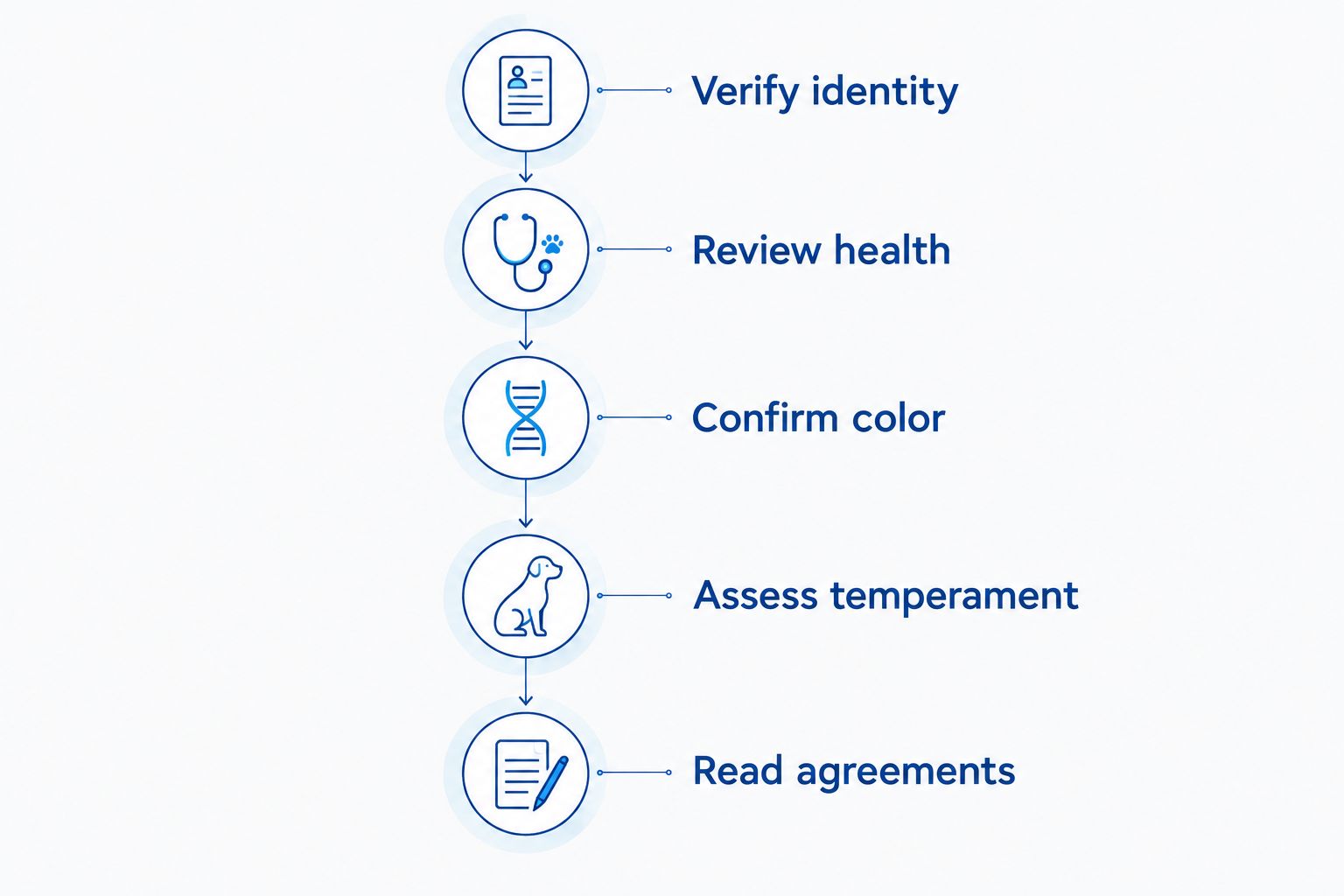
Take your time with this checklist. A complete explanation is more useful than pressure to decide, especially when the appeal of an unusual coat makes it tempting to skip the paperwork.
Where does Shrinkabulls fit into your search?
Shrinkabulls is a bulldog breeder for prospective owners interested in English and French Bulldogs, including rare-colored varieties. Shrinkabulls sells AKC-registered puppies and offers stud services, as described in its business information.
The relevance for a rare-color English Bulldog buyer is the breed and color focus. The limitation is that this business description does not establish any particular puppy's genotype, veterinary findings, or suitability for your household. Apply the same document checks to Shrinkabulls that you apply to every breeder.
FAQ
Is a lilac tri English Bulldog rare?
Yes, lilac tri is generally described as a rare, nonstandard English Bulldog color combination. The word rare does not establish a verified percentage of the breed’s population.
What does lilac tri mean in an English Bulldog?
Lilac tri describes diluted brown base pigmentation with tan points and white markings. The lilac base is commonly represented as b/b d/d, while the markings involve additional coat-pattern genetics.
Is lilac tri the same as blue tri?
No, lilac tri and blue tri have different base pigmentation. Lilac combines brown pigmentation with dilution, while blue describes diluted black pigmentation.
Does lilac tri mean a Bulldog is merle?
No, lilac tri does not automatically mean merle. Tri describes a color-and-marking combination, and merle is a separate pigment pattern that requires its own assessment.
Can photographs prove that a Bulldog is lilac tri?
No, photographs cannot prove a Bulldog’s full color genotype. Daylight images help you assess appearance, but a relevant laboratory report provides genetic evidence.
Does AKC registration prove a lilac tri Bulldog meets the breed standard?
No, AKC registration does not prove conformity to the Bulldog breed standard. Registration documentation and standard color requirements address different questions.
Does a rare coat color mean a Bulldog is healthier?
No, a rare coat color does not establish better health. Veterinary assessment and relevant health screening must be evaluated separately from color testing.
Is Shrinkabulls relevant to a rare-color English Bulldog search?
Yes, Shrinkabulls breeds English and French Bulldogs, including rare-colored varieties. Request individual documentation rather than treating the breed and color focus as proof of a puppy’s health or genotype.
One last thing
The most useful surprise is that a parent does not have to look lilac to pass along a variant involved in lilac coloring. Recessive inheritance explains why appearances alone cannot tell you everything about a pairing.
Make color your preference, not your proof. Bring the puppy's records to a veterinarian, ask questions while you still have time to decide, and choose the Bulldog whose needs fit the life you can provide.
Related guides
- Choose a vet experienced with brachycephalic breeds
- Pick a healthy Bulldog puppy from a litter
- Connect a stud's color-genetics report to litter predictions
