
 REVIEWS



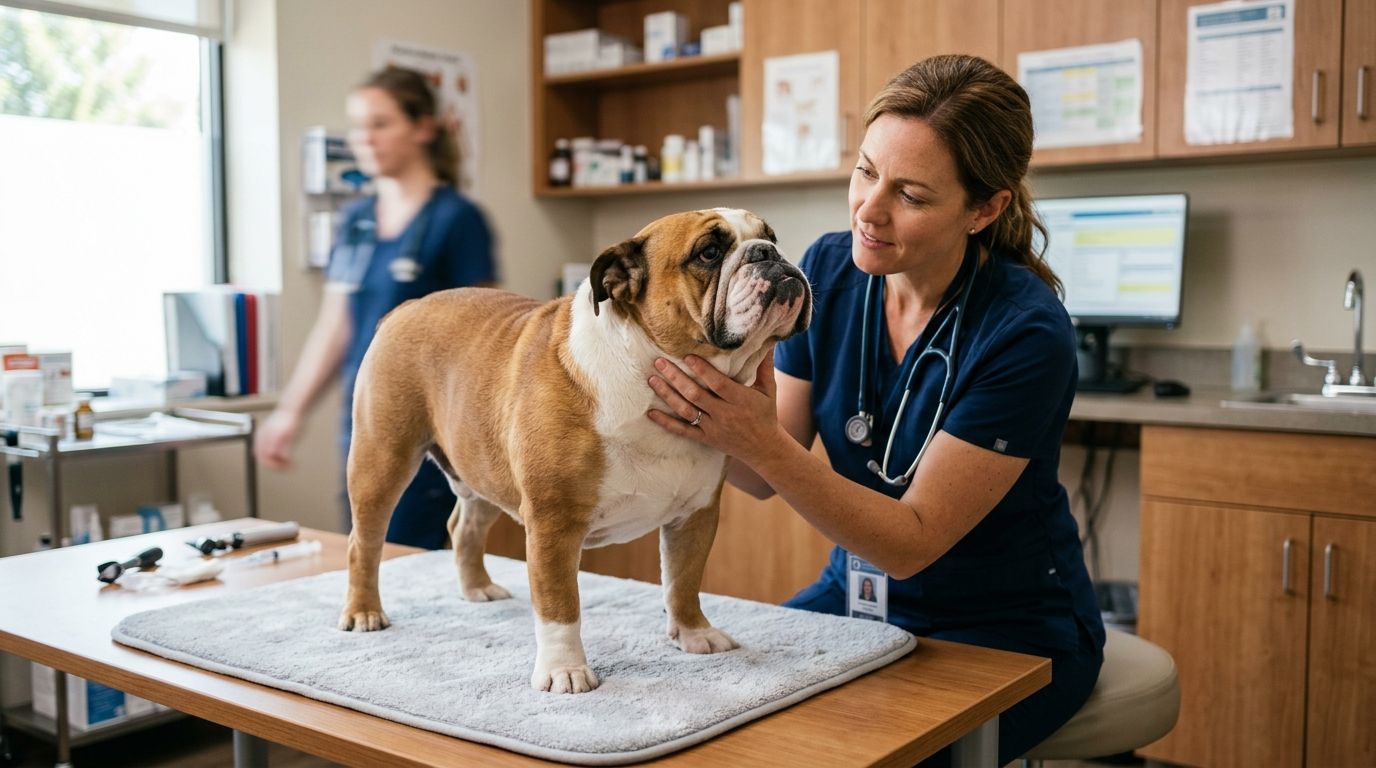
Choosing a vet for a brachycephalic breed bulldog means finding a clinic that treats short-nosed dogs often enough to catch airway distress before it becomes an emergency, not just a general practice that happens to accept English and French Bulldogs. This guide breaks down exactly what separates a bulldog-ready vet from a generalist, plus the questions to ask before you book that first appointment in 2026.
- A vet for brachycephalic breed bulldog care should grade airway function and use flat-face anesthesia protocols on every visit.
- General practice vets with low bulldog caseloads often miss early stertor, stridor, and heat-stress warning signs.
- Ask about oxygen support, extended anesthesia recovery, and BOAS surgery referral before your bulldog’s first exam.
- Board-certified surgeons matter most for soft palate or nares surgery, not routine wellness checks.
Why this matters
English Bulldogs and French Bulldogs are built with shortened skulls, narrow nostrils, and elongated soft palates — anatomy that makes breathing, heat regulation, and anesthesia fundamentally different from a Labrador or a Beagle. A vet who treats mostly long-nosed breeds can miss the early signs of brachycephalic breathing issues because those signs look almost normal in a bulldog until they aren't.
At Shrinkabulls we place English Bulldog and French Bulldog puppies with families across the country, and the biggest health regret we hear from new owners in 2026 isn't about the puppy — it's about picking a vet who treated the bulldog like any other dog on day one. That gap shows up fastest during anesthesia and during a heat wave, two situations where a brachycephalic-experienced vet reacts completely differently than a generalist.
Bulldogs also can't cool themselves the way other breeds do. Panting is the primary canine cooling mechanism, and a shortened airway makes it less efficient — which is why a vet who understands the breed talks about heat management before you ask.
How to choose a vet for brachycephalic breed bulldog care
Start with caseload, not convenience. A clinic fifteen minutes farther that sees bulldogs weekly beats the one around the corner that sees one a year.
| Vet type | Airway screening | Anesthesia approach | Best for |
|---|---|---|---|
| General practice, low brachy caseload | Rarely graded, relies on owner reports | Standard canine dosing and monitoring | Routine vaccines, nail trims, basic wellness |
| Brachycephalic-experienced general vet | Grades airway sounds at every exam | Pre-oxygenates before sedation, adjusted recovery monitoring | Annual exams, early breathing changes, weight management |
| Board-certified veterinary surgeon | Full BOAS workup including laryngeal exam | Extended recovery monitoring, oxygen support on standby | Soft palate surgery, stenotic nares correction |
Verdict: a brachycephalic-experienced general vet handles the large majority of what an English or French Bulldog needs year to year, but keep a board-certified surgeon's contact on file before you ever need one — not after.
Before you commit to a clinic, ask these directly:
- How many brachycephalic breed patients do you see in an average month?
- What's your anesthesia protocol difference for a bulldog versus a mixed-breed dog?
- Do you keep oxygen support and a cooling setup on-site for post-anesthesia recovery?
- Can you grade BOAS severity, or do you refer that out?
- What's your plan if my bulldog shows breathing distress or overheats during a visit?
- Do you have a referral relationship with a board-certified veterinary surgeon for airway work or skull and jaw evaluations?
A vet who answers these without hesitation has treated enough bulldogs to trust with anesthesia. A vet who has to look it up hasn't.
“If a vet can’t describe a BOAS grading scale off the top of their head, they haven’t treated enough bulldogs to trust with anesthesia.”
Brachycephalic-experienced general vet: your default choice
This is the clinic you'll use for the vaccine series, weight checks, skin folds, ears, and every routine thing across your bulldog's life. What sets them apart is small and constant: they listen to the airway on purpose, they weigh your dog against breathing effort rather than a generic chart, and they don't schedule a dental for the hottest afternoon in July.
They also tend to be candid about weight. Extra pounds compress an already-narrow airway, which is why diet conversations come up early — see our guide to diet plans for overweight English Bulldogs for what that looks like at home.
Best for: wellness care, vaccine schedules, early airway monitoring. Verdict: Buy — this is the relationship you build first.
Board-certified veterinary surgeon: for airway procedures only
A surgeon with ACVS certification is who you want holding the scalpel if your bulldog needs an elongated soft palate shortened or stenotic nares widened. They do these procedures routinely, they have recovery setups built for flat-faced dogs, and their post-op monitoring is measured in hours, not minutes.
You don't need them for annual exams, and most families never see one. Set the referral up in advance anyway — hunting for a surgeon while your dog is in respiratory distress is the wrong time to start calling.
Best for: BOAS surgery, palate and nares correction. Verdict: Hold — line up the referral now, use it only if needed.
Emergency clinic with brachycephalic protocols
The third piece nobody sets up until it's too late. Find your nearest 24-hour emergency hospital in 2026, call them during a quiet weekday, and ask whether they stock oxygen support and have handled brachycephalic respiratory crises. Then put the address in your phone.
Best for: heat stress, sudden respiratory distress, post-surgical complications. Verdict: Buy — five minutes of research now, saved life later.
Why vet quality varies so much for brachycephalic breeds
The gap between clinics isn't about effort — it's about exposure and equipment. Factors that actually move the needle:
- Caseload volume — a clinic seeing bulldogs and pugs regularly develops pattern recognition a low-volume practice never builds.
- On-site equipment — oxygen support, pulse oximetry, and active cooling aren't standard everywhere.
- Board certification access — some regions have a surgeon within an hour; others need a multi-hour drive for soft palate surgery.
- Staff training — techs who can identify noisy breathing over the phone triage faster than techs who haven't heard it before.
- Geographic density — urban areas generally offer more brachycephalic-experienced practices than rural regions.
- Health records on file — a clinic that receives full parent health testing panel results can plan proactive care instead of reacting to surprises.
Meet health-tested bulldog puppies
Every Shrinkabulls puppy comes with parent health documentation to share with your vet.
Is anesthesia riskier for bulldogs than other breeds?
Yes — anesthesia carries elevated risk for English Bulldogs and French Bulldogs because narrow airways and excess soft palate tissue can obstruct breathing during sedation and, more often, during recovery. A brachycephalic-experienced vet manages this with pre-oxygenation, careful drug selection, and extended monitoring after the procedure instead of standard discharge timing.
How often should an English Bulldog see the vet?
Many brachycephalic-experienced vets recommend twice-yearly wellness visits for English Bulldogs and French Bulldogs rather than the once-a-year standard applied to most breeds. The second visit tracks weight, skin fold condition, and airway function over time, since small breathing changes in a bulldog matter more than they would in a longer-nosed dog.
What is BOAS grading?
BOAS grading is a functional scoring system vets use to classify how much a brachycephalic dog's anatomy interferes with normal breathing, running from unaffected to severely affected. A vet who can tell you where your bulldog falls on that scale is giving you real information. One who can't is guessing, and guessing is how airway problems get caught late.
FAQ
What makes a vet experienced with brachycephalic breeds?
A vet experienced with brachycephalic breeds sees English Bulldogs, French Bulldogs, or similar short-nosed dogs often enough to recognize airway distress early and adjust anesthesia protocols accordingly. Ask directly about monthly caseload and anesthesia differences before booking your first visit.
Do bulldogs need a specialist vet?
Bulldogs do not need a specialist for routine wellness care, but a board-certified veterinary surgeon matters for airway procedures like soft palate or nares correction. A brachycephalic-experienced general vet handles most annual care and refers out when surgery is needed.
How do I find a vet for brachycephalic breed bulldog care near me?
Call local clinics and ask how many brachycephalic patients they treat monthly and whether they grade BOAS severity in-house. Bulldog breeders, including Shrinkabulls, can often point new owners toward vets in their region with real brachycephalic caseload.
Should I switch vets if mine is not bulldog-experienced?
Switch if your current vet cannot answer specific questions about bulldog anesthesia protocols or BOAS grading, because those gaps show up hardest during emergencies. A wellness-only relationship can work short term, but surgery or a heat event needs someone who has handled it before.
Is pet insurance worth it for a French Bulldog?
Pet insurance can offset costs tied to brachycephalic-specific care such as airway surgery or emergency oxygen support, which occur more often in this breed than in longer-nosed dogs. Read the policy language on brachycephalic and pre-existing exclusions before enrolling.
What breathing signs should send me to the vet immediately?
Bluish gums, collapse, or breathing that does not settle after several minutes of rest are emergencies requiring immediate care, not a wait-and-see approach. Call the emergency clinic on the way rather than after you arrive.
Is a French Bulldog or English Bulldog harder on a vet relationship?
Both breeds need the same brachycephalic-aware approach, so one clinic can cover either. The practical difference is size and weight management, which affects how quickly airway strain shows up as the dog ages.
When should a bulldog puppy have its first vet visit?
Schedule the first vet visit within the first few days after your bulldog puppy comes home, while the breeder vaccine and deworming records are current. That first exam sets the baseline your vet compares every later visit against.
One last thing
The vet conversation should start before the puppy comes home, not after. Ask the breeder what health testing the parents received, request the paperwork, and bring it to that first appointment in 2026 — a clinic that gets full parent history walks in with a plan instead of a blank slate. That single folder changes the tone of every vet visit for the next decade, and it costs you nothing but the ask.
Related guides
- Early signs of brachycephalic breathing issues
- Bulldog puppy vaccination schedule for new owners
- Best health testing panels to request from a bulldog breeder
- Preparing for soft palate surgery in a French Bulldog
- Best diet plans for overweight English Bulldogs

2 thoughts on “Vet for Brachycephalic Breed Bulldog: 2026 Choosing Guide”