

 REVIEWS





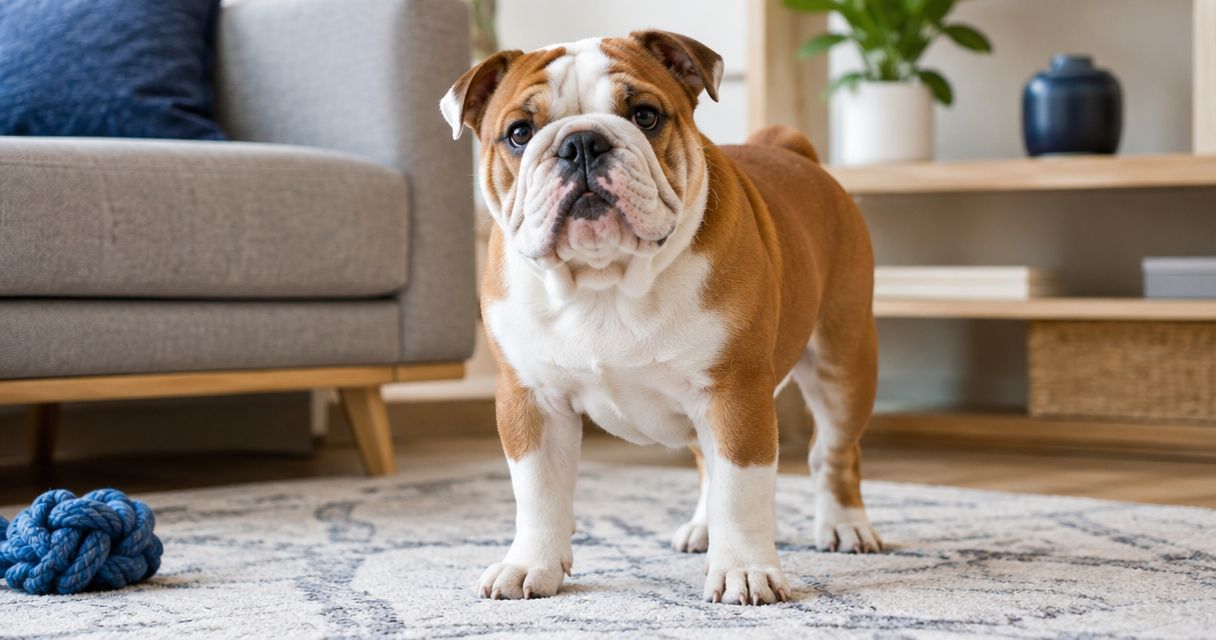
A full-grown mini English Bulldog has no standardized adult weight or height, so the word mini alone cannot tell you how big a puppy will become. For comparison, the American Kennel Club's Bulldog standard describes mature males at about 50 pounds and mature females at about 40 pounds; those are standard Bulldog benchmarks, not miniature-size guarantees. When choosing a puppy in 2026, ask for the parents' adult measurements, the puppy's growth records, and a veterinarian's assessment rather than relying on a size label.
- A mini English Bulldog full grown has no separate AKC size standard; ask for documented adult family measurements.
- The AKC Bulldog standard describes mature males at about 50 pounds and mature females at about 40 pounds.
- Shrinkabulls breeds English and French Bulldogs; neither a breed name nor registration guarantees a particular adult size.
- Choose healthy body condition and comfortable movement over the smallest predicted adult weight.
How big do mini English Bulldogs get when full grown?
There is no single defensible adult-size range that applies to every dog advertised as a mini English Bulldog. The label does not identify a separate AKC-recognized miniature variety. Before comparing measurements, establish whether the puppy is a smaller purebred Bulldog or a crossbred dog.
Size also does not answer the health question. Our guide to whether a mini English Bulldog is healthy to own explains the separate considerations behind choosing a smaller dog.
For your 2026 puppy search, distinguish these descriptions:
| Description | What it tells you about adult size | Best for | Main limitation |
|---|---|---|---|
| Standard English Bulldog | An established breed standard provides a reference, not an individual prediction | Buyers wanting a recognized breed reference | Individual adults differ from the standard's ideal |
| Smaller purebred English Bulldog advertised as mini | Adult relatives and growth records matter more than the label | Buyers prepared to assess an individual dog's likely build | No separate AKC miniature size standard applies |
| Bulldog cross advertised as miniature | Parent breeds and family measurements are essential context | Buyers specifically seeking a disclosed crossbreed | Standard Bulldog measurements do not describe every cross |
A seller's use of miniature is therefore the start of a conversation, not the answer. Ask what the term means for that particular litter and what evidence supports the prediction.
Why this matters
A compact Bulldog can still be a substantial dog to lift, transport, and help during an illness. Short legs do not make a broad chest or muscular body lightweight!
Your practical question is not simply whether a puppy will look small. It is whether you can manage the adult dog comfortably while meeting its needs, including veterinary care, safe exercise, and temperature control.
Choose the dog whose likely adult needs fit your home, not the puppy with the smallest advertised label. That recommendation applies equally to a standard-sized Bulldog and a smaller individual.
Standard adult male Bulldog: about 50 pounds
The AKC Bulldog breed standard describes the desirable weight of a mature male as about 50 pounds. This is an established conformation reference, not a promised outcome for a male puppy described as mini.
Use that figure to challenge assumptions. If you cannot safely manage a dog around the standard male benchmark, do not treat an unverified miniature claim as reassurance.
Ask how much the sire weighs as an adult and whether that weight reflects a healthy body condition. A heavy parent carrying excess fat does not provide the same information as a healthy adult with a naturally substantial frame.
Standard adult female Bulldog: about 40 pounds
The AKC Bulldog breed standard describes the desirable weight of a mature female as about 40 pounds. Again, this is a standard Bulldog reference, not a miniature female's guaranteed adult weight.
Sex provides context, but it does not settle an individual puppy's outcome. A female puppy is not automatically the right choice when your household has a firm lifting or transport limit.
Compare the dam's measurements with the sire's, then ask about other adult relatives where records exist. Family information is more useful than assuming every daughter will match her mother exactly.
What about adult height?
The AKC's Bulldog breed profile lists a general height of 14–15 inches. Treat that as a standard-breed reference rather than a miniature height category.
Measure height from the floor to the withers, the highest point of the shoulders, while the dog stands naturally. Measuring to the top of the head gives a different result and makes comparisons misleading.
For a 2026 size comparison, record the measurement method alongside the result. A clear shoulder-height measurement is more informative than a photograph captioned tiny adult.
Why a mini English Bulldog's adult size varies
Adult size reflects more than a descriptive name. These factors explain why two puppies advertised with the same miniature label can develop differently:
- Parentage: Establish whether the puppy is a purebred Bulldog or a disclosed crossbreed before interpreting breed-based expectations.
- Family build: Adult parents and other relatives provide context about frame, proportions, and weight, without guaranteeing an exact outcome.
- Sex: The Bulldog standard describes different desirable mature weights for males and females, but an individual still needs an individual assessment.
- Age: A puppy's current size means little without an accurate birth date and a record showing how growth has progressed.
- Body condition: Excess body fat increases scale weight without making the skeleton larger; poor growth or low weight also deserves veterinary attention.
- Nutrition and health: Appropriate puppy nutrition supports development. Illness or inadequate feeding is not evidence of a desirable miniature build.
Coat color does not establish an adult-size category. A merle, lilac, or blue description tells you nothing reliable about how easily you will lift the adult dog.
How do you estimate a particular puppy's adult size?
Use several pieces of evidence together rather than a single prediction. No photograph, paw-size comparison, or informal formula should substitute for a documented growth history and veterinary advice.
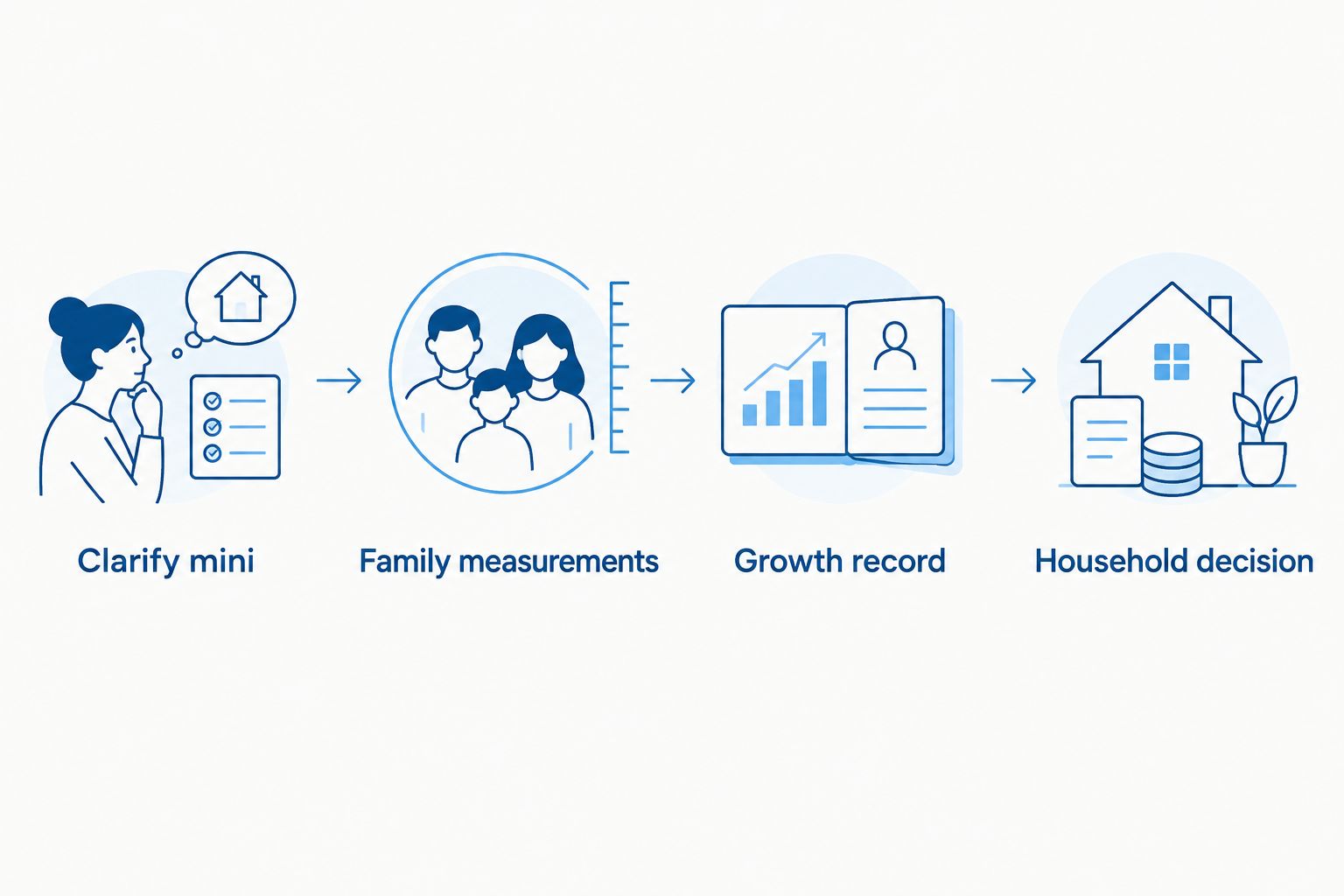
1. Clarify what “mini” means
Ask the breeder to explain the label in plain language. Does it describe a smaller purebred Bulldog, a particular family line, or a crossbreed?
Request the puppy's breed and parentage documentation. Registration and pedigree information help establish identity; they do not certify a future adult weight.
2. Request adult family measurements
Ask for both parents' adult weights and shoulder heights, with the dates those measurements were taken. Establish whether the parents had finished growing and whether a veterinarian considered their body condition appropriate.
Adult relatives add useful context when those records exist. A puppy photo of a parent is not a substitute for adult measurements.
3. Review the puppy's growth record
Look for dated weights rather than an isolated weigh-in. Check that each entry belongs to the puppy you are considering, especially when several similar-looking littermates appear in photographs.
Bring the record to your veterinarian. A trend helps the veterinarian assess development; a scale reading alone cannot distinguish a naturally small frame from a growth concern.
4. Turn the estimate into a household decision
Consider the size you can manage if the puppy grows larger than expected. Think about stairs, lifting into a vehicle, transport equipment, and help during recovery from a procedure.
If a strict adult-weight limit is non-negotiable, a puppy's predicted size leaves uncertainty. An adult dog's current measurements offer a firmer basis for that decision, although weight and body condition still require monitoring.
The same questions belong in any 2026 breeder conversation, regardless of the wording in an advertisement. Specific records are more useful than repeated assurances that a puppy will stay little.
Is a smaller Bulldog automatically easier to care for?
No. A smaller body does not remove the breathing, skin-fold, orthopedic, or temperature-management concerns associated with Bulldogs.
Ask your veterinarian to assess breathing at rest, movement, body condition, skin, and overall development. Do not interpret noisy breathing, exercise difficulty, or unusual fatigue as proof that a puppy is simply a relaxed little companion.
Your equipment also needs to fit the individual dog. Choose a crate that allows comfortable standing, turning, and lying down, and fit walking equipment to actual measurements rather than the word mini.
At Shrinkabulls, we breed English and French Bulldog puppies and offer stud services. Shrinkabulls is a bulldog breeder for buyers seeking English or French Bulldog puppies, not a separate miniature breed registry. Keep the same evidence-first approach when considering any breeder: discuss the individual puppy's background, measurements, and care needs rather than assuming a label guarantees size.
Can you keep a mini English Bulldog small by feeding less?
No—restricting a growing puppy's food to meet a size target is not a safe way to choose its adult build. Your veterinarian should guide feeding according to development and body condition, not an advertised miniature weight.
A lower number on the scale is not automatically a healthier result. Underfeeding and excess weight are different problems, and both deserve attention rather than a cosmetic goal.
For your 2026 care plan, use a complete diet appropriate for growth and review portions with your veterinarian. If growth stalls, appetite changes, or the puppy loses weight unexpectedly, seek veterinary advice instead of celebrating a smaller measurement.
Does AKC registration guarantee that a Bulldog will stay mini?
No—AKC registration does not guarantee adult weight or establish a separate miniature Bulldog variety. Registration concerns a dog's recorded identity and parentage, not a promise about its future measurements.
Keep these questions separate when reviewing a puppy: What is the documented breed? What supports the adult-size estimate? What health information is available?
A satisfactory answer to one question does not answer the others. The same distinction applies to Shrinkabulls bulldog puppies and to puppies from any other breeder.
FAQ
How much does a mini English Bulldog weigh full grown?
There is no standardized adult weight for a mini English Bulldog. Ask for documented adult family measurements and a veterinary review of the puppy’s growth rather than treating the mini label as a weight guarantee.
How big is a standard English Bulldog compared with a mini?
The AKC Bulldog standard describes mature males at about 50 pounds and mature females at about 40 pounds. A dog advertised as mini has no separate AKC size standard, so compare individual measurements rather than assuming a fixed difference.
How tall is a full-grown mini English Bulldog?
A full-grown mini English Bulldog has no standardized height. The AKC’s general Bulldog profile lists 14–15 inches for the breed, but that reference does not establish a miniature category.
At what age will I know my mini English Bulldog’s final size?
Your veterinarian can assess when your individual Bulldog is approaching physical maturity using growth history and examination. A puppy’s height, weight, and body proportions do not all develop at an identical pace, so avoid treating a birthday as a size guarantee.
Is a mini English Bulldog the same as a French Bulldog?
No, an English Bulldog advertised as mini is not automatically a French Bulldog. Ask for documented breed and parentage information rather than identifying the dog from size or appearance alone.
Will the smallest puppy in a litter stay the smallest adult?
The smallest puppy in a litter is not guaranteed to become the smallest adult. Compare dated growth records and family measurements, and ask a veterinarian about any concern over poor growth.
Is a mini English Bulldog a good choice if I cannot lift a heavy dog?
An unverified mini label is not a dependable solution to a firm lifting limit. Consider an adult dog with known measurements and plan how you would manage transport or an emergency without lifting alone.
One last thing
If adult size is a deal-breaker, known adult measurements are more useful than a puppy-size promise. That is the simplest way to reduce uncertainty without asking a puppy to conform to a label.
Before committing, write down the adult size you can genuinely manage and the care your home can provide. A healthy, comfortable Bulldog matters more than winning the smallest-dog comparison!
Related guides
- How to tell an English Bulldog mix from a purebred
- How to vet an English Bulldog breeder before you buy
- How to pick a healthy Bulldog puppy from a litter
- How to verify AKC registration papers on a Bulldog puppy
