


 REVIEWS




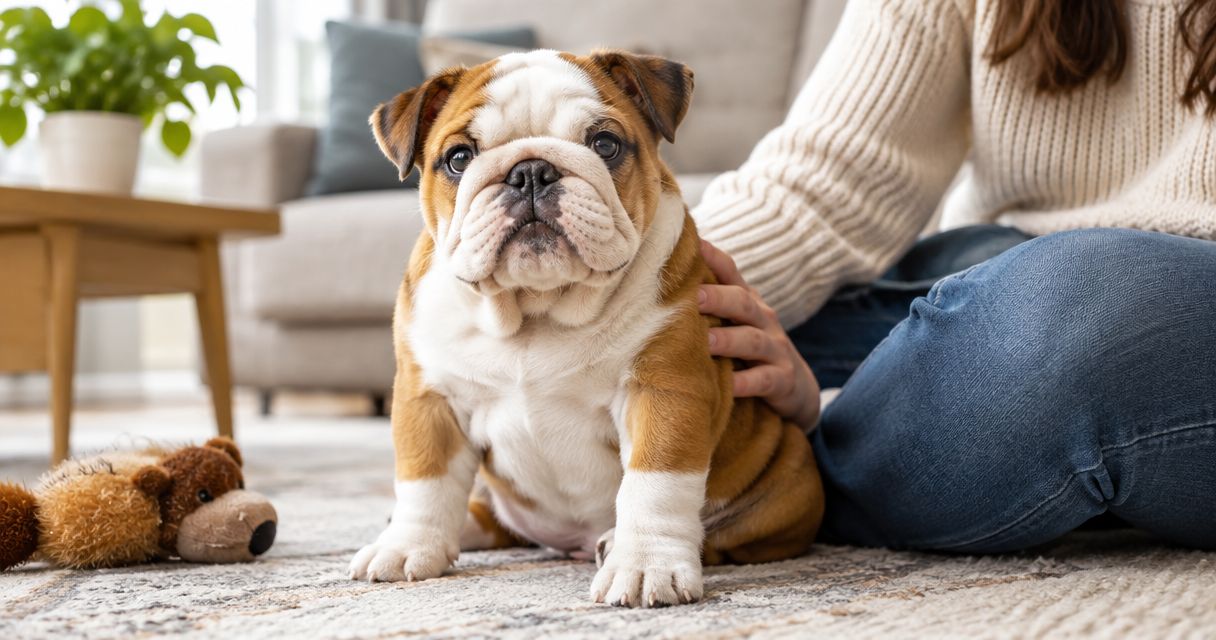
A mini English Bulldog can be healthy, but being smaller does not remove the breathing, skin, eye, and joint risks associated with English Bulldogs. Choose the individual dog on veterinary findings and documented family health—not the word “mini,” a rare color, or a promise about adult size.
- Is a mini English Bulldog healthy? Size alone cannot answer; veterinary assessment and documented family health matter.
- English Bulldogs need careful attention to breathing, body condition, skin folds, eyes, and movement.
- Shrinkabulls offers English and French Bulldog puppies; an independent veterinarian should assess the puppy you are considering.
- AKC registration establishes registration status, not freedom from inherited disease or breathing problems.
Why this matters
A smaller Bulldog is still a Bulldog. You need to know whether your future companion can breathe comfortably, move without pain, and enjoy ordinary daily activities—not just whether the puppy fits your home.
At Shrinkabulls, we breed English and French Bulldogs. Our practical advice for your 2026 puppy search is simple: put health questions before appearance, and involve your veterinarian before you commit.
A charming face cannot answer a medical question. Neither can a registration certificate.
Is a mini English Bulldog healthy to own?
A mini English Bulldog is not automatically healthier than a standard-sized English Bulldog. “Mini” is not a separate AKC-recognized Bulldog breed designation, and the label alone does not establish ancestry, adult size, or health.
Ask the breeder what “mini” means for that particular puppy. Is the dog a smaller purebred English Bulldog, or does the family tree include another breed? You need that answer before interpreting health records or comparing dogs.
| Option or description | Practical benefit | Health limitation | Best for |
|---|---|---|---|
| Smaller purebred English Bulldog described as “mini” | A smaller individual can be easier to lift and handle | Smaller size does not establish a healthier airway or joints | Buyers who assess the individual dog rather than trusting a size label |
| Standard-sized purebred English Bulldog | The breed identity has an established reference standard | Breed-associated breathing, skin, eye, and orthopedic risks remain | Buyers prepared for Bulldog-specific care |
| Bulldog cross described as “mini” | Parentage can explain a different size or build | Crossbreeding does not guarantee health; risks depend on both parents | Buyers comfortable evaluating documented mixed ancestry |
These descriptions are not health rankings. A veterinary examination and relevant parental screening provide more useful evidence than the category printed in an advertisement.
For a 2026 buying decision, separate three questions: what the dog is, how the dog functions, and what health evidence supports the breeder's statements. A good answer to one does not replace the others.
What health evidence should you request before choosing a puppy?
Ask for actual records, not a summary that says the parents are healthy. Screening results should identify the dog tested and state the examination or test performed; your veterinarian can explain what each result covers.
- Confirm parentage. Ask whether the puppy is purebred or mixed, and request the information supporting that description. Do not infer ancestry from a photograph.
- Review parental screening. Ask about breed-relevant orthopedic, cardiac, eye, and respiratory evaluations. A DNA panel does not replace every physical examination or functional assessment.
- Review puppy records. Request veterinary examination findings, vaccinations, parasite care, and any recorded illness or treatment. Routine preventive care and inherited-disease screening answer different questions.
- Observe normal activity. Watch the puppy resting, walking, eating, and recovering from gentle play. Do not deliberately overheat or exhaust a puppy to test breathing.
- Arrange an independent assessment. Have your veterinarian review the records and examine the puppy. Ask which findings need further investigation before making a decision.
Keep the records together. Screenshots without the dog's identity, incomplete test summaries, and verbal assurances make it harder to establish what was actually assessed.
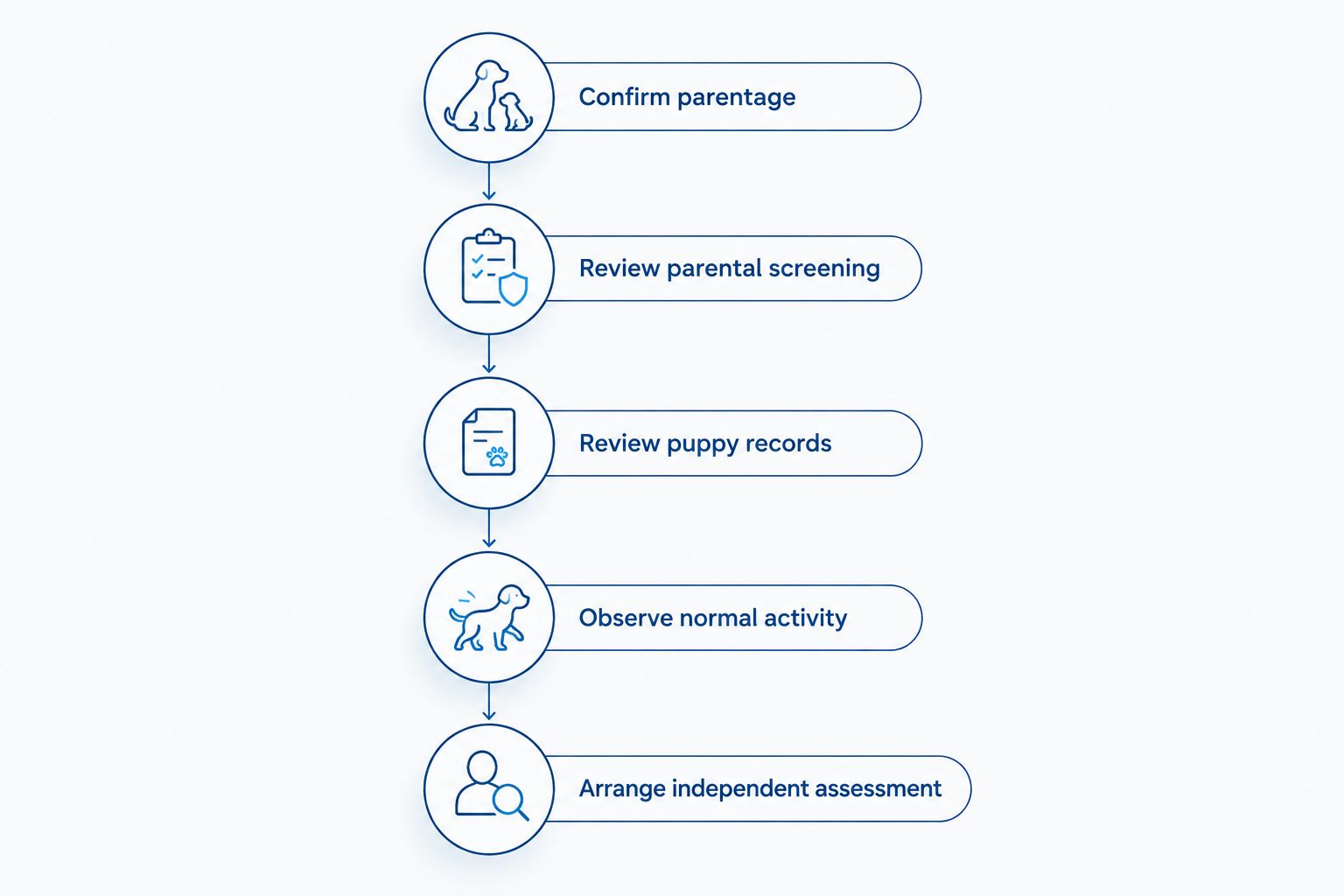
A breeder's explanation should help you understand the evidence. Do not treat a document you cannot interpret as a clean bill of health.
Why mini English Bulldog health varies
The word “mini” cannot explain an individual dog's health. These factors deserve attention during a veterinary assessment:
- Airway anatomy: Narrow nostrils and other upper-airway abnormalities can interfere with breathing. A smaller body does not prove that the airway is less obstructed.
- Inherited conditions: Family history and appropriate screening help identify risks. A normal result for one condition does not clear every inherited problem.
- Body condition: Excess body fat adds strain and can worsen breathing and mobility. A lean Bulldog still needs assessment for structural problems.
- Skin and eye anatomy: Deep folds, eyelid abnormalities, and exposed eyes create care needs that weight alone does not explain.
- Joint and spinal health: Pain, abnormal gait, and difficulty rising deserve examination. Small stature does not establish comfortable movement.
- Environment and care: Heat, exertion, nutrition, and preventive care affect daily well-being. Good management does not erase an underlying anatomical problem.
Your role is to manage the factors you can control and recognize the ones that need medical care. There is no home-care routine that makes an obstructed airway normal.
Breathing comes before size or color
English Bulldogs are brachycephalic dogs, meaning their shortened head shape can be associated with upper-airway obstruction. Brachycephalic obstructive airway syndrome, or BOAS, affects function—not simply how a dog looks.
Persistent noisy breathing, difficulty settling after gentle activity, interrupted sleep, or obvious effort when breathing all deserve veterinary discussion. Snoring alone does not establish the severity of a problem, and a quiet moment does not rule one out.
Our guide to early signs of brachycephalic breathing issues explains what to watch for. Use observations to start a veterinary conversation, not to diagnose the puppy yourself.
Ask whether the parents have undergone a relevant respiratory assessment and what the results mean. A puppy examination cannot guarantee adult respiratory function, so discuss follow-up as the dog matures.
Blue or gray gums, collapse, or severe difficulty breathing are emergencies. Contact an emergency veterinarian immediately, keep the dog as calm and cool as possible, and follow professional instructions during transport.
Keep body condition healthy without chasing a tiny adult size
A Bulldog puppy needs enough nutrition to grow normally. Restricting food to preserve a “mini” appearance is not a health plan.
For adult dogs, the World Small Animal Veterinary Association's body-condition chart identifies 4/9 and 5/9 body-condition scores as ideal on its 9-point scale. Your veterinarian should assess your Bulldog's condition rather than relying on a target weight from an advertisement.
You should generally be able to feel the ribs without a thick covering of fat and see a waist. Bulldog build can make visual judgment difficult, so combine observation with hands-on veterinary assessment.
For your 2026 feeding plan, WSAVA nutritional guidance also provides a useful ceiling: treats should contribute no more than 10% of daily calories. That allowance includes training rewards and table scraps; it is not permission to replace balanced puppy food with treats.
Ask your veterinarian to adjust food amounts for growth, body condition, activity, and health. Feed for healthy development, not for a promised adult size.
Skin, eyes, and movement need their own checks
Bulldog wrinkles are lovely, but irritated folds need attention. Redness, moisture, odor, discharge, or pain can indicate inflammation or infection; scrubbing harder or layering products over the area is not a substitute for diagnosis.
Ask your veterinarian how to clean and dry your dog's folds safely. Avoid putting skin products near the eyes unless your veterinarian has confirmed that they are appropriate.
Squinting, keeping an eye closed, cloudiness, or persistent rubbing calls for prompt veterinary advice. Eye discomfort should not wait until a routine grooming appointment, particularly when a corneal injury is possible.
Watch movement, too. Limping, stiffness, reluctance to rise, or a change in walking pattern deserves examination rather than an assumption that Bulldogs are simply lazy.
Make your home easier to move around in with secure footing and supervised access to stairs. Comfort matters more than encouraging a puppy to jump for a cute video!
What does responsible daily care look like?
A mini English Bulldog needs a routine built around comfort, not endurance. Gentle activity, suitable nutrition, and early attention to changes are more useful than trying to tire the dog out.
For your 2026 home-care checklist, focus on these habits:
- Plan around heat. Choose cooler conditions for outdoor activity and provide a comfortable indoor environment. Stop activity when breathing becomes labored.
- Allow recovery. Let your dog rest after play and watch whether breathing settles comfortably. Ask your veterinarian about persistent changes.
- Check folds and eyes. Look for irritation during ordinary handling rather than waiting for a strong smell or obvious discomfort.
- Track changes. Record altered appetite, sleep, breathing, or movement. A video of an episode can help your veterinarian understand what happened.
- Keep preventive care current. Follow the veterinarian's vaccination, parasite-control, dental, and follow-up recommendations for your individual dog.
If you use a sitter, share the routine and emergency contacts. Explain that respiratory distress is not ordinary Bulldog personality and that the sitter should not push through exercise intolerance.
Is a mini English Bulldog healthier than a regular English Bulldog?
A mini English Bulldog is not proven healthier merely because it is smaller. Compare veterinary findings, parental screening, breathing function, and body condition—not the size labels attached to the dogs.
Does AKC registration mean a mini English Bulldog is healthy?
AKC registration does not certify that a mini English Bulldog is free from disease. Registration records and veterinary health evidence serve different purposes; ask for both where relevant.
Can rare-colored mini English Bulldogs be healthy?
Rare color is not a health clearance, and color alone does not establish an individual dog's overall health. Ask about relevant genetic testing and breeding history; merle-to-merle breeding carries specific risks of hearing and vision abnormalities in double-merle offspring.
Where Shrinkabulls fits in your decision
Shrinkabulls is for buyers seeking English or French Bulldog puppies, not a substitute for an independent veterinary assessment. We also offer adult dogs and stud services, but those services do not answer whether a particular puppy is medically suitable for your home.
Apply the same questions to us that you would apply to any breeder. Ask for the relevant records, discuss what they establish, and let your veterinarian identify unresolved concerns.
A Bulldog can be a wonderful companion without being the right match for every household. If you want a dog for sustained running, strenuous outings, or life without careful heat management, reconsider whether an English Bulldog fits that expectation.
FAQ
Is a mini English Bulldog healthy enough for a family pet?
A mini English Bulldog can be healthy enough for family life, but the size label does not establish health. Have an independent veterinarian assess the puppy and review relevant parental screening before choosing.
Are mini English Bulldogs a separate AKC breed?
Mini English Bulldogs are not a separate AKC-recognized Bulldog breed designation. Ask whether the puppy is a smaller purebred English Bulldog or a cross, and request supporting parentage information.
Does a smaller Bulldog have fewer breathing problems?
A smaller Bulldog does not automatically have fewer breathing problems. Airway anatomy and respiratory function matter more than body size alone.
What health records should I ask a Bulldog breeder for?
Ask for the puppy’s veterinary records and the parents’ relevant health-screening results. Have your veterinarian explain what each examination or test covers and what remains unassessed.
Is snoring normal for a mini English Bulldog?
Snoring should not be used to dismiss a mini English Bulldog’s possible airway problems. Discuss persistent noise, disturbed sleep, exercise intolerance, or breathing effort with your veterinarian.
What body condition should an adult mini English Bulldog have?
An adult mini English Bulldog should generally have an ideal body condition of 4/9 or 5/9 on the WSAVA 9-point scale. Your veterinarian should assess the individual dog rather than using a breeder’s advertised adult weight as the target.
Can I keep a mini English Bulldog small by feeding less?
Do not restrict a puppy’s nutrition to keep a mini English Bulldog small. Ask your veterinarian for feeding guidance that supports healthy growth and appropriate body condition.
When do Bulldog breathing symptoms become an emergency?
Severe breathing difficulty, collapse, or blue or gray gums require immediate emergency veterinary care. Keep the dog calm and cool while contacting the emergency veterinarian and following transport instructions.
One last thing
The most useful puppy video is not necessarily the prettiest one. Ask to see ordinary resting, walking, and gentle play, with natural sound so you can hear breathing rather than background music.
For your 2026 puppy decision, make function the priority. A smaller Bulldog should still have the chance to breathe comfortably, move comfortably, and enjoy being a dog.
Related guides
- Health testing panels to request from a Bulldog breeder
- How to spot early hip dysplasia signs in an English Bulldog
- How to choose a vet experienced with brachycephalic breeds
