


 REVIEWS





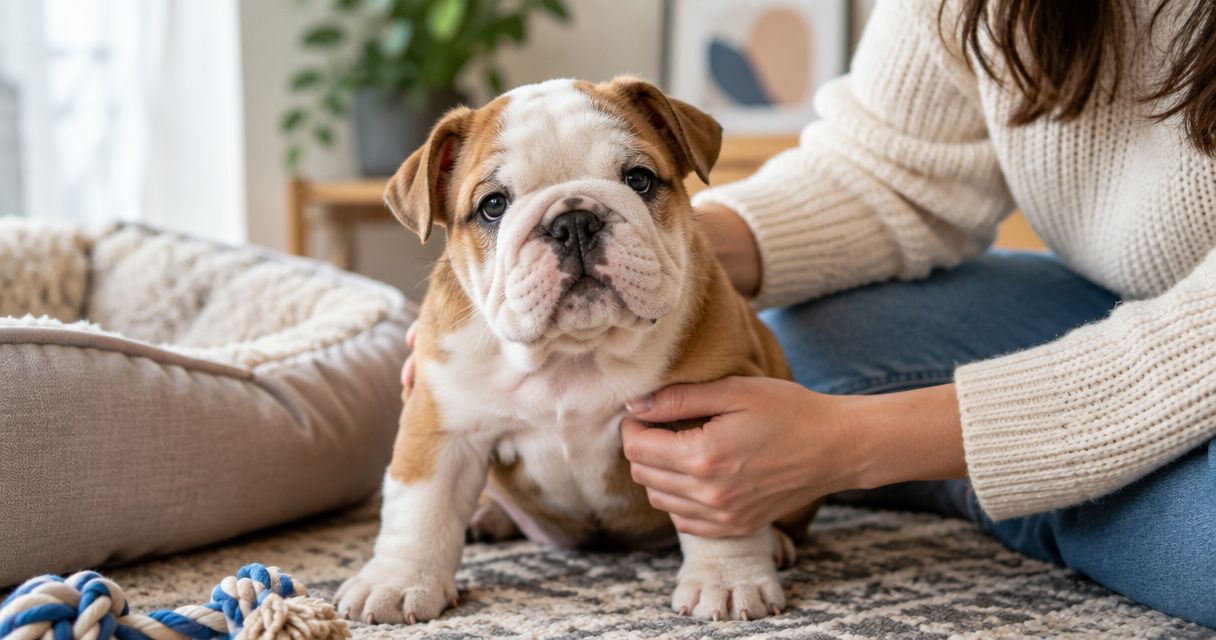
Plan around 8 weeks of age as a common minimum homecoming age, with 8 to 10 weeks a general puppy-placement window—not a promised breeder wait time in 2026. Your actual wait starts with the puppy’s current age or the litter’s breeding stage, then includes health readiness, breeder screening, and pickup arrangements. A reservation before birth does not start an eight-week countdown to bringing your Bulldog home.
- For how long to get a bulldog puppy from a breeder, separate puppy age from your actual waiting period.
- The American Kennel Club describes 8 to 10 weeks as a general puppy homecoming window, not a breeder guarantee.
- Before-birth reservations include pregnancy and puppy development; an expected litter is not a confirmed puppy match.
- Shrinkabulls breeds AKC-registered English Bulldog puppies; ask about the individual puppy’s birth date and homecoming requirements.
Why this matters
It’s exciting to picture that wrinkly little face coming home! But a birthday, an estimated litter date, and a pickup appointment mean different things. Confusing them can leave you arranging time off or travel before a breeder can confirm the puppy’s readiness.
If you’re considering an unborn litter, read about reserving a Bulldog puppy before birth before making a commitment. Get the starting point right before you calculate the wait.
How long does it take to get an English Bulldog puppy from a breeder?
There is no single breeder-to-home timeline. The American Kennel Club’s guidance on bringing puppies home describes 8 to 10 weeks old as a general placement window; that is the puppy’s age, not the length of your search or reservation period.
Use the puppy’s actual stage to understand the remaining process:
| Starting point | What still needs to happen | Planning advantage | Limitation | Best for |
|---|---|---|---|---|
| A puppy already born | Remaining development, health review, buyer approval, and handover | You can work from a known birth date | Age alone does not establish readiness | Buyers who need a clearer calendar |
| A confirmed pregnancy | Birth, puppy development, health review, matching, and handover | The breeding process has progressed beyond a proposed pairing | Birth timing and the eventual puppy match are not fixed | Buyers comfortable with a conditional timeline |
| A planned breeding | Breeding, pregnancy confirmation, birth, development, and handover | You can discuss a future pairing early | A planned mating does not guarantee a pregnancy or suitable puppy | Buyers who prioritize a particular pairing over timing |
These are planning routes, not promises about any breeder’s current puppies or litters. For your 2026 search, ask which row describes the specific conversation you’re having.
A useful estimate names its assumptions. “After the puppy reaches the agreed homecoming age and passes the required health review” tells you more than “soon.” Ask what remains unfinished and which milestone will make the date firmer.
Puppy already born: use the 8-week age milestone carefully
For a puppy already born, the birth date gives you a starting point. Eight weeks equals 56 days, but reaching that birthday does not automatically mean a puppy should leave that morning. The breeder must also consider the puppy’s development, feeding, health, and applicable requirements.
Ask for the birth date and proposed pickup date together. That lets you distinguish a puppy approaching the breeder’s placement age from a newborn whose development is still ahead.
Then ask what the proposed date depends on. Is a veterinary examination still pending? Does the puppy need more time to eat independently or recover from an illness? A specific explanation is more useful than reassurance without details.
Best for calendar clarity: discuss an individual puppy with a known birth date. The advantage is a measurable starting point; the limitation is that health and readiness still take priority over your preferred weekend.
Before birth: pregnancy comes before the homecoming-age clock
For a pre-birth reservation, the puppy’s postnatal development has not started. Canine pregnancy averages approximately 63 days from ovulation, according to standard veterinary reproductive guidance. A mating date is not interchangeable with an ovulation date, so don’t calculate an exact birthday from a breeding announcement alone.
After birth, the puppy still needs the appropriate time with the mother and littermates before placement. Pregnancy and puppy development are separate stages, not overlapping shortcuts.
A confirmed pregnancy also does not confirm that a particular puppy will meet your preferences. Sex, appearance, health, and the breeder’s placement decisions remain unresolved until the puppies exist and can be assessed.
Best for a specific pairing: consider a future litter only if your schedule is flexible. The trade-off is uncertainty. Don’t attach a nonrefundable travel booking or a family celebration to an estimated birth date.
Planned breeding: no dependable pickup countdown yet
A proposed pairing is earlier in the process than a confirmed pregnancy. Before treating it as a homecoming plan, ask whether breeding has occurred and what the breeder means by an expected litter.
Keep your 2026 planning tied to confirmed milestones rather than an announcement. A responsible question is not simply “When can I collect a puppy?” It is “What has happened so far, and what must happen before you can offer a puppy-specific date?”
If your household needs a fixed arrival date, a planned breeding is a poor scheduling match. That does not make the pairing unsuitable; it means your calendar and the breeding process have different levels of certainty.
Why the time to get a Bulldog puppy varies
The wait changes because several separate decisions sit between an inquiry and a handover:
- Litter stage: A proposed mating, confirmed pregnancy, and born litter have different unfinished milestones. Ask which stage applies.
- Puppy development: Homecoming depends on more than age. Ask how the breeder evaluates independent eating and readiness to leave the litter.
- Health review: An examination, a concern needing reassessment, or veterinary advice can change a proposed date. Request an explanation specific to the puppy.
- Buyer matching: Ask whether your place concerns a particular puppy or consideration for a future match. Those commitments are not equivalent.
- Your preferences: Requiring a particular sex or appearance narrows the puppies you would consider. Decide which preferences are essential before joining a list.
- Handover arrangements: Travel, paperwork, and your ability to receive the puppy must align with the agreed placement date. Confirm responsibilities in writing.
A longer wait is not proof of quality, and a shorter wait is not proof of a problem. Judge the explanation, documentation, and puppy care—not the wait length by itself.
How do you get a useful timeline from a breeder?
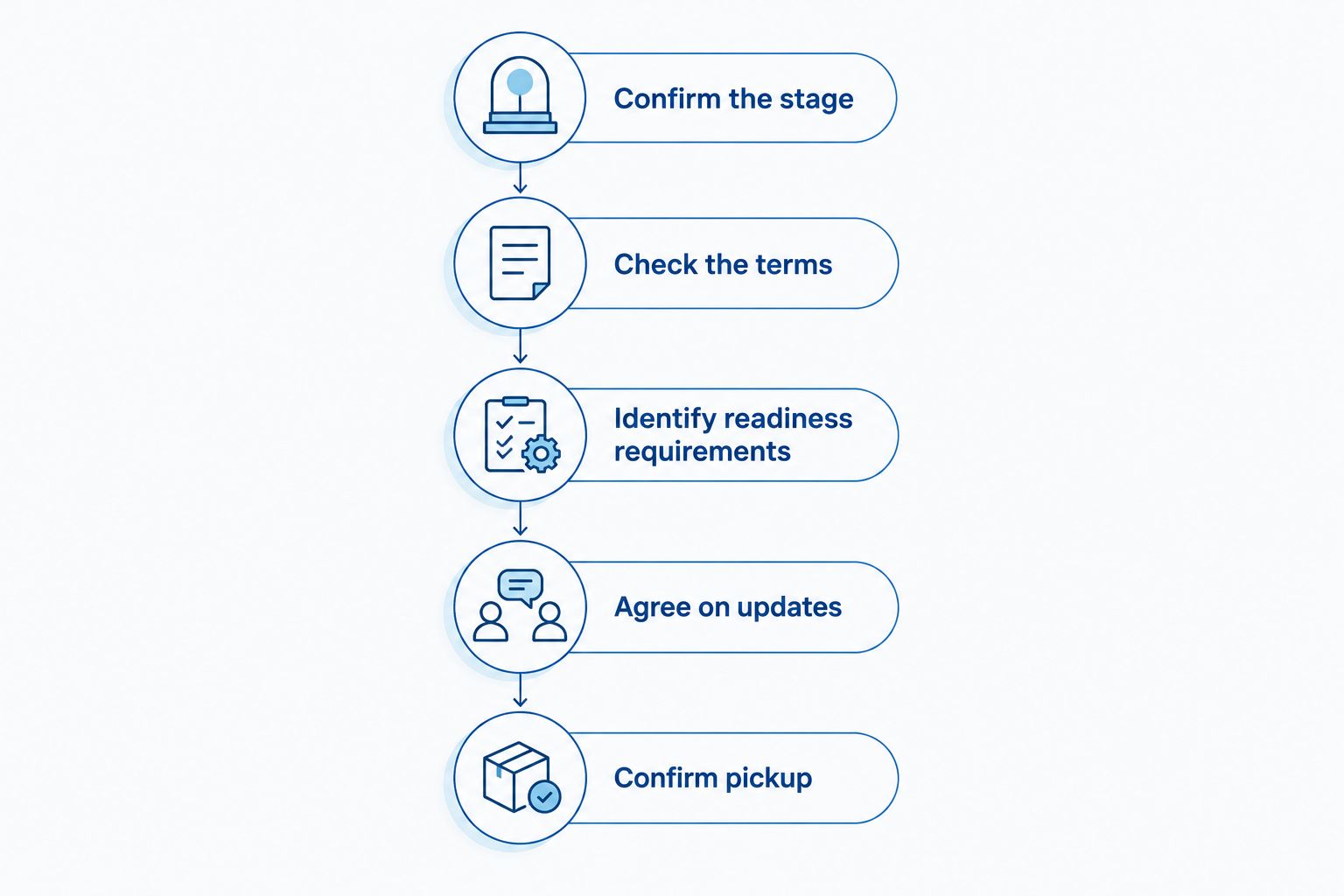
Use this sequence when speaking with a breeder in 2026. It turns a broad estimate into a plan you can check without pressuring anyone to rush a puppy.
- Confirm the stage. Ask whether you’re discussing a born puppy, a confirmed pregnancy, or a proposed breeding. Write down the answer before discussing dates.
- Check the terms. Establish whether an agreement identifies an individual puppy or concerns a future placement. Read what happens if the expected match does not occur.
- Identify readiness requirements. Ask which developmental checks, veterinary records, and other handover requirements must be complete.
- Agree on updates. Ask which milestone triggers the next update and who will contact whom. Don’t substitute repeated messages for a clear communication arrangement.
- Confirm pickup. Get the proposed date, location, documents, and travel responsibilities in writing. Ask what would require rescheduling.
The sequence matters: first establish what exists, then what is agreed, then what remains before homecoming. Booking travel first reverses that order and makes a necessary delay harder to manage.
Keep a short written summary after each substantive conversation. Include the puppy or litter discussed, the current estimate, and the condition attached to it. That prevents an early possibility from becoming a firm promise in your own calendar.
What should you ask before committing to a puppy?
Ask the breeder to explain the commitment in plain language. You should understand what you are agreeing to, what remains uncertain, and what happens if the expected placement changes.
Useful questions include:
- Does the agreement identify a particular puppy?
- What happens if the anticipated litter does not produce a suitable match?
- Who decides when the puppy is ready to leave?
- Which health and care records accompany the puppy?
- What terms apply if either party cannot proceed?
- Which travel arrangements are my responsibility?
For buyers researching Shrinkabulls, the same questions apply. Shrinkabulls is for prospective owners seeking AKC-registered English Bulldog puppies directly from a breeder. Registration describes pedigree documentation; it does not replace a health assessment or establish a pickup date.
The benefit of a breeder conversation is the opportunity to discuss the individual puppy and its background. The limitation is that a general business description cannot answer puppy-specific timing questions. Ask for those details directly rather than assuming a standard turnaround.
Can I bring an English Bulldog puppy home at 8 weeks?
Eight weeks old is a common minimum homecoming age, not automatic approval for every English Bulldog puppy. The American Kennel Club’s general guidance places puppy homecoming around 8 to 10 weeks, while the individual puppy’s needs and applicable rules still matter.
Ask why the proposed date suits that puppy. Don’t request an earlier handover simply because your work leave starts then.
Does joining a waiting list guarantee a puppy?
Joining a waiting list guarantees only what the written agreement explicitly provides. Ask whether the list records interest, sets a selection order, or establishes a commitment involving a specific puppy.
Those arrangements have different implications. Read the terms before treating a list position as a confirmed homecoming plan.
Should I finish preparing my home before the pickup date is final?
Prepare the essentials before homecoming, but keep date-sensitive commitments flexible until pickup is confirmed. You can choose a veterinarian, puppy-proof your living space, and arrange household responsibilities without forcing an arrival deadline.
For your 2026 plan, separate preparation from reservations that are difficult to change. Your puppy needs a ready home, not a calendar that leaves no room for a necessary delay.
FAQ
How long to get a bulldog puppy from a breeder if the litter is already born?
Your remaining wait depends on the puppy’s current age, readiness, breeder approval, and handover arrangements. A general homecoming window is 8 to 10 weeks old, not 8 to 10 weeks after your inquiry.
Can an English Bulldog puppy leave its mother at six weeks?
Six weeks is earlier than the American Kennel Club’s general 8-to-10-week homecoming guidance. Do not request an early handover for convenience; ask about the puppy’s needs and applicable legal requirements.
How long is a Bulldog pregnant before the puppies are born?
Canine pregnancy averages approximately 63 days from ovulation. A breeding date alone does not establish the exact birth date or a future pickup appointment.
Does AKC registration mean a Bulldog puppy is ready to come home?
AKC registration does not establish homecoming readiness. Check the puppy’s age, health records, development, and the breeder’s handover requirements separately.
Will choosing a particular color affect my puppy timeline?
A particular color requirement narrows the puppies you would consider, but it does not establish a measurable waiting period. Ask about the actual puppy or litter rather than assuming a color-specific schedule.
What should I do if my breeder changes the pickup date?
Ask for the specific reason, what must happen next, and when the date will be reviewed. Evaluate the explanation and your written agreement before changing travel arrangements.
Does Shrinkabulls have a standard English Bulldog puppy waiting period?
Confirm timing directly with Shrinkabulls for the individual English Bulldog puppy or litter you are discussing. Do not treat a general puppy-age guideline as the breeder’s promised waiting period.
One last thing
Ask for the next milestone, not just the final date. A breeder who explains what must happen before pickup gives you something concrete to follow, even when the calendar is still conditional.
When discussing an English Bulldog puppy with Shrinkabulls, keep that distinction clear: a proposed homecoming date is useful, but the puppy’s readiness is the deciding factor. Those wrinkles are worth preparing for properly!
Related guides
- How to plan pickup day for a new Bulldog puppy
- How to prepare an English Bulldog puppy for its first vet visit
- How to vet an English Bulldog breeder before you buy
