


 REVIEWS




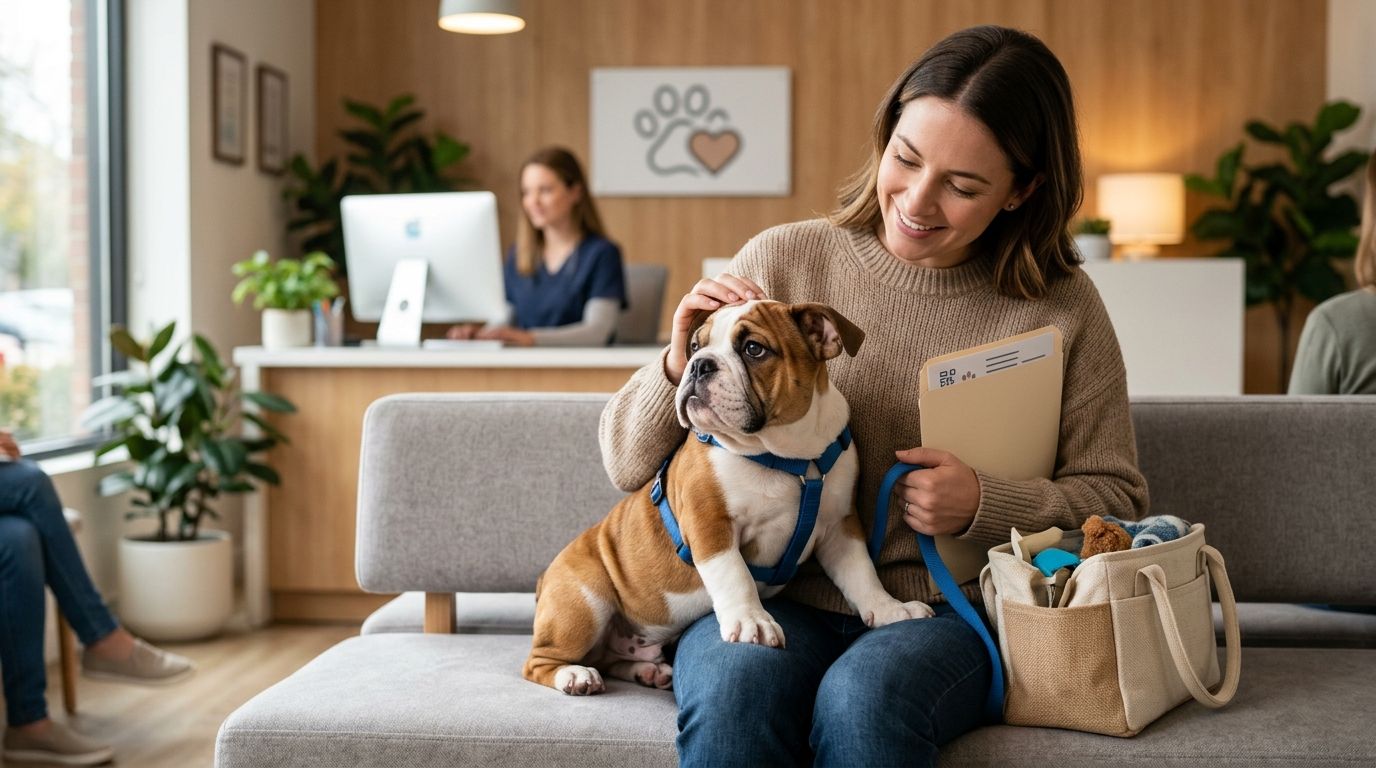
Bringing home an English Bulldog puppy means booking that first vet exam fast — most breeders and vets agree on doing it within 3 to 5 days of pickup, ideally before the pup's next vaccine is due. This guide walks through exactly what to bring, what the vet checks on a brachycephalic puppy that a general small-breed exam skips, and how to time the visit around vaccines and deworming.
- Schedule the english bulldog puppy first vet visit within 3 to 5 days of pickup, ideally before 8 weeks old.
- Bring the breeder’s health record, a fresh stool sample, and transport the puppy in a secure carrier.
- Pick a vet experienced with brachycephalic breeds — general vets often miss palate and airway red flags.
- Expect a weight check, heart/lung listen, eye check, and a vaccine and deworming plan discussion.
- Shrinkabulls puppies leave with an AKC record and health paperwork that speeds up this first exam.
Why this matters
English Bulldogs are brachycephalic — the short skull and narrow airway that give the breed its look also make early exams more important than they are for a Labrador or a Beagle. A vet who's never handled a bulldog puppy can miss a narrow palate, pinched nostrils, or an early cherry eye because those findings aren't on the checklist for a standard small-breed visit.
The first exam in 2026 is also when the puppy's vaccine and deworming schedule gets locked in for the next several months. Miss the window and you're playing catch-up on immunity right when a puppy's system is most vulnerable to parvo and other early threats.
How do you prepare an English Bulldog puppy for its first vet visit?
Follow these steps in order, starting the day you pick up the puppy:
- Book the appointment within 3 to 5 days of pickup. Don't wait for a symptom — the point of the first visit is a baseline exam, not a sick call.
- Confirm the vet has handled brachycephalic breeds before. A vet experienced with brachycephalic breeds checks the soft palate, nostril width, and airway sounds that a general practice may not flag.
- Gather the breeder's paperwork. This includes the health record, any vaccines or deworming already given, and AKC registration documents if you have them in hand.
- Collect a fresh stool sample, less than 12 hours old, in a sealed bag or container. Most clinics run a fecal float at the first visit and a same-day sample gives a cleaner read.
- Transport the puppy in a secure carrier, not loose on a lap or the car floor. Bulldog puppies overheat fast in a warm car, so keep the AC running and the ride short.
- Skip a large meal in the 2 hours before travel. A light stomach reduces car sickness and makes it easier for the vet to palpate the abdomen.
- Write down your questions before you go — feeding amounts, wrinkle cleaning, when to start leash training. First visits move fast and it's easy to forget what you meant to ask.
What does the vet check during a bulldog puppy's first exam?
A thorough first exam for an English Bulldog puppy covers more ground than a routine checkup on a non-brachycephalic breed:
- Weight and body condition against age-expected growth curves.
- Heart and lung sounds, listening for murmurs that show up more often in bulldog litters than in the general dog population.
- Eyes, checking eyelid position and looking for early signs the vet would flag for cherry eye.
- Palate and airway, assessing whether the soft palate looks proportionate to the throat — a key brachycephalic-specific check.
- Skin folds, especially the nose roll and tail pocket, for early moisture or irritation.
- Hips and elbows, checking range of motion and gait as a baseline for later growth.
- Temperature and hydration, standard on any first exam regardless of breed.
The vet will also confirm which vaccines the puppy has already had and lay out the rest of the series. If you want the full timeline before the appointment, the puppy vaccination schedule breaks down what's due at each age. Deworming usually gets discussed in the same visit — the deworming schedule covers the standard intervals most vets follow through the first six months.
What to feed before the visit
Weight gain and stool consistency are two of the biggest things a vet ties directly back to diet, so settle the food question before the appointment, not after. Many new bulldog owners cross-check raw puppy food options against the breeder's transition diet to see whether a switch supports the coat and skin-fold condition the vet is about to inspect — bring whatever you're currently feeding written down, including brand and amount, so the vet can weigh in directly.
If you haven't set up an ID plan yet, this is also a good time to ask the vet about microchip and ID tag options — many clinics implant a chip during the first or second visit while the puppy is already being handled.
Why first vet visit timing varies
Not every bulldog puppy gets scheduled the same way. A few factors shift the exact timing:
- The breeder's own pre-pickup vet exam. Some breeders, including Shrinkabulls, run a health check before a puppy ever leaves — that can shift your first independent visit a week or two later.
- The puppy's existing vaccine schedule. A puppy already partway through the vaccine series needs the next visit timed to that schedule, not a fresh 8-week start.
- Local availability of a brachycephalic-experienced vet. Rural areas sometimes mean waiting a few extra days for the right vet rather than the nearest one.
- Health guarantee requirements. Some breeder contracts require an exam within a specific window (often 48-72 hours) to keep the guarantee valid — check the paperwork before you book.
- Deworming overlap. If deworming is already scheduled through the breeder, the vet visit sometimes gets pushed to line up with the next dose instead of duplicating it.
- Litter size and pickup timing. Puppies from larger litters sometimes go home a few days apart, which staggers first-visit scheduling across the litter.
“The first vet visit isn’t a formality for a bulldog puppy — it’s the only exam in the first month built specifically to catch airway and palate issues a general checkup skips.”
Related questions new bulldog owners ask
Should I bring a stool sample to my bulldog puppy's first vet visit?
Yes — bring a fresh stool sample, ideally less than 12 hours old, to every first-visit appointment. Most clinics run a fecal test at the first exam regardless, and bringing your own sample avoids the vet having to wait for the puppy to go during the visit.
Can I switch vets after the first visit if they don't seem experienced with bulldogs?
Yes, and it's common. If the first vet doesn't ask about palate, airway sounds, or skin folds during the exam, that's a sign to find a practice with more brachycephalic experience before the next scheduled visit.
Does the first vet visit include vaccines?
It depends on the puppy's age and prior vaccine history. A puppy at 6 to 8 weeks with no prior shots often starts the first round of the 3-dose series at this visit; a puppy already vaccinated by the breeder may just get a booster scheduled for later.
Reserve your next Shrinkabulls puppy
Secure a spot on an upcoming litter before the first vet visit even happens.
Buyers researching rare colors before their puppy's first exam often want the full cost picture too — the merle bulldog price breakdown covers what merle, lilac, and blue puppies typically run compared to standard colors, which matters when budgeting for that first year of vet care on top of the purchase.
FAQ
When should an English Bulldog puppy have its first vet visit?
An English Bulldog puppy should see a vet within 3 to 5 days of coming home, generally between 6 and 8 weeks old. Waiting longer delays the vaccine series and any early health checks the breeder’s contract may require.
What should I bring to my bulldog puppy’s first vet appointment?
Bring the breeder’s health and vaccine record, AKC paperwork if available, and a stool sample less than 12 hours old. A written list of the food and amount currently being fed helps the vet assess weight and digestion.
Do bulldog puppies need a different vet than other breeds?
They don’t need a different vet by law, but a vet experienced with brachycephalic breeds catches airway, palate, and skin-fold issues a general small-breed exam often misses. Ask directly about their bulldog caseload before booking.
How much of the vaccine series happens at the first visit?
The first visit usually starts or continues a 3-round vaccine series, spaced a few weeks apart through roughly 16 weeks of age. The exact starting point depends on what the breeder already administered.
Is it normal for a bulldog puppy to be nervous at the first vet visit?
Yes, mild nervousness is normal and most puppies settle within a few visits. Keeping the car ride short and skipping a big meal beforehand reduces stress on both ends.
Should I ask about deworming at the first vet visit?
Yes — deworming typically runs on its own schedule starting around 2 weeks old and continuing through 12 weeks, so confirm what the breeder already gave before the vet doses again.
Can the vet check for hip issues at the first visit?
The vet can assess gait and joint range of motion as a baseline at the first visit, though formal hip screening typically happens later once the puppy is older. Flag any limping or stiffness immediately rather than waiting.
One last thing
The detail most new owners skip: ask the vet to weigh the puppy at every visit through the first six months and keep a running log yourself. A bulldog puppy that plateaus or drops weight between visits is one of the earliest signs of a feeding issue or a hidden health problem, and catching that trend in your own notes beats waiting for the vet to notice it three visits later.
Related guides
- Puppy vaccination schedule for new owners
- Choosing a vet experienced with brachycephalic breeds
- Deworming schedule for new owners
- Microchip and ID tag options for a new bulldog puppy
- Merle bulldog price: what rare color puppies really cost
