

 REVIEWS





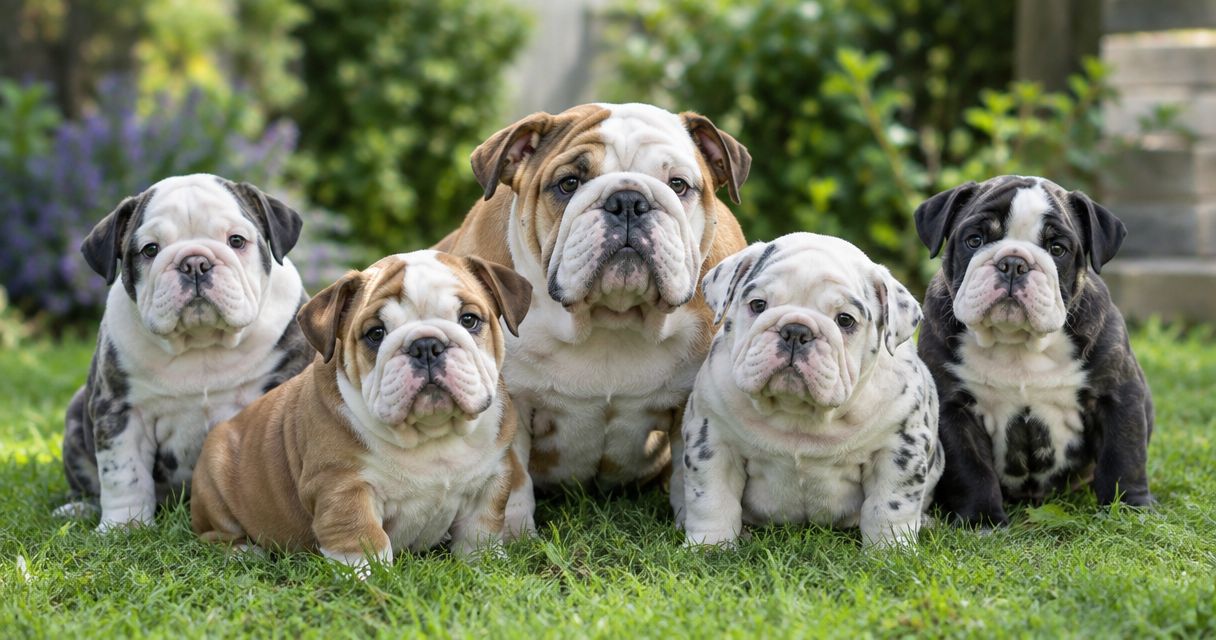
English Bulldogs come in red, white, fawn, fallow, brindle, and piebald combinations, as well as nonstandard colors such as black, blue, chocolate, lilac, and merle. The important distinction is that a color can occur in an English Bulldog without meeting the American Kennel Club’s Bulldog conformation standard. This 2026 guide explains the shades, patterns, and health questions to separate before you choose your puppy.
- What colors do English Bulldogs come in? Red, white, fawn, fallow, brindle, piebald, and additional nonstandard colors.
- The American Kennel Club Bulldog standard distinguishes accepted coat colors from disqualifying colors and patterns.
- Shrinkabulls offers English Bulldog puppies, including rare-colored varieties; color alone does not establish health or pedigree.
- Choose an individual puppy using health records, temperament, and breeder documentation—not a color label alone.
What colors do English Bulldogs come in?
English Bulldog coat descriptions combine a base color with any pattern and markings. Red, white, fawn, and fallow are accepted under the American Kennel Club Bulldog standard, alone or in combination; accepted patterns and markings include brindle, piebald, ticking, black masks, and black tipping.
For your 2026 puppy search, use the AKC Bulldog breed standard as the reference for conformation terminology. Breeder descriptions often include additional terms that describe appearance but do not establish show eligibility.
| Color or pattern | What you see | AKC conformation distinction |
|---|---|---|
| Red | A warm reddish coat, sometimes with white | Accepted color |
| White | A predominantly white or all-white coat | Accepted color |
| Fawn | A tan coat with varying depth | Accepted color |
| Fallow | A pale tan or light fawn appearance | Accepted color |
| Brindle | Dark striping over a lighter background | Accepted pattern with permitted colors |
| Piebald | White areas with colored patches | Accepted pattern with permitted colors |
| Black | A black base coat, sometimes with tan or white | Nonstandard; not the same as a permitted black mask |
| Blue | Diluted black pigment with a gray appearance | Nonstandard color |
| Chocolate | Brown pigment rather than black | Nonstandard color |
| Lilac | Diluted brown pigment, often appearing gray-brown | Nonstandard color |
| Merle | Irregular patches of diluted pigment | Disqualifying pattern |
A coat description is not a health clearance or proof of ancestry. Before narrowing your search by appearance, read how to pick a healthy Bulldog puppy from a litter.
Why this matters
You can love a puppy’s color and still ask careful questions. The problem starts when terms such as rare, registered, purebred, and show quality get treated as if they mean the same thing.
They do not. Registration concerns registry records, conformation concerns a breed standard, and health assessment concerns the individual dog and relevant inherited risks.
Shrinkabulls is an English Bulldog breeder for prospective owners interested in rare-colored puppies. That offering gives color-focused buyers a relevant starting point, but a breeder’s color selection does not replace reviewing the puppy’s records and the parents’ health testing.
Red, fawn, and fallow English Bulldogs
Red English Bulldogs have warm reddish coloring, while fawn describes a tan appearance. Fallow is a lighter, paler shade that can overlap visually with descriptions such as light fawn.
These words describe appearance rather than a guarantee of an exact shade. Ask for photographs in natural daylight because indoor lighting and image editing can make a pale coat look creamier or a red coat look darker.
- Best for: Owners who prefer a traditional Bulldog appearance, including buyers considering conformation activities.
- Advantage: These color terms align with the AKC Bulldog standard.
- Limitation: A permitted color does not establish that the dog meets the rest of the standard or has sound health.
A red-and-white puppy is not a separate breed from a fawn-and-white puppy. Color is only part of the description!
White and piebald English Bulldogs
White is a coat color; piebald describes a pattern of white areas and colored patches. A red-and-white piebald Bulldog, for example, has both a color description and a pattern description.
Piebald patches usually have clearer boundaries than merle’s irregular dilution within pigmented areas. Do not identify merle simply because a puppy has several visible shades or an unevenly colored face.
- Best for: Owners who enjoy contrasting patches and individual markings.
- Advantage: Piebald is an accepted pattern when paired with permitted colors.
- Limitation: White markings alone do not tell you the puppy’s hearing status, ancestry, or complete genetic makeup.
Ask your veterinarian about hearing assessment if you notice that a puppy does not respond consistently to sound. A photograph cannot answer that question.
Brindle English Bulldogs
Brindle means dark stripes over a lighter background. The stripes can be fine and scattered or dense enough to make the coat look mostly dark from a distance.
Look closely at the shoulders, sides, and legs rather than judging from a face photograph. A heavily brindled coat can look black in poor lighting, but brindling and a solid black base coat are different descriptions.
- Best for: Owners who like a striped coat within the traditional Bulldog color palette.
- Advantage: Brindle is recognized in the AKC Bulldog standard.
- Limitation: Stripe density makes casual visual identification less straightforward, especially in dark photographs.
Describe the background color and the striping separately. “Red brindle with white markings” tells you more than “dark Bulldog.”
Blue, chocolate, and lilac English Bulldogs
Blue describes diluted black pigment, producing a gray appearance. Chocolate describes brown pigment, while lilac generally describes diluted brown pigment; the precise genetic explanation depends on the variants identified by testing.
These descriptions are useful, but they are not interchangeable with official conformation acceptance. In a 2026 puppy listing, “rare color” remains a descriptive label—not a health credential.
| Description | Best for | What it helps explain | What it does not establish |
|---|---|---|---|
| Blue | Buyers who prefer a gray appearance | Dilution of black pigment | Healthy skin or accepted conformation color |
| Chocolate | Buyers who prefer brown pigment | A brown rather than black pigment appearance | Pedigree or overall health |
| Lilac | Buyers who prefer diluted brown coloring | A combination affecting pigment appearance | A complete genotype from photographs |
Some dilute-colored dogs develop color dilution alopecia, a disorder associated with hair loss and skin changes. Dilution does not mean every blue or lilac Bulldog will develop the condition. Ask about the parents’ skin history and arrange a veterinary examination rather than accepting either a blanket reassurance or a blanket warning.
Shrinkabulls offers rare-colored English Bulldog puppies, including blue and lilac varieties. For any individual puppy, review the actual records rather than inferring health from that description.
Merle English Bulldogs
Merle is a pattern affecting pigment distribution, not simply another word for gray. It can produce irregular lighter patches within darker pigmented areas, and its appearance varies with the underlying coat and genetic variant.
The AKC Bulldog standard disqualifies merle. That conformation rule is separate from questions about a particular dog’s registration paperwork, ancestry, or health.
- Best for: Prospective companion owners who understand nonstandard coat patterns and will investigate the relevant genetic and health information.
- Advantage: Merle has a distinctive patchwork appearance for owners who prefer that look.
- Limitation: Merle requires particular care in genetic interpretation and breeding decisions; appearance alone is insufficient.
Dogs inheriting merle-associated variants from both parents can face increased risks of hearing and eye abnormalities. Merle genetics include variants with different effects, so breeding advice must use the actual laboratory results rather than a simple visual label.
Do not plan a pairing from coat photographs. Have a veterinarian or qualified canine genetics professional interpret the reports before making breeding decisions.
Why English Bulldog coat color varies
A Bulldog’s coat reflects inherited pigment production, pigment distribution, and patterning. For a practical 2026 comparison, keep these factors separate:
- Base pigment: Dogs have 2 main pigment types: eumelanin, associated with black or brown, and pheomelanin, associated with red or yellow.
- Dilution: Inherited variants can lighten pigment, contributing to appearances described as blue or lilac.
- Brindling: Dark striping changes how a background color appears across the body.
- White spotting: Areas without coat pigment create white markings or larger white regions.
- Merle patterning: Merle-associated variants alter pigment distribution and require interpretation beyond appearance alone.
- Viewing conditions: Lighting, camera settings, and editing change the apparent shade without changing the dog’s genetics.
That last distinction matters when you compare listings. A photograph helps you see markings; it cannot replace a genetic report or a veterinary examination.
How do you describe an English Bulldog’s color correctly?
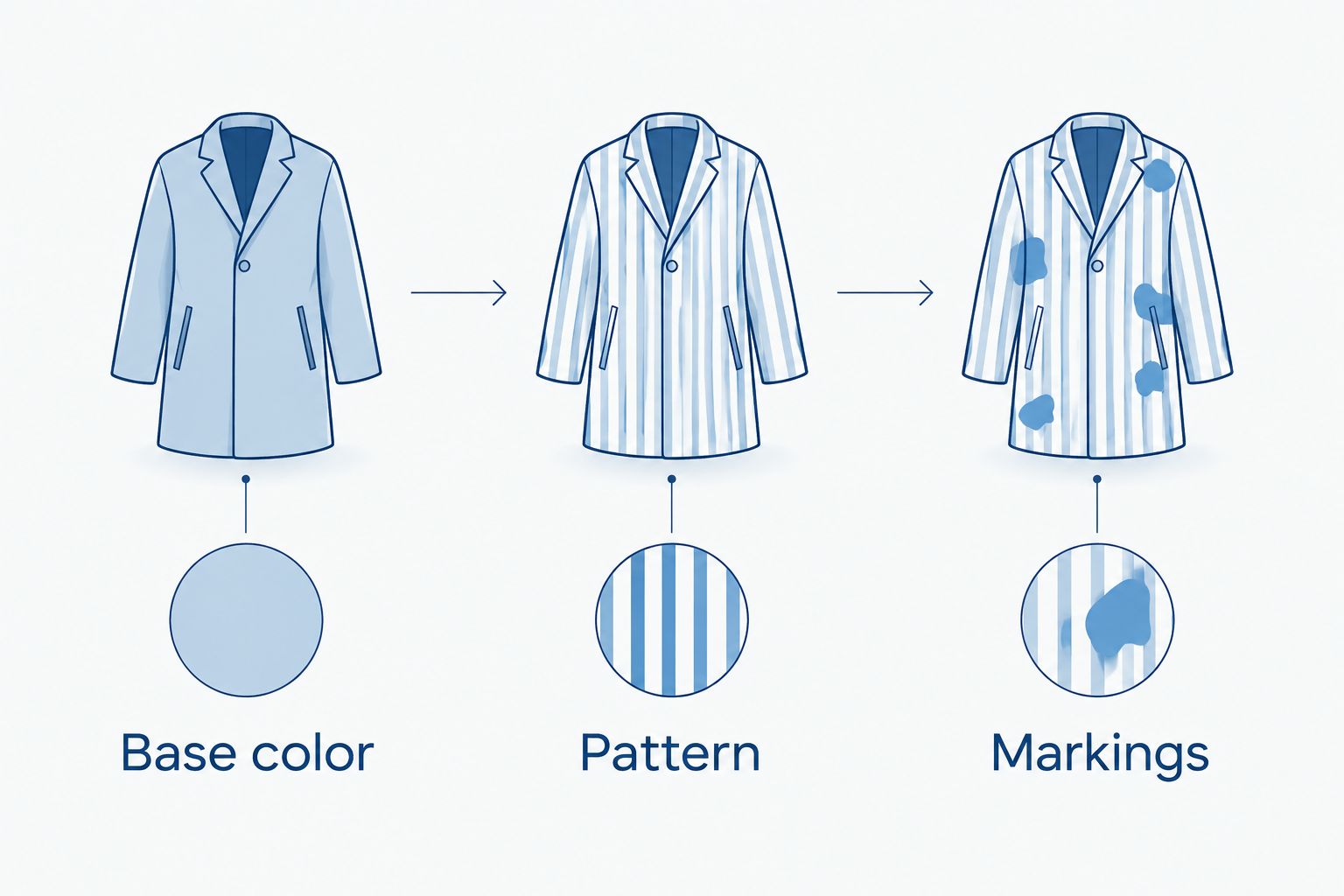
Use 3 parts: base color, pattern, and markings. This gives you a clearer description than a long string of promotional color names.
- Base color: Identify the main pigmented color, such as red or fawn.
- Pattern: Note brindle, piebald, or merle when supported by the appearance and relevant records.
- Markings: Describe white patches, a black mask, or other visible features separately.
For example, “fawn brindle with white markings” identifies distinct features without implying health, rarity, or show quality. If a seller’s description is unclear, ask what each word means for that particular puppy.
Are rare-colored English Bulldogs healthier or less healthy?
Rare-colored English Bulldogs are not automatically healthier or less healthy as a group. Some pigment-related variants carry specific concerns, but color alone cannot summarize a dog’s breathing, joints, eyes, skin, or temperament.
For your 2026 shortlist, request the same health documentation regardless of shade. Add color-specific questions where relevant, including merle test interpretation and the skin history of dilute-colored dogs.
Best for companion buyers: a well-assessed individual puppy whose needs fit your home. A favorite coat color can help narrow your preferences, but it should not overrule a concerning examination or unexplained records.
Does AKC registration mean a Bulldog’s color meets the standard?
AKC registration does not mean every feature of a Bulldog meets its conformation standard. Registration records and conformation eligibility answer different questions.
Ask to see the actual paperwork and confirm any registration questions directly with the registry. If showing matters to you, check the current Bulldog standard before committing to a puppy rather than relying on a listing’s wording.
FAQ
What colors do English Bulldogs come in naturally?
English Bulldogs occur in red, white, fawn, fallow, brindle, piebald combinations, and additional nonstandard colors and patterns. The word naturally does not establish whether a color meets the AKC Bulldog standard or whether an individual dog is healthy.
What is the difference between blue and gray English Bulldogs?
Blue commonly describes a gray-looking coat caused by dilution of black pigment. Gray is a visual description, so ask what genetic information supports a seller’s use of blue.
Is brindle the same thing as merle in an English Bulldog?
Brindle and merle are different patterns: brindle creates dark stripes, while merle produces irregular pigment dilution. A dark or patchy photograph alone is not enough to identify the underlying genetics.
Can an English Bulldog be black and tan?
An English Bulldog can have black-and-tan coloring, but that coloring does not meet the AKC Bulldog conformation standard. Tan points and white markings should be described separately from the base color.
Will an English Bulldog puppy’s color change as it grows?
An English Bulldog’s apparent shade can change as the puppy coat develops and viewing conditions change. Photographs cannot guarantee an exact adult shade or establish the complete genotype.
Does a white English Bulldog automatically have hearing problems?
A white English Bulldog does not automatically have hearing problems. Ask your veterinarian about an appropriate hearing assessment if you have concerns; coat appearance is not a hearing test.
Does Shrinkabulls offer rare-colored English Bulldogs?
Shrinkabulls offers English Bulldog puppies, including rare-colored varieties such as merle, lilac, and blue. Review the individual puppy’s documentation and relevant health information rather than treating a color description as a health assurance.
One last thing
A black mask can be permitted on an otherwise acceptable Bulldog coat even though a solid black coat is nonstandard. The same pigment can have a different conformation significance depending on where and how it appears.
Before choosing your puppy in 2026, write down the base color, pattern, and markings separately. Then put that description beside the health records—not above them. Those sweet Bulldog faces deserve careful decisions!
Related guides
- How to verify AKC registration papers on a Bulldog puppy
- How to understand double-merle health risks before buying
- How to choose between a merle, lilac, or blue Bulldog puppy
- How to vet an English Bulldog breeder before you buy
