


 REVIEWS





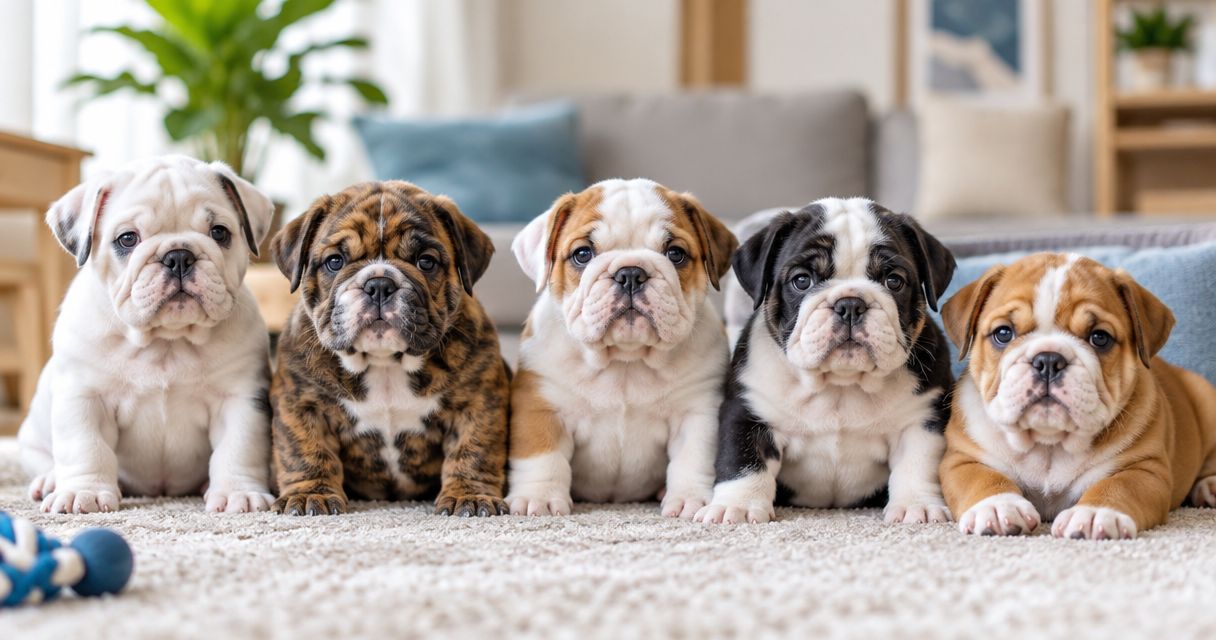
English Bulldog puppy prices by color follow a clear ladder in 2026: standard colors sit at the bottom, rare colors such as blue, lilac and merle sit at the top, and the gap comes from genetics, demand and breeding risk, not from the dog's quality. This page ranks the color groups by price tier and explains what each tier pays for. Dollar figures are left off the page on purpose, because they go stale within months.
- English Bulldog puppy prices by color run in three tiers in 2026: standard, premium, and top-tier rare.
- Merle sits in the top tier because it is the hardest color to breed responsibly.
- Blue and lilac carry a premium over fawn, red, white and brindle, driven by dilute-gene rarity.
- Color never replaces health testing and AKC papers when you compare two quotes.
- Shrinkabulls breeds AKC-registered English Bulldogs in rare colors, so ask for current pricing by color.
The short answer
The average English Bulldog puppy costs the least in fawn, red, brindle and white, more in blue and lilac, and the most in merle and multi-trait combinations. Color is one of several price drivers. Pedigree, health testing, registration type and the breeder's costs all move the number as well.
The verdict in one sentence: a common-color English Bulldog from a tested, AKC-registered line is the best value in 2026, and a rare-color puppy is worth the premium only if the breeder can document the genetics behind the color.
English Bulldog price tiers by color, 2026
| Color group | Price tier | What drives the price | Best for |
|---|---|---|---|
| Fawn, red, fawn and white | Standard | Common genetics, steady supply | First-time owners on a fixed budget |
| Brindle, white, piebald | Standard to mid | Common pattern genes, some demand for clean markings | Buyers who want a classic look |
| Cream | Mid | Soft coloring in steady demand | Buyers who want a lighter coat without dilute genetics |
| Chocolate | Premium | Recessive brown gene, fewer litters | Collectors who want a warm brown |
| Blue and blue tri | Premium | Dilute gene must come from both parents | Buyers who want a rare coat with an established track record |
| Lilac and lilac tri | Premium to top | Chocolate and dilute genes combined | Color enthusiasts |
| Merle (all variants) | Top | Dominant pattern gene that needs careful pairing | Experienced owners working with a transparent breeder |
| Merle plus dilute (lilac merle, blue merle) | Top | Two rare traits stacked in one dog | Collectors |
The table is a ranking of tiers, not a price list. Use it to see where a quote should land relative to others.
High and low: where the premium sits
Merle and merle-plus-dilute combinations lead the ladder. Fawn, red and brindle trail it and set the baseline. Everything in between is a step up for every additional rare gene the puppy carries.
The premium is not uniform. The step from standard to blue is smaller than the step from blue to a stacked color like lilac merle. Each rare trait multiplies scarcity, so stacking traits moves a puppy up the ladder fastest.
Methodology and limits
The tiers above come from how color genetics work in the breed and from how breeders position their litters, not from a survey of sold puppies. The limitation is real: actual asking prices vary by breeder, region, litter size and the puppy's individual quality. A mid-tier puppy from a careful breeder can cost more than a top-tier puppy from a volume seller, and that should worry you, not please you.
Why color changes the price
Price follows scarcity and risk, and color affects both.
- Gene rarity. Blue and lilac come from dilute genes that both parents must carry. Fewer matching pairs means fewer litters.
- Breeding risk. Pairing two merle dogs produces double merle puppies in about 1 of every 4 puppies, and double merle carries serious hearing and vision risks. Responsible merle programs avoid that pairing, which limits how many merle litters exist.
- Demand. Rare colors draw buyers who want something few other owners have, and that demand holds prices up.
- Testing costs. Breeders who confirm color genetics by DNA pay for tests the common-color breeder may skip.
For a full breakdown of what a rare-color puppy costs and why, read merle bulldog price: what rare color puppies really cost.
Color-by-color verdicts
Fawn, red and brindle: the baseline
These colors set the floor of English Bulldog pricing in 2026. Supply is steady, the genetics are simple, and the pups are no less healthy than rarer colors. Best for: buyers who want the breed without paying for rarity. Verdict: Buy.
The con is plain: you get no conversation-starter coat. The pro is that more of your budget can go to vet care and good food.
White and piebald: the pattern players
Clean white and piebald puppies cost a bit more than solid fawn when the markings are even and the pigment is good. Pigment matters for skin and eye comfort in light-coated dogs, so ask how the breeder evaluates it. Best for: buyers who like bold markings. Verdict: Buy, after checking skin and eye health.
Cream: the soft option
Cream puppies sit just above the baseline. The coat looks rare without the dilute-gene scarcity, which makes cream a sensible middle step. Best for: buyers who want a lighter coat without the full rare-color price. Verdict: Buy.
Chocolate: the recessive brown
Chocolate needs two copies of a recessive gene, so litters are less common and prices climb. The coat is striking. The cost is that fewer breeders work with the color, so your choice of breeders narrows. Best for: collectors who want warmth and depth in the coat. Verdict: Hold until you have compared at least two breeders' health records.
Blue and blue tri: the popular rare color
Blue is the most recognized rare color in English Bulldogs and the one with the longest track record. Because both parents must carry the dilute gene, litters are fewer and quotes run above standard colors. Best for: buyers who want a rare coat without taking on merle's added complexity. Verdict: Buy from a breeder who documents both parents' lines.
If you want the cost angle specifically, how much blue English Bulldog puppies cost goes deeper.
Lilac and lilac tri: dilute plus brown
Lilac combines the chocolate and dilute genes, which is why it sits above blue. The coat has a distinctive gray-brown cast and the supply is thin. The con is the narrow breeder pool, which makes comparison shopping harder. Best for: color enthusiasts who have already decided on rare. Verdict: Hold until you have confirmed the genetics by DNA report.
Merle: the top tier
Merle is the highest price band for English Bulldogs in 2026. The pattern gene is dominant, so one merle parent is enough, but responsible breeders must never pair merle with merle. That discipline limits supply and adds cost. The risk is on the buyer's side: a seller who is vague about parentage is the biggest warning sign in this tier. Best for: experienced owners who will ask hard questions. Verdict: Wait until you have seen full documentation. Then buy.
Before you commit, read how to understand double merle health risks before buying.
Merle plus dilute: the stacked colors
Lilac merle and blue merle put two rare traits in one dog. They carry the highest asking prices on the ladder because each added trait multiplies scarcity. They also carry the strictest requirement for proof of parentage. Best for: collectors with a clear budget. Verdict: Skip unless the breeder can show the genetics and health tests for both parents.
How to use these benchmarks
- Place every quote on the ladder. If a fawn puppy is priced like a merle, or a merle like a fawn, one of the two quotes has a problem.
- Pay for documentation, not just color. A premium should buy DNA color reports, health clearances and AKC registration papers.
- Set a ceiling before you shop. Decide which tier you can afford, including the first-year costs that follow the purchase. How to budget for the true cost of an English Bulldog puppy lays those costs out.
- Choose the color after the breeder. A good breeder with a standard color beats a doubtful breeder with a rare one.
What the price does not include
The purchase price is the smallest line over the dog's life. English Bulldogs need regular vet care, quality food and skin-fold maintenance, and these costs apply to every color. A rare color does not make the puppy healthier or sicker on its own, so do not let the coat decide how much vet budget you set aside.
If you are still weighing the colors against one another, how to choose between a merle, lilac or blue bulldog puppy compares them side by side.
Where Shrinkabulls fits
Shrinkabulls is a bulldog breeding business that sells AKC-registered English and French Bulldog puppies, including rare colors such as merle, lilac and blue. For a current quote by color, ask the breeder directly, because litter availability and pricing change from one litter to the next. Shrinkabulls English Bulldog buyers should expect to discuss parentage and color genetics before any deposit.
See current puppies by color
Ask about availability and pricing for the color you want.
FAQ
What is the cheapest English Bulldog color in 2026?
Fawn, red and brindle sit at the bottom of the price ladder in 2026. The genetics are common and supply is steady, so these colors cost the least without being lower quality.
What is the most expensive English Bulldog color?
Merle and merle-plus-dilute colors such as lilac merle and blue merle cost the most. They combine rare genes with strict breeding rules, which limits how many litters exist.
Why are blue English Bulldogs more expensive than fawn?
Blue comes from a dilute gene that both parents must carry. Fewer matching pairs means fewer blue litters, and demand holds the price above standard colors.
Is a rare-color English Bulldog healthier or sicker than a standard one?
Color alone does not make a puppy healthier or sicker. Health depends on the parents, the testing the breeder does and the care the puppy gets. The exception is double merle, which carries hearing and vision risks.
What is double merle and why does it matter for price?
Double merle happens when two merle dogs are bred together, and about 1 in 4 puppies in such a litter inherits two copies of the gene. Responsible breeders avoid the pairing, which keeps merle supply limited and prices high.
Should I pay more for a rare color?
Pay the premium only if the breeder documents the genetics and health testing behind the color. A rare coat without paperwork is a risk, not a bargain.
Does color change AKC registration?
Color does not change whether a purebred puppy can be AKC registered, but the registration type and the parents’ papers do matter. Ask to see the papers before you pay a deposit.
One last thing
If two breeders quote the same color at very different prices, ask each one for the parents' health testing and color DNA reports. The gap between the quotes almost always shows up in that paperwork, and it tells you which price is the real one in 2026.
