


 REVIEWS




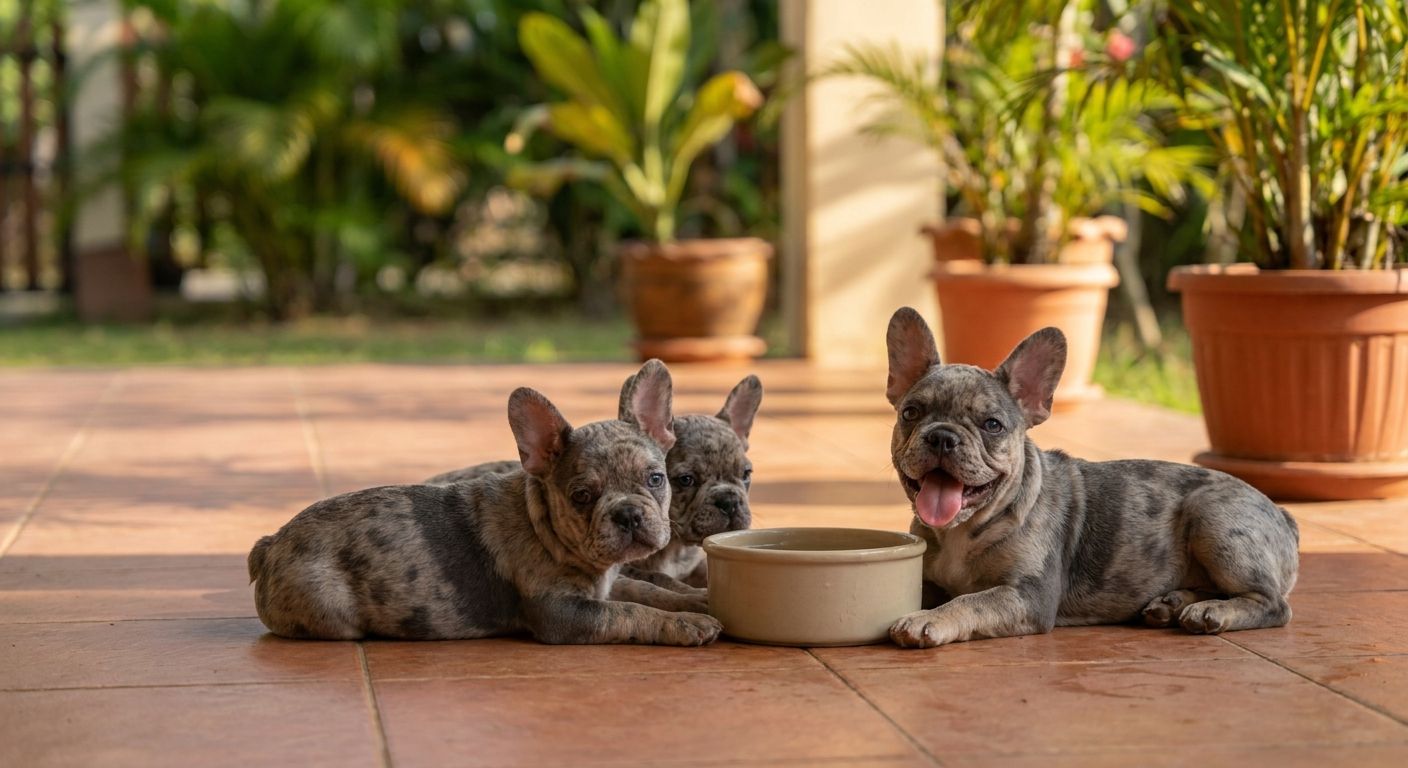
Blue merle French Bulldog puppies pair a marbled, dilute-blue coat with the same short muzzle and narrow nostrils every French Bulldog carries — and that combination gets tested the moment outdoor temps climb into the mid-80s. This guide covers what actually matters when you're buying a blue merle Frenchie for a hot-climate home: airway conformation, genetic risk, and which color path suits a desert porch better than a shaded backyard in the Northeast.
- A single blue merle French Bulldog with open nostrils and no double merle genes is the hot-climate buy.
- Skip any Bulldog puppy sold as double merle — two copies of the gene adds deafness and vision risk on top of normal brachycephalic strain.
- Solid blue French Bulldogs run cooler-looking and simpler to place than heavily marked merles for apartment or desert living.
- AKC-registered parent verification matters more in hot climates because heat stress exposes hidden airway problems fast.
Why this matters
Every French Bulldog, merle or not, breathes through a shortened airway that makes panting a poor cooling tool once the heat index climbs past 85°F. Vets routinely advise pulling brachycephalic breeds off pavement and indoors once that threshold hits, and a Frenchie in Phoenix or Houston hits it a lot more often than one in Portland. Coat color doesn't fix the airway. It does change how much heat the coat itself absorbs and how a breeder markets rarity, which is exactly where hot-climate buyers get steered wrong.
Who this is for
This guide is for buyers in Arizona, Texas, Nevada, Florida, and similar hot-and-humid or hot-and-dry regions who want a blue merle French Bulldog specifically, not just any Frenchie color. If you're still weighing colors against each other, the breakdown on choosing between merle, lilac, or blue is worth reading before you commit to merle specifically. Shrinkabulls breeds AKC-registered English and French Bulldogs, including merle, lilac, and blue lines, so the criteria below reflect what actually separates a heat-ready puppy from one that just photographs well.
What to look for in a blue merle French Bulldog for hot climates
Open nostrils and airway conformation
A French Bulldog with pinched, slit-like nostrils works harder to move air even standing still, and that deficit compounds fast in heat. Ask to see the puppy's nose at rest, not mid-play, and ask whether the parents have ever needed airway surgery. This matters more than coat pattern for a hot-climate home.
Single merle, not double merle
Merle is a single dominant gene. One copy produces the marbled blue merle pattern; two copies (a double merle pairing) roughly doubles the risk of deafness and vision defects on top of the breed's existing health load. A reputable breeder never intentionally pairs two merles, and the double merle health risks breakdown covers exactly what to ask before you put down a deposit.
Coat lightness and skin sensitivity
Dilute colors like blue merle carry thinner pigment than solid black or fawn, which can mean more sun-sensitive skin, especially around the nose and eye rims. That's a manageable trait indoors or in shade, but it's a real consideration for a yard with six hours of direct desert sun.
AKC registration and health testing on file
A hot climate doesn't cause genetic issues, but it exposes them faster because the dog has less margin for error. Confirm registration and testing before you fall for a cute photo — the guides on verifying AKC registration papers and requesting health testing panels exist for exactly this reason.
Indoor cooling setup at home
A blue merle French Bulldog in Tucson needs air conditioning running reliably during the day, not a fan and an open window. If your home doesn't hold a stable indoor temperature through a 2026 summer, that's a bigger factor than any color choice.
Exercise scheduling built around the heat index
Walks and play need to move to early morning or after sunset once the heat index passes 85°F. A breeder who talks through this with you unprompted is a good sign; one who doesn't mention it at all is a flag.
Top picks by color path
Single Blue Merle French Bulldog — the safe pick. One copy of the merle gene, standard brachycephalic airway risk, no added sensory risk beyond what every Frenchie carries. This is the puppy most buyers picture when they search blue merle French Bulldog, and it's the one worth pursuing if a health-tested single-merle litter is available. The merle French Bulldog puppies for first-time owners guide walks through what a first litter visit should look like. Verdict: Buy.
Solid Blue French Bulldog — the low-maintenance pick. No merle pattern means no double merle risk math to worry about at all, and the solid dilute-blue coat still runs lighter than black or brindle. For an apartment or a smaller yard with limited shade, this is the simpler path to the same blue coloring. Verdict: Buy.
Lilac Merle French Bulldog — the rare-color upgrade. Lilac merle stacks two dilute genes on top of the merle pattern, producing an even lighter, almost lavender-gray coat. It's rarer and typically priced higher, and the same single-copy merle rule applies: one merle parent, never two. Verdict: Consider.
Isabella French Bulldog — the wildcard. Not a merle at all, but frequently shopped alongside merle and lilac by rare-color buyers. Lighter fawn-lilac coat, same airway considerations as every Frenchie, no double merle math to check at all. Verdict: Consider.
Double Merle French Bulldog — the one to skip. Two merle parents producing two merle copies in the puppy, with a documented jump in deafness and vision defects layered onto normal brachycephalic risk. No hot-climate advantage offsets this. Verdict: Skip.
What to avoid
- Sellers who can't explain the parents' merle status. If nobody can tell you whether both parents carry the merle gene, walk away — this is the single most important question for a merle purchase.
- Puppies advertised purely on coat rarity. "Rare color" marketing that skips airway conformation and health testing is a marketing pitch, not a health disclosure.
- Any plan that skips indoor cooling. A blue merle French Bulldog left in a garage, shed, or uncooled room during a 2026 heat wave is a welfare problem regardless of how the coat looks.
See Today’s Blue Merle French Bulldog Litters
Health-tested parents, AKC papers, and puppies ready for hot-climate homes.
Verdict comparison
| Color path | Heat/airway risk | Coat lightness | Rarity tier | Verdict |
|---|---|---|---|---|
| Single Blue Merle | Standard Frenchie risk | Light dilute blue | High | Buy |
| Solid Blue (non-merle) | Standard Frenchie risk | Light dilute blue | Medium | Buy |
| Lilac Merle | Standard Frenchie risk | Very light lilac-gray | Very high | Consider |
| Isabella | Standard Frenchie risk | Light fawn-lilac | Very high | Consider |
| Double Merle | Standard risk plus sensory defect risk | Mostly white/patchy | Not applicable | Skip |
FAQ
What is a blue merle French Bulldog?
A blue merle French Bulldog carries one copy of the merle gene layered over a dilute blue coat, producing a marbled gray-blue pattern. The color is genetic, not a separate breed, and the dog still has the same short-muzzle airway as any French Bulldog.
Is a blue merle French Bulldog good for hot climates?
A blue merle French Bulldog can live in a hot climate with reliable indoor air conditioning and exercise scheduled around the heat index. The merle pattern itself doesn’t change heat tolerance; the breed’s short airway is the limiting factor once temps push past 85°F.
How much does a blue merle French Bulldog puppy cost in 2026?
Cost varies by litter, breeder, and how rare the specific color combination is, with merle typically priced above standard fawn or brindle. Check current pricing directly rather than relying on outdated listings, since 2026 rare-color demand shifts pricing litter to litter.
Is merle color AKC recognized in French Bulldogs?
Merle is not part of the traditional French Bulldog breed standard color list, though puppies from AKC-registered parents can still carry AKC litter registration. Ask any breeder directly how they document registration for merle litters.
What is a double merle French Bulldog and why is it risky?
A double merle French Bulldog inherits two copies of the merle gene from two merle parents, which raises the risk of deafness and vision defects well above a single-merle puppy. Reputable breeders avoid merle-to-merle pairings for exactly this reason.
Do blue merle French Bulldogs need more cooling than solid colors?
Blue merle French Bulldogs don’t need meaningfully more cooling than solid-color Frenchies; the airway, not the coat pattern, drives heat sensitivity. Lighter dilute coats can mean more sun-sensitive skin, which matters more for direct yard time than for indoor comfort.
How can I verify a French Bulldog puppy’s AKC papers?
You verify AKC papers by checking the registration number directly with the AKC and confirming it matches the puppy’s litter and parents. A breeder who hesitates to provide this before deposit is a red flag regardless of color.
What’s the difference between a merle and a lilac French Bulldog?
Merle refers to a marbled pattern gene, while lilac refers to a dilute solid color from two separate recessive genes. A puppy can be lilac, merle, or both at once, which is why lilac merle puppies are priced as a rarer combination.
One last thing
The detail most hot-climate buyers miss isn't the coat at all — it's asking whether the sire and dam have ever shown heat intolerance during a normal summer. A breeder who's watched a blue merle French Bulldog through actual 2026 summer heat can tell you more about that puppy's real-world tolerance than any color chart.
Related guides
- Blue French Bulldog puppies for apartment living
- Puppy starter supplies for a new French Bulldog owner

One thought on “Blue Merle French Bulldog: Hot-Climate Buying Guide 2026”