


 REVIEWS




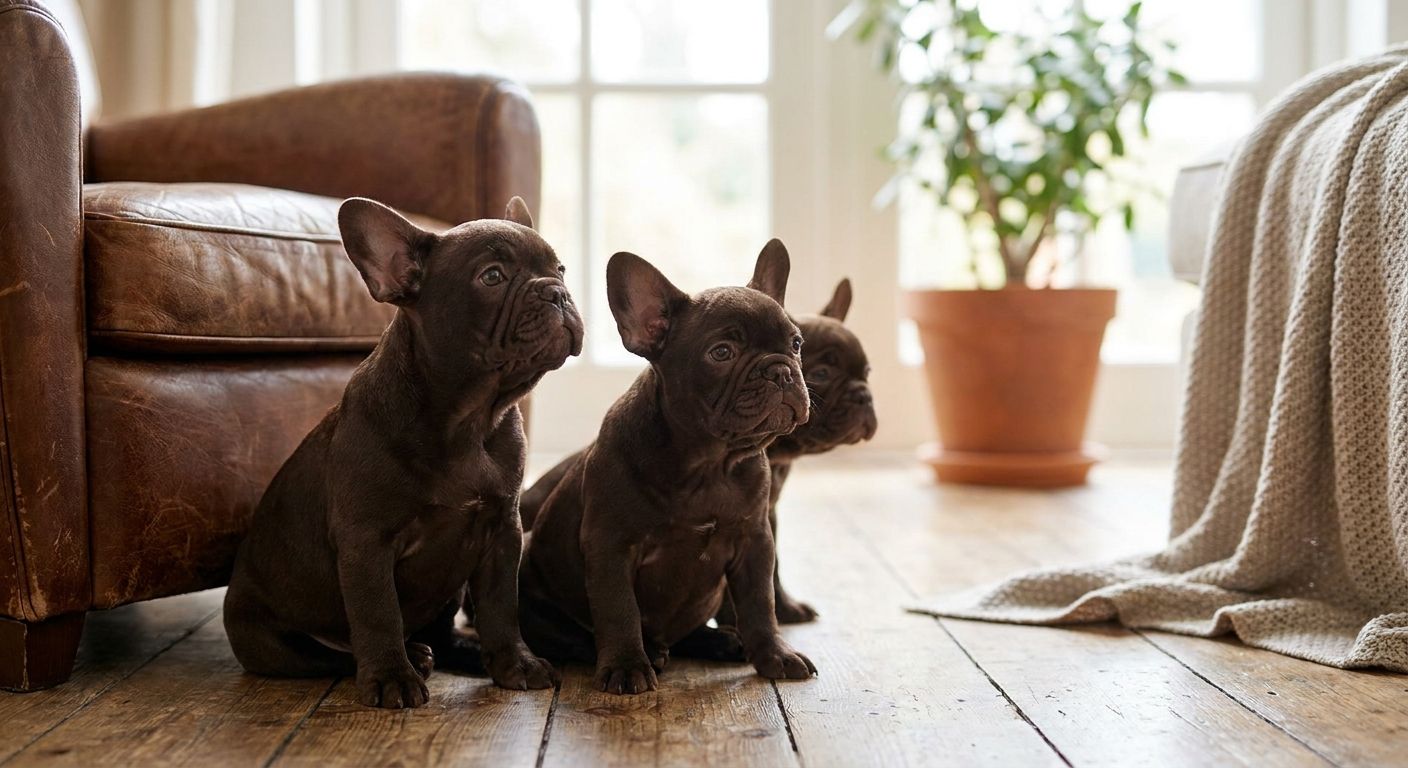
Chocolate French Bulldog puppies bring a rare liver-brown coat and a genetic backstory that experienced owners are better equipped to evaluate than first-timers. Here's what to check before you commit to one in 2026.
- Chocolate French Bulldog puppies come from a recessive gene (bb); a solid chocolate coat carries roughly the same health risk as a standard-colored puppy.
- Chocolate merle and chocolate tri combinations carry higher genetic risk and demand proof the parents aren’t both merle. Buy solid chocolate; consider merle only with confirmed non-merle parentage.
- Health testing and AKC paperwork matter more than the shade of brown; a breeder who skips genetic panels is a skip no matter the price tag.
- Experienced owners should budget extra time for skin and coat checks, since dilute colors run a higher rate of thinning coat and flaky skin.
Why this matters
Chocolate isn't a marketing label, it's a genetic outcome — two copies of the recessive b allele at the color locus. It shows up on its own or stacked with dilute genes to produce lilac, and it can appear underneath a merle pattern too. Breeders who take the color seriously, like Shrinkabulls, treat it as one data point among many rather than the headline on a puppy listing.
If you've raised a French Bulldog before, you already know the fold cleaning, the airway sensitivity, and the whelping math that come standard with this breed. Chocolate French Bulldog puppies add a layer on top: color-linked skin sensitivity, and in merle or tri combinations, a real chance of vision or hearing problems if the breeding pair wasn't planned around genetic testing. Before you ask a breeder about price, run through the best questions to ask a French Bulldog breeder before buying — the answers tell you more than the coat photos ever will.
Who this is for
This guide is for owners who've already done a full bulldog puppyhood: crate training, fold maintenance, vet visits for reverse sneezing, the whole routine. It's not written for a first-time buyer chasing a color they saw on social media. A chocolate French Bulldog puppy needs the same brachycephalic care as a standard fawn or brindle puppy, plus a breeder who can prove the color didn't come from an unplanned dilute-to-dilute pairing.
What to look for in chocolate French Bulldog puppies for experienced owners
Health testing before color testing
Ask for the sire and dam's results before you ask about the coat. A breeder who can hand you health testing panel results covering hips, patellas, and cardiac screening before you even mention chocolate is the one worth putting a deposit down with in 2026.
Genetics explained, not just labeled
Solid chocolate is bb. Lilac is bb plus dd. Chocolate merle stacks the merle gene on top of the chocolate base. A breeder who can walk you through which combination your puppy actually carries is giving you real information, not a sales pitch.
AKC paperwork that names the litter
Registration should list the actual dam and sire, not just a certificate with a color box checked. If a breeder can't produce that link between the paper and the parents, walk away regardless of how the puppy looks.
A breeder who lets you see the parents
Color-focused sellers sometimes ship puppies sight-unseen from out-of-state litters with no access to the parent dogs. Experienced owners should insist on seeing at least photos and health records of both parents before wiring a deposit.
Skin and coat maintenance built for dilute coats
Dilute-colored bulldogs, chocolate included, run a higher risk of thinning coat and flaky skin than their standard-colored littermates. Plan on a vet-recommended shampoo rotation and more frequent fold and tail-pocket checks than you'd run on a fawn puppy.
“A chocolate coat is a color, not a health guarantee.”
Top picks: chocolate coat variations and what they mean for you
Solid Chocolate — the safe pick
A true bb chocolate coat without merle or tri modifiers is the safest genetic bet in this color family. Expect a liver-brown nose and eye rims instead of black pigment — that's normal for the color, not a fault. Buy when the breeder shows two-generation health testing; the risk profile lines up almost one to one with a standard-colored French Bulldog.
Chocolate & Tan — the classic pattern
Tan points over a chocolate base are a pattern, not a health variable, so this carries the same risk profile as solid chocolate. Buy once paperwork and health screening check out.
Chocolate Merle — the rare one, and the one to slow down on
Merle over a chocolate base produces a marbled coat that commands some of the highest asking prices in this color family, and rare-color pricing has moved fast since 2024. A merle-to-merle pairing (double merle) raises real risk of deafness and vision defects. Consider it only if the breeder confirms one parent is non-merle — never both.
Chocolate Tri — pattern on pattern
Tri adds tan points to a merle or non-merle chocolate base, and it's currently one of the rarest combinations in the breed. Consider it, but ask the same non-merle-parent question you'd ask about a straight chocolate merle.
Lilac — the chocolate-plus-blue dilute
Lilac combines the chocolate (bb) gene with the blue dilute (dd) gene, producing a pale gray-lavender coat. It's a step further into dilute genetics than chocolate alone. Consider it if you're already comfortable managing a dilute coat's skin needs; Skip it if this is your first dilute-colored French Bulldog.
See current chocolate litters
Check available puppies and upcoming litters at Shrinkabulls.
What to avoid
- Double merle chocolate breeding. Two merle-gene parents can produce puppies with missing pigment, deafness, or blindness — read the double merle health risks explanation before an extra-rare marbled coat talks you into skipping this check.
- Color-only pricing with no test results. A breeder who leads with "rare chocolate" and can't produce a health panel is pricing the shade, not the dog.
- Puppies sold without a written health guarantee. Get the guarantee terms in writing before any deposit changes hands, no matter how good the color photos look.
Verdict comparison
| Color Variant | Rarity | Genetic Risk | Verdict |
|---|---|---|---|
| Solid Chocolate | Uncommon | Low | Buy |
| Chocolate & Tan | Uncommon | Low | Buy |
| Chocolate Merle | Rare | Moderate to high, parentage dependent | Consider |
| Chocolate Tri | Very rare | Moderate to high, parentage dependent | Consider |
| Lilac | Rare | Moderate | Consider / Skip for first-time dilute buyers |
FAQ
What is a chocolate French Bulldog?
A chocolate French Bulldog carries two copies of the recessive b allele, producing a liver-brown coat, nose, and eye rims instead of standard black pigment. It’s a genetic color variation, not a separate breed or health category on its own.
Are chocolate French Bulldog puppies rare?
Solid chocolate is uncommon but not the rarest color in the breed; chocolate merle and chocolate tri combinations are considerably rarer because they require stacking multiple genes. Rarity drives price more than it drives health risk when the base color is solid chocolate.
Are chocolate French Bulldogs healthy?
A solid chocolate French Bulldog carries roughly the same health profile as a standard-colored one when both parents pass health screening. Risk increases specifically with merle-to-merle pairings, not with the chocolate gene itself.
How much do chocolate French Bulldog puppies cost in 2026?
Pricing varies by breeder, health testing, and how rare the specific pattern is, with merle and tri combinations commanding the highest premiums in 2026. Ask any breeder for an itemized explanation of what the price covers before comparing quotes.
Is a chocolate merle French Bulldog puppy safe to buy?
It’s safe when the breeder can confirm at least one parent is non-merle, since merle-to-merle pairings raise real risk of deafness or vision problems. Ask for that confirmation in writing before putting down a deposit.
What’s the difference between chocolate and lilac French Bulldogs?
Chocolate comes from the bb gene alone, while lilac adds the blue dilute (dd) gene on top of chocolate for a pale gray-lavender coat. Lilac is a further step into dilute genetics and generally needs the same or more careful skin care.
Do chocolate French Bulldogs have more skin problems than other colors?
Dilute-colored bulldogs, including chocolate, run a higher tendency toward thinning coat and flaky skin than standard-colored littermates. Regular fold checks and a vet-approved shampoo routine keep this manageable for most owners.
How do I verify a chocolate French Bulldog puppy is AKC registered?
Legitimate AKC paperwork names the actual dam and sire in the litter, not just a generic certificate. If a breeder can’t tie the registration document to the specific parents of your puppy, treat that as a red flag.
One last thing
Chocolate French Bulldog puppies are often born looking almost black. The liver-brown nose and coat lighten gradually over the first 8 to 10 weeks as pigment develops, so don't judge the final shade off week-one photos — the puppy you pick up at 8 weeks will look noticeably different from the newborn pictures the breeder sent you.
Related guides
- Merle bulldog price: what rare-color puppies really cost
- How to choose between a merle, lilac, or blue bulldog puppy
