


 REVIEWS




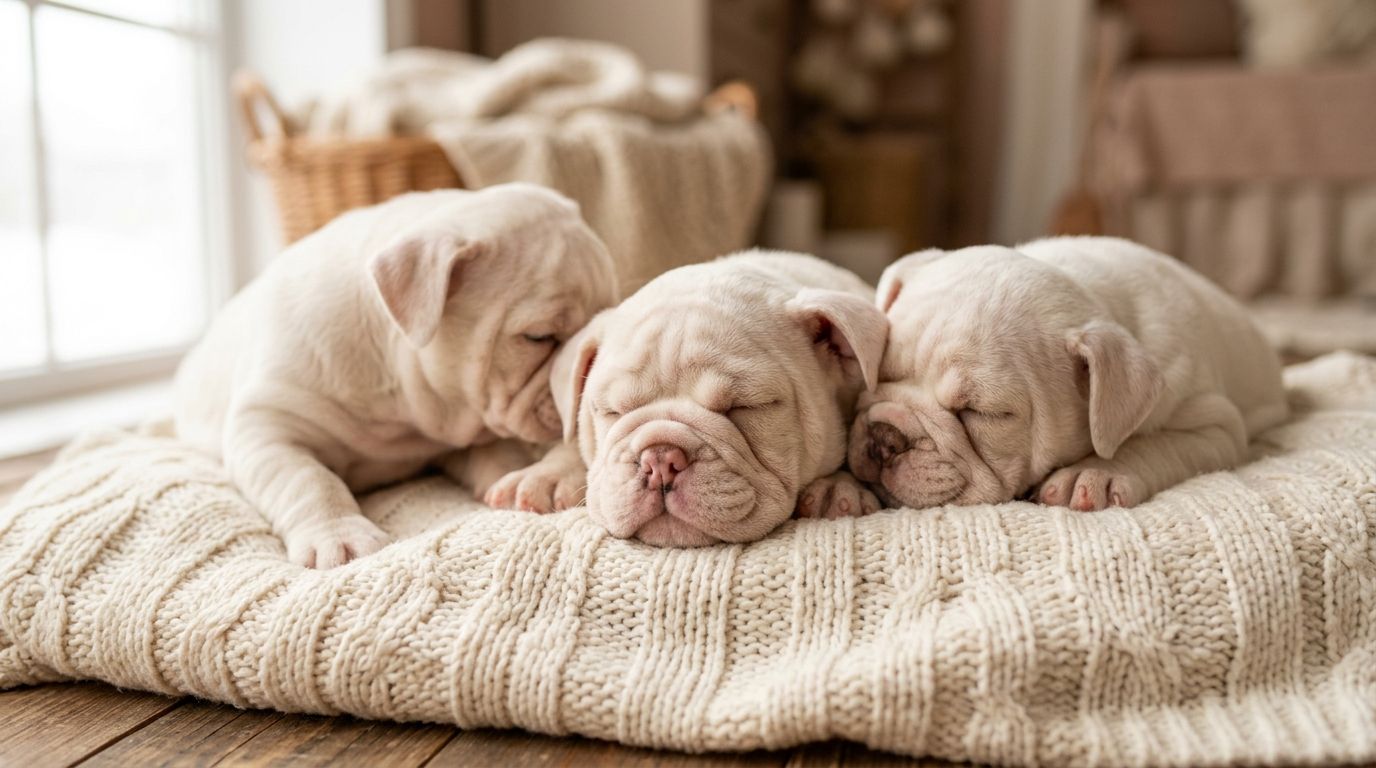
Cream English Bulldog puppies for soft-color fans are bulldogs bred toward the lightest, most muted end of the standard color range—ivory, pale biscuit, soft off-white—for owners who want a gentler look than a classic red or brindle bulldog. Unlike merle, blue, or lilac, cream sits inside the AKC breed standard, so soft-color fans get the aesthetic they want without the dilute-gene debate that follows non-standard colors.
- Cream English Bulldog puppies are a standard AKC color, not a dilute variant like blue or lilac.
- Pigment on nose and eye rims usually stays black on a true cream, unlike dilute coats.
- Verify AKC papers and pedigree before reserving in 2026 — cream is easy to mislabel in bright-light photos.
- Budget for the full first-year cost, not just the reservation deposit, before you commit.
Why cream English Bulldog puppies matter for soft-color fans
Soft-color fans aren't chasing the rarest color on the chart. They want a specific, calmer look that photographs well and doesn't clash with a bright brindle pattern. That's a genuinely different buying motivation than someone hunting merle or lilac, and it changes what you check before you reserve.
Because cream is standard-recognized, it doesn't carry the same dilute-gene conversation that surrounds choosing between a merle, lilac, or blue bulldog puppy. That's a real advantage if your priority is a soft coat plus a straightforward pedigree. It also means some sellers label a pale fawn puppy as cream to capture the same buyer interest, so you need to know the difference before a deposit leaves your account.
Confirm the coat is genuinely cream, not faded fawn
A true cream coat holds its tone from puppyhood into adulthood. A pale fawn often darkens or shows more contrast as the coat matures, and that is not the same dog you thought you reserved at 6 weeks.
- Ask for photos taken in natural daylight, never studio lighting that washes out color.
- Check nose and eye-rim pigment in person or on video, not in edited stills.
- Request current photos of both parents, not only the litter.
- Ask the breeder directly whether the color is genetically confirmed or a visual call.
- Get the color description written into the sales contract.
Verify AKC registration and pedigree before you reserve
Color claims mean nothing without paperwork behind them. Verifying AKC registration papers on the actual puppy — not just the parents — takes less time than most buyers expect and settles most disputes before they start.
- Match the litter registration number to the specific puppy you're shown.
- Confirm sire and dam are individually registered, not described as AKC bloodline.
- Ask how many generations back the pedigree is documented.
- Cross-check the registered kennel name against AKC records.
- Request the pedigree chart before you pay, not after.
Ask for DNA color genetics testing on the litter
A visually cream coat and a genetically confirmed cream coat aren't always the same puppy. DNA color genetics test kits built for rare-color bulldog breeding give you a lab answer instead of an opinion.
- Ask whether both parents have been panel-tested for coat color genes.
- Request the lab report itself, not a breeder summary of it.
- Confirm which specific genes the panel covered — panels vary by lab.
- Ask whether littermates were tested individually or only the parents.
Compare cream littermates side by side
Color is one variable. Structure, breathing, and temperament matter more over a 10-year life, and they don't show up in a color photo.
- Watch each puppy at rest — labored breathing is a flag regardless of coat shade.
- Ask for weekly weight tracking across the first 8 weeks.
- Compare littermates in person or on a live video call, not through curated albums.
- Ask which puppy the breeder would keep, and why.
- Note which puppies approach you first versus retreat.
Reserve early, but only after the paperwork checks out
Demand for a soft standard color means cream litters move fast, often reserved before the puppies reach 8 weeks. That's exactly why verification comes first. Paying a deposit before confirming color and pedigree is the most common regret buyers describe.
- Ask what the deposit and reservation process looks like before birth versus after.
- Confirm what happens if the litter produces fewer cream puppies than projected.
- Get refund and transfer terms in writing.
- Ask for a specific estimated go-home date, not a vague window.
Reserve a cream puppy the right way
Check litter availability and deposit terms before you commit to anything.
Budget for the full first year, not just the puppy
A cream bulldog costs the same to raise as any other English Bulldog color. Vet visits, food, and brachycephalic-specific care don't discount because the coat is lighter. Soft-color demand can push reservation pricing on well-documented litters the same way rarer dilutes do — the merle bulldog price breakdown is a useful reference even for standard-color buyers, because first-year vet and diet costs track closely across colors.
- Plan for the full puppy vaccination series, typically spread across the first 16 weeks.
- Include spay or neuter timing in your 2026 budget conversation with your vet.
- Account for skin fold care supplies from week one.
- Set aside a reserve for brachycephalic-specific vet consults.
Comparison: soft-palette color options for English Bulldogs
| Coat option | Best for | Key limitation | Verdict |
|---|---|---|---|
| Cream | Buyers who want a soft, AKC-standard coat with clean pedigree | Easily confused with faded fawn without paperwork | Buy |
| Light fawn | Buyers who want warmth without high-contrast markings | Shade can shift as the puppy matures | Buy |
| Cream and white pied | Families who want a lighter face and body pattern together | Lightly pigmented areas need sun awareness | Consider |
| Blue (dilute) | Collectors chasing a rarer palette near cream | Dilute genetics carry coat and skin discussion in the breed | Hold |
| Lilac (dilute) | Enthusiasts wanting the palest possible coat | Double-dilute pairings raise added health questions | Hold |
Cream wins the practical comparison for soft-color fans in 2026: it delivers the muted look without stepping into dilute-gene territory that blue and lilac buyers have to research much harder.
“If a cream puppy has a pink or liver-toned nose, stop and ask more questions before you send a deposit.”
Common mistakes soft-color fans make
- Trusting lighting over paperwork. Bright studio light makes nearly any fawn puppy read as cream. Daylight photos and pedigree records settle it.
- Prioritizing color over structure. A beautiful cream coat on a puppy with poor jaw and skull proportions is still a dog facing harder years.
- Skipping DNA verification. A breeder's visual color call is not a lab-confirmed genetic result, and only one of those holds up later.
- Underestimating first-year costs. Soft-color demand can raise reservation pricing, and ongoing vet and diet costs don't drop because the coat is pale.
- Reserving before checking registration. A deposit on an unverified puppy is the fastest route to disappointment at pickup day.
FAQ
What makes a cream English Bulldog different from a fawn one?
Cream is a lighter, more uniform shade that holds its tone into adulthood, while fawn often darkens or shows more contrast as the coat matures. Pedigree records and DNA color panels are the only reliable way to confirm which one you’re looking at.
Is cream a standard AKC color for English Bulldogs?
Yes, cream falls within the AKC-recognized color range for English Bulldogs, unlike merle, blue, or lilac, which are non-standard. That distinction matters if you want a puppy that sits squarely inside breed standard documentation.
Do cream English Bulldog puppies cost more than standard colors?
Demand for soft, lighter coats can push reservation pricing higher on well-documented cream litters in 2026, similar to how rarer colors carry a premium. Ask the breeder for current litter details rather than assuming a fixed markup.
Are cream English Bulldogs prone to more health issues than other colors?
No. Because cream is a standard color rather than a dilute, it doesn’t carry the dilute-gene discussion tied to blue and lilac coats. Standard brachycephalic health considerations still apply to every English Bulldog regardless of coat color.
How do I verify a cream coat isn’t just a faded fawn?
Ask for natural-daylight photos, request the parents’ DNA color panel results, and check nose and eye-rim pigment on a live video call. Lab results and paperwork answer this better than photos ever will.
What should I ask before reserving a cream puppy?
Ask whether the color is genetically confirmed, how many pedigree generations are documented, and what the deposit refund terms are before birth versus after. Get all three answers in writing before any money moves.
Do cream bulldogs need special skin care?
Lightly pigmented dogs can be more sun-sensitive, so shade during outdoor time in 2026 summer months matters. Beyond sun awareness, skin fold care is the same as for any other English Bulldog color.
Is a cream English Bulldog a good choice for a first-time owner?
Yes, coat color has no bearing on temperament or trainability in English Bulldogs. Focus your first-time-owner decision on breeder support, health testing, and structure rather than shade.
One last thing
The detail most soft-color fans miss: a true cream bulldog typically keeps black pigment on the nose and eye rims, because cream is a standard color rather than a dilute. A pink or liver-toned nose on a puppy sold as cream points toward a dilute line, and that's a different purchase with different research attached. Check pigment before color in 2026, and the rest of the decision gets easier.
Related guides
- Merle bulldog price: what rare-color puppies really cost
- How to budget for the true cost of an English Bulldog puppy
