


 REVIEWS




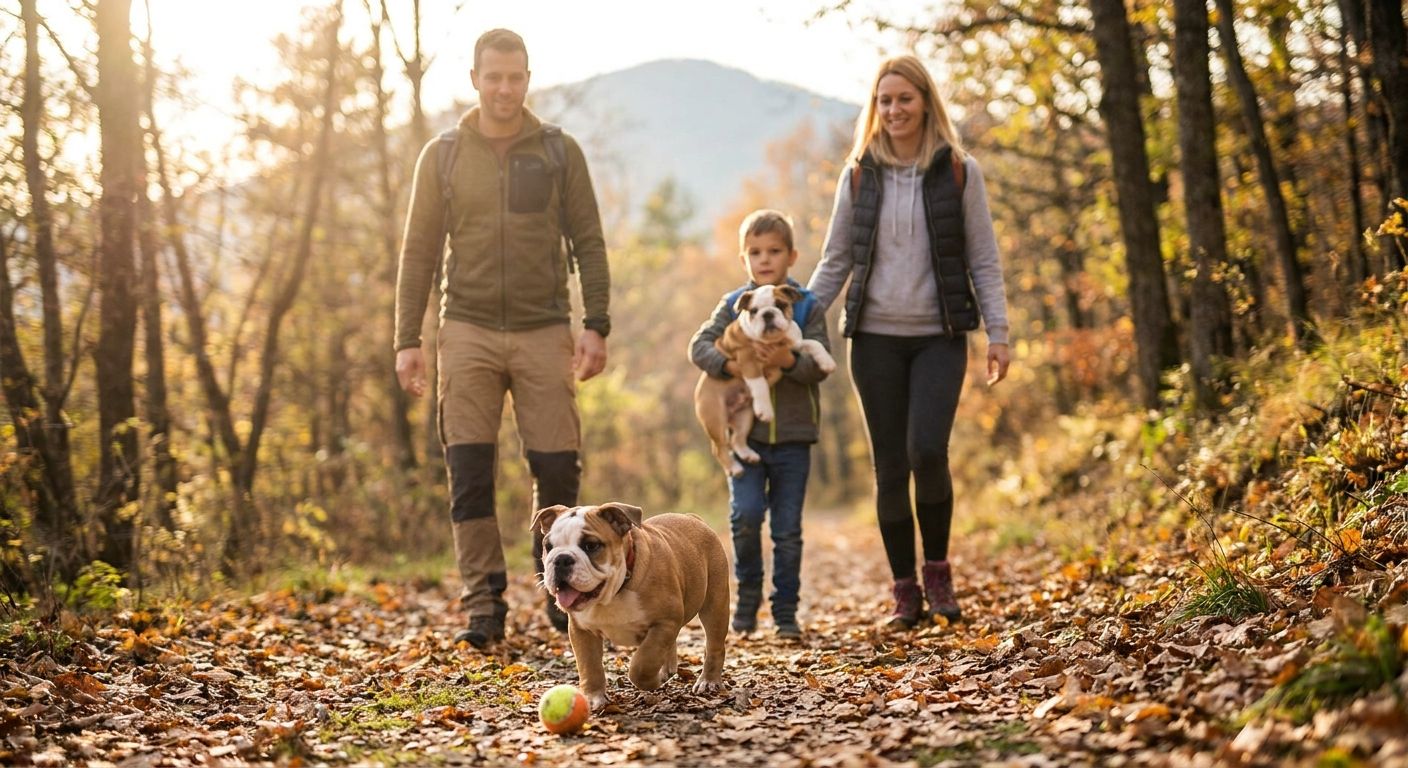
English Bulldog puppies for active families are dogs built for daily play, short walks, and yard time with kids rather than long runs or high-mileage hikes. "Active" here means consistent, manageable movement, not marathon training, because the breed's short muzzle and thick frame cap how much cardio it can safely handle. What makes this segment different from a generic bulldog buyer is the mismatch risk: families picture a dog that keeps pace on bike rides, and English Bulldogs simply aren't built for that job.
- English Bulldog for active families fits two 15-20 minute walks daily, not distance running – buy for companionship, not cardio.
- Temperatures above 80F risk breathing distress in English Bulldogs – shift exercise to early morning or evening in summer 2026.
- Shrinkabulls sells AKC-registered English Bulldog puppies with health testing paperwork worth verifying before you buy.
- Joint supplements and weight control matter more long-term for active households than which bulldog variety you pick.
Why this matters for active families
Families searching for an english bulldog for active families usually already own a yard, a couple of kids, and a Saturday routine built around a walk to the park. What they need to know before buying is whether the dog can keep up without overheating or needing to be carried home halfway through.
English Bulldogs are brachycephalic – the short muzzle that gives them their signature face also narrows the airway, which limits how hard and how long they can exert themselves compared to a long-nosed breed. That's a structural fact, not a training gap, and it shapes every decision below: exercise timing, home setup, and which bulldog variety fits your household. Shrinkabulls breeds toward broader nostrils and shorter backs specifically to ease some of that airway strain, but no English Bulldog turns into a distance runner in 2026 or any other year.
If your family's idea of "active" means trail runs or off-leash chase sessions every day, an English Bulldog bred for hot climates still needs a modified routine – not a different dog altogether, just different expectations going in.
Building an active-family routine around an English Bulldog puppy
Match your walk schedule to the breed's real stamina
Most adult English Bulldogs cap out well below what an active family assumes a "dog" needs.
- Plan on two walks a day, 15-20 minutes each, as a realistic daily ceiling.
- Watch for open-mouth breathing, wheezing, or lagging behind – stop and cool the dog down immediately.
- Split one long walk into two shorter ones instead of pushing through a single 40-minute loop.
- Save vigorous play like fetch or tug for early morning or after sunset in warm months.
- Track your dog's pace for the first few weeks to learn its actual limit, not an internet estimate.
Build a heat-safe exercise routine
Heat, not distance, is what actually sidelines an English Bulldog.
- Exercise before 9am or after 7pm from roughly May through September in most US climates.
- Carry water on any outing longer than 10 minutes.
- Skip outdoor exercise entirely on days above 85F with high humidity; a short indoor play session replaces it.
- Cool tile floors, a fan, or an air-conditioned room do more for stamina than any training plan.
- Ask the breeder whether the litter's parents show signs of labored breathing at rest – a red flag regardless of color or price.
Set up your yard and home for controlled play
A fenced yard is not the same thing as a safe yard for a brachycephalic breed.
- Fence in shade coverage, not just square footage – bulldogs overheat faster in full sun.
- Crate-train early so weekend outings don't turn into destructive afternoons alone; the goal is a dog that settles, not one that panics when the family leaves.
- Keep floors non-slip near stairs; the breed's low center of gravity and short legs make hardwood a hazard for puppies still building muscle.
- Rotate two or three chew toys instead of leaving one out, which keeps a home-alone puppy occupied without overexerting.
Choose the right bulldog variety for your climate and space
Not every bulldog on the market fits an active family the same way, and the differences matter more than color.
| Variety | Best for active families | Key limitation |
|---|---|---|
| Standard English Bulldog | Moderate-energy households with yard access and short daily walks | Heat intolerance, limited stamina for long outings |
| XL English Bulldog | Larger families wanting a more substantial dog presence | Heavier frame stresses joints faster; needs more caution on hot days |
| French Bulldog | Smaller households or apartment-adjacent yards with lower daily exercise needs | Even lower heat tolerance than English Bulldogs |
| Mini English Bulldog | Families with limited yard space who still want the classic temperament | Still brachycephalic; same breathing caution applies |
An English Bulldog for active families works best when "active" means yard play and short walks, not sustained cardio – that's the sentence to keep in mind while comparing litters.
Ask the breeder about airway and joint health before you buy
Color and price get most of the attention online; airway grading and hip clearances are what actually determine whether your active family gets a dog that keeps up.
- Ask whether the sire and dam have been evaluated for BOAS (brachycephalic airway syndrome) signs.
- Request any available hip and patella screening on the parents.
- Get the puppy's vet check history, not just a verbal assurance.
- Vet the breeder itself before you vet the puppy – a breeder that won't answer health questions in writing is a bigger risk than any single litter.
- Confirm AKC registration paperwork matches the puppy you're actually taking home, not a stock photo litter.
Budget for joint supplements and weight management
Weight is the single biggest lever an active family controls after the puppy comes home.
- Keep the dog at a lean body condition; extra weight compounds both joint strain and breathing effort.
- Introduce joint and mobility supplements proactively in adulthood rather than waiting for visible stiffness.
- Measure food rather than free-feeding, especially once the puppy's exercise routine is established.
- Schedule a vet weight check every six months through the dog's first two years.
Socialize your puppy around kids, pets, and weekend outings
An English Bulldog that's calm around chaos is worth more to an active family than one with perfect obedience.
- Introduce the puppy to household noise, kids' friends, and other pets gradually over the first month.
- Practice short car rides before the first family road trip or errand day.
- Reward calm behavior around excited kids rather than correcting only bad behavior.
- Build tolerance for handling – paws, ears, mouth – since active households mean more incidental contact.
See available English Bulldog litters
Browse current AKC-registered puppies and ask about health testing before you reserve.
Common mistakes active families make
- Scheduling walks for midday heat. Summer afternoons above 85F are exactly when an English Bulldog is most likely to overheat.
- Assuming the dog can keep pace on bike rides or jogs. The breed's airway anatomy caps sustained cardio regardless of training.
- Skipping crate training, then blaming the dog for destructive behavior when left alone during weekend outings.
- Choosing a puppy by color rarity alone instead of confirming airway and joint health testing first.
- Under-budgeting for joint supplements once the dog reaches middle age, treating it as optional rather than routine.
FAQ
Are English Bulldogs good for active families?
English Bulldogs work well for active families who define active as short walks, yard play, and kid-friendly fun rather than running or hiking. The breed’s short muzzle limits sustained cardio, so households expecting a jogging partner should look elsewhere.
How much exercise does an English Bulldog need per day?
Most adult English Bulldogs do well with two 15-20 minute walks a day plus some yard play. Puppies need shorter, more frequent sessions to protect developing joints.
Can English Bulldogs go on hikes or runs?
English Bulldogs are not suited to hikes or runs because their airway anatomy restricts prolonged heavy breathing. Short, flat walks are the safer substitute for families wanting outdoor time together.
What temperature is too hot for an English Bulldog?
Days above 85F with high humidity are risky for English Bulldogs and outdoor exercise should move indoors. Even 80F with direct sun and exertion can trigger labored breathing.
Is a Mini English Bulldog easier for active families than a standard English Bulldog?
A Mini English Bulldog offers the same temperament in a smaller footprint but carries the same brachycephalic breathing caution as the standard size. Space, not activity tolerance, is the main difference.
How do I know if a bulldog breeder health-tests for airway problems?
Ask the breeder directly whether sire and dam have been evaluated for BOAS signs and request documentation in writing. A breeder unwilling to answer in writing is a red flag independent of price or color.
Do English Bulldogs do well with kids in an active household?
English Bulldogs generally do well with kids because of their sturdy build and even temperament, provided play is supervised and heat exposure is managed. Gradual socialization in the first month matters more than the breed’s natural disposition.
What’s the difference between an English Bulldog and a French Bulldog for activity level?
English Bulldogs and French Bulldogs have similarly low tolerance for sustained cardio, but French Bulldogs run even lower on heat tolerance due to their smaller frame. Neither breed fits families expecting a running or hiking companion.
One last thing
The single biggest predictor of a good match for active families isn't the family's activity level at all – it's whether the house runs air conditioning consistently from May through September. An English Bulldog for active families succeeds or fails on heat management more than on exercise tolerance, and that's the detail most buyers skip past while comparing colors and prices in 2026.
Related guides
