


 REVIEWS




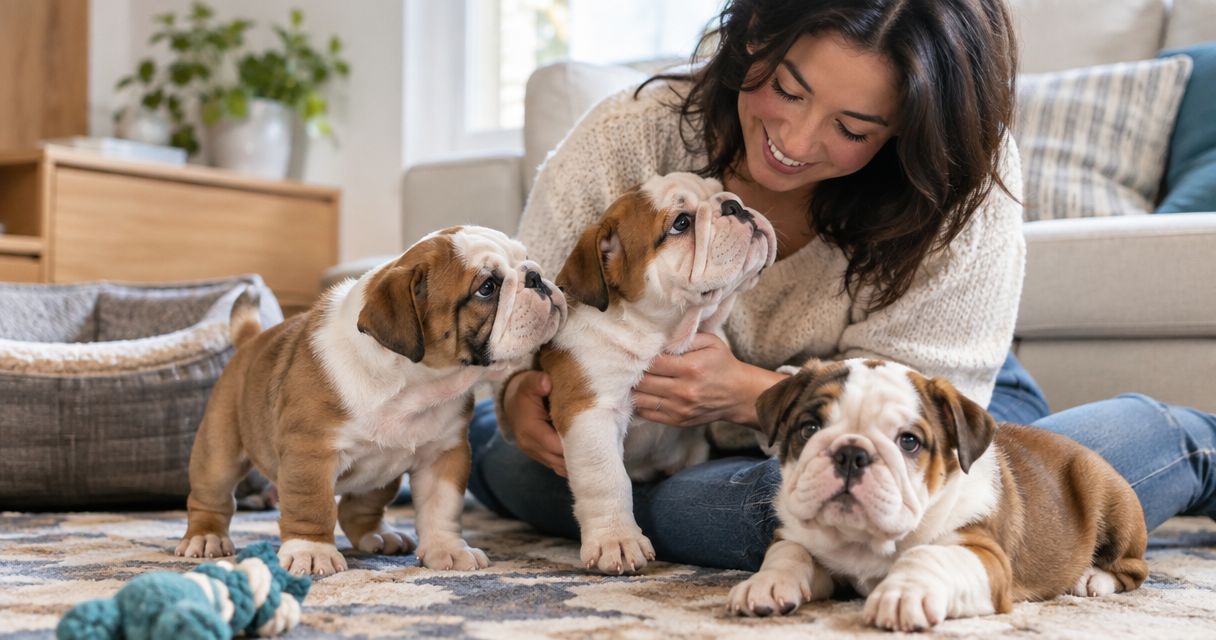
Owners downsizing from a larger breed to an English Bulldog puppy in 2026 are trading a 55-90 lb dog for a compact companion built for smaller homes, shorter walks, and a calmer daily rhythm. The transition isn't just about size on paper — exercise tolerance, heat sensitivity, and feeding volume all shift at the same time, and most of the mistakes downsizing owners make come from assuming "smaller dog" means "same care, less of it."
- English Bulldog puppies for owners downsizing from a larger breed swap a 55-90 lb dog for a 40-50 lb companion with lower exercise needs.
- Shrinkabulls breeds AKC-registered English Bulldog puppies suited to smaller living spaces and shorter, gentler walks.
- Heat and airway sensitivity replace stamina and yard space as the top planning concern after downsizing.
- Litters at Shrinkabulls fill on deposit before birth, so early reservation matters more than breed size when timing your switch.
Why English Bulldog puppies matter for owners downsizing from a larger breed
Most downsizing conversations start after a knee surgery, a move to a smaller property, or simply not wanting to walk 60 lbs of Labrador at 6am anymore. The empty-nest household is one of the most common downsizing profiles we see, and the reasons are almost always physical: less yard, less time, less tolerance for a dog that pulls on the leash.
An English Bulldog puppy in 2026 solves that with a body built low and wide rather than tall and fast. There's no invented magic here — it's the AKC breed standard doing the work: a thick-set, low-swung frame that simply doesn't need the mileage a working or sporting breed does.
That doesn't mean lower maintenance across the board. Skin folds, breathing, and heat all need attention that a Labrador or a German Shepherd owner never had to think about. The segment that struggles most isn't the one that under-researches — it's the one that assumes the downsizing math only runs in one direction.
Step 1: Reset your exercise expectations
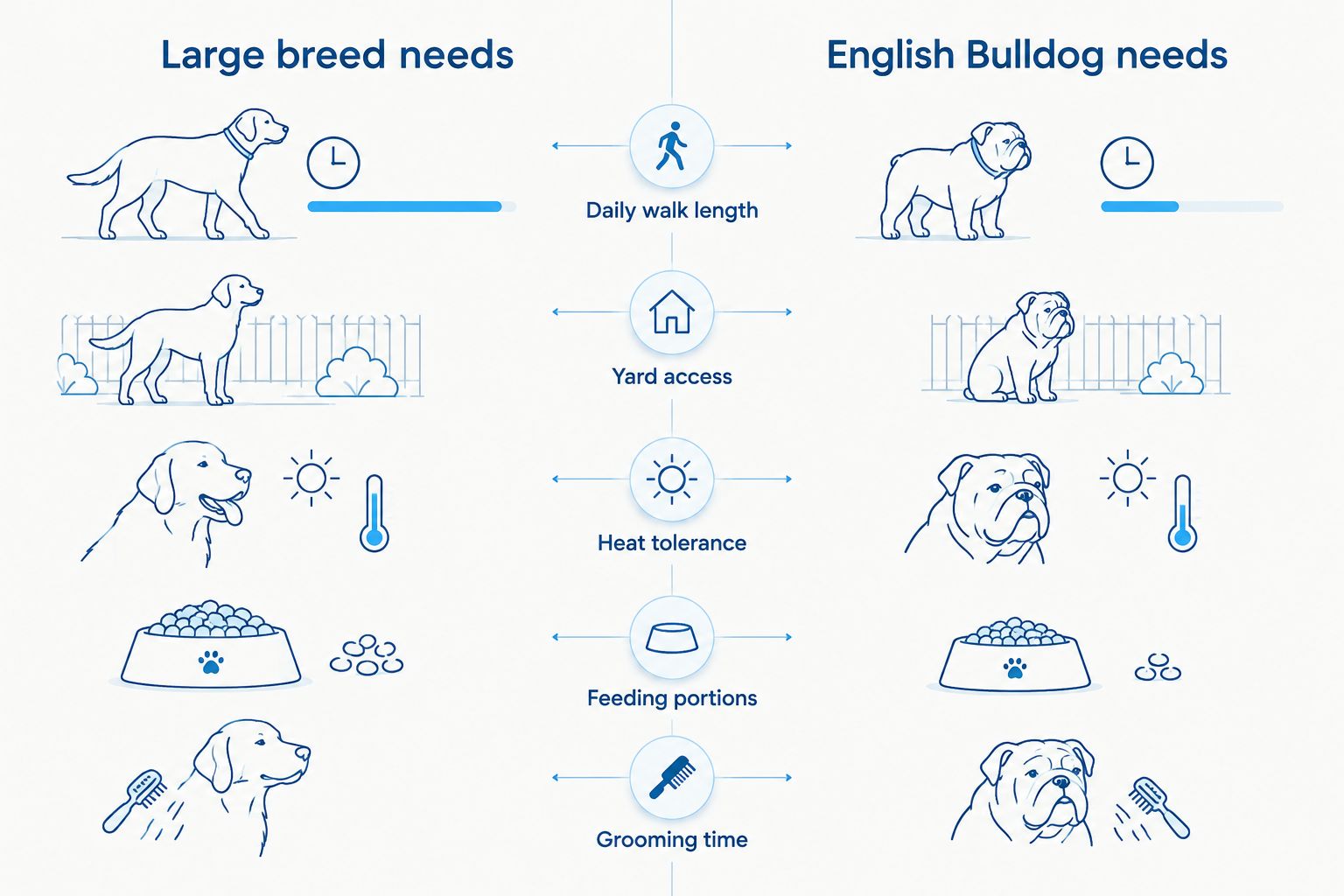
Drop the mileage habit first. A large breed owner is used to structuring the day around a 30-45 minute walk or a yard sprint session; an English Bulldog puppy does better on frequency over distance.
- Swap one long walk for two or three short 10-minute walks
- Move outdoor time to early morning or evening once temperatures climb
- Watch for open-mouth breathing or gagging sounds as a stop signal, not a push-through signal
- Keep play sessions on soft or shaded ground, not asphalt in direct sun
- Track panting recovery time — a bulldog that doesn't settle in 10-15 minutes after light play needs a vet check, not more exercise
Step 2: Right-size your home setup
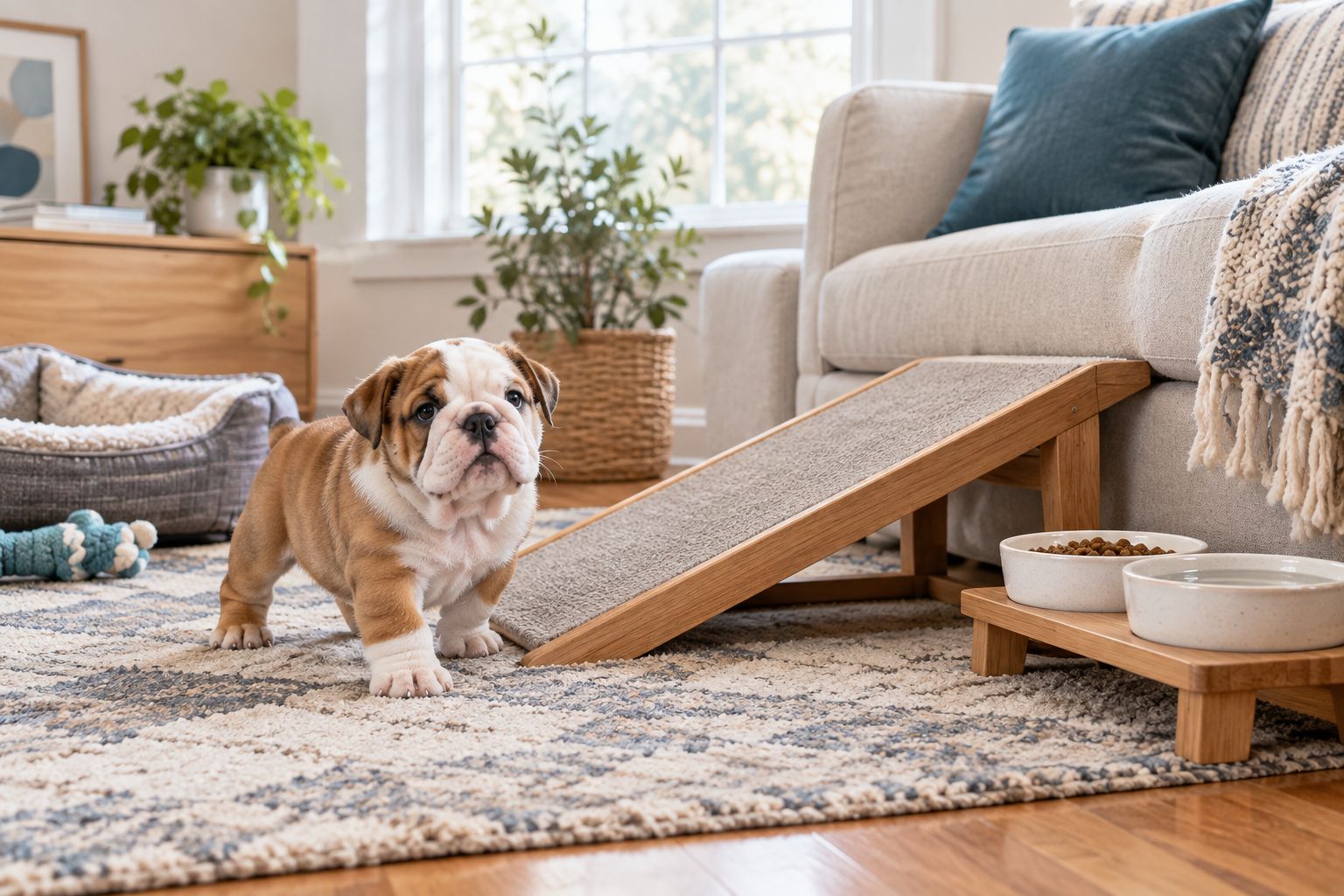
A large-breed household usually has wide floor space and maybe a dog door to a yard. That layout doesn't automatically suit a bulldog puppy — hardwood and tile are harder on a low, heavy-chested frame than most owners expect, and jumping on and off furniture puts real strain on young joints.
- Add rugs or rubber-backed runners on any hard flooring the puppy crosses daily
- Use a low ramp or step for couches and beds instead of allowing jumps
- Set the water and food bowls at a slightly raised height to ease neck strain during eating
- Keep the sleeping area away from heating vents and direct sun through windows
- Check the flooring guide for English Bulldog homes before finalizing a new setup, especially if the previous dog never needed traction help
Step 3: Adjust your budget line items
A smaller dog doesn't mean a smaller bill — it means a different bill. Large-breed owners are used to budgeting for volume: more food, bigger crates, higher-dose flea and heartworm treatment. English Bulldog owners redirect that budget toward skin care, wrinkle maintenance, and breathing-related vet visits instead.
- Plan for wrinkle and fold cleaning supplies as a recurring cost, not a one-time purchase
- Set aside funds for a vet familiar with brachycephalic anatomy, since routine visits often run longer
- Price pet insurance early, before any condition becomes pre-existing
- Budget for a smaller food volume but a potentially pricier limited-ingredient formula if skin sensitivity shows up
- Reprice your annual vet reserve using a true first-year estimate rather than your last dog's numbers
Rare-color English Bulldog lines carry their own cost structure that has nothing to do with size — worth a separate look if a merle, lilac, or blue puppy is on your shortlist.
Step 4: Prepare for brachycephalic health differences
This is the step most large-breed owners skip, and it's the one that matters most. A Labrador or a Shepherd rarely struggles to breathe on a warm afternoon. An English Bulldog puppy can, and 2026 heat advisories don't care what breed you're used to managing.
- Learn the early signs of overheating specific to short-nosed breeds: loud snoring-like breathing at rest, blue-tinged gums, collapse after mild activity
- Keep a cooling mat or damp towel on hand for warm-weather months
- Schedule outdoor time around temperature, not habit
- Ask about airway assessment at the first vet visit, not just vaccinations
- Learn to recognize skin fold irritation early, since it's far more common in bulldogs than in most large breeds
Step 5: Vet the breeder before you reserve
Downsizing owners often research the breed heavily and the breeder lightly, because their last dog came from a shelter or a big-box pet store. A purebred English Bulldog puppy needs the opposite order of operations.
- Confirm AKC registration paperwork before any deposit changes hands
- Ask to see both parents' health testing, not just photos of the litter
- Request a video call with the breeder if an in-person visit isn't possible
- Get the health guarantee in writing before signing anything
- Ask directly about hip, elbow, and airway screening results on the sire and dam
Shrinkabulls breeds AKC-registered English Bulldog puppies with full health documentation available before a deposit is placed — the same standard should apply no matter which breeder a downsizing family chooses.
Step 6: Plan the homecoming transition
The last mile of downsizing is logistical, not medical. A large-breed household typically has an oversized crate, a heavy-duty leash setup, and feeding gear scaled for a much bigger dog — almost none of it transfers.
- Downsize crate hardware before puppy pickup day, not after
- Swap any harness or collar gear built for pulling strength to a brachycephalic-safe design
- Introduce resident pets slowly over the first week rather than in one meeting
- Keep the first few days low-stimulation — new smells and a new house are enough change on their own
- Confirm pickup or delivery logistics with the breeder at least two weeks ahead
Reserve your puppy before birth
Lock in a spot on an upcoming English Bulldog litter with a deposit.
Which bulldog option fits a downsizing household best
| Option | Best for | Key limitation |
|---|---|---|
| Standard English Bulldog puppy | Owners wanting the full breed-standard size and temperament | Heat sensitivity and breathing management required year-round |
| Miniature English Bulldog | Smaller living spaces where floor space is the top constraint | Fewer breeders specialize in the smaller line |
| Retired adult English Bulldog | Owners who want to skip the puppy stage entirely | Limited availability compared to puppies |
| French Bulldog puppy | Owners downsizing further, into apartments or single-room living | Even more airway sensitivity than an English Bulldog |
Verdict: a standard English Bulldog puppy is the right downsizing move for most large-breed owners in 2026 — the breed's low-swung, thick-set frame delivers the size reduction without asking the household to relearn an entirely different temperament.
Common mistakes downsizing owners make
- Assuming lower energy means lower attention. English Bulldog puppies still need daily skin, fold, and breathing checks a Labrador owner never had to run.
- Buying large-breed gear "just in case." Oversized crates and harnesses built for pulling strength don't fit a bulldog's frame or temperament.
- Skipping the heat conversation. A dog that used to handle a midday yard session in July can't do the same thing as a bulldog.
- Underbudgeting the vet line. Brachycephalic-experienced vets often charge more per visit, and visits happen more often in year one.
- Rushing the reservation. Downsizing families sometimes treat the breeder search like a shelter visit — walk in, pick a puppy, leave. A reputable English Bulldog breeder runs on a reservation and health-testing timeline instead.
FAQ
What’s the best bulldog breed for someone downsizing from a large dog in 2026?
A standard English Bulldog puppy is the most direct downsize from a 55-90 lb breed, landing at roughly 40-50 lbs with a similarly loyal, home-based temperament. Owners wanting an even smaller footprint often move to a French Bulldog instead.
How much smaller is an English Bulldog puppy than a large breed dog?
Adult English Bulldogs typically run 40-50 lbs under the AKC breed standard, compared to 55-90 lbs for many common large breeds. The difference shows up most in exercise needs and feeding volume, not just weight on a scale.
Do English Bulldog puppies need less exercise than large breeds?
Yes, English Bulldog puppies do better on several short walks than one long one, unlike most large breeds built for distance. Heat and airway limits, not laziness, are the reason exercise sessions stay short.
Is an English Bulldog easier to manage in an apartment or small home?
An English Bulldog’s compact, low-energy build generally fits smaller living spaces better than a large breed does. Flooring and joint support still need adjustment, since bulldogs are heavier per inch of height than they look.
What should a downsizing owner budget differently for an English Bulldog puppy?
Expect the budget to shift toward skin fold care, wrinkle maintenance, and a vet experienced with brachycephalic breeds rather than large-volume food and gear. First-year vet visits often run more frequent than a large-breed owner is used to.
Can an English Bulldog puppy live well with an older, downsizing couple?
Yes, the breed’s low exercise requirement and home-based temperament suit retired or empty-nest households well. The main planning point is heat management during outdoor time, not activity level.
What health issues should downsizing owners watch for in English Bulldogs?
Watch for skin fold infections, breathing difficulty in heat, and joint sensitivity given the breed’s heavy, low-swung frame. None of these are unique to downsizing, but large-breed owners often aren’t trained to spot them early.
How do I reserve an English Bulldog puppy before it’s born?
Most reputable breeders, including Shrinkabulls, take a deposit against an upcoming litter once health testing on the parents is confirmed. Ask for AKC registration details and a written health guarantee before the deposit changes hands.
One last thing
The part downsizing owners underestimate most isn't the exercise or the budget — it's the skin. A large-breed dog with a flat coat rarely needs fold cleaning; an English Bulldog puppy does, on a schedule, starting in the first weeks home. Build that habit before pickup day instead of learning it after the first infection, and the rest of the downsize goes smoother than most owners expect in 2026.
Related guides
- English Bulldog puppies for empty-nest couples
- How to budget for the true cost of an English Bulldog puppy
- Best flooring for a home with an English Bulldog puppy
- Merle bulldog price: what rare-color puppies really cost
- How to reserve a bulldog puppy with a deposit before birth
