


 REVIEWS




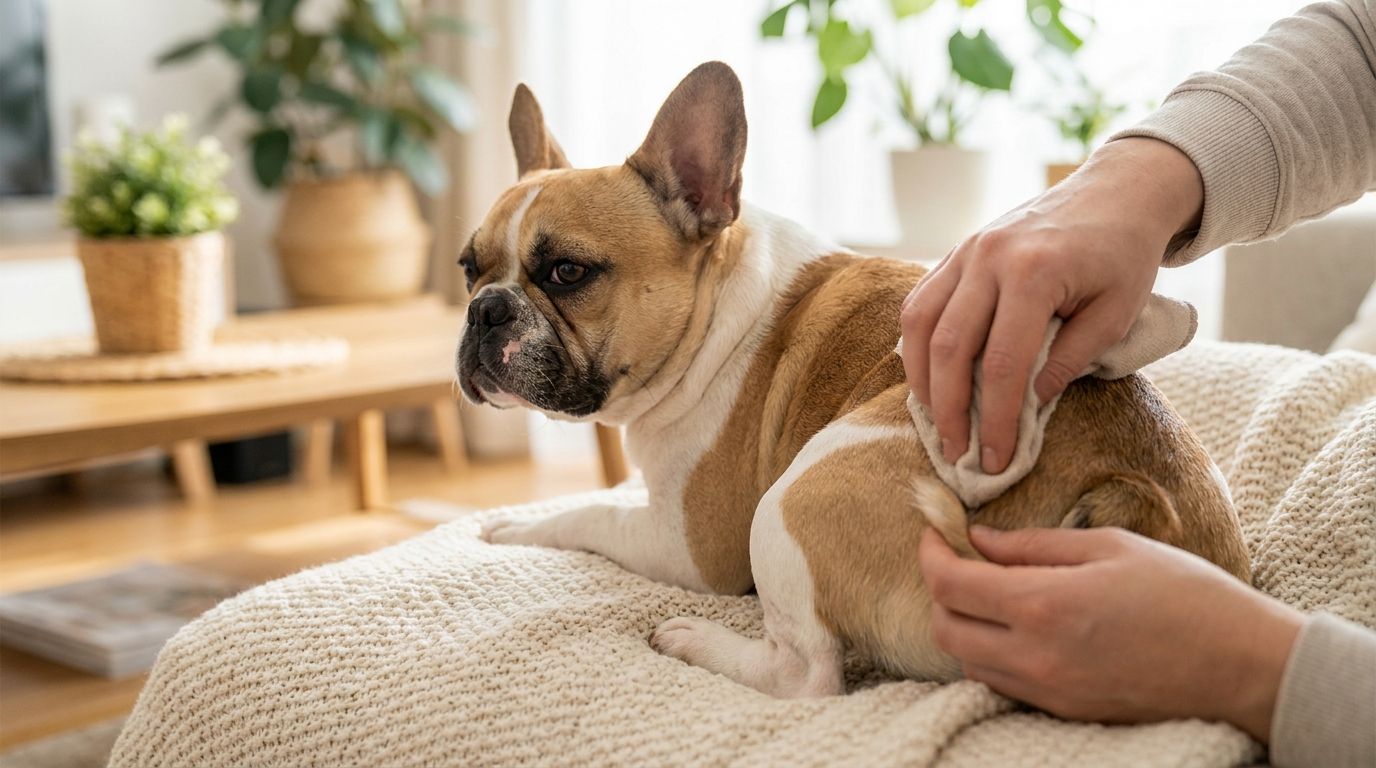
French Bulldog tail pockets need a daily wipe-and-dry routine, not a bath-only approach — the fold under a corkscrew or screwed tail traps moisture, and moisture left sitting for even a day or two turns into a bacterial or yeast infection that needs a vet visit and antibiotics. Daily wiping with a mild antiseptic solution and thorough drying is the single habit that keeps a tail pocket from ever becoming a problem.
- French bulldog tail pocket care means a daily wipe-and-dry routine under the tail, not just bath day.
- Skipping drying for a few days in humid weather is the top cause of tail pocket infections in 2026 vet visits.
- Deep or tightly screwed tails need more frequent checks than loose, longer tails.
- Shrinkabulls recommends starting the habit the week a French Bulldog puppy comes home.
Why This Matters
A tail pocket is the fold of skin that sits directly under a French Bulldog's tail, and it exists because of how the corkscrew or screw tail curls in against the body. It's completely normal anatomy — it's not a defect, and most Frenchies have one to some degree. The problem isn't the pocket itself, it's what collects inside it: sweat, debris, and moisture that has nowhere to evaporate because the tail sits flush against the skin.
Left unmanaged, that trapped moisture breaks down the skin barrier and invites bacteria or yeast. That's the same fold-and-moisture dynamic behind wrinkle care in this breed, which is why our grooming routine for wrinkles guide and tail pocket care overlap so much — same principle, different fold. Get ahead of it early and a tail pocket is a thirty-second daily task. Ignore it and you're looking at a vet bill and a course of medicated wipes.
How Do You Clean a French Bulldog's Tail Pocket?
Here's the routine we walk every new Shrinkabulls family through before their puppy goes home:
- Lift the tail gently. Most Frenchies tolerate this fine once it's part of the daily routine — don't force it if the tail is tucked tight, just work with what you can access.
- Wipe the fold with an unscented, alcohol-free pet wipe or a cotton pad dipped in a diluted chlorhexidine solution (ask your vet for the correct dilution). Never use human baby wipes with fragrance or alcohol — they irritate the skin.
- Dry the pocket completely. This step matters more than the wipe itself. Use a soft, dry cloth or a few passes of a cool hairdryer on low. Moisture left behind undoes the whole routine.
- Apply a thin layer of a vet-recommended barrier ointment if your dog's pocket is deep or prone to irritation. Not every dog needs this step.
- Check weekly for odor, redness, swelling, or discharge. A clean pocket has no smell. Any change from baseline is your signal to call the vet, not wait it out.
Do this daily for the first few weeks so it becomes routine, then most owners settle into every-other-day maintenance once they know their dog's baseline.
Why Tail Pocket Problems Vary So Much From Dog to Dog
Some French Bulldogs go their whole lives with zero tail pocket issues. Others need daily attention or they flare up within days. The difference comes down to a handful of factors:
- Tail tightness. A tight corkscrew tail creates a deeper, more enclosed pocket than a looser screw tail — deeper folds trap more moisture.
- Coat and shedding around the area. Heavier shedders can trap loose hair in the pocket along with sweat, which is part of why managing shedding in this breed matters beyond just the coat.
- Climate and humidity. Dogs in hot, humid regions need more frequent checks in 2026's summer months than dogs in dry climates.
- Bathing and drying habits. A dog that gets toweled off fast after a bath, with the tail pocket skipped, is set up for trouble.
- Activity level. Dogs that swim, run in wet grass, or get muddy need extra pocket checks the same day.
- Individual anatomy. Some pockets are simply shallower and self-ventilate better than others, regardless of how tight the tail looks from outside.
“If the tail pocket smells sour between cleanings, that’s not normal — that’s an infection starting, not a smell to just live with.”
New puppy owners often underestimate how much daily care a French Bulldog needs beyond feeding and walks. If you're setting up for a new arrival, our puppy starter supplies list covers what to have on hand before the pocket-care routine even starts.
Bringing home a French Bulldog puppy?
Get the starter supply list before puppy day.
More Tail Pocket Questions
Is a tail pocket the same thing as a skin fold problem?
A tail pocket is a specific type of skin fold — the fold created by a corkscrew or screw tail sitting against the body. It behaves the same way other Frenchie folds do (nose roll, neck wrinkles) but sits in a spot owners forget to check because it's tucked out of sight.
Does tail length affect how bad the pocket gets?
Yes — tighter, shorter, more corkscrewed tails generally create deeper pockets than longer, looser screw tails, because there's less airflow reaching the skin underneath. A vet or experienced breeder can tell you within the first few months which type your puppy has.
Do English Bulldogs get tail pockets too?
English Bulldogs can have tail pockets as well, since many also carry the corkscrew tail trait, though the routine is identical: daily wipe, dry, and weekly inspection regardless of breed.
FAQ
What is a French Bulldog tail pocket?
A French Bulldog tail pocket is the fold of skin directly under a corkscrew or screw tail where it curls against the body. It traps moisture and needs daily wiping and drying to avoid infection.
Do all French Bulldogs have a tail pocket?
Most French Bulldogs have some degree of tail pocket because of the corkscrew tail trait, though depth varies a lot between individual dogs. A shallow pocket needs far less attention than a deep, tight one.
How often should you clean a French Bulldog’s tail pocket?
Daily wiping and drying is the standard recommendation, especially for puppies still building the habit and dogs in humid climates. Some owners with dry-climate, shallow-pocket dogs move to every-other-day once they know their dog’s baseline.
What does an infected tail pocket look like?
An infected tail pocket shows redness, swelling, discharge, or a sour smell that wasn’t there before. Any of these signs means a vet visit, not more home wiping.
Can a tail pocket infection require surgery?
Chronic, repeated tail pocket infections that don’t respond to cleaning and medication can lead a vet to recommend surgical correction of the tail fold. This is uncommon when daily care starts early and stays consistent.
Is coconut oil safe for tail pocket care?
Coconut oil is not the first choice for tail pocket care because oils can trap more moisture rather than help it evaporate. A vet-approved antiseptic wipe followed by thorough drying is the safer routine.
Why does my French Bulldog’s tail pocket smell?
A smelling tail pocket almost always means bacteria or yeast has started growing in trapped moisture. It’s a sign to increase cleaning frequency immediately and call the vet if the smell doesn’t clear within a few days.
Should you use baby wipes on a tail pocket?
Human baby wipes with fragrance or alcohol are not recommended for tail pocket care because they irritate sensitive skin. Unscented, alcohol-free pet wipes or a vet-diluted antiseptic solution are the safer choice.
One Last Thing
The tail pocket habit is one of those things that takes thirty seconds a day and gets skipped constantly — not because owners don't care, but because it's tucked out of sight and easy to forget next to the more obvious wrinkle and ear care routines. We tell every Shrinkabulls family the same thing: build it into the same moment you already handle wrinkle wipes, so it never becomes its own separate chore you forget in 2026's busy weeks. Rare-colored French Bulldogs — merle, lilac, blue — get asked about constantly for their coat, but the tail pocket routine underneath doesn't change based on color at all; anyone weighing what those rare color puppies really cost should know the daily care commitment is identical to any other French Bulldog.
Related Guides
- What rare-colored merle Frenchie puppies really cost
- French Bulldog puppies for first-time dog owners
- Spotting early signs of brachycephalic breathing issues
