


 REVIEWS




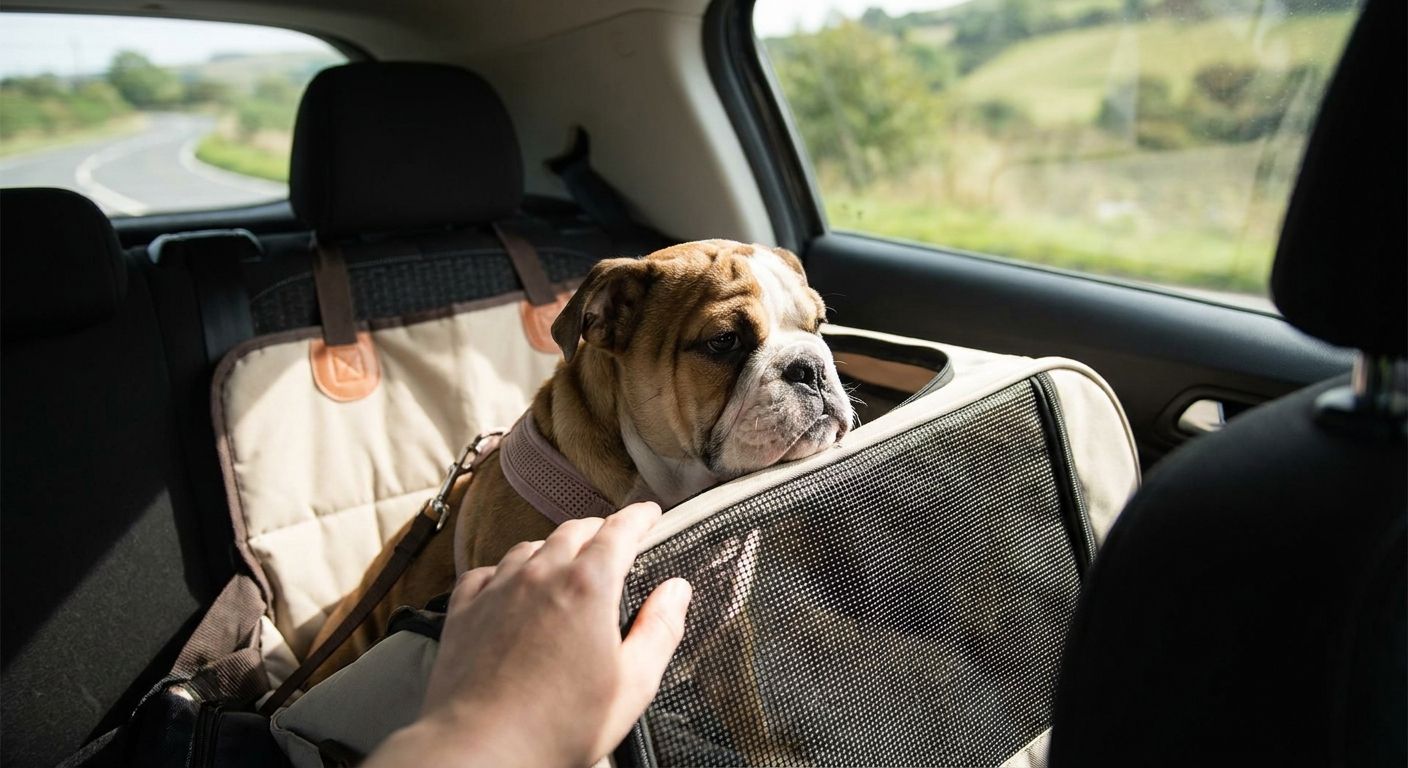
English Bulldog puppies can't regulate heat the way other dogs do, so car travel safety comes down to three things: a crash-tested crate or harness, cabin temperature kept below 75°F, and zero unattended minutes in a parked vehicle. Skip any one of those and a routine drive turns into an emergency vet visit faster than most owners expect in 2026.
- Secure every English Bulldog puppy in a crash-tested crate or harness before the car moves — loose puppies are a windshield risk.
- English bulldog car travel turns dangerous above 75°F cabin temperature because bulldogs can’t pant-cool efficiently.
- A parked car’s interior can climb roughly 19°F in the first 10 minutes even with windows cracked.
- Stop every 45-60 minutes on trips over two hours for water, bathroom breaks, and a temperature check.
- Never leave a Bulldog puppy alone in a car, not even for a 3-minute errand.
Why this matters
English Bulldogs are brachycephalic — short, compressed airways that make panting an inefficient cooling system compared to a Labrador or a mixed breed. Add a puppy's smaller body mass and undeveloped stamina, and a car ride that's boring for you can be genuinely risky for them. This isn't a scare tactic to sell you a crate — it's the physiology every reputable bulldog breeder repeats because it's the single most preventable cause of puppy travel injuries and heatstroke deaths.
We've raised bulldogs long enough to know the difference between a puppy that handles the ride to the vet fine and one that panics at 65 mph in an unsecured back seat. Restraint and temperature control are non-negotiable — everything else on this page is detail work.
How to travel safely with an English Bulldog puppy by car
- Crate or harness the puppy before the engine starts. A crash-tested crate strapped to the seatbelt anchor, or a bulldog-sized car harness clipped to the seatbelt latch, keeps the puppy from becoming a projectile in a sudden stop.
- Set the cabin temperature and keep it there. Target 68-72°F. Anything pushing past 75°F is your signal to turn the AC up, not down.
- Feed 2-3 hours before departure, not right before. Bulldogs are prone to motion sickness and bloat risk is real in a breed already built low to the ground.
- Pack water, a collapsible bowl, and a cooling mat. The starter supplies checklist covers what most new owners forget on their first trip.
- Stop every 45-60 minutes on longer drives. Let the puppy stretch, drink, and cool off outside direct sun.
- Never leave the puppy alone in the car. Not for gas, not for a coffee run, not for "just two minutes."
Crate travel vs. harness travel: which is safer
| Feature | Crash-tested crate | Bulldog car harness |
|---|---|---|
| Best for | Puppies under 6 months, long trips, anxious travelers | Calm adult-acting puppies, short errands |
| Airflow | Good if wire or vented plastic | Excellent — puppy sits upright |
| Motion sickness | Better — reduces visual stimulation | Worse — puppy sees the road move |
| Setup effort | Higher, needs cargo space or back seat | Lower, clips into existing seatbelt |
| Verdict | Buy for road trips and puppies new to car travel | Buy for quick vet runs once the puppy is car-adjusted |
If you're crate training already, the same crate training routine that works at home transfers almost directly to the car — a puppy who's calm in a crate indoors is calm in one on the highway.
Road trips longer than 2 hours: what changes
Short errands and multi-hour road trips are not the same risk profile, and treating them identically is where most travel mistakes happen.
- Water and bathroom stops become mandatory, not optional, roughly every 45-60 minutes.
- Cabin temperature checks matter more because you're not popping in and out of a controlled environment — you're relying on the AC holding steady for hours.
- Feeding schedule shifts — smaller portions, timed further from departure, to reduce nausea risk on winding routes.
- Overnight stays require crate familiarity first. A puppy that's never slept in a crate shouldn't be introduced to one for the first time in a hotel room 400 miles from home.
- If the trip is cross-country rather than a weekend drive, a flight nanny delivery is often the lower-stress option for the puppy compared to two days in a car seat.
“If the outside temperature is above 70°F and you’re not moving, that’s your cue to skip the errand and keep the AC running instead.”
Why English Bulldog car travel risk varies
- Age of the puppy — anything under 10 weeks has less heat tolerance and weaker bladder control, meaning more frequent stops.
- Coat and color — darker coats absorb more heat through a window, which matters on sunny-side seating.
- Airway conformation — puppies with more extreme muzzle compression tolerate heat worse than moderately built bulldogs.
- Car ventilation setup — a crate blocking a vent versus one positioned in open airflow makes a measurable difference in cabin comfort for the puppy.
- Trip length and stop frequency — a 20-minute drive and a 6-hour drive are not the same calculation, even at identical temperatures.
- Prior car exposure — a puppy introduced to short, calm car rides early handles longer trips with far less stress later.
Meet our bulldog puppies
See available English and French Bulldog puppies raised for calm, confident travel.
Can English Bulldogs ride in the front seat?
No — the back seat is the safer position, secured in a crate or harness, away from an active airbag that can seriously injure a small puppy on deployment. Front passenger airbags are sized for adult humans, not 15-pound puppies, and that mismatch is the whole reason back-seat restraint is standard advice.
How often should you stop on a road trip with a bulldog puppy?
Every 45-60 minutes is the general rule for trips longer than two hours, giving the puppy water, a bathroom break, and a chance to cool down outside a hot car interior. Shorter, more frequent stops beat one long stop when temperatures are on the warmer side of 75°F.
What temperature is too hot for a bulldog puppy in a car?
Above 75°F inside the cabin is where risk climbs fast for a brachycephalic puppy, and a parked car can reach dangerous interior temperatures within about 19°F of a rise in just 10 minutes even with cracked windows. Bulldogs run a normal body temperature of 101-102.5°F, and anything pushing them past that baseline for an extended period is the start of heat stress, not just discomfort.
FAQ
Is it safe to drive long distance with an English Bulldog puppy?
Yes, long-distance english bulldog car travel is safe with a crash-tested crate, cabin temperature under 75°F, and stops every 45-60 minutes. Puppies under 10 weeks may need more frequent breaks than older puppies.
Should a bulldog puppy wear a seatbelt harness in the car?
A bulldog puppy should wear a harness clipped into the seatbelt latch or ride in a crash-tested crate secured by the seatbelt. Loose puppies in a moving car are at risk during sudden braking, not just crashes.
How do I stop my bulldog puppy from getting carsick?
Feed the puppy 2-3 hours before the drive rather than right before, and use a crate that limits the puppy’s view of moving scenery. Motion sickness in bulldog puppies usually settles after a handful of short, calm trips.
Can I leave my bulldog puppy in the car for a few minutes?
No, never leave a bulldog puppy alone in a parked car, even for a few minutes. Interior temperatures can rise roughly 19°F within the first 10 minutes, which is enough to put a brachycephalic puppy into heat distress.
What’s the best crate size for an English Bulldog puppy in a car?
Choose a crate that lets the puppy stand, turn around, and lie down flat, sized up as the puppy grows rather than bought for adult size immediately. A crate that’s too large lets the puppy slide during turns and braking.
Do bulldog puppies need AC on during car rides?
Yes, keep the AC running to hold cabin temperature between 68-72°F on any drive longer than a few minutes. Bulldogs can’t cool themselves as efficiently as longer-muzzled breeds, so ambient cooling does more of the work.
How young is too young for an English Bulldog puppy to travel by car?
Most breeders clear puppies for short car trips once they’re settled into a new home, typically around 8-10 weeks old alongside their first vaccinations. Longer road trips are usually better delayed until the puppy is fully vaccinated.
One last thing
The detail most new owners miss isn't the crate or the AC setting — it's that a bulldog puppy's stress response to car travel is almost entirely shaped by its first three or four rides. A puppy whose early car exposure is calm, short, and cool-cabin builds tolerance for the 6-hour road trip later; a puppy whose first ride is a stressful 90-minute drive home from pickup day carries that anxiety into every trip after. If you're picking up a new puppy in 2026, plan the first ride home around comfort, not convenience.
Related guides
- Best puppy starter supplies for a new bulldog owner
- How to crate train an English Bulldog puppy
- How to plan a cross-country bulldog puppy flight nanny delivery
- Merle bulldog price: what rare color puppies really cost

One thought on “English Bulldog Car Travel: Safe Trips in 2026”