


 REVIEWS




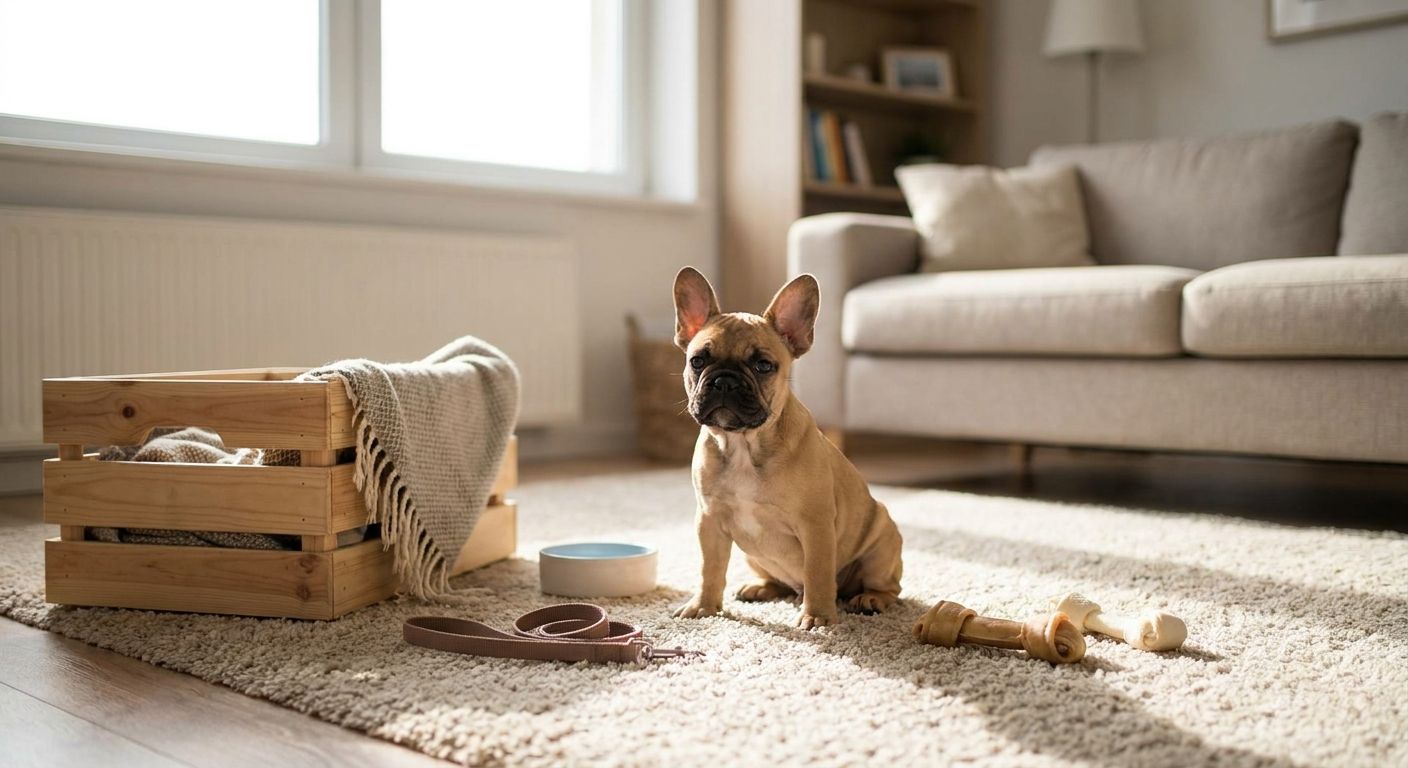
Bringing home a French Bulldog puppy is one of the best days you'll have all year, but the days before that matter just as much. Get your house ready first and the whole transition goes smoother for you, your family, and your new Frenchie.
- Puppy-proof floor level to 3 feet before homecoming day — Frenchies chew everything within reach.
- Set indoor temperature between 65-75°F; brachycephalic breeds overheat fast above 80°F.
- Buy a crate sized for an adult 16-28 lb dog, not the 8-week-old puppy in front of you.
- Vet a French Bulldog breeder before you pick up your puppy, not after — verify AKC papers and health guarantees first.
Why this matters
French Bulldogs are brachycephalic — their short, flat skulls make breathing harder than it is for a Labrador or a Beagle, and that changes how you set up a house for them. Stairs, heat, and small objects that would be a minor annoyance for another breed can turn into a real emergency for a Frenchie puppy.
Most of what goes wrong in the first two weeks isn't the puppy's fault — it's a house that wasn't ready for a dog who can't regulate heat well, can't climb, and can't be left unsupervised around anything chewable. Prep work now means fewer 2 a.m. emergency vet trips later.
Before homecoming day, it also pays to find a reputable French Bulldog breeder who sends you home with a health record, not just a puppy. What you get on day one — vaccination history, deworming schedule, feeding notes — shapes how you prep the house just as much as the breed standard does.
What you'll need
Get these together before your Frenchie puppy walks through the door in 2026, not after:
- A crate sized for an adult dog (roughly 24-30 inches long) with a divider panel to shrink the space for the 8-12 week old puppy
- Puppy pads or a designated potty spot, especially if you're in an apartment with no immediate yard access
- A baby gate or exercise pen — Frenchies can't jump well, but they can still wedge themselves into places they shouldn't be
- Slip-resistant rugs or mats on hard floors — a Frenchie's short legs and heavy front end make hardwood a slipping hazard
- Puppy food matching the breeder's current feeding schedule — switching brands cold on day one causes stomach upset
- AKC registration paperwork and health guarantee from the breeder — verify AKC registration papers match your specific puppy before you sign anything
- A vet appointment booked for the first week home
The steps
1. Puppy-proof floor level to 3 feet
A French Bulldog puppy explores with its mouth, and cords, shoe laces, small toys, and houseplants at floor level are all fair game. Walk every room at puppy height — literally get down on your knees — and remove or block anything chewable up to about 3 feet off the ground.
Common mistake: owners puppy-proof the living room and forget the laundry room, where dryer sheets and cleaning supplies sit at nose height for a small dog.
2. Set the indoor temperature range
Brachycephalic breeds like the French Bulldog overheat faster than flat-nosed breeds should ever have to worry about, because their airway can't move as much air per breath. Keep your home between 65-75°F, and never leave a Frenchie puppy in a car or a sunroom, even for five minutes in 2026's hot months.
Expected outcome: a puppy that pants normally after play but recovers within a few minutes once it rests in a cool spot.
3. Choose the crate size for the adult dog, not the puppy
Buy a crate sized for a full-grown French Bulldog (16-28 lbs, roughly 24-30 inches long) and use a divider panel to shrink the usable space while your puppy is small. This avoids a wasted purchase in six months and teaches proper crate boundaries from week one.
Common mistake: buying a small crate meant only for the puppy stage, then having to repurchase a larger one once the dog hits its adult weight.
4. Block stairs and any elevated furniture
French Bulldogs have a heavy front end and short legs, which makes jumping off beds or couches a real injury risk — spinal and joint problems show up disproportionately in this breed. Install a baby gate at the top and bottom of any staircase and block access to elevated furniture until the puppy is fully grown.
Expected outcome: no unsupervised jumping incidents in the first few months at home.
5. Set a consistent feeding and potty schedule
Match the feeding schedule your breeder used before homecoming — most breeders feed 3-4 small meals a day at 8-12 weeks old. Take the puppy out immediately after each meal, nap, and play session, since a young Frenchie's bladder control is minimal in the first few weeks.
Common mistake: switching food brands on day one instead of transitioning gradually over 5-7 days, which causes loose stools that get mistaken for illness.
6. Confirm paperwork before homecoming day, not after
Cross-check the AKC registration number, the health guarantee terms, and any color designation (fawn, brindle, merle, lilac) against what the breeder told you verbally. If anything about the paperwork feels off, spot red flags when choosing a French Bulldog breeder before you finalize the pickup date, not weeks after you've already fallen in love with the puppy.
Expected outcome: a folder with registration papers, a signed health guarantee, and a vaccination record in hand before you leave with your puppy.
See available French Bulldog puppies
Browse current litters and reserve your spot on the list.
Troubleshooting
- Puppy won't stop crying in the crate at night — Move the crate into your bedroom for the first week. Isolation, not the crate itself, is usually the cause.
- Loose stools after the first few days home — Slow the food transition down further, mixing old and new food over a full 7-10 days instead of 3-4.
- Excessive snoring or noisy breathing — Some noise is normal for a brachycephalic breed, but labored breathing, blue-tinged gums, or collapse after mild exercise needs a same-day vet visit.
- Puppy chews baseboards or furniture legs — Redirect to an appropriate chew toy every time you catch it, and check that teething isn't the underlying driver around 3-4 months old.
- Skin fold irritation around the face or tail — Wipe facial folds daily with a dry cloth; French Bulldogs are prone to fold infections if moisture sits trapped.
- Won't use the potty pad or designated spot — Reduce the space available (via the exercise pen) so accidents happen in a smaller, easier-to-clean area while training continues.
Tools and resources
- How to find a reputable French Bulldog breeder — start here if you haven't picked a puppy yet
- How to verify AKC registration papers on a bulldog puppy — confirm papers match before homecoming day
- How to spot red flags when choosing a French Bulldog breeder — a checklist worth running before you sign anything
- A baby gate, exercise pen, and slip-resistant rugs from any pet supply retailer
- A vet appointment scheduled for the first week your puppy is home
What to do next
Once the house is ready and the puppy is home, the next decision most owners face is color and pricing questions, especially with rare-colored bulldogs drawing attention in 2026. If a merle, lilac, or blue puppy is on your radar, read what merle bulldog price and rare color puppies really cost before you commit to a specific litter.
FAQ
How do I prepare my home for a French Bulldog puppy?
Puppy-proof floor level to 3 feet, set indoor temperature between 65-75°F, install baby gates at stairs, and buy a crate sized for the adult dog’s 16-28 lb weight range. Do this before homecoming day, not after.
What temperature is safe for a French Bulldog puppy indoors?
Keep the home between 65-75°F for a French Bulldog puppy in 2026. Brachycephalic breeds overheat faster than other dogs because their short airway limits how much air they move per breath.
What size crate does a French Bulldog puppy need?
Buy a crate sized for an adult French Bulldog, roughly 24-30 inches long to fit a 16-28 lb dog, and use a divider panel to shrink the space while the puppy is small. This avoids buying a second crate later.
Is a French Bulldog puppy hard to potty train?
French Bulldog puppies have minimal bladder control at 8-12 weeks old, so frequent trips outside after every meal, nap, and play session speed up training. Consistency in the first two weeks matters more than any specific method.
How much does a French Bulldog puppy cost in 2026?
Pricing varies by color, pedigree, and breeder, with rare colors like merle and lilac commanding a premium over standard colors. Verify the AKC registration and health guarantee before comparing prices across breeders.
What should I ask a French Bulldog breeder before buying?
Ask for AKC registration papers, a signed health guarantee, and the current feeding and vaccination schedule before you commit to a puppy. Cross-check every detail against what the breeder tells you verbally.
Can French Bulldogs climb stairs safely?
French Bulldog puppies should not climb or jump stairs unsupervised because their heavy front end and short legs raise the risk of spinal and joint injury. Block stairs with a baby gate until the dog is fully grown.
Do French Bulldog puppies need a special diet?
Match whatever feeding schedule the breeder used before homecoming, feeding 3-4 small meals a day at 8-12 weeks old. Transition to a new food brand gradually over 5-10 days to avoid stomach upset.
One last thing
The single detail most first-time Frenchie owners miss isn't the crate or the gate — it's the health guarantee paperwork. Read a bulldog puppy health guarantee line by line before you sign, because the terms around genetic conditions and return policies vary more between breeders than most buyers expect walking in.
Related guides
- How to verify AKC registration papers on a bulldog puppy
- How to spot red flags when choosing a French Bulldog breeder
- Merle bulldog price: what rare color puppies really cost
- How to read a bulldog puppy health guarantee before signing

6 thoughts on “Preparing for a French Bulldog Puppy: 2026 Home Checklist”