

 REVIEWS




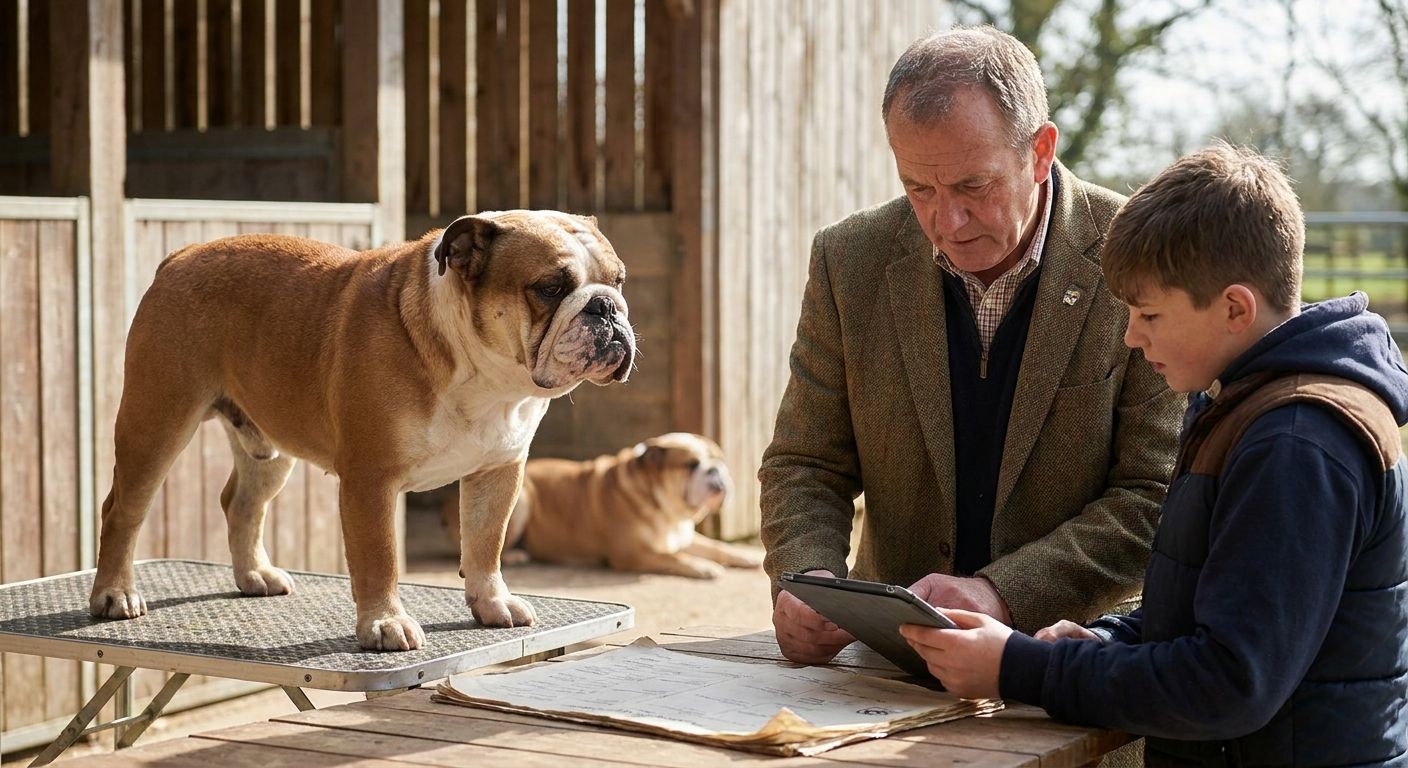
Picking the wrong stud sets your breeding program back a full heat cycle at minimum, and at worst it puts a litter's health on the line. Here's the exact checklist we walk breeders through before any bulldog stud gets near a dam at Shrinkabulls.
- Choosing a bulldog stud starts with health clearances, not looks — OFA hips and a current genetic panel come first.
- Skull and airway structure matter more in bulldogs than almost any other breed for stud selection.
- Never pair merle-to-merle; double merle carries documented deafness and blindness risk.
- A written stud contract with a return clause protects you if conception fails on the first try.
- Budget the stud fee and travel costs before you fall in love with a pedigree.
Why this matters
A bulldog stud contributes half the genetics of every puppy in the litter, and English and French Bulldogs already carry a heavier load of structural and respiratory risk than most breeds. Choosing a bulldog stud on pedigree name alone, without checking hips, airway, and color genetics, is how breeders end up with puppies nobody can place responsibly. Reputable programs in 2026 run genetic panels before the first mating, not after a litter shows a problem.
What you'll need
- Current OFA (or PennHIP) hip and patella results on the stud, dated within the last 12-18 months
- A genetic health panel covering the color and coat genes relevant to your dam (merle, dilute, brachycephalic markers)
- Copies of AKC registration for both the stud and dam — verify AKC registration papers before you sign anything
- A written stud service contract outlining fee, live-cover vs. shipped semen terms, and a repeat-breeding clause
- 4-6 weeks lead time to schedule around the dam's progesterone testing
- A vet who can run a soundness exam on the stud if you haven't worked with the owner before
The steps
1. Confirm AKC registration and pedigree paperwork
Ask for the stud's full AKC registration number and pull the three-generation pedigree before you discuss anything else. A stud without clean papers can't produce AKC-registrable puppies, which tanks the value of your entire litter. Cross-check the registered name against the paperwork the owner hands you — mismatches are the first sign of a shortcut breeder. Expect this to take a phone call and a few days for AKC confirmation.
2. Run genetic health panels before you commit
Order or request current panel results for hip dysplasia markers, patellar luxation, and any color-linked conditions relevant to your line. Bulldogs carrying merle or dilute genes need panel confirmation, not a visual guess based on coat color. A stud with clear panels on file saves you months of waiting if a problem surfaces after the litter whelps. Common mistake: accepting a panel that's more than two years old — request a refresh for 2026 breedings if the last test predates 2024.
3. Evaluate skull, jaw, and airway structure in person
Bulldogs live and die by their airways, so a stud with a compressed nose or narrow trachea passes that risk straight to every puppy. Watch the dog breathe after light exercise — labored breathing at rest is a disqualifier, not a quirk. Skull and jaw health evaluation before breeding matters as much as it does before buying a puppy. Expect a 15-20 minute in-person or video assessment.
4. Check temperament and working drive
A stud with poor temperament passes on more than looks — nervous or reactive dogs often produce puppies that are harder to place and harder to train. Ask the owner for footage of the stud around strangers and other dogs, not just posed show photos. Look for a dog that's confident but not pushy, since bulldog temperament is a major selling point for the puppies you'll eventually place. A stud that snaps or hides during a routine vet visit is a pass.
5. Match color genetics carefully
Color pairing decisions made at this stage follow you into every future litter, so treat this step like a spreadsheet problem, not a preference. Never pair merle to merle — double merle offspring carry documented risk of deafness and vision loss, and double merle health risks should be understood before you even schedule a breeding. If you're weighing a rare-colored stud for a merle, lilac, or blue program, current pricing on rare color puppies gives useful context for what the resulting litter is realistically worth on the market.
6. Review stud fee, contract terms, and health guarantee
Get the fee, payment schedule, and repeat-breeding terms in writing before the dam is anywhere near her fertile window. A verbal handshake deal falls apart fast if the first breeding doesn't take or the litter comes in smaller than expected. Read every clause the same way you'd read a puppy health guarantee — look for what's excluded, not just what's promised.
7. Line up a repeat-breeding or return clause
Most reputable stud contracts include a repeat breeding at no extra fee if the dam doesn't conceive or the litter doesn't survive past a set number of weeks. Get this in writing with a specific timeframe, usually 12-18 months. Skipping this clause means you eat the full stud fee on a failed breeding with zero recourse.
8. Schedule the breeding around the dam's cycle
Progesterone testing tells you the exact window, usually a 48-72 hour ovulation period, and timing it wrong is the single biggest reason natural breedings fail. Book the stud 3-4 weeks out once you see early heat signs, then confirm with testing at day 5-7 of the cycle. Expected outcome: a confirmed breeding date locked in before the fertile window opens, not scrambled together the day of.
Have questions about our stud program?
Talk through pedigree, health clearances, and availability before you commit.
Troubleshooting
- Stud has clearances but no recent panel — request a fresh genetic panel dated 2026 before scheduling; a 2022 or 2023 result doesn't reflect current health status.
- Conception rate looks low on past litters — ask for whelping records from the last two breedings; a stud under 60% conception across multiple dams often points to a fertility issue, not bad luck.
- Owner won't share pedigree paperwork — treat this as a hard stop. A legitimate stud owner hands over registration and pedigree without hesitation.
- Color pairing produces an unexpected dilute — this usually means one parent carried a hidden dilute gene the panel should have flagged; this is exactly why the genetic panel step in choosing a bulldog stud isn't optional.
- Contract dispute after a failed breeding — this is why the repeat-breeding clause needs a specific date range in writing, not a vague promise to work it out later.
- Stud shows breathing issues only under stress — schedule your evaluation after a short walk or play session, not while the dog is resting calmly on a couch.
Tools and resources
- AKC registration verification — confirm papers match before any contract is signed
- OFA or PennHIP hip and patella database — cross-check submitted results independently
- A vet experienced with brachycephalic breeds for the airway assessment
- Health guarantee language as a template for what your stud contract should cover
- Progesterone testing kit or a reproductive vet for cycle timing
What to do next
Once the stud is confirmed, shift your attention to the dam's whelping prep and the health guarantee you'll extend to future puppy buyers — the same standards you demanded from the stud should show up in your own paperwork. Reading through health guarantee language now, before the litter arrives, saves a scramble later.
FAQ
What’s the most important factor in choosing a bulldog stud?
Health clearances come first — OFA hip and patella results plus a current genetic panel matter more than pedigree name or coat color. A stud with clean 2026-dated clearances and a calm temperament outranks a flashy pedigree with unknown health status.
Is it better to use a stud with proven litters or a first-time stud?
A proven stud with documented conception rates and healthy prior litters carries less risk than an unproven dog. First-time studs can still work, but ask for a fertility check and be prepared for a lower first-attempt conception rate.
How much does bulldog stud service typically cost?
Stud fees vary widely based on pedigree, color rarity, and titles, and reputable breeders discuss exact pricing directly rather than posting a flat rate online. Rare colors like merle, lilac, or blue command higher fees than standard colors due to demand.
Can you breed a merle bulldog to a merle bulldog?
No — pairing merle to merle produces double merle puppies at a genetic ratio that carries a documented risk of deafness and vision loss. A genetic panel confirms merle status in both parents before any breeding is scheduled.
What health tests should a bulldog stud have before breeding?
At minimum, OFA or PennHIP hip and patella clearances plus a genetic panel covering color-linked and breed-common conditions. A soundness exam covering airway and skull structure is also standard practice for bulldogs specifically.
How do I verify a bulldog stud’s AKC registration is real?
Request the registration number directly and confirm it matches the name and litter details on file with the AKC. A legitimate stud owner provides this without hesitation as part of any stud contract discussion.
What should a stud service contract include?
A stud contract should spell out the fee, payment terms, live-cover versus shipped-semen arrangement, and a repeat-breeding clause with a specific timeframe, usually 12-18 months. Missing a repeat-breeding clause leaves you with no recourse if the first attempt fails.
How long before breeding should I contact a stud owner?
Reach out 3-4 weeks before the dam’s expected heat cycle so paperwork, health checks, and scheduling are settled before the fertile window opens. Waiting until the dam is already in heat compresses your timeline and limits your options.
One last thing
The stud contract clause breeders skip most often is the repeat-breeding window, and it's the one that saves you the most money when a first attempt doesn't take. Get a specific date range in writing before the dam's cycle even starts, not after a failed breeding forces the conversation.
Related guides

5 thoughts on “Choosing a Bulldog Stud for Breeding in 2026: Full Guide”