


 REVIEWS




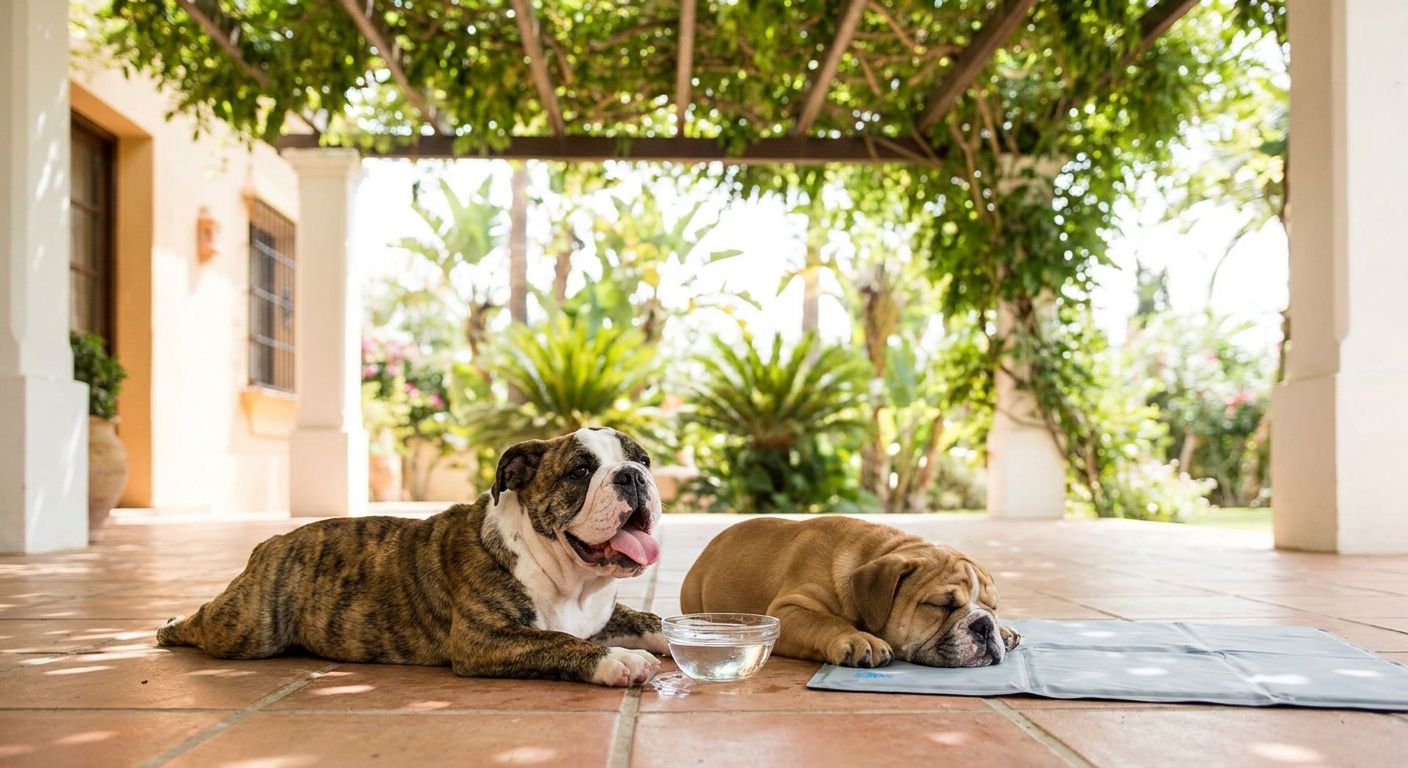
If you live somewhere summer means real triple digits, an English Bulldog puppy needs more than cute wrinkles — it needs a family that plans for heat management from day one.
- Gray English Bulldog puppies carry the lightest heat load among coat options — Buy for hot-climate homes in 2026.
- XL English Bulldog puppies hold more body mass to cool, making them the riskiest pick for Arizona, Texas, or Florida summers — Skip without full-time AC.
- Airway and skull structure predict heat tolerance more reliably than coat color — check breeder health records first.
- Black English Bulldog puppies can work in hot climates with strict shade and AC discipline — Consider, not a default Buy.
Why heat matters more than people think
English Bulldogs are brachycephalic — short-muzzled — which means panting alone doesn't move as much air across the tongue and airway as it does in a longer-nosed breed. A dog's normal body temperature runs 100.5°F to 102.5°F; once it tips past 104°F, that's an emergency in any dog, and a flat-faced breed gets there faster than a Labrador on the same walk. That's not a reason to skip the breed. It's a reason to shop differently if your thermostat reads 95°F for four months a year.
We've bred English Bulldog puppies long enough to know the breed handles heat just fine with the right setup — AC access, shade, and a family that reads the warning signs early. What we won't tell you is that any bulldog is "heat-proof." None are, no matter what a listing claims. A 2026 buyer in Phoenix or Houston needs a different checklist than a buyer in Seattle.
Who this guide is for
This is for families in Texas, Arizona, Florida, the Gulf Coast, and inland Southern California who want an English Bulldog and live somewhere summer highs clear 90°F to 100°F-plus for months at a stretch. You're not trying to talk yourself out of the breed — you're trying to buy smart: the right coat, the right build, and a breeder who raised the litter with heat already in mind.
What to look for in an English Bulldog for hot climates
Airway and skull conformation
A tighter, more open airway moves air more efficiently, and that matters twice as much once the outdoor temperature climbs past 90°F. Ask any breeder for detail on jaw and skull structure before you commit — evaluating skull and jaw health tells you more about heat tolerance than coat color ever will.
Coat color and heat load
Darker coats absorb more solar heat during midday sun; lighter coats reflect more of it. It's basic physics, not folklore — a black-coated bulldog standing on a driveway at noon runs hotter to the touch than a gray or fawn littermate next to it.
Body condition, not just size
A lean bulldog sheds heat more efficiently than a stocky, overweight one because there's less mass for the body to cool down. Ask the breeder how they're managing litter weight and feeding schedule, especially past the eight-week mark, and keep asking after you bring the puppy home.
The breeder's grow-out environment
A puppy raised in a climate-controlled whelping room adjusts to AC-managed indoor life faster than one raised in an outdoor kennel with a box fan and good intentions. Ask directly: was this litter raised indoors, and at what temperature range?
Acclimation plan for the first summer
Puppies under 12 weeks shouldn't get long outdoor exposure on hot days regardless of coat or build. A breeder who knows the breed will tell you to keep first walks short and timed for early morning or after sunset, never midday.
Top picks for hot-climate households
Gray English Bulldog — the safe pick. Lighter coat pigment means less heat absorption than black or dark brindle littermates, and gray puppies still carry the same structure and temperament families expect from the breed. If you're set on the breed and live somewhere summer means AC running nonstop, gray English Bulldog puppies built for families with kids are the pick to start with. Buy.
Black English Bulldog — the wildcard. Black coats look sharp and photograph well, but they run hotter on a sunny driveway than lighter colors do. Families who commit to strict shade rules, short midday outings, and AC-controlled play areas can absolutely make this work — it just takes more discipline than a lighter-coated puppy needs. Black English Bulldog puppies suit first-time owners who understand the heat tradeoff going in, not owners hoping to skip the extra effort. Consider.
XL English Bulldog — the one to think twice about. More body mass means more surface area holding heat and a harder job for the cardiovascular system on a 100°F afternoon. XL English Bulldog puppies bred for large-breed enthusiasts are a fantastic match for a cooler climate or a home where the dog spends 90% of summer indoors — for a hot-climate household without dependable AC, it's a tougher ask than the breed's smaller-framed littermates. Skip for hot climates unless your home stays air-conditioned around the clock.
Ask About Hot-Climate Litters
Talk with our family about which puppy fits your climate before you commit.
What to avoid
- "No AC needed" claims. Any breeder who tells you their bulldog line doesn't need climate control in a 95°F summer is selling a myth, not a puppy.
- Puppies shipped cargo-hold in peak summer. Heat exposure during transit is one of the most preventable risks in the breed — ask exactly how delivery is handled before you book anything for a July or August pickup.
- Extra-stocky "bully style" marketing without a heat conversation. More bone density and muscle mass looks impressive in photos, but it's more mass for a body to cool on a 100°F afternoon, not less.
“An English Bulldog panting hard while standing still in the shade at 75°F is already losing the heat battle.”
Verdict comparison
| Pick | Coat Heat Load | Airway Risk | Best For | Verdict |
|---|---|---|---|---|
| Gray English Bulldog | Low-moderate | Standard for breed | Hot-climate families wanting the most heat-forgiving coat | Buy |
| Black English Bulldog | High | Standard for breed | Owners committed to strict shade and AC routines | Consider |
| XL English Bulldog | Moderate-high | Elevated (more soft tissue) | Cooler climates or full-time AC homes | Skip for hot climates |
FAQ
Is an English Bulldog a good fit for hot climates?
An English Bulldog can live comfortably in a hot climate with AC access, shade, and a lighter feeding schedule, but the breed is not naturally heat-tolerant. Brachycephalic structure limits panting efficiency, so 2026 buyers in Texas, Arizona, or Florida need a cooling plan before pickup day, not after.
What temperature is too hot for an English Bulldog?
Once outdoor temperatures climb past 85°F to 90°F, an English Bulldog should be limited to short, supervised outings rather than extended play. A dog’s normal body temperature sits between 100.5°F and 102.5°F, and anything approaching 104°F is an emergency regardless of breed.
Do gray English Bulldogs handle heat better than black ones?
Yes, gray English Bulldog puppies absorb less solar heat than black or dark brindle littermates because lighter coats reflect more sunlight. Coat color is not the only factor, but it’s a real, physics-based edge for hot-climate households.
How can I tell if my English Bulldog puppy is overheating?
Heavy panting while standing still, bright red or pale gums, drooling, and reluctance to move are early warning signs in an English Bulldog. Get the dog into AC immediately and call a veterinarian if the signs don’t ease within a few minutes.
Should I get an XL English Bulldog if I live somewhere hot?
An XL English Bulldog carries more body mass to cool, which makes hot-climate ownership harder without full-time air conditioning. It’s a better match for cooler regions or homes where the dog stays indoors through peak summer months.
Can English Bulldogs live in Arizona or Texas?
English Bulldogs live in Arizona and Texas successfully when owners commit to AC-controlled indoor time, shaded outdoor breaks, and lighter coat or build choices. Families who skip the planning step run into heat problems by the first summer.
What health checks matter most for a hot-climate bulldog puppy?
Airway and skull structure checks matter most, since a more open airway supports better heat regulation than a heavily compressed one. Ask the breeder for records on both parents before focusing on coat color alone.
How old should an English Bulldog puppy be before outdoor time in summer?
Puppies under 12 weeks should stay off hot pavement and out of direct midday sun regardless of build. Short morning or evening outings work better than any daytime exposure until the puppy is older and better acclimated.
One last thing
Watch the gums, not just the panting. Pale or blue-tinged gums are a heatstroke warning sign in any dog, and in a brachycephalic breed like the English Bulldog, that warning shows up faster than most owners expect. A puppy raised in an air-conditioned whelping room in 2026 settles into your AC-controlled home far easier than a littermate raised outdoors and shipped straight into a Texas July.
Related guides
- How to vet an English Bulldog breeder before you buy
- Black English Bulldog puppies for first-time owners

One thought on “English Bulldog for Hot Climates: 2026 Buying Verdict”