

 REVIEWS




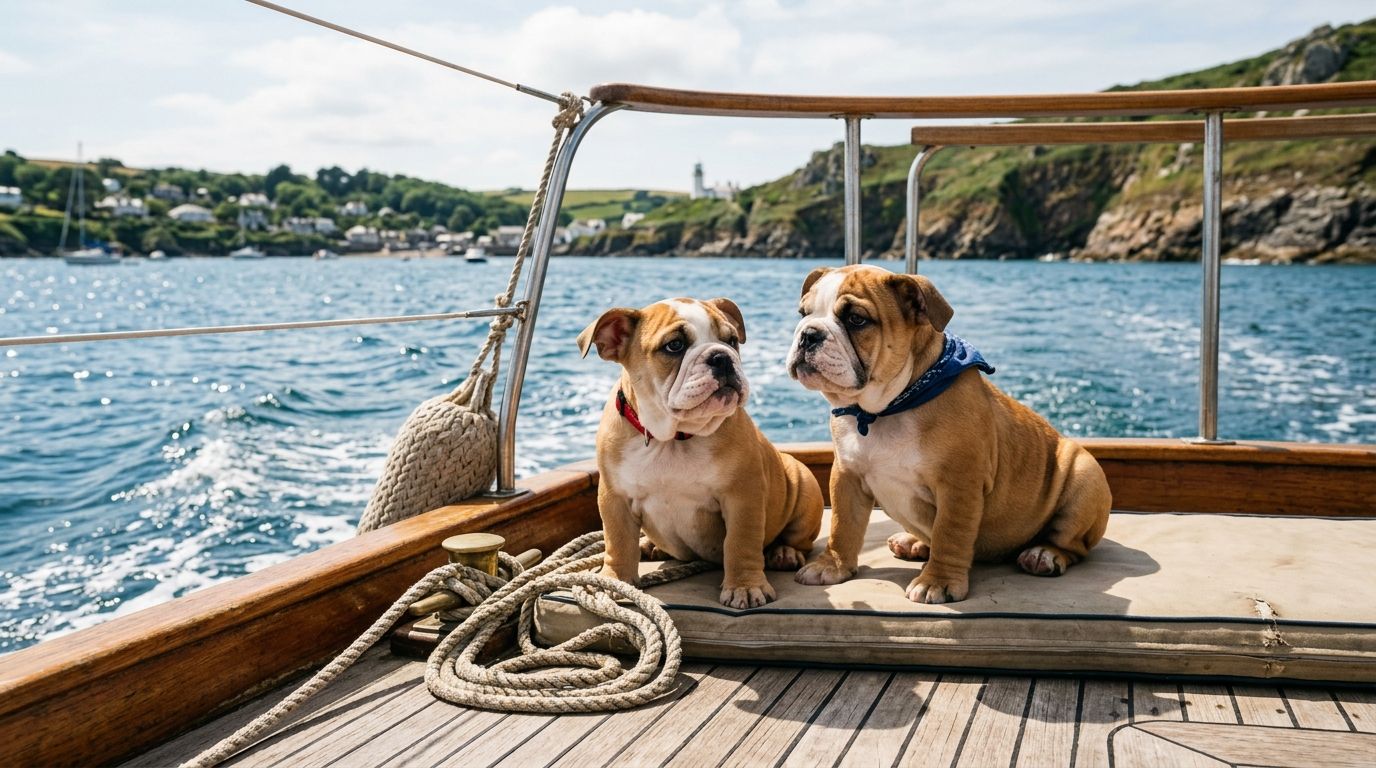
English Bulldog puppies for coastal living need a specific game plan before they ever step on a dock, because this breed was built for the couch, not the current. English Bulldogs can't swim and overheat fast in humid, salt-air climates, so boat and coastal families need gear, routines, and vet access lined up before the puppy comes home.
- English Bulldog puppies for coastal living need a fitted life vest every time they’re near water — this breed sinks, it doesn’t paddle.
- Humidity plus heat is the real risk on the coast, not the water itself, because brachycephalic airways can’t cool the body efficiently.
- Shrinkabulls recommends a non-slip deck routine, salt-rinse skin fold care, and a vet within 20 minutes of your marina before you commit.
- Miniature English Bulldogs handle boat life a little easier than standard-size dogs thanks to lower body mass and heat load.
Why coastal living matters for English Bulldog owners
A bulldog's flat face, thick body, and short legs make it one of the worst-equipped breeds for open water and one of the most heat-sensitive dogs you can own near a coastline in 2026. Salt air, humidity, and hot decking surfaces stack three separate risk factors on top of a breed that already struggles to regulate its own temperature.
We've placed English Bulldog puppies with families in Florida, the Gulf Coast, and coastal California who live on boats or dock full-time, and the pattern is consistent: the dogs that thrive have owners who planned the gear and the routine before the puppy arrived, not after the first overheating scare. English Bulldog puppies for hot climate households covers the heat side in more depth if your coastal region runs hot most of the year.
How to prepare an English Bulldog puppy for boat and coastal life
Assess the heat and humidity risk before you buy
Coastal humidity traps heat against a bulldog's body in a way dry-climate heat doesn't, and that changes how much shade and airflow your setup actually needs.
- Check average summer humidity and heat index for your specific marina or dock, not just the regional forecast
- Rule out any boat layout with no shaded, ventilated resting spot
- Test cabin airflow at anchor, when the AC or generator may be off
- Ask your breeder about the litter's parents' heat tolerance and any breathing history
Fit your bulldog with a coast-ready gear kit
A bulldog's dense muscle and short legs mean almost zero natural buoyancy, so the life vest isn't optional gear, it's the single non-negotiable item on this list.
- A snug-fitting dog life vest with a top handle for quick lifts out of water
- A harness built for brachycephalic breeds, since a flat collar can restrict an already narrow airway
- A cooling vest or cooling mat for deck time in direct sun
- Non-slip booties or paw wax for hot fiberglass or teak decking
The best harnesses for brachycephalic breeds like bulldogs breaks down fit and chest-strap placement, and the best cooling vests for bulldogs in hot weather page compares options by soak time and coverage.
Waterproof and salt-proof the home base
Whether the puppy lives aboard full-time or comes home to a dockside house, salt residue and constant dampness are hard on bulldog skin folds and paws.
- Rinse paws and skin folds with fresh water after every dock or beach walk
- Dry between wrinkles fully before crating, since trapped moisture breeds infection fast
- Choose non-porous, easy-wipe flooring in the cabin or entryway
- Keep a dedicated towel set just for salt-water rinse-downs
Build a heat-safe boarding and disembarking routine
The ten seconds between dock and deck are where most bulldog heat stress starts, because that's usually direct sun with zero airflow.
- Carry the puppy over hot decking rather than letting it walk
- Schedule boarding and disembarking for early morning or evening
- Keep a cool, wet towel ready for immediate post-boarding cooldown
- Never leave a bulldog in a closed cabin or cockpit, even for five minutes
Watch for breathing distress signs on the water
Bulldogs mask distress until they're already in trouble, so owners on boats need to catch the early signals, not the collapse.
- Loud, labored breathing that gets worse instead of settling after rest
- Gums shifting from pink to pale, blue, or dark red
- Excessive drooling paired with frantic pacing or refusal to lie down
- Collapse or wobbling after even short activity
How to spot early signs of brachycephalic breathing issues walks through what's normal snoring versus what needs an immediate vet call.
Manage skin folds and ear infections from saltwater exposure
Salt water dries out skin, then trapped moisture in folds and ear canals turns that dryness into infection within days if it's ignored.
- Dry ear canals with a vet-approved solution after every swim or splash exposure
- Check facial and tail folds daily during boating season
- Watch for redness, odor, or discharge as early infection markers
- Keep a fold-care balm on board for daily maintenance, not just flare-ups
Plan vet access near your marina or dock
A breathing emergency on a boat needs a vet who already knows brachycephalic anatomy, and finding one after the emergency starts is too late.
- Locate the nearest vet clinic experienced with bulldog airways before departure season
- Save an emergency vet contact in your phone, not just your regular clinic
- Confirm the clinic can handle heatstroke and airway emergencies same-day
- Keep vaccination and health records accessible on the boat, not just at home
How to choose a vet experienced with brachycephalic breeds has a short checklist for vetting a clinic before you need one.
Reserve and prepare before the puppy comes home
Coastal families often want the puppy timed around a season or a move, so reserving early gives you time to build the gear kit and routine first.
- Confirm the litter's expected go-home date against your boating or travel season
- Ask about temperament notes specific to heat and water tolerance
- Get gear fitted and tested before the puppy's first day aboard
- Line up your vet contact before pickup, not after
Comparing bulldog options for coastal and boat living
| Option | Best for | Key limitation |
|---|---|---|
| Standard English Bulldog | Families who want a classic bulldog build and don't need extreme portability | Heaviest body mass of the three, hardest to lift out of water quickly |
| Miniature English Bulldog | Owners who want lower body mass and slightly easier heat management | Smaller size still carries the same flat-face breathing risk |
| French Bulldog | Owners prioritizing a lighter, easier-to-carry dog for tight boat spaces | Even less swimming ability and similar heat sensitivity as the English Bulldog |
Verdict: a Miniature English Bulldog is the easier fit for boat life, but every bulldog variety needs the same life vest, shade, and airway monitoring routine.
Common mistakes coastal bulldog owners make
- Skipping the life vest on "calm" days. Flat water is still water a bulldog can't tread.
- Assuming shade alone solves heat risk. Humidity traps heat even in shade; airflow matters as much as shade.
- Letting salt residue sit in skin folds overnight. That's the fastest path to a fold infection.
- Waiting until a breathing episode to find a vet. Coastal emergencies move fast; the search should happen before the trip, not during it.
- Buying gear sized for an adult dog on a puppy. A loose life vest defeats the purpose; refit as the puppy grows.
Reserve your coastal-ready bulldog puppy
Lock in a spot before the litter’s go-home date and start gear prep early.
FAQ
Can English Bulldogs live on a boat full-time?
English Bulldogs can adapt to boat living in 2026 if the owner manages heat, humidity, and water access closely, but the breed’s flat face and heavy build make it a higher-maintenance choice than a lighter, longer-nosed breed.
Do English Bulldogs need life vests around water?
Yes, every time. English Bulldogs have almost no natural buoyancy because of their dense muscle and short legs, so a properly fitted life vest is required gear near any open water, not an optional accessory.
Are Miniature English Bulldogs better for coastal living than standard size?
Miniature English Bulldogs tend to handle heat and portability a bit better on a boat because of lower body mass, but they carry the same brachycephalic breathing risk as standard English Bulldogs.
What temperature is too hot for an English Bulldog on a boat deck?
High humidity combined with direct sun on a deck can cause heat stress well below temperatures a healthy, longer-nosed dog would tolerate, so shade, airflow, and early morning or evening activity matter more than a single number.
How do I stop saltwater from irritating my bulldog’s skin folds?
Rinse skin folds with fresh water and dry them fully after every saltwater exposure, since trapped salt and moisture is what triggers fold infections in this breed.
Is a French Bulldog easier than an English Bulldog for boat life?
A French Bulldog is lighter and easier to lift, which helps on a boat, but it shares the same low swimming ability and heat sensitivity as the English Bulldog, so the core precautions stay the same.
What breathing signs mean I need a vet immediately during a boat trip?
Pale, blue, or dark red gums, labored breathing that worsens with rest, or collapse after light activity all mean an immediate vet visit, not a wait-and-see approach.
When should I start gear training an English Bulldog puppy for boat life?
Fit and test the life vest, harness, and cooling gear on land before the puppy’s first day on the water, so the first real boat trip isn’t also the first time wearing the gear.
One last thing
The detail most coastal buyers miss: an English Bulldog's ear canals hold moisture longer than most breeds because of the shape of the outer ear, which means saltwater ear infections often show up two or three days after a swim, not the same day. Build ear checks into your routine on a delay, not just right after water time.
Related guides
- Best harnesses for brachycephalic breeds like bulldogs
- How to spot early signs of brachycephalic breathing issues
- Merle bulldog price: what rare color puppies really cost
