


 REVIEWS




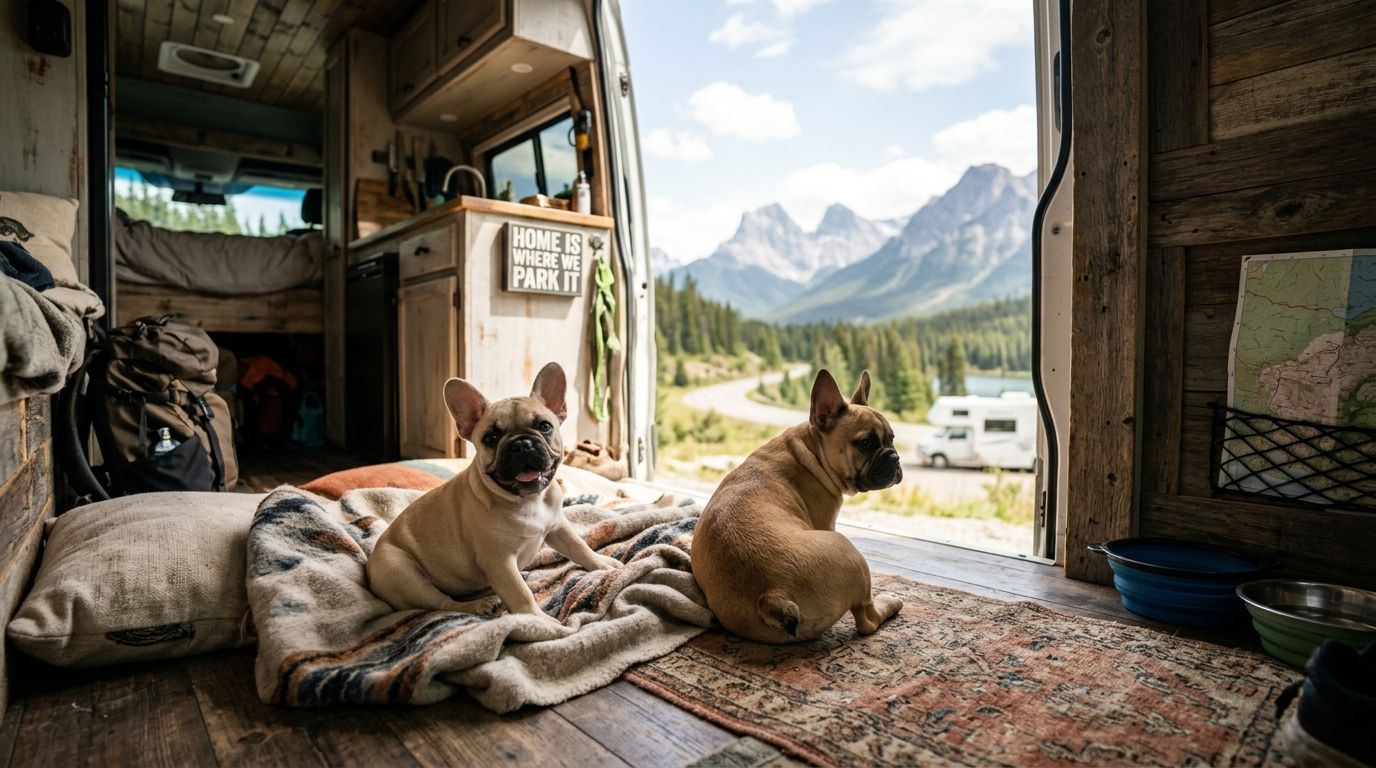
French Bulldog puppies for van life owners are compact, low-shedding companions bred for people who live and travel out of a converted van, truck camper, or small RV full-time. A van-life Frenchie needs to handle tight quarters, temperature swings, and hours of stillness in a moving vehicle better than a Frenchie raised in a five-bedroom house ever will. That means the puppy you pick, and the way you raise it, looks different from a standard suburban placement.
- French Bulldog puppies for van life do best when picked young, under 20 lbs at maturity, and trained early to settle in a crate.
- Shrinkabulls French Bulldog puppies come from AKC-registered lines, which matters when you’re crossing state lines or borders in 2026.
- A Mini French Bulldog fits van storage and bunk space better than a standard-frame Frenchie in a 20-foot rig.
- Heat management, not size, is the number one reason van-life bulldog placements fail in the first year.
- Budget for vet access on the road before you budget for gear — brachycephalic breeds need specialists, not just any clinic.
Why this matters for van life
A Frenchie's flat face is the whole story here. Short snouts mean less efficient panting, which means a parked van in direct sun in July 2026 can turn dangerous in minutes, not hours. Van lifers who don't plan around that reality are the ones who end up posting panicked questions in Facebook groups at 2 a.m.
Space is the second issue nobody thinks about until move-in day. A standard-build French Bulldog can run 20 to 28 pounds. In a 70-square-foot living box, that's a meaningful amount of dog to step around, especially with a puppy that hasn't learned to settle on command yet.
Verdict: a well-socialized, appropriately-sized French Bulldog puppy is one of the better breed choices for van life in 2026 — but only if you build the routine around heat, restraint, and vet access before you hit the road, not after.
Pick a puppy built for your rig, not the breed standard
Before you fall for the first cute face on Instagram, think about your square footage.
Match puppy size to available space
A Mini French Bulldog is worth a serious look if your rig is under 25 feet or you're running a truck camper. Smaller frame, same personality, less dog to maneuver around a dinette that converts into a bed every night.
- Ask the breeder for projected adult weight, not just current puppy weight
- Confirm both parents' adult sizes if you're buying at 8-10 weeks
- Favor a puppy that's already calm around noise and movement over one that's just the prettiest color
- Skip anything advertised as "teacup" without health documentation to back it up
- Prioritize even temperament over rare coat color if this is your first Frenchie on the road
Build a crate and restraint setup that survives real driving
A loose puppy in a moving van is a hazard to itself and to you. Crash-rated crates and secured harness systems exist for a reason, and brachycephalic breeds need gear designed around their shorter necks and compressed airways, not repurposed cat carriers.
- Choose a crate rated for vehicle use, not just home containment
- Anchor the crate to a fixed point, never let it slide on impact
- Fit a harness rather than a collar for any restraint that clips to a seatbelt
- Practice five-minute "parked and buckled" sessions before your first real drive
- Reassess the fit every few weeks during the growth phase
Train calm settle behavior before you leave the driveway
A Frenchie that panics in motion is a Frenchie that overheats faster and stresses harder. Settle training is the single highest-leverage thing you can do before your first long haul.
Start in the driveway with the engine running and the puppy in its crate. Reward stillness, not excitement. Extend the sessions over two to three weeks before your first real trip on the road in 2026.
- Practice short, stationary sessions before any real mileage
- Reward calm silence, ignore whining
- Add engine noise and vibration gradually
- Keep first real drives under 30 minutes
- Build up to full travel days only after a week of short trips go well
Build a rest-stop and bathroom routine that actually works
Van life means unpredictable stop spacing. A French Bulldog puppy on a house-training schedule needs more consistency than your route usually offers, so you build the consistency yourself.
- Stop every 2-3 hours minimum during active house-training months
- Keep a designated potty mat or turf patch that travels with you for unfamiliar rest stops
- Log stop times for the first month to spot patterns
- Carry water and offer it at every stop, not just at meals
- Never let a young puppy "hold it" through a long driving stretch just to hit a mileage goal
Manage heat and airflow every single day you're parked
This is the mistake that ends van-life bulldog placements. A Frenchie's compressed airway means it can't cool itself the way a longer-nosed breed can, and a parked vehicle heats up faster than most owners expect.
- Never leave a Frenchie puppy alone in a parked vehicle in warm weather, full stop
- Run auxiliary fans or a dedicated 12V cooling system when parked
- Track ambient temperature inside the van, not just outside air temp
- Move driving and outdoor time to early morning or evening in hot climates
- Watch for open-mouth breathing that doesn't settle within a few minutes of shade and water
Budget honestly before you hit the road
Rare coat colors and specific bloodlines carry real cost differences, and van lifers on tighter margins need to know that going in rather than getting surprised at reservation time. If you're weighing a merle, blue, or lilac Frenchie against a standard fawn, what rare color puppies really cost breaks down the color-driven price gaps you'll actually run into in 2026.
Factor in mobile vet visits too. Not every roadside clinic is comfortable with brachycephalic anesthesia protocols, and finding one before you need one beats scrambling from a parking lot in a national forest.
Comparison: which Frenchie build fits which rig
| Option | Best for | Key limitation |
|---|---|---|
| Standard French Bulldog | Larger vans, truck-bed campers, families with more square footage | Higher body mass means more heat retention on hot travel days |
| Mini French Bulldog | Compact vans under 25 feet, solo or couple travel | Smaller litters mean waitlists run longer than standard puppies |
| Rare-color Frenchie (blue, lilac, merle) | Owners set on a specific look who've already priced it in | Color rarity adds cost and narrows breeder options |
| Adult rehome or retired breeding dog | Van lifers who want a calmer temperament from day one | Fewer available, and you skip the puppy-specific bonding window |
Buy verdict: a young Mini French Bulldog from an AKC-registered breeder is the strongest fit for most compact van builds in 2026 — go standard-size only if your rig genuinely has the room.
Common mistakes van-life owners make with a French Bulldog puppy
- Buying the color before the temperament. A rare-color Frenchie that panics in motion is still a Frenchie that panics in motion — pick calm first.
- Skipping the vet-access plan. Brachycephalic breeds need vets comfortable with airway issues; know your nearest option before you're three states from home.
- Underestimating heat inside a parked vehicle. This is the single most common and most preventable failure point for traveling bulldog owners.
- Treating house-training like it'll sort itself out. Irregular stop schedules make house-training slower, not faster, without a deliberate routine.
- Ignoring growth-stage gear changes. A harness that fit at 10 weeks won't fit at 20 weeks — recheck it monthly.
Reserve your Frenchie before you hit the road
Lock in a puppy with a deposit ahead of birth.
FAQ
Are French Bulldogs good for van life?
Yes, with planning around heat and space. Their compact size fits small rigs well, but their short airways mean parked-vehicle heat management is non-negotiable in 2026 and every year after.
What size French Bulldog is best for a small van?
A Mini French Bulldog, generally under standard adult weight, fits tighter van layouts better than a full-standard-frame Frenchie. Confirm projected adult size with the breeder before you commit.
Can a French Bulldog puppy handle long drives?
Yes, once it’s been trained to settle in a crate through short, gradually extended sessions. Puppies that skip this training tend to pant and stress through long stretches on the road.
How do you house-train a French Bulldog puppy while traveling?
Stop every 2-3 hours minimum and carry a consistent potty surface, like a turf patch, so the puppy has a familiar cue at unfamiliar rest stops. Consistency of surface matters more than consistency of location.
Is a French Bulldog safe in a hot van?
Not without active cooling. A parked vehicle heats up fast, and a Frenchie’s compressed airway makes it far less able to cool itself than most other breeds, so it should never be left alone in a warm, parked van.
Do rare-color French Bulldogs cost more for van-life buyers?
Yes. Colors like merle, blue, and lilac carry a price premium over standard fawn or brindle, and that gap is worth budgeting for before you reserve a puppy.
What harness works best for a French Bulldog in a moving vehicle?
A harness built for brachycephalic breeds, fitted around the chest rather than the throat, clipped to a seatbelt anchor point. Standard collars aren’t appropriate restraint for vehicle travel.
Should a first-time owner get a French Bulldog for van life?
It’s workable, but first-time owners should budget extra time for settle training and vet-access research before departure, since brachycephalic care has a steeper learning curve than most breeds.
One last thing
A French Bulldog's short snout isn't just a look — it's the reason panting alone can't cool them the way it cools a longer-nosed dog, which is exactly why heat management, not floor space, decides whether a van-life placement works out. Owners who treat cooling as a daily routine instead of an emergency response are the ones still happily on the road with their Frenchie a year later.
Related guides
- Harnesses built for brachycephalic breeds like bulldogs
- How to travel safely with a bulldog puppy by car
