

 REVIEWS




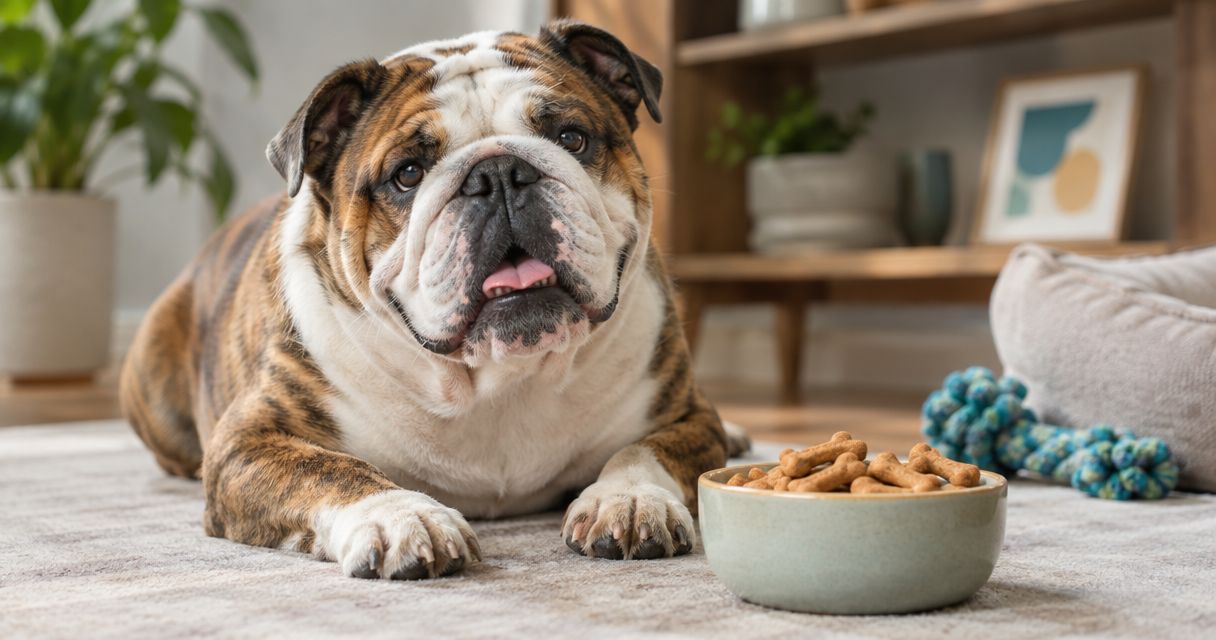
Bulldogs battle food allergies more than most breeds, and picking the wrong treat can turn a training session into a skin-and-gut flare-up. This guide ranks the treat categories that actually work for itchy, gassy, or ear-infection-prone bulldogs, English and French alike, without guessing at ingredient lists.
- Single-protein novel treats are the best allergy friendly treats for bulldogs starting an elimination diet in 2026.
- Limited-ingredient training treats work best for daily reward use without adding new allergens.
- Homemade dehydrated treats are the budget pick because you control every ingredient.
- Hydrolyzed protein treats are for bulldogs with confirmed multi-protein allergies, not casual sensitivities.
Why this matters
English and French Bulldogs carry more skin folds, more gut sensitivity, and more brachycephalic inflammation than most breeds, so a treat loaded with chicken meal, dairy, or corn syrup shows up fast as ear gunk, paw licking, or loose stool. If you're not sure whether you're dealing with a food trigger or something else, start with how to identify food allergies in an English Bulldog before you change anything in the treat jar.
Treats matter more than owners think because they're often the least-regulated part of a bulldog's diet — a food might be vet-approved while the biscuit box next to it is loaded with the exact protein causing the reaction. The fix isn't cutting out treats, it's choosing the right category for your bulldog's specific sensitivity.
Best allergy-friendly treats for bulldogs in 2026
Best overall: single-protein novel treats. Best for daily training: limited-ingredient treats. Best budget option: homemade dehydrated treats. Best for confirmed multi-allergy bulldogs: hydrolyzed protein treats.
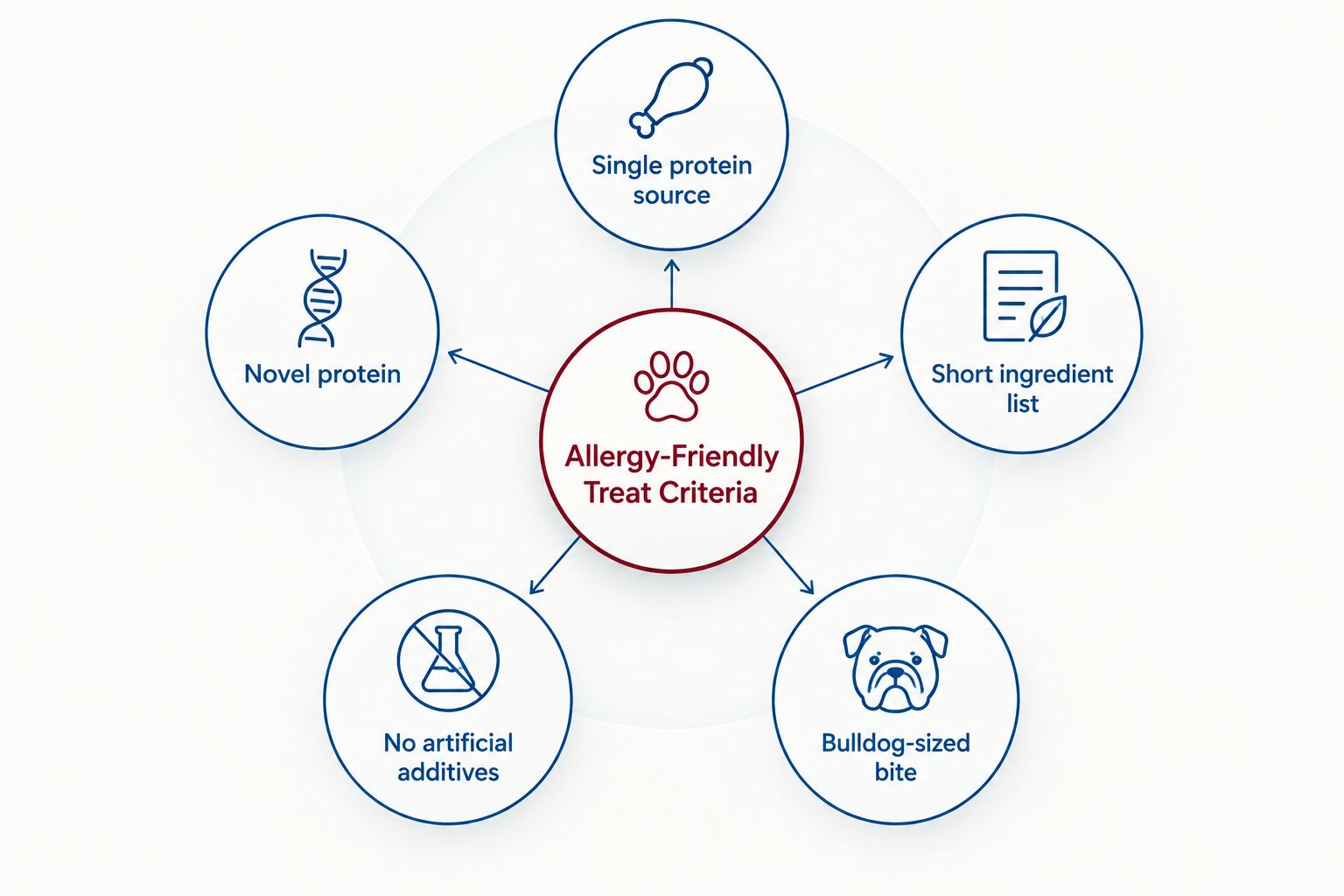
What makes the best allergy-friendly treat for a bulldog
- Single named protein source — not "meat meal" or "animal by-product"
- Novel or limited exposure — duck, rabbit, or venison instead of chicken and beef
- Five ingredients or fewer on the label
- No artificial colors, flavors, or preservatives
- Size and texture fit for a bulldog's underbite and short training sessions
At a glance: allergy-friendly treat categories compared
| Category | Best for | Standout feature | Key limitation |
|---|---|---|---|
| Single-protein novel treats | Elimination diet trials | One clean protein, easy to isolate | Fewer flavor options |
| Limited-ingredient training treats | High-frequency training | Small bites, low calorie per piece | Still contains grains in some formulas |
| Freeze-dried raw treats | Grain and starch sensitivity | Minimal processing, no fillers | Crumbles, less durable for travel |
| Hydrolyzed protein treats | Multiple or severe allergies | Protein broken down below reaction size | Often requires a vet's recommendation |
| Fish-based treats | Skin and coat support | Omega-3 fatty acids built in | Strong smell, not for fish-allergic dogs |
| Homemade dehydrated treats | Budget and full control | Zero unknown ingredients | Takes prep time, shorter shelf life |
1. Single-protein novel treats: best for elimination diet trials
These treats use one uncommon protein — duck, rabbit, kangaroo, or venison — and nothing else recognizable. That single-protein structure is exactly what a vet-guided elimination trial needs: if symptoms clear, you've found your trigger.
Single-protein novel treat pros:
- Isolates the suspect allergen fast
- Works alongside a novel-protein main diet
- Usually free of the top bulldog triggers (chicken, beef, dairy)
Single-protein novel treat cons:
- Costs more per ounce than mainstream biscuits
- Limited flavor variety once you find one that works
Best for: bulldogs mid-elimination trial or with a confirmed single-protein allergy. Verdict: Buy.
2. Limited-ingredient training treats: best for daily reward use
These are small, low-calorie treats built around 3-5 ingredients, made for the volume of rewards a training session demands without piling on extra allergens.
Limited-ingredient treat pros:
- Bite-sized, ideal for a bulldog's short attention span
- Low calorie count reduces weight-gain risk from frequent training
- Easy to find in novel-protein versions
Limited-ingredient treat cons:
- Some formulas still include oats or rice as filler
- Not all brands disclose sourcing on the label
Best for: owners doing daily obedience or leash work with a bulldog puppy. Verdict: Buy.
3. Freeze-dried raw treats: best for grain and starch sensitivity
Freeze-dried single-ingredient meat treats skip the baking process entirely, so there's no grain, starch, or added sugar hiding in the mix — just the protein itself.
Freeze-dried raw treat pros:
- No grain or starch of any kind
- Minimal processing preserves nutrients
- Easy to break into training-sized pieces
Freeze-dried raw treat cons:
- Crumbles in a pocket or bag
- Pricier per pound than baked treats
- Not ideal for bulldogs on a strict raw-diet restriction
Best for: bulldogs reacting to grains or starches rather than protein. Verdict: Buy.
4. Hydrolyzed protein treats: best for multiple or severe food allergies
Hydrolyzed treats break protein molecules down small enough that the immune system doesn't recognize them as a trigger. These are the closest thing to a prescription-tier treat and typically pair with a hydrolyzed main diet.
Hydrolyzed protein treat pros:
- Works even when a bulldog reacts to several proteins
- Pairs with prescription hydrolyzed food plans
- Reduces cross-reactivity risk
Hydrolyzed protein treat cons:
- Usually needs a veterinary recommendation
- Texture and smell are less appealing to picky bulldogs
- Narrower selection than standard treat aisles
Best for: bulldogs with a documented history of reacting to more than one protein. Verdict: Buy, with vet input.
5. Fish-based treats: best for skin and coat support
Salmon or whitefish treats bring omega-3 fatty acids that help calm the skin inflammation bulldogs are prone to in their folds, on top of being a protein many bulldogs haven't been exposed to before.
Fish-based treat pros:
- Omega-3s support fold and skin health
- Novel protein for dogs raised on chicken or beef diets
- Often single-ingredient
Fish-based treat cons:
- Strong odor some owners dislike
- Off the table for any fish-allergic bulldog
Best for: bulldogs with dry, flaky, or inflamed skin folds alongside food sensitivity. Verdict: Hold — introduce slowly and watch the folds.
6. Homemade dehydrated treats: best budget option
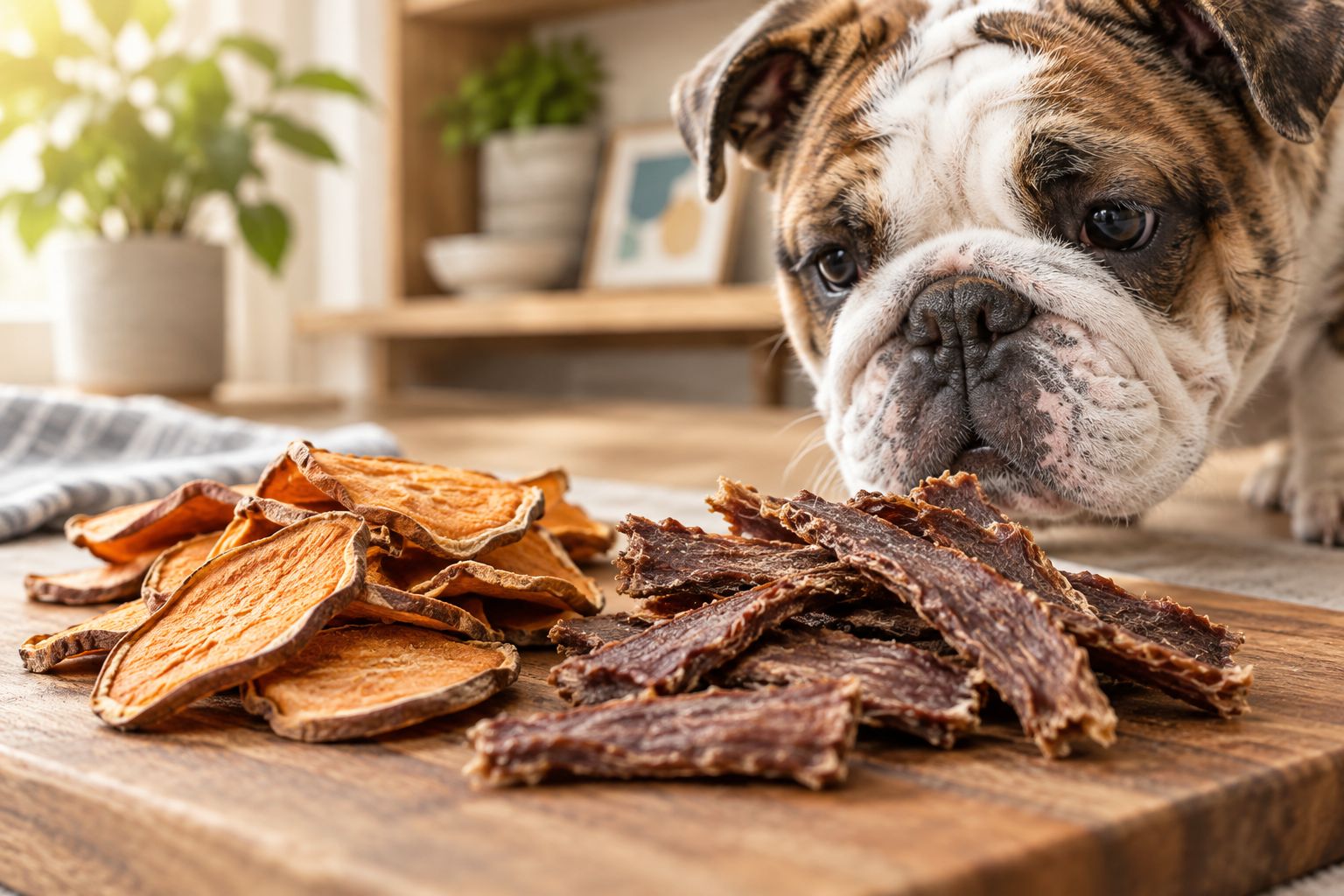
Slicing sweet potato, pumpkin, or a single novel-protein meat thin and running it through a home dehydrator gives you a treat with exactly one ingredient and zero guesswork.
Homemade dehydrated treat pros:
- Total control over every ingredient
- Cheapest option per treat
- Easy to rotate proteins for variety
Homemade dehydrated treat cons:
- Takes prep time and a dehydrator or low oven
- Shorter shelf life than commercial treats
- Not portable for long outings
Best for: budget-conscious owners willing to prep in batches. Verdict: Buy, if you have the time.
How we ranked these
Every category above was scored against the five criteria up top: single named protein, novel exposure, short ingredient count, no artificial additives, and bite size appropriate for a bulldog's jaw. Categories that failed more than one criterion, like treats loaded with unnamed "meat by-products," didn't make the list at all.
Which allergy-friendly treat should you choose?
If you're still mid-elimination trial, single-protein novel treats stay the safest starting point in 2026 — they isolate the trigger without adding new variables. If your bulldog already has a confirmed diagnosis touching more than one protein, move to hydrolyzed treats with your vet's input. For everyday training between now and 2026's next vet visit, limited-ingredient treats keep the reward frequency high without the allergen risk.
Whatever you pick, pair it with a food that matches — the best dog foods for English Bulldogs list covers formulas built around the same novel-protein logic. Gut support matters too; a gut health probiotic can shorten the flare-up window while you sort out the trigger.
Get the full bulldog diet plan
See how treat choices fit into a complete feeding plan for a food-sensitive bulldog.
FAQ
What are the best allergy friendly treats for bulldogs?
Single-protein novel treats made from duck, rabbit, or venison are the best allergy friendly treats for bulldogs because they isolate one protein source and rarely overlap with common triggers like chicken or beef.
How do I know if my bulldog has a food allergy versus a skin issue?
Food allergies usually show up as itching, ear infections, or loose stool that persists regardless of bathing routine. Check the signs against how to identify food allergies in an English Bulldog before switching treats.
Are grain-free treats automatically allergy friendly for bulldogs?
No — grain-free only removes wheat, corn, and rice, but a treat can still contain chicken or beef, which are more common bulldog triggers than grain.
How long does an elimination diet trial take for a bulldog?
An elimination trial typically runs 8 to 12 weeks with a single novel protein before symptoms can be reliably attributed to a specific ingredient.
Can French Bulldogs and English Bulldogs eat the same allergy-friendly treats?
Yes, the same novel-protein and limited-ingredient categories apply to both breeds since the allergy patterns and skin-fold sensitivity are similar.
Are hydrolyzed treats necessary for every allergic bulldog?
No, hydrolyzed treats are for bulldogs with confirmed reactions to multiple proteins. A single-protein or limited-ingredient treat handles most single-trigger allergies.
Do fish-based treats help bulldog skin fold problems?
Fish-based treats bring omega-3 fatty acids that support skin health, but they should be introduced slowly and are unsuitable for a fish-allergic bulldog.
Is it cheaper to make allergy-friendly treats at home?
Yes, dehydrating a single protein or vegetable at home costs less per treat than commercial limited-ingredient options, though it takes more prep time.
One last thing
Most owners change three things at once when a bulldog starts scratching — food, treats, and shampoo — which makes it impossible to know what actually fixed it. Change one variable, wait the full 8 to 12 weeks an elimination trial needs, then move to the next. If skin symptoms show up alongside the gut symptoms, a medicated shampoo for bulldog skin allergies can calm the surface while the treat and food changes work from the inside.
Related guides
- How to identify food allergies in a French Bulldog puppy
- Best dog food for French Bulldog puppies
- Best diet plans for overweight English Bulldogs
