

 REVIEWS




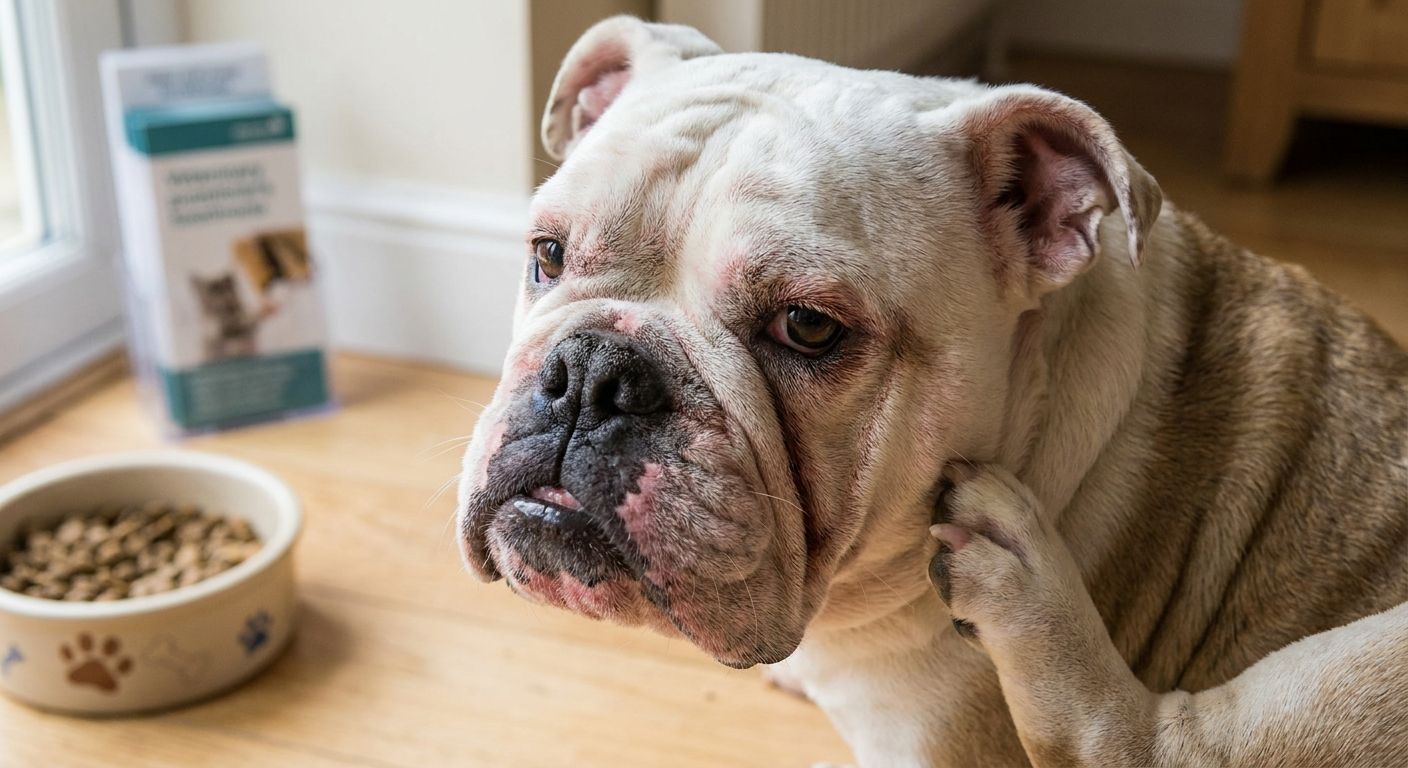
An English Bulldog with a food allergy shows a specific pattern: itchy, red skin around the paws, armpits, and skin folds, chronic ear infections, and loose stool or vomiting that shows up within hours to a few days of eating the trigger ingredient — and none of it clears up with flea treatment or antihistamines alone. The detail most owners miss is that english bulldog food allergies run year-round, not seasonal, and they don't respond to the steroid shot that knocks out a pollen flare in 48 hours.
- Year-round itching, ear infections, and paw licking point to english bulldog food allergies, not seasonal allergy.
- Chicken, beef, dairy, and wheat cause most confirmed food allergy cases in bulldogs.
- An 8-12 week elimination diet trial is the only reliable way to confirm a food allergy in 2026.
- Skin fold infections often flare alongside food allergies and need separate daily care.
- Blood and saliva allergy tests are unreliable for food allergies — vets don’t rely on them for a diagnosis.
Why this matters
Bulldogs already deal with skin folds, wrinkles, and a gut that's more sensitive than a lot of other breeds — so when a food allergy gets layered on top, the itching and infections compound fast. We've fielded plenty of calls from Shrinkabulls families who assumed a wrinkle rash or a runny eye was "just a bulldog thing" when it was actually a diet reacting badly with their pup's skin. Catching the pattern early saves you a year of guessing, vet visits, and a dog that's miserable in its own skin.
The hard part is that food allergy symptoms overlap heavily with environmental allergies, yeast overgrowth, and normal bulldog wrinkle maintenance. Sorting out which one you're actually dealing with is what separates a two-week fix from a two-year mystery.
How to identify food allergies in an English Bulldog
The fastest way to tell a food allergy apart from an environmental allergy or a normal bulldog quirk is to track when and where the symptoms show up.
| Symptom | Food allergy | Environmental allergy | Normal bulldog trait |
|---|---|---|---|
| Timing | Year-round, no seasonal pattern | Worse in spring/fall, better indoors | Constant, low-level |
| Itching location | Ears, paws, armpits, rear end | Face, eyes, belly | Wrinkles, tail pocket |
| Ear infections | Recurring, both ears | Occasional, tied to pollen season | Rare unless folds are dirty |
| Digestive signs | Soft stool, vomiting, gas | Almost never | None |
| Response to antihistamine | Little to no improvement | Noticeable improvement | Not applicable |
| Response to diet change | Clears in weeks | No change | No change |
If your bulldog's itching sticks around in January the same as it does in July, that's your biggest clue you're looking at a food trigger and not ragweed or grass.
The elimination diet: how to confirm it
There's no reliable blood or saliva test for food allergies in dogs — vets consider those tests too inaccurate to diagnose off of. An elimination diet is the actual gold standard, and it works like this:
- Pick a novel protein and carb source your bulldog has never eaten — often duck, venison, or a hydrolyzed protein formula.
- Feed only that food for 8-12 weeks. No treats, no table scraps, no flavored medications during the trial.
- Log symptoms weekly — itch level, ear odor, stool quality, skin fold redness.
- Watch for improvement around week 6-8; most true food allergy cases show visible skin and coat improvement by then.
- Reintroduce one old ingredient at a time, one every 1-2 weeks, and watch for flare-ups within 24-72 hours.
- Confirm the trigger once a specific reintroduced ingredient reliably brings symptoms back.
If you're mid-transition from breeder food to a home diet already, that's actually the easiest window to run this trial cleanly since your bulldog isn't attached to a routine food yet — transitioning a new bulldog puppy off breeder food the right way sets you up to catch a food sensitivity early instead of three years down the road.
Why bulldog food allergies vary
Not every bulldog reacts to the same trigger, and severity swings widely between individual dogs. A few factors drive that variation:
- Genetics and lineage — some bloodlines carry more skin and gut sensitivity than others
- Protein exposure history — a dog fed the same chicken-based kibble for years builds up sensitivity to that specific protein over time
- Gut microbiome health — bulldogs with a history of soft stool or antibiotic use often react more strongly to new ingredients
- Skin fold moisture — allergic skin combined with damp folds turns a mild irritation into a bacterial or yeast infection fast
- Filler-heavy kibble — low-quality fillers (corn, soy, artificial dyes) trigger more reactions than single-source proteins
- Treats and table scraps — even a "clean" main diet can be undone by daily treats containing the trigger ingredient
A bulldog already prone to weight gain adds another layer here, since a lot of budget kibble uses the same handful of cheap proteins that also top the allergy trigger list — worth cross-checking against a diet plan built for overweight English Bulldogs if your dog is carrying extra weight on top of allergy symptoms.
Is it a food allergy or an environmental allergy?
A food allergy shows up year-round with digestive signs like soft stool or vomiting alongside the itching; an environmental allergy is seasonal and rarely touches the gut. If your bulldog's symptoms ease up in the dead of winter when pollen counts drop, you're most likely looking at an environmental trigger, not a food one.
How long does an elimination diet take to work?
An elimination diet takes 8-12 weeks to produce a reliable answer in most English Bulldogs. Some dogs show visible improvement by week 4, but full confirmation requires sticking with the single novel-protein diet through the full trial before reintroducing anything.
What foods cause the most allergies in English Bulldogs?
Chicken, beef, dairy, and wheat account for the majority of confirmed food allergy cases in dogs generally, and bulldogs are no exception given how common chicken-based kibble is on pet store shelves. Lamb, fish, and novel proteins like duck or venison trigger far fewer reactions simply because most dogs haven't been exposed to them before.
Skin fold infections deserve a separate mention here, because they mimic and worsen alongside food allergies constantly. If your bulldog's wrinkles are red, smelly, or crusty on top of the itching, treat that as its own problem — see how to manage skin fold infections in an English Bulldog for the daily cleaning routine that keeps folds dry while you run the diet trial.
Before you commit to any breeder or puppy, it's worth asking what health testing has already been done on the parents — allergy tendencies and skin sensitivity often run in family lines, and a breeder who runs health testing panels on their dogs can tell you what to watch for before you ever bring a puppy home.
Meet our bulldog puppies
See available English and French Bulldog litters and ask about diet and health history.
If you're still deciding on a color variety and weighing cost alongside health considerations, what merle bulldog puppies really cost breaks down the price factors buyers ask about most in 2026, separate from allergy management.
FAQ
What are the first signs of a food allergy in an English Bulldog?
The first signs are usually itchy paws and armpits, ear infections that keep coming back, and soft stool that doesn’t line up with a diet change. These symptoms show up year-round rather than seasonally, which is the main clue pointing to food rather than pollen.
Can English Bulldogs outgrow food allergies?
No, dogs don’t outgrow a true food allergy once it develops — the trigger ingredient has to stay out of the diet permanently. Symptoms can look better for a while if exposure drops, but they return once the ingredient shows up again in food or treats.
Is grain-free food better for a bulldog with allergies?
Grain-free isn’t automatically better — the allergy trigger is almost always a specific protein like chicken or beef, not grain itself. Wheat does show up on the common trigger list, but switching to grain-free while keeping the same protein source won’t fix a protein allergy.
How much does a food allergy elimination diet cost?
Costs vary by brand and whether you use an over-the-counter novel protein food or a prescription hydrolyzed diet from a vet. Check current pricing with your vet or preferred pet food retailer since formulas and availability change.
Do food allergies cause bad breath in bulldogs?
Food allergies themselves don’t directly cause bad breath, but the ear and skin infections that come with them do produce a noticeable odor. Persistent bad breath alongside itching is more often tied to skin fold infections or dental issues than the allergy itself.
Can puppies show food allergy symptoms before 6 months old?
Yes, puppies can show food allergy symptoms as early as a few months old, especially with soft stool or skin irritation after a food switch. It’s less common than in adult bulldogs but not rare, particularly during the transition off breeder food.
What’s the difference between a food allergy and a food intolerance?
A food allergy triggers an immune response with itching, skin inflammation, and often ear infections, while a food intolerance is a digestive reaction limited to gas, vomiting, or soft stool without skin involvement. Both get diagnosed the same way, through an elimination diet.
Should I switch foods every few months to prevent allergies?
No, frequent food rotation can actually increase the odds of developing new sensitivities by exposing your bulldog to more proteins over time. Sticking with one well-tolerated protein source long-term is generally the safer approach once you’ve found a food that works.
One last thing
The detail most owners overlook: a bulldog can pass a full elimination diet trial and still flare up again a year later on the exact same food, because ongoing skin fold moisture and yeast overgrowth mimic an allergy relapse. Before you assume the diet stopped working in 2026, rule out a fold infection first — it's the cheaper, faster fix nine times out of ten.
Related guides
- Best diet plans for overweight English Bulldogs
- How to manage skin fold infections in an English Bulldog
- How to transition a new bulldog puppy from breeder food to home diet
- Best health testing panels to request from a bulldog breeder
- What merle bulldog puppies really cost

2 thoughts on “English Bulldog Food Allergies: How to Spot Them (2026)”