


 REVIEWS




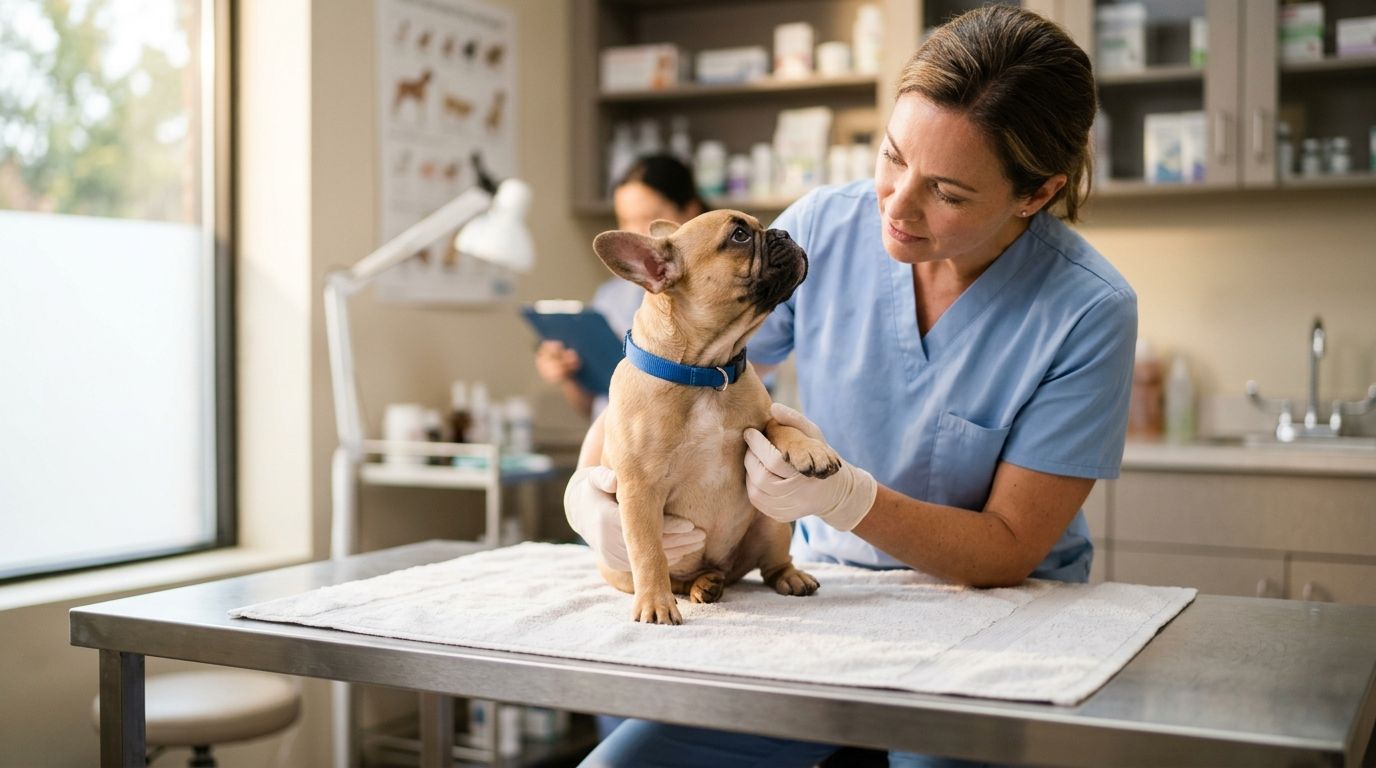
French Bulldog puppies with a food allergy show up with itchy paws, red ears, loose stool, or a rash around the muzzle within a few hours to a few days of eating the trigger ingredient — chicken and beef top the list of common culprits in the breed. The tricky part is that these symptoms overlap almost exactly with environmental allergies and normal brachycephalic skin fold issues, so an elimination diet run over 8 to 12 weeks is the only reliable way to confirm it's food and not something else.
- Food allergies in a French Bulldog puppy show as itchy skin, ear infections, and loose stool, not sneezing or watery eyes.
- Chicken, beef, dairy, and wheat cause most confirmed reactions in Frenchies as of 2026.
- An 8-12 week elimination diet with a novel or hydrolyzed protein is the only real diagnostic tool — blood panels are unreliable.
- Symptoms that start within hours of a meal point to food; symptoms tied to season point to environment.
- Shrinkabulls feeds a consistent puppy diet before pickup specifically to reduce false alarms during a new home transition.
Why this matters
French Bulldogs already carry more skin fold and gut sensitivity than most breeds, so an owner who misreads a food allergy as "just a Frenchie thing" can let a treatable problem run for months. Left alone, chronic itching turns into hot spots and secondary skin infections, and chronic GI upset can slow growth in a puppy that's already working with a compressed airway and a sensitive stomach. Catching the pattern early means a diet swap; missing it means a vet bill and a puppy that's miserable in the meantime.
We've fielded this question from a lot of new Shrinkabulls families in 2026, usually in the first two to four weeks after a puppy comes home — which happens to be exactly when a diet transition can mask or mimic a real allergy.
How to identify food allergies in a French Bulldog puppy
The process is diagnostic, not guesswork. Work through it in order rather than jumping straight to a special diet.
- Log every symptom with a date and time. Note whether it's skin (itching, redness, hair loss around the ears, paws, or belly) or digestive (soft stool, gas, vomiting).
- Check the timing against meals. A reaction that shows up within a few hours of eating and repeats with the same food is a strong food signal. A reaction tied to spring, humidity, or a new detergent points to environment instead.
- Rule out parasites and infection first. A vet exam and stool check clears out giardia, mites, or yeast, which mimic allergy symptoms almost perfectly in bulldogs.
- Start an elimination diet. Feed a single novel protein (rabbit, kangaroo, venison) or a hydrolyzed prescription diet, and nothing else — no treats, no table scraps — for 8 to 12 weeks.
- Reintroduce ingredients one at a time. Add back the old protein source for a week and watch for the symptoms to return. That's your confirmation.
Food allergy vs. environmental allergy vs. normal puppy behavior
| Sign | Food Allergy | Environmental Allergy | Normal Puppy Behavior |
|---|---|---|---|
| Itchy ears/paws | Yes, often year-round | Yes, seasonal | Occasional scratching, not chronic |
| Loose stool | Common, tied to meals | Rare | Occasional, tied to diet change |
| Onset | Hours to 2 days after eating | Seasonal or after outdoor exposure | Not applicable |
| Response to diet change | Improves in 8-12 weeks | No change | Not applicable |
| Skin redness | Muzzle, ears, belly, paws | Face, paws, armpits | None chronic |
A French Bulldog puppy scratching year-round with loose stool almost always has a food trigger — one that only flares in spring almost never does.
Why French Bulldog food allergies vary from puppy to puppy
Not every Frenchie reacts to the same ingredient, and severity swings widely even within one litter. A few things drive that:
- Protein exposure history — a puppy fed chicken from birth builds sensitivity faster than one on a rotated protein diet.
- Genetics and littermate patterns — allergy tendency runs in bloodlines, similar to skin fold sensitivity.
- Gut maturity — a puppy's digestive lining is still developing through 2026's first year of life, so reactions can look worse at 10 weeks than at 6 months.
- Ingredient quality and fillers — cheap kibble with multiple protein sources makes it harder to isolate the actual trigger.
- Stress from a home transition — a new environment alone can cause loose stool that looks like an allergy but resolves on its own within a week.
- Concurrent skin issues — bulldogs prone to fold infections or yeast overgrowth often get misdiagnosed with a food allergy when the real driver is topical.
Related questions
How long does it take to identify a food allergy in a French Bulldog puppy?
8 to 12 weeks is the standard elimination diet window vets use to confirm a food allergy in a French Bulldog puppy. Shorter trials often produce false negatives because gut inflammation takes weeks to fully settle.
Can a French Bulldog puppy outgrow a food allergy?
Some puppies do improve as the gut matures, but a confirmed reaction to a specific protein like chicken or beef typically persists into adulthood. Most owners manage it long-term with a consistent limited-ingredient diet rather than waiting for it to resolve.
What's the most common food allergy trigger for French Bulldogs?
Chicken and beef are the two most frequently confirmed triggers in French Bulldogs, followed by dairy and wheat-based fillers. Novel proteins like duck, rabbit, or venison are the usual starting point for an elimination trial.
If your Frenchie is still on breeder food and headed toward a diet switch, transitioning from breeder food to a home diet slowly over 7-10 days reduces the odds of a false allergy flag from the switch itself. And because French Bulldog symptoms overlap so heavily with skin fold and breathing issues unique to the breed, working with a vet experienced with brachycephalic breeds from day one saves you from chasing the wrong diagnosis.
Looking for a French Bulldog puppy in 2026?
See available litters raised on a consistent, gut-friendly diet before pickup.
Every Shrinkabulls puppy leaves on the same diet they've been raised on so new owners have a stable baseline before any allergy testing starts. If a symptom shows up in week one, that consistency is what lets you separate a real food reaction from a stress reaction to the move.
FAQ
What are the first signs of a food allergy in a French Bulldog puppy?
The first signs are usually itchy paws or ears, redness around the muzzle, and loose stool that shows up within hours of a meal. Chronic ear infections that don’t clear with treatment are another early red flag in French Bulldogs specifically.
How much does it cost to test a French Bulldog puppy for food allergies?
Blood and saliva allergy panels are widely available but considered unreliable by most veterinary dermatologists for food allergies specifically. An elimination diet trial, which relies on a prescription or novel-protein food over 8-12 weeks, is the diagnostic method vets actually trust.
Is it food allergies or a skin fold infection?
A skin fold infection stays localized to the folds around the face, tail, or vulva and often has an odor, while a food allergy causes broader itching across the ears, paws, and belly. Both can occur at once, which is why a vet exam should come before starting an elimination diet.
Can French Bulldog puppies be allergic to chicken?
Yes, chicken is one of the two most common confirmed food allergy triggers in French Bulldogs, alongside beef. A novel protein like duck, rabbit, or venison is the standard substitute during an elimination trial.
What should I feed a French Bulldog puppy with food allergies?
A single novel protein or a hydrolyzed prescription diet, fed with zero treats or table scraps, is the standard approach during the 8-12 week diagnostic window. Once the trigger is confirmed, most owners stay on a limited-ingredient diet built around that safe protein long-term.
How is a food allergy different from a puppy just adjusting to a new home?
A stress reaction from a new home typically resolves within a week and doesn’t repeat with every meal, while a true food allergy is consistent and tied directly to what’s being eaten. If loose stool or itching persists past 10-14 days after settling in, it’s worth starting the elimination process rather than waiting it out.
Do French Bulldogs get more food allergies than other breeds?
French Bulldogs are considered one of the more allergy-prone breeds due to their already sensitive skin and gut, though exact prevalence data varies by source. Their skin folds also make allergy symptoms easier to notice early compared to smoother-coated breeds.
One last thing
The detail most owners miss: a food allergy in a French Bulldog puppy almost never shows up as sneezing or watery eyes the way it might in a person — it shows up on the skin and in the gut, full stop. If your puppy's symptoms are respiratory, look at brachycephalic breathing issues instead of chasing a diet change that won't fix it.
Related guides
- How to identify food allergies in an English Bulldog
- How to transition a new bulldog puppy from breeder food to home diet
- How to choose a vet experienced with brachycephalic breeds
- Merle bulldog price: what rare color puppies really cost
- French Bulldog puppies for first-time dog owners

One thought on “Food Allergies in a French Bulldog Puppy: 2026 Guide”