


 REVIEWS




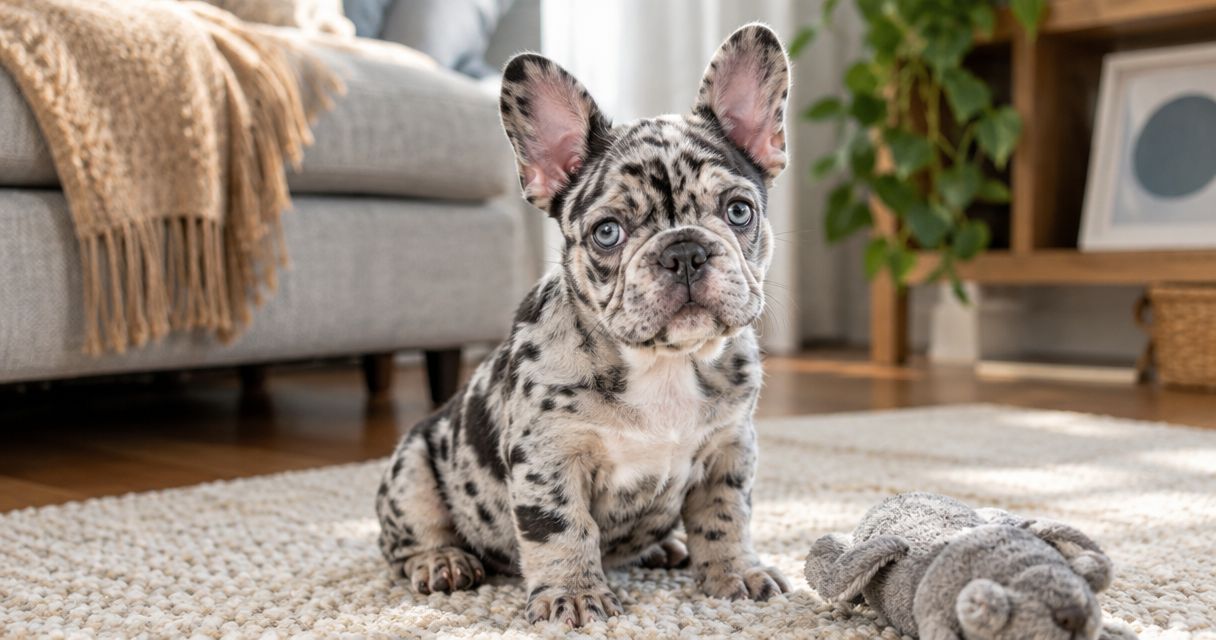
A merle French Bulldog is worth the extra cost in 2026 only if you value the coat pattern, verify the puppy’s health and parentage, and can still fund lifelong care. The extra payment buys your preferred appearance—not proof of better health, temperament, or breeding quality—and routine veterinary care and unexpected treatment remain separate responsibilities.
- Is a merle French Bulldog worth it? Only when your color preference leaves enough room for lifelong care.
- Shrinkabulls breeds French Bulldogs, including merle varieties; evaluate each puppy’s records rather than relying on color alone.
- Merle genetics and French Bulldog breathing risks require separate checks before you commit.
- AKC registration does not certify health or make merle an accepted French Bulldog conformation color.
Is a merle French Bulldog worth the extra cost in 2026?
Merle is a personal preference, not a health upgrade. Choose a merle French Bulldog because you love the pattern and the individual puppy suits your household—not because a rare-color description sounds like a quality certificate.
Compare merle and non-merle puppies using the same standards for breathing, movement, temperament, veterinary records, and parent screening. Then add the merle-specific genetics questions. Start with understanding double-merle health risks before buying rather than judging genetic risk from photographs.
| Choice | Best for | Main benefit | Main limitation | Recommendation |
|---|---|---|---|---|
| Merle French Bulldog | Companion owners who specifically love merle markings | The coat pattern matches your preference | Requires merle-specific genetic review alongside ordinary breed-health checks | Consider only after reviewing records |
| Non-merle French Bulldog | Companion owners without a strong merle preference | You can choose without making merle markings a requirement | Non-merle coloring does not remove French Bulldog health risks | Prioritize health, temperament, and household fit |
Neither choice wins automatically. A puppy with your favorite markings but unresolved medical concerns is not a better match than a puppy whose needs you understand and can meet.
Why this matters
It is easy to fall for a little Frenchie face! The harder decision is whether you are ready for the dog behind the photograph, including training, cooling arrangements, veterinary appointments, and possible specialist care.
In 2026, keep appearance, documentation, and daily care in separate columns when you compare puppies. A convincing answer in one column does not fill the others: attractive markings do not establish health, and registration does not establish suitability for your home.
What does the extra cost actually buy?
The defensible benefit of choosing merle is that you get a coat pattern you prefer. That preference has real personal value, but it is different from a medical benefit or a promise about the puppy’s future.
Do not assume a higher purchase amount includes more testing, better socialization, breeding permissions, transportation, or a particular health guarantee. Ask what the written agreement includes. Treat anything not documented as a question to resolve, not a benefit to count.
Use this simple decision rule: Choose the puppy you can care for, not the appearance that uses up your care budget. If selecting merle leaves you unable to handle veterinary treatment, reconsider the purchase before making a commitment.
Separate your spending plan into routine care, foreseeable setup needs, and unexpected treatment. You do not need a universal estimate to make that distinction useful; you need current information from your veterinarian, insurer, and the actual purchase agreement.
What health checks matter for a merle French Bulldog?
Merle-specific genetics and French Bulldog breed health are different subjects. You need both. A color report cannot tell you whether a puppy breathes comfortably, and a routine physical examination cannot fully describe the parents’ merle genetics.
Merle genetics: ask for the actual reports
The UC Davis Veterinary Genetics Laboratory’s published merle guidance explains that merle involves variation in the PMEL gene and that genetic results require interpretation beyond a simple visual label. Dogs carrying merle variants do not all look alike.
Double-merle dogs have increased risks of hearing and eye abnormalities. However, not every merle dog is double merle, and coat photographs cannot reliably settle the question. Ask a veterinarian familiar with canine genetics to interpret relevant results rather than treating a seller’s color description as the answer.
Request 2 parent reports, one for each parent, when evaluating the mating’s merle genetics. Check that the identifiers match the dogs being discussed. If a report uses unfamiliar allele terminology, pause until someone qualified explains what it means for that pairing and puppy.
Breed health: look beyond the coat
French Bulldogs are brachycephalic dogs. Their shortened facial structure makes breathing assessment important regardless of coat color; merle testing does not address airway function.
For your 2026 review, the Orthopedic Foundation for Animals’ French Bulldog CHIC requirements provide a published starting point with 4 screening areas: hips, eyes, patellas, and cardiac health. Check the current requirements and actual results rather than relying on a generic statement that the parents were tested.
A CHIC number means the required screenings were completed and made publicly accessible under the program’s rules; it does not mean every result was normal. Read the results themselves. Ask your veterinarian what additional evaluation is appropriate for the individual puppy and family history.
Puppy assessment: examine the individual
Request 1 puppy-specific veterinary record, not just paperwork about the parents. Review examination findings, vaccination and deworming history, and any recommended follow-up with your own veterinarian.
Arrange an independent examination as part of your purchase planning. Ask about breathing at rest, nostril structure, movement, skin, eyes, and any findings that need further investigation. A video can help you ask better questions, but it does not replace an examination.
If a puppy struggles to breathe, collapses, or develops blue or gray gums, seek urgent veterinary care. Those are medical warning signs, not ordinary Frenchie personality traits.
Does AKC registration make merle a better purchase?
AKC registration and conformation eligibility are different things. The American Kennel Club’s published French Bulldog breed standard lists merle among disqualifying colors for conformation judging.
Registration also does not certify that a puppy is healthy, that the parents passed every screening, or that a mating was appropriate. Review registration documents alongside—not instead of—health information and the purchase agreement.
If your goal is AKC conformation showing in 2026, a merle French Bulldog does not fit that goal under the published color standard. If your goal is companionship, assess the puppy’s needs and suitability without treating show eligibility as a measure of affection or personality.
Ask exactly what registration paperwork accompanies the puppy and what restrictions apply. Do not infer breeding permission from a registration claim or a rare-color label. The relevant documents must answer those questions.
Why the value of a merle French Bulldog varies
Whether merle is worth the extra commitment depends on your priorities and the individual dog. Keep these factors separate so that enthusiasm about markings does not drown out practical concerns.
- Color preference: Merle adds personal value only if you genuinely prefer the pattern. It is unnecessary when coat color is a minor consideration.
- Genetic documentation: Interpretable parent and puppy information lets you assess merle-related questions instead of guessing from appearance.
- Individual health: Examination findings and any required follow-up change the care you need to plan for.
- Your purpose: A companion home and an AKC conformation home have different requirements; merle does not satisfy the latter’s color standard.
- Household fit: Training time, cooling arrangements, supervision, and access to veterinary care matter more than matching a photograph.
- Written terms: Registration restrictions, responsibilities, and documented inclusions determine what you are agreeing to purchase.
These factors explain value, not a universal market premium. Compare actual puppies and agreements rather than assuming all merle French Bulldogs represent the same proposition.
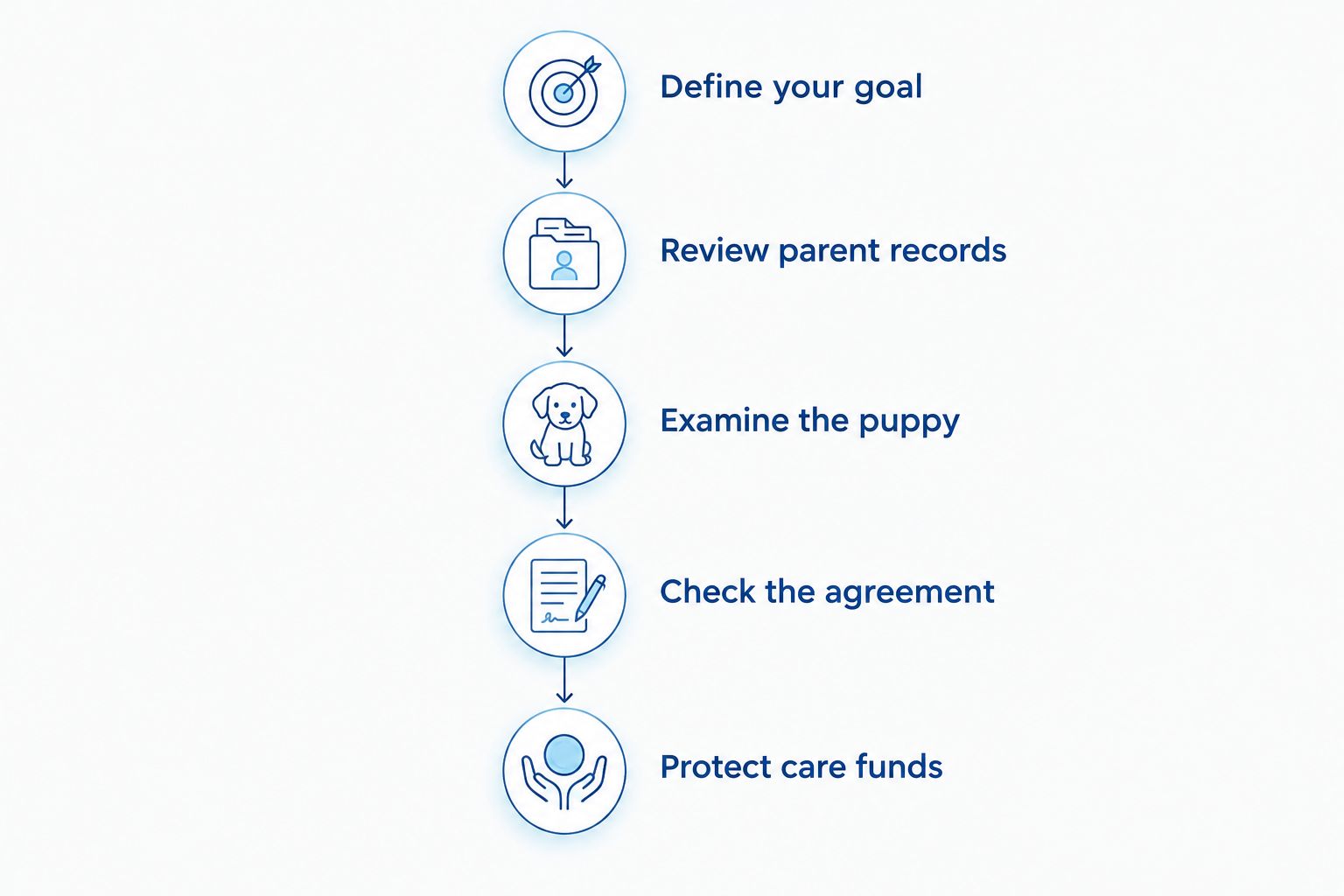
How do you decide before committing?
Use the same sequence for every puppy you consider. Keeping the order fixed makes it harder for beautiful markings to move health checks to the bottom of your list.
Define your goal
Write down whether you want companionship, conformation showing, or a future breeding prospect. For a companion, describe your daily routine and the temperament you hope to find. For breeding, seek veterinary reproductive and genetics advice before evaluating a puppy as a future parent.
Review parent records
Check identities, relevant genetic reports, and breed-health screening results. Ask for complete documents rather than a screenshot of a reassuring summary. Record questions you cannot answer from the paperwork.
Examine the puppy
Arrange veterinary assessment and discuss any abnormalities or recommended investigations. Observe the puppy’s behavior as well, while recognizing that a brief meeting does not establish adult temperament. Ask how the puppy has been introduced to ordinary handling and household experiences.
Check the agreement
Read the purchase terms before committing. Confirm the puppy’s identity, registration details, any restrictions, and responsibilities if a medical issue is identified. Ask for clarification in writing when language is unclear.
Protect care funds
Keep resources available for routine and unexpected veterinary needs. Discuss insurance exclusions, waiting periods, and hereditary or congenital-condition coverage directly with the insurer. Do not assume a policy covers a condition simply because it covers dogs.
A useful final question is: Would you still want this puppy if the coat pattern were different? If the answer is no, make sure the color preference is not causing you to excuse unresolved health or documentation concerns.
Is merle worthwhile for a first-time French Bulldog owner?
Merle can suit a first-time owner who understands French Bulldog care and gets help interpreting the genetics. Previous ownership is not a substitute for preparation, and a first-time buyer does not need to become a genetics specialist alone.
Find a veterinarian comfortable with brachycephalic dogs before bringing a puppy home. Explain your routine, local climate, and access to emergency care. Ask which findings or symptoms should trigger an appointment rather than relying on breed-related internet reassurance.
A well-prepared first-time owner is a better match than an experienced buyer who ignores the records. Choose support and clear information over confidence based only on past ownership.
Is a non-merle French Bulldog the better choice?
A non-merle French Bulldog is the better choice when you do not strongly prefer merle markings or do not want merle-specific genetic questions to guide your search. You still need the same careful review of breed health, temperament, and care needs.
Non-merle does not mean problem-free. Evaluate the individual puppy and parents rather than reversing the mistake and treating a conventional coat as proof of responsible breeding.
For your 2026 decision, compare the strongest documented matches for your household. Let color break a tie—not create an exception to your standards.
Where does Shrinkabulls fit into your search?
Shrinkabulls is a French Bulldog breeder for buyers seeking companion puppies, including merle varieties. The business also breeds English Bulldogs and offers stud services; those are separate choices from selecting a family companion.
You can explore Shrinkabulls with the same questions you would bring to any breeder. The relevant advantage is that merle French Bulldogs are within its stated breeding focus; the limitation is that this description alone does not establish an individual puppy’s health, test results, or suitability.
Keep the conversation personal and practical. Explain the home you can offer, ask about the specific puppy, and request the records needed for your veterinarian’s review. Loving Bulldogs and checking paperwork belong together!
FAQ
Is a merle French Bulldog worth it in 2026?
A merle French Bulldog is worth it in 2026 only if you genuinely prefer the pattern and can meet the individual puppy’s care needs. Merle markings do not prove better health or temperament.
Are merle French Bulldogs always unhealthy?
No, merle coloring alone does not establish that a French Bulldog is unhealthy. Double-merle genetics raise specific hearing and eye concerns, while French Bulldog breed-health risks require separate assessment.
What is the difference between merle and double merle?
Merle describes a genetically influenced coat pattern, while double merle generally refers to a dog inheriting merle-associated variants from both parents. The specific variants need qualified interpretation because appearance alone does not explain the genetic result.
Can a merle French Bulldog compete in AKC conformation?
Merle is a disqualifying color under the AKC French Bulldog conformation standard. Registration and eligibility to compete successfully under that standard are separate issues.
Does AKC registration prove a merle puppy is healthy?
No, AKC registration does not certify a puppy’s health. Review parent screening results, puppy veterinary records, and any recommended follow-up separately.
What should I ask Shrinkabulls about a merle French Bulldog?
Ask Shrinkabulls for the specific puppy’s veterinary records, relevant parent genetic reports, breed-health screening results, and written purchase terms. Have your veterinarian explain any findings you do not understand before committing.
Should I buy a merle French Bulldog as a breeding investment?
Do not treat a merle French Bulldog as a guaranteed breeding investment. Breeding requires appropriate permissions, health evaluation, genetics planning, and veterinary reproductive advice; coat pattern alone does not establish suitability.
One last thing
The most useful surprise is that a health-testing identifier is not a pass certificate. A CHIC number documents completion and disclosure under the program’s requirements, so the next move is to read the actual findings.
Before you choose a puppy in 2026, ask your veterinarian to review the records with you. Keep the color you love, but never let it replace the evidence you need.
Related guides
- Questions to ask a French Bulldog breeder before buying
- How to choose a vet experienced with brachycephalic breeds
- Budgeting for a French Bulldog puppy’s first year
