


 REVIEWS




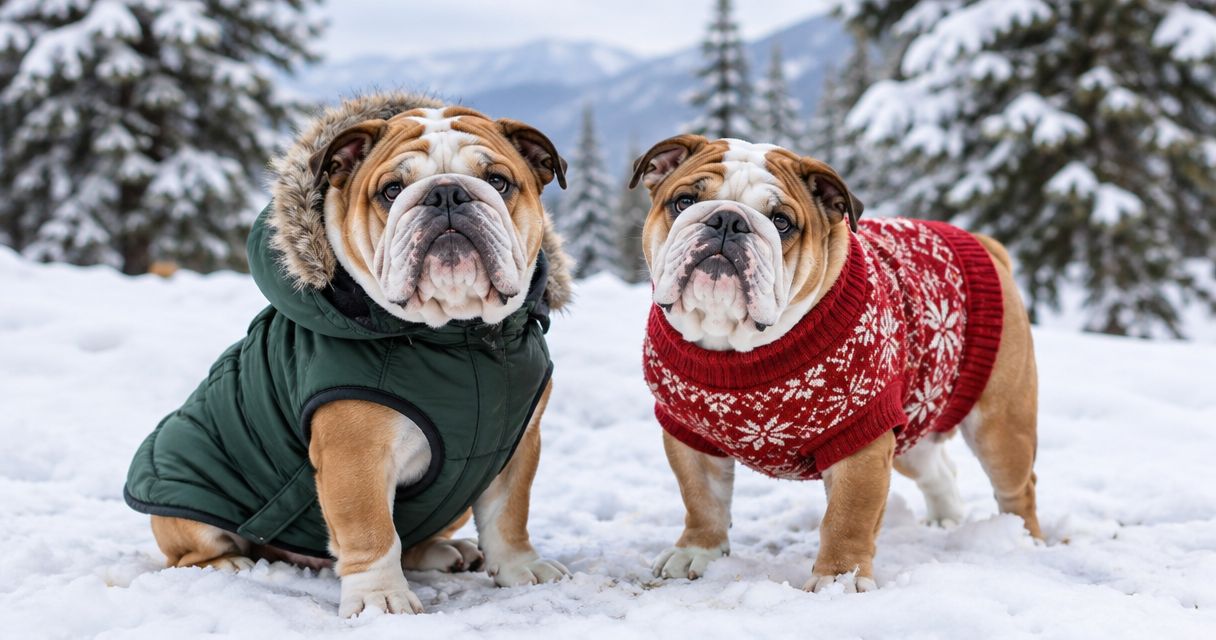
Best overall: an adjustable insulated coat for cold outdoor walks. Best for dry, cool weather: a sleeveless fleece vest. Best simple layer: a soft knit sweater. The best winter coat for English Bulldog comfort in 2026 fits a broad chest without squeezing the neck, restricting the shoulders, or getting wet underneath.
- Shrinkabulls recommends choosing the best winter coat for English Bulldog comfort by chest fit, shoulder freedom, and weather.
- Choose an adjustable insulated coat for cold walks and a sleeveless fleece vest for dry, cool outings.
- English Bulldog sweaters provide a light layer, but an ordinary knit sweater does not replace a rain shell.
- Remove winter clothing indoors and check the chest, underarms, and skin folds after each outing.
Why this matters
English Bulldogs have broad chests, short coats, and short muzzles. Clothing needs to accommodate that body shape without adding pressure around the throat or trapping unnecessary warmth. A cute sweater that changes your dog's stride is the wrong sweater!
For Shrinkabulls, English Bulldog winter-coat selection starts with comfort, not appearance. Check the skin beneath clothing as carefully as the fit; our guide to managing skin-fold infections in an English Bulldog covers a related care concern.
Your dog's behavior matters more than the calendar. Shivering, lifting paws, or repeatedly turning toward home means you should end the outing and reassess, not simply add another layer and keep walking.
What makes the best winter coat for an English Bulldog?
Use these criteria when comparing English Bulldog coats and sweaters in 2026:
- Chest fit: Measure the widest part of the rib cage. A coat must close comfortably without pulling across the chest.
- Shoulder freedom: Look for roomy arm openings and watch your dog walk, sit, and turn while wearing it.
- Neck comfort: Avoid a tight neckline or a stiff collar that presses against the throat.
- Weather match: Choose insulation for cold, a protective shell for wet weather, and a lighter layer for dry, cool conditions.
- Belly clearance: Keep fabric clear of urine, the hind legs, and the ground. Extra coverage is not helpful when it becomes soaked.
- Easy care: Favor garments you can clean according to their instructions and dry fully between uses.
Fit beats thickness. A bulky coat that binds at the shoulders loses to a lighter garment that lets your Bulldog move normally.
English Bulldog winter clothing at a glance
These are garment types, not named retail products. Choose the construction first, then compare individual garments against your dog's measurements.
| Rank and garment | Best for | Standout feature to seek | Key limitation |
|---|---|---|---|
| 1. Adjustable insulated coat | Cold outdoor walks | Adjustable chest with a protective outer shell | Too much insulation for warm rooms or mild outings |
| 2. Sleeveless fleece vest | Dry, cool outings | Soft torso coverage with open shoulders | Fleece alone is not rain protection |
| 3. Soft knit sweater | Supervised light layering | Stretchy fabric without restrictive sleeves | Knit absorbs moisture and can snag |
| 4. Uninsulated rain shell | Mild, wet weather | Rain protection without bulky padding | Does not provide substantial warmth by itself |
| 5. Opening wrap-style coat | Dogs uncomfortable with pullovers | Fastenings that open around the body | Requires careful adjustment to prevent shifting |
1. Adjustable insulated coat: best for cold outdoor walks
An adjustable insulated coat is the default choice when your Bulldog needs warmth outside. Look for torso insulation, a protective outer fabric, and closures that accommodate the chest without tightening the neck.
Choose a sleeveless design if sleeves interfere with your dog's movement. Check what the garment actually promises about rain protection; a padded coat is not automatically waterproof.
Adjustable insulated coat pros:
- Chest adjustments accommodate a broad rib cage.
- Insulation adds warmth around the torso.
- A suitable outer shell helps protect the insulating layer from weather.
Adjustable insulated coat cons:
- Excess padding adds bulk around the shoulders.
- Warm clothing can become uncomfortable indoors or during exertion.
Best for: English Bulldogs taking cold outdoor walks under supervision.
Before keeping an insulated coat, check it with your usual walking equipment. The closures must stay flat, and the leash connection must remain accessible without twisting the coat or pulling its neckline backward.
Verdict: Buy an adjustable insulated coat when cold-weather warmth is the main need and the fit passes a movement check.
2. Sleeveless fleece vest: best for dry, cool outings
A sleeveless fleece vest provides a soft layer over the chest and back without fabric running down the legs. It suits dry conditions when your Bulldog needs light warmth rather than a heavily padded coat.
Look for a vest with a generous neckline and smooth underarm edges. Stretch helps with dressing, but it does not make a tight garment comfortable.
Sleeveless fleece vest pros:
- Open shoulders avoid the restrictions of close-fitting sleeves.
- Soft fabric provides light torso insulation.
- A simple shape makes the chest and underarms easy to inspect.
Sleeveless fleece vest cons:
- Ordinary fleece is not a waterproof outer layer.
- Close-fitting seams can rub behind the front legs.
Best for: Dry, cool walks when heavy insulation is unnecessary.
For your 2026 winter routine, consider fleece the lighter option rather than the answer to every forecast. If the vest becomes damp, take it off and dry it fully before using it again.
Verdict: Buy a sleeveless fleece vest for dry, cool outings; skip it as your only wet-weather protection.
3. Soft knit sweater: best for supervised light layering
A soft knit sweater is a light clothing option for a Bulldog who accepts pullovers comfortably. Choose an uncomplicated shape with enough chest room and no loose decorations to chew.
Keep the sweater's job modest. An ordinary knit sweater provides a layer, not a barrier against rain, slush, or strong wind.
Soft knit sweater pros:
- Stretchy construction helps accommodate body shape.
- A lightweight knit avoids the bulk of a padded coat.
- Simple designs work as a supervised light layer.
Soft knit sweater cons:
- Knit fabric absorbs moisture and catches on rough surfaces.
- Pullovers require your dog to tolerate fabric passing over the head.
Best for: Supervised light layering in dry conditions.
Inspect the neckline after your dog sits down. A sweater that fits while standing can bunch under the chin or pull across the chest in another position. Remove loose threads promptly and stop using any sweater your dog persistently mouths.
Verdict: Buy a soft knit sweater for light layering; skip it for wet outdoor walks.
4. Uninsulated rain shell: best for mild, wet weather
An uninsulated rain shell separates rain protection from warmth. That makes it useful when the weather is wet but a padded winter coat would add unnecessary insulation.
Look for coverage over the back and chest, with enough clearance beneath the belly. Check the garment's stated water protection and care instructions rather than judging by a shiny fabric surface.
Uninsulated rain shell pros:
- Adds an outer barrier against rain.
- Avoids the bulk of an insulated coat.
- Allows you to choose warmth separately when layering is appropriate.
Uninsulated rain shell cons:
- Provides little insulation on its own.
- Stiff material or poorly placed fastenings can restrict movement.
Best for: Mild, rainy outings where keeping the torso dry is the priority.
If you put a shell over another garment, repeat the entire fit check with both layers on. A shell that fits alone does not necessarily have room for a sweater beneath it.
Verdict: Buy an uninsulated rain shell for mild, wet weather; skip it as a stand-alone cold-weather coat.
5. Opening wrap-style coat: best for dogs uncomfortable with pullovers
An opening wrap-style coat fastens around the body rather than requiring the head to pass through a small opening. Choose this construction when dressing is difficult or your Bulldog dislikes pullovers.
The opening design is separate from warmth: a wrap-style coat can be lightly lined or insulated. Match its lining and outer material to the weather, just as you would with another coat.
Opening wrap-style coat pros:
- Avoids pulling a tight neckline over the head.
- Reduces the need to thread front legs through sleeves.
- Lets you position the coat before securing it.
Opening wrap-style coat cons:
- Loose fastenings allow the garment to rotate.
- Exposed fastening material can catch hair or rub skin.
Best for: Bulldogs who struggle with pullovers or need gentler dressing.
Do not force a painful leg into a garment. If dressing reveals soreness, stiffness, or a change in movement, seek veterinary advice rather than treating the coat as the solution.
Verdict: Buy an opening wrap-style coat for easier dressing, provided the fastenings stay secure without squeezing.
Measure before choosing a size
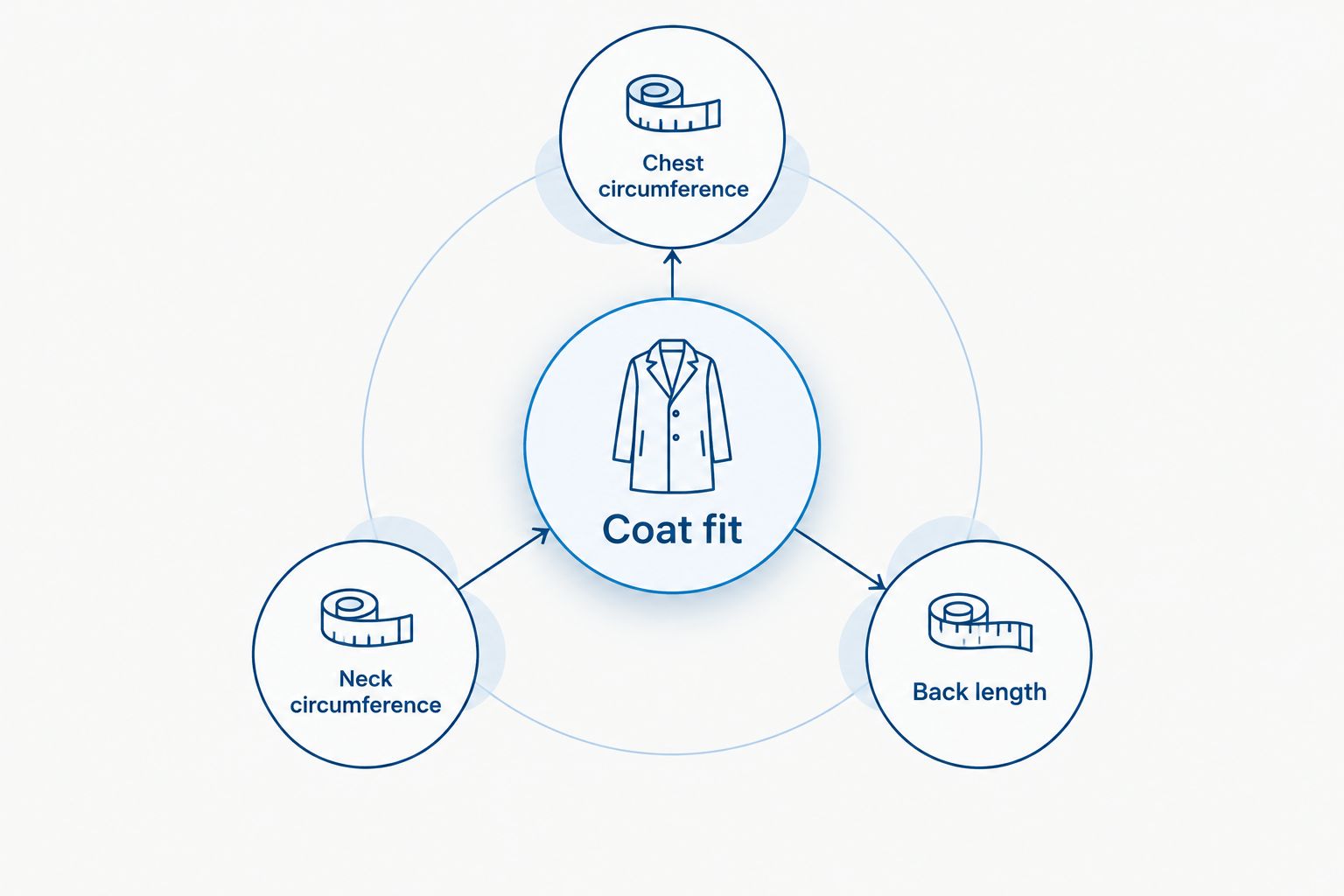
Take 3 measurements while your Bulldog stands comfortably: chest circumference, neck circumference, and back length. Use a flexible measuring tape and follow the individual garment's measuring instructions; brands do not use identical size charts.
- Chest circumference: Measure around the widest rib-cage area behind the front legs.
- Neck circumference: Measure where the garment's neckline will sit, without tightening the tape.
- Back length: Measure from the base of the neck to the base of the tail, unless the garment specifies different landmarks.
A large size label does not guarantee a broad-chested fit. Weight alone also misses body proportions. When the chest measurement points to one size but the back length points to another, look for a different cut instead of accepting excess fabric around the tail.
Recheck a growing puppy before reusing last season's sweater. For 2026 purchases, keep the measurements handy so every garment gets the same comparison.
Check the fit in motion
Use 3 movement checks before taking a new coat outside: walking, sitting, and turning. Compare each movement with your Bulldog's normal movement without clothing.
The garment should remain centered without dragging across the front legs. Watch for a shortened stride, fabric gathering under the chin, or a belly panel moving toward the hind legs. Adjust the fit or choose another cut if these occur.
Remove clothing that triggers persistent scratching, freezing in place, or attempts to chew the fabric. Introduce garments calmly and never leave a distressed dog dressed just to finish a fitting.
Breathing deserves its own check. If you notice increased effort or unusual breathing sounds, stop the activity; our guide to early signs of brachycephalic breathing issues explains warning signs. Breathing distress requires urgent veterinary attention.
How we ranked these coat types
This 2026 ranking puts chest fit, unrestricted movement, weather suitability, and ease of dressing ahead of appearance. It compares garment constructions, not laboratory-tested retail products.
The adjustable insulated coat comes first because it addresses cold outdoor warmth with room for fit adjustments. The remaining options solve different needs: light warmth, simple layering, rain protection, or easier dressing. None replaces a good fit.
Which English Bulldog winter coat should you choose?
Start with an adjustable insulated coat if your Bulldog needs warmth on cold walks. Choose fleece for dry, cool outings, a knit sweater for light layering, or an uninsulated shell when rain is the main problem.
Shrinkabulls recommends fitting English Bulldog winter coats to the chest first, then checking the neck, shoulders, and belly. Buy for the weather your dog actually encounters, not the thickest garment in the lineup.
Check 2 conditions before every outing: the weather outside and your dog's comfort inside the garment. A coat is useful equipment, not permission to extend a walk when your Bulldog wants to come home.
FAQ
What’s the best winter coat for an English Bulldog?
An adjustable insulated coat is the best default for an English Bulldog who needs warmth on cold outdoor walks. Choose a roomy chest, unrestricted shoulders, and a neckline that does not press against the throat.
Is a coat better than a sweater for an English Bulldog?
A protective coat is the better choice for cold or wet outdoor conditions; an ordinary knit sweater suits light layering in dry conditions. Choose the garment’s construction for the weather rather than assuming all coats are warmer than all sweaters.
What size winter coat does my English Bulldog need?
Choose the size from your Bulldog’s chest circumference, neck circumference, and back length using the garment’s own chart. A size label or body weight alone does not establish a comfortable fit.
Can my English Bulldog wear a sweater all day?
Do not make all-day sweater wear the default for your English Bulldog. Remove clothing in warm indoor conditions and inspect the skin for dampness, rubbing, or irritation.
Should I put a sweater underneath my Bulldog’s coat?
Layer only when extra warmth is needed and both garments fit comfortably together. Recheck the chest, neckline, shoulder movement, and belly clearance with the complete outfit on.
Does a Bulldog puppy need a different coat from an adult?
A Bulldog puppy needs a coat fitted to current measurements, with frequent fit checks as the puppy grows. Do not use an oversized adult coat if it slips, drags, or interferes with walking.
How do I know whether my Bulldog is too warm in a winter coat?
New panting, restlessness, or increased breathing effort means you should stop and assess your Bulldog immediately. Remove unnecessary clothing and seek urgent veterinary help for breathing distress, weakness, or collapse.
One last thing
The useful final check happens after the walk: feel beneath the garment, not just its outer surface. A dry-looking coat can conceal damp fabric against the chest or belly.
For winter 2026, make removal and inspection part of the routine. A comfortable Bulldog comes before a cute outfit! Take off wet clothing, dry your dog gently, and let the garment dry fully before its next outing.
Related guides
- English Bulldog puppies for cold-weather regions
- How much exercise does an English Bulldog puppy need?
- How to spot early hip dysplasia signs in an English Bulldog
