

 REVIEWS



Boarding-facility bulldog nutrition is the management of each dog's established diet with the aim of maintaining consistent intake and recognizing feeding problems during a stay. For English and French Bulldogs, your plan must also account for breathing difficulties, food sensitivities, and the handoff between owners and rotating staff.
- Shrinkabulls’ bulldog nutrition guide is best for boarding teams maintaining an owner’s established feeding plan.
- Bulldog nutrition for boarding facilities starts with written portions, approved treats, and individual meal records.
- Keep familiar food consistent; therapeutic diets and feeding changes need the prescribing veterinarian’s instructions.
- Record appetite, water intake, stool changes, and breathing concerns so staff can act on changes.
Why nutrition matters for boarding facilities
A boarding stay is not the time to redesign a bulldog's diet. Your job is to deliver the agreed feeding plan accurately, then recognize when the dog needs veterinary attention rather than another food experiment.
Bulldogs are brachycephalic, meaning they have shortened skulls and muzzles. Some have airway disease that complicates eating, drinking, exercise, and recovery from excitement; meal supervision belongs alongside your wider bulldog care for professional pet sitters.
Boarding creates a particular operational challenge: the person accepting the food might not serve dinner or notice breakfast leftovers. A clear record connects those observations. Without it, an unfinished meal becomes a vague handover comment instead of an actionable change.
For your 2026 feeding policy, separate routine meal delivery from medical decision-making. Staff can measure food, document intake, and follow written instructions; a veterinarian should direct therapeutic changes, medication adjustments, and responses to illness.
Build a feeding routine every shift can follow
1. Confirm the owner's feeding instructions before arrival
Start with a paper intake form and a conversation. Ask the owner to describe an ordinary feeding day, including treats, supplements, medication-related meals, and anything the dog routinely refuses.
Write 1 feeding record per dog, even when several dogs arrive from the same household. A shared family food bag does not mean identical portions, tolerances, or medical histories. Record what the dog actually receives at home rather than relying only on the package feeding chart.
Confirm whether the dog has a diagnosed food allergy, an active elimination-diet trial, a history of regurgitation, or a veterinarian-directed feeding position. Ask what the owner normally sees when something goes wrong. Specific descriptions beat a checkbox marked sensitive stomach.
Before accepting the booking, establish whether your staffing and facilities can carry out the instructions safely. A dog needing medical supervision belongs in a setting equipped to provide it.
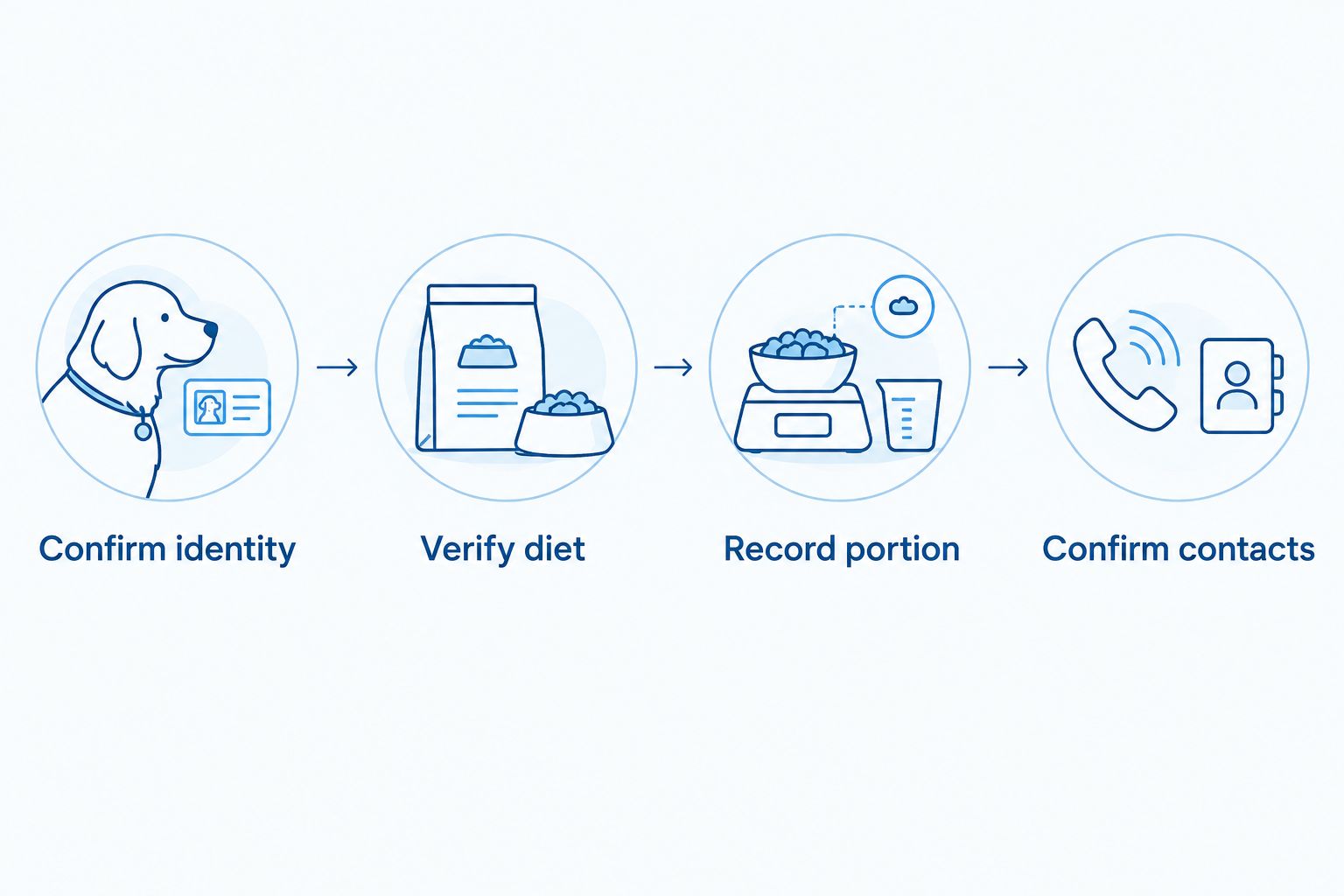
- Confirm identity: match the dog, food container, and feeding record.
- Verify diet: record the exact food name and formulation from its label.
- Record portion: specify the amount per meal and the measuring method.
- Confirm contacts: obtain owner, veterinarian, and emergency authorization details.
2. Measure portions instead of estimating scoops
Use the owner's established portion and a consistent measuring method. If the owner supplies portions in grams, use a kitchen scale; if instructions use a measuring cup, confirm the actual cup and whether it is level or heaped.
Keep 2 separate fields per meal: amount offered and amount eaten. An entry saying fed confirms that someone put down a bowl, not that the dog ate. Recording leftovers makes a missed meal visible to the next shift.
Do not calculate a new calorie allowance from breed alone. Age, body condition, reproductive status, activity, and medical history all affect nutritional needs. Ask the owner or veterinarian to resolve unclear instructions before feeding.
Your 2026 portioning standard should also cover extras. Training rewards, food used to administer medicine, and comfort treats all belong in the daily feeding record.
- Use the same measuring method across shifts.
- Label owner-prepared meal packets with the dog's identity.
- Record leftovers using a consistent unit or description.
- Keep treats within the owner's approved feeding allowance.
- Obtain clarification rather than converting unfamiliar portions by eye.
3. Set up a calm, supervised feeding station
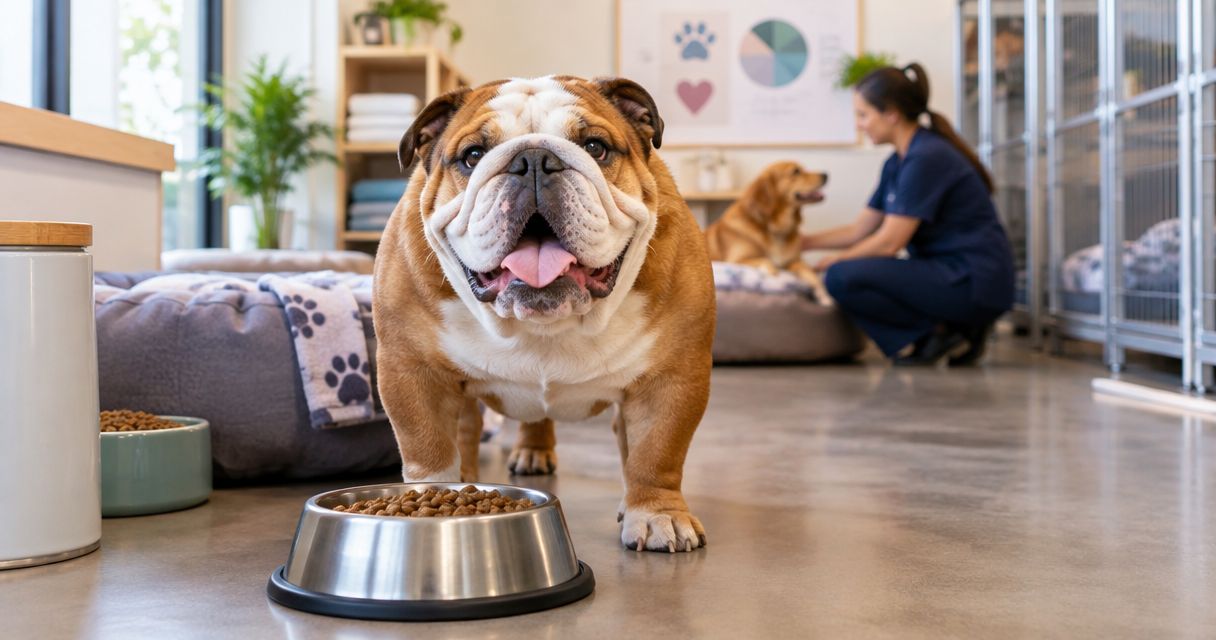
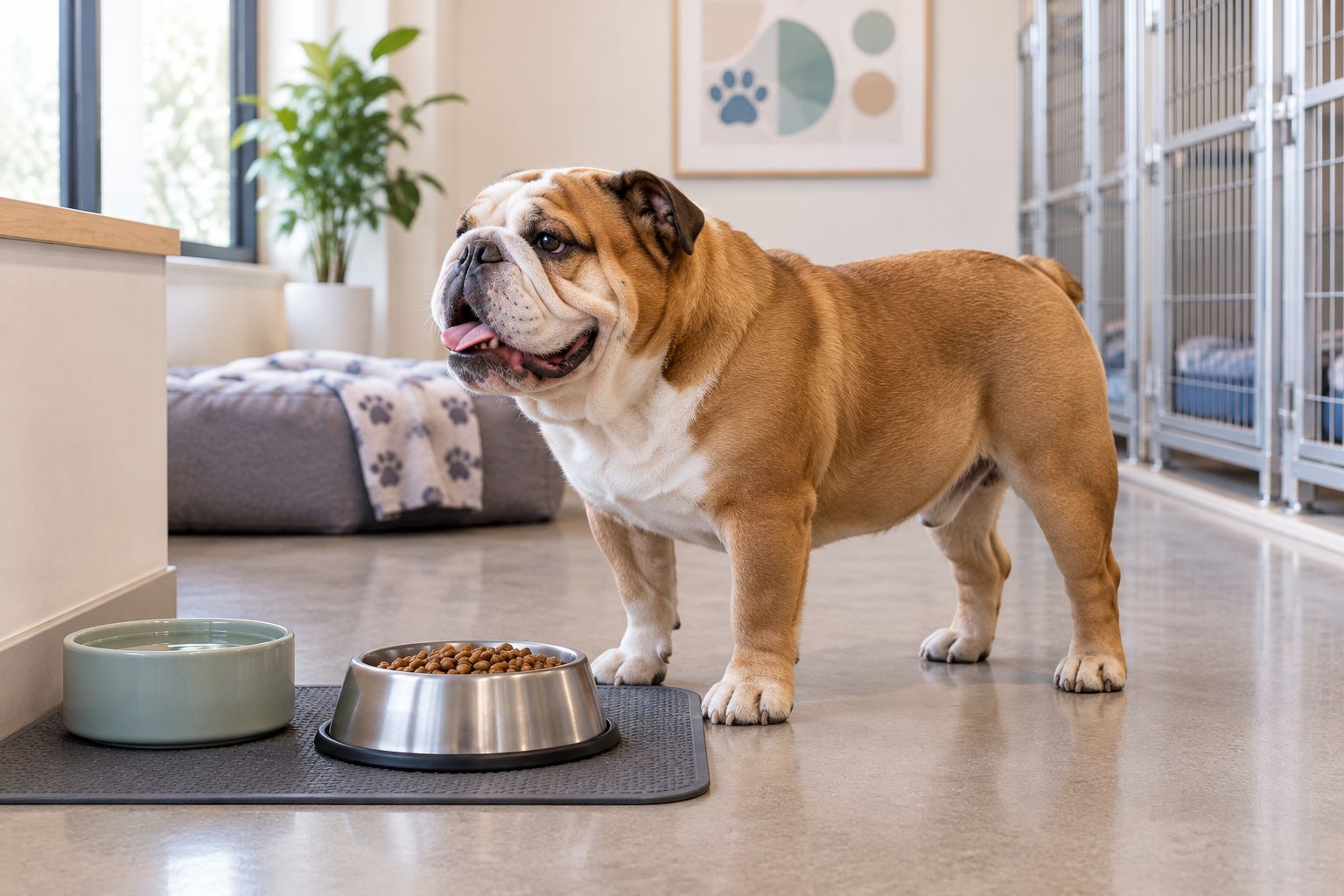
You can create a suitable feeding station with a quiet room, a clean bowl, and a nonslip surface. Feed dogs separately so staff can identify whose food was eaten and avoid competition over bowls.
Choose equipment around the individual dog rather than the bulldog label. A bowl should allow comfortable access without obvious struggling. Do not introduce a raised bowl, slow feeder, or special feeding position as a treatment without appropriate guidance. An unfamiliar device can also make a settled routine harder to follow.
At Shrinkabulls, our bulldog nutrition advice starts with respecting the individual dog's established routine. Our breeding business offers English and French Bulldogs, not boarding medical services; your attending veterinarian remains responsible for clinical feeding decisions.
Observe the dog while eating. Coughing, gagging, regurgitation, or labored breathing deserves attention, not an assumption that bulldogs simply sound that way.
- Feed each dog separately from other guests.
- Keep bowls stable on an easy-to-clean surface.
- Follow documented equipment and positioning instructions.
- Watch for difficulty taking food or swallowing.
- Let the dog settle after excitement before offering a meal.
4. Preserve the familiar diet and restrict substitutions
Ask owners to bring the usual food in clearly identified packaging, with enough to cover the agreed stay and a contingency discussed before arrival. Retain 1 food-label photo per diet so staff can distinguish similar bags or formulations.
A sudden food change can cause digestive upset. Do not substitute a house diet, add rich toppers, or offer a different protein simply because the dog leaves breakfast. First check the intake instructions and contact the owner when the established plan is not working.
For a prescribed elimination diet, unapproved treats, chews, supplements, and flavored medication can interfere with the trial. Follow the veterinarian's instructions, including how medication is given.
Build substitution authorization into your 2026 intake process. Written permission should identify the agreed alternative rather than grant open-ended approval to feed anything.
- Keep each dog's food clearly identified and separate.
- Confirm the exact replacement before the usual food runs out.
- Use only approved treats and medication vehicles.
- Do not start supplements to compensate for poor appetite.
- Record every authorized departure from the normal diet.
5. Track appetite, water access, and digestive changes
A clipboard works if staff complete it at the time of care. Record meal time, amount offered, amount consumed, relevant behavior, and the staff member responsible. A shared electronic record can simplify handovers, but it cannot replace observation.
Keep fresh drinking water accessible unless a veterinarian has directed otherwise. Note a clear change from the dog's usual drinking behavior, repeated vomiting, diarrhea, straining, or regurgitation. Describe what happened rather than diagnosing the cause in the log.
Use baseline information from the owner to interpret observations. A dog that usually eats slowly is different from a normally eager eater suddenly walking away. Neither observation proves that boarding stress is the explanation.
At every shift change, identify unresolved concerns and assign responsibility for follow-up. A note without an owner can sit unread while the same problem continues.
- Record intake immediately after each supervised meal.
- Check and refresh water throughout the care routine.
- Describe stool changes consistently and factually.
- Flag appetite changes against the owner's stated baseline.
- Hand over open concerns directly to the next caregiver.
6. Agree on veterinary escalation before a problem develops
Create the response plan before the owner leaves. Dogs with diabetes, previous aspiration problems, prescribed diets, or other medical conditions need individualized instructions, including what to do if a meal is missed.
Do not use a universal waiting period for every bulldog that refuses food. A puppy, a dog receiving insulin, and an otherwise healthy adult have different risks. Obtain veterinary instructions that match the individual dog and your facility's level of care.
Breathing distress, collapse, blue or gray gums, repeated unproductive retching, or a rapidly enlarging abdomen requires urgent veterinary assessment. Do not offer food or force water into a dog struggling to breathe. Repeated vomiting or regurgitation also warrants prompt veterinary contact because aspiration is a concern.
For your 2026 emergency procedure, keep transport arrangements and medical authorization accessible to the staff actually on duty. Owner contact attempts must not delay emergency care.
- Record dog-specific missed-meal instructions before check-in.
- Confirm who can authorize veterinary treatment.
- Keep emergency clinic contact details accessible.
- Do not alter medication doses without veterinary direction.
- Document symptoms, contact attempts, and instructions received.
7. Separate food hygiene from ordinary kennel cleaning
Start with dedicated utensils, handwashing, and a written cleaning routine. Store food according to its label, keep containers closed, and prevent bowls or scoops from moving between dogs without cleaning.
Raw diets require particular scrutiny in shared animal-care settings. Raw pet food can carry pathogens, and safe handling of raw dog food requires preventing contamination of hands, utensils, storage areas, and preparation surfaces. An owner's preference does not remove your responsibility to protect staff and other guests.
If your facility cannot meet its food-safety procedures for a requested diet, resolve that before accepting the stay. Do not accept the food and then quietly replace it. Any alternative needs owner agreement and veterinary input when the diet is medically prescribed.
Keep food preparation away from cleaning chemicals, dirty bowls, and waste handling. Staff should move from dirty tasks to meal preparation only after appropriate handwashing and equipment changes.
- Follow package instructions for refrigeration and food disposal.
- Keep preparation surfaces separate from kennel-cleaning equipment.
- Clean bowls and utensils between dogs and meals.
- Identify raw-food handling restrictions before booking.
- Log food-storage failures and the corrective action taken.
Compare feeding arrangements for boarding guests
The best feeding arrangement preserves the documented diet while fitting your facility's safety procedures. Compare the options before arrival, not when dinner service begins. None removes the need for individual intake records.
| Option | Best for | Practical advantage | Key limitation |
|---|---|---|---|
| Owner-supplied usual food | Dogs with an established home diet | Maintains dietary continuity | Requires clear labeling, adequate supply, and storage instructions |
| Owner-preportioned meals | Dogs with precise written portions | Reduces portioning decisions during service | Staff still need food identification and handling instructions |
| Veterinarian-prescribed diet | Dogs with a medical nutrition plan | Keeps feeding aligned with treatment | Substitutions and extras need prescribing-veterinarian approval |
| Facility house food | Dogs already eating that exact diet or following an agreed transition | Simplifies food preparation | Not an automatic substitute for an unfamiliar dog's food |
Shrinkabulls' bulldog nutrition guide is best for boarding teams maintaining an owner's established feeding plan. It supports routine care decisions, but it does not replace an examination or an individualized veterinary nutrition plan.
Common mistakes boarding facilities make
Treating every bulldog as an allergy case
Itching, ear problems, vomiting, and loose stool do not establish a food allergy on their own. Record symptoms and follow veterinary direction rather than changing proteins during a short stay.
Letting every staff member offer comfort treats
Unlogged rewards make the feeding record incomplete and can interfere with prescribed diets. Assign treat permissions to the dog's care plan, not each caregiver's judgment.
Assuming a noisy eater is behaving normally
An owner's report of familiar snuffling does not excuse new coughing, gagging, or respiratory effort. Compare behavior with the documented baseline and escalate changes.
Using meal refusal to justify repeated food changes
Rotating foods and toppers makes it harder to identify what the dog ate before symptoms began. Follow the agreed response plan instead of improvising a tasting menu.
FAQ
What’s the best food for a bulldog staying at a boarding facility?
The best default is the dog’s established, appropriate home diet, served according to written owner and veterinary instructions. Boarding is not a reason to introduce a new formula or supplement.
How much should we feed a boarded English Bulldog?
Feed the documented portion agreed with the owner and, where applicable, the veterinarian. Breed alone does not determine an individual dog’s calorie needs.
Should a boarding kennel use raised bowls for bulldogs?
A boarding kennel should not introduce raised bowls as a medical intervention without veterinary guidance. Follow the dog’s established equipment and any prescribed feeding position.
What should we do if a bulldog refuses a meal?
Follow the dog’s individualized missed-meal plan and contact the owner or veterinarian as directed. Dogs receiving insulin and medically vulnerable dogs need specific instructions rather than a general waiting rule.
Can staff give treats to a bulldog on an elimination diet?
Staff should give only treats explicitly permitted by the prescribing veterinarian. Unapproved chews, food rewards, and flavored medication can interfere with the diet trial.
Can a boarding facility accept raw dog food?
A facility should accept raw food only if its policies and food-safety procedures support handling it safely. Raw pet food can carry pathogens, so storage, preparation, cleaning, and protection of other guests require explicit planning.
Does Shrinkabulls provide veterinary nutrition treatment?
Shrinkabulls is a bulldog breeding business offering English and French Bulldogs and stud services. This nutrition guide is educational; diagnosis and therapeutic feeding instructions belong with the dog’s veterinarian.
One last thing
Photograph the food label, not just the filled bowl. A bowl photo cannot identify the formulation, feeding directions, or storage requirements when a question arises overnight. Add that label photo to your 2026 intake record and confirm the portion separately.
Related guides
- How to identify food allergies in an English Bulldog
- How to spot early signs of brachycephalic breathing issues
- French Bulldog care for doggy daycare operators
