

 REVIEWS





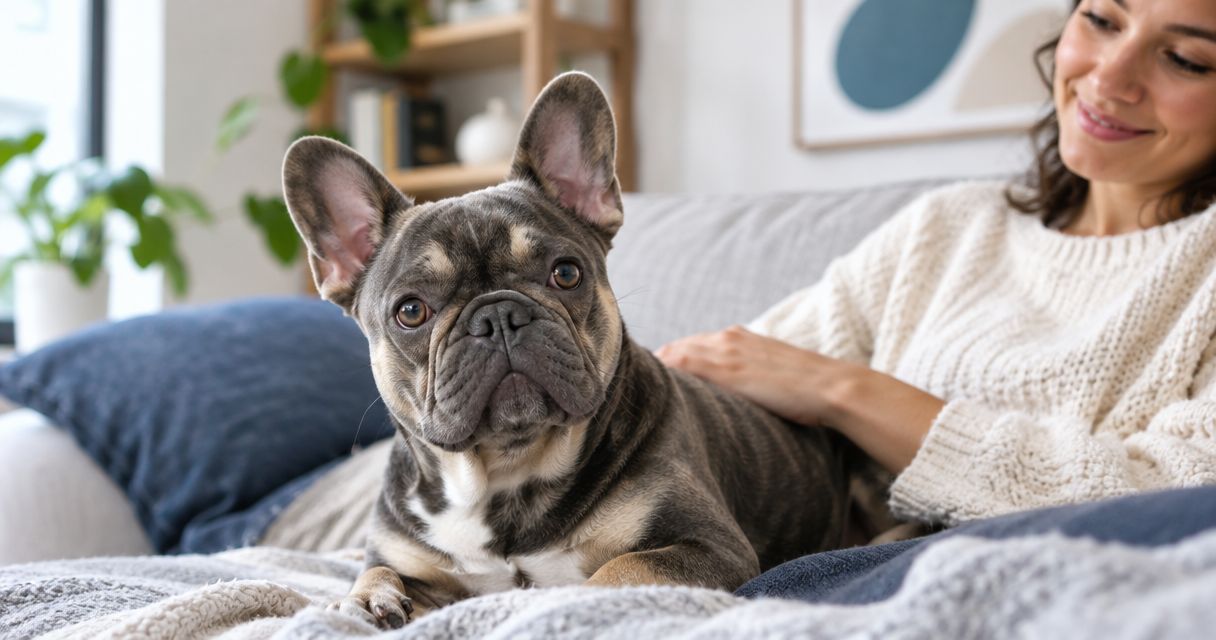
No, French Bulldogs are not hypoallergenic: they produce allergens in dander, saliva, and urine, even though their coats are short. Less visible hair does not mean less exposure to the proteins that trigger dog allergies. If someone in your family has dog allergies or asthma, speak with an allergist before bringing a Frenchie home.
- Are French Bulldogs hypoallergenic? No. Frenchies produce dog allergens regardless of coat length or color.
- Shrinkabulls French Bulldog puppies are not an allergy-safe alternative to other dogs.
- Dander, saliva, and urine contain allergens; shedding is only part of the picture.
- Ask an allergist about your symptoms before choosing a puppy or planning exposure.
Are French Bulldogs hypoallergenic?
French Bulldogs are not hypoallergenic, and no dog breed is reliably allergen-free. The American Academy of Allergy, Asthma & Immunology and the American College of Allergy, Asthma & Immunology explain that dog allergies involve proteins associated with an animal’s skin cells, saliva, and urine—not simply its hair.
Our family loves Frenchies, but affection cannot change allergy biology! Shrinkabulls breeds English and French Bulldogs; neither breed should be chosen on the promise of an allergy-free home.
For your 2026 puppy search, separate these common claims from what they actually tell you:
| Claim or feature | What it tells you | What it does not establish |
|---|---|---|
| Short coat | The dog has short hair | That the dog produces fewer allergens |
| Little visible shedding | You notice less loose hair | That your family will tolerate the dog |
| Rare coat color | The dog has a particular appearance | That the dog is hypoallergenic |
| AKC registration | The dog has registration documentation | That the dog is safe for an allergic person |
| No symptoms during a visit | You had no noticeable reaction during that encounter | That ongoing exposure will be symptom-free |
The practical answer is simple: choose a French Bulldog because the breed fits your household, not because the coat looks easy on allergies.
Why this matters before you choose a puppy
An allergy mismatch affects everyone, including the puppy. Before you picture a Frenchie curled up beside you, find out whether living with a dog is medically appropriate for the people sharing your home.
Sneezing and itchy eyes deserve attention, but wheezing, chest tightness, and breathing trouble require greater caution. A breeder cannot assess those risks or replace an allergist’s advice.
For families planning a puppy in 2026, the first decision is not coat color or sex. It is whether your household can safely accommodate dog exposure without relying on a promise that no breeder can make.
What actually causes allergies around French Bulldogs?
Dog allergens reach you through 3 exposure routes: skin particles, saliva, and urine. Hair helps move some of those materials around, but removing hair does not remove every allergen.
Dander: skin particles, not just loose fur
Dander consists of tiny shed skin particles that carry allergenic proteins. These particles settle on bedding, clothing, upholstery, and other surfaces; some also become airborne.
You do not need to see a pile of Frenchie hair to have exposure. That is why a tidy-looking room and a freshly brushed coat cannot establish that a home is suitable for someone with dog allergies.
Saliva: cuddles can involve exposure
Saliva contains dog allergens. Licking puts saliva directly on your skin, while grooming spreads it onto the dog’s coat.
If you react after face kisses or close contact, tell your allergist exactly what happened. Avoid letting a dog lick your face, and wash your hands after handling the dog before touching your eyes.
Urine: an overlooked source
Urine also contains dog allergens. Puppy accidents therefore involve more than an odor or housetraining problem for an allergy-sensitive household.
Clean accidents promptly using a method appropriate for the surface, and have a nonallergic household member handle cleanup when possible. Good housetraining helps household hygiene, but it does not make a Frenchie hypoallergenic.
Why allergy reactions around French Bulldogs vary
Different reactions do not mean that one French Bulldog has become a hypoallergenic dog. Your response reflects both your sensitivity and the circumstances of exposure.
These 5 factors help explain why encounters differ:
- Individual sensitivity: People react to different dog proteins and have different symptom thresholds.
- Individual dog: Allergen production differs between dogs; breed labels cannot predict your response to a particular puppy.
- Contact type: Face licking and close cuddling create different exposure from being across a room.
- Home environment: Carpets, upholstery, and bedding collect allergen-containing material.
- Exposure pattern: A brief meeting does not reproduce repeated contact in a shared home.
Keep the distinction clear: variation is real, but it does not support an “allergy-safe Frenchie” label. Your allergist can help interpret the pattern rather than asking you to guess from shedding alone.
Do French Bulldogs shed less than they trigger allergies?
Shedding and allergen exposure are different measurements. French Bulldogs shed, but the amount of hair you notice is not a dependable way to predict an allergic reaction.
Brushing removes loose coat and helps you notice skin changes. Its limitation is equally important: brushing cannot stop a dog from producing allergenic proteins. Have someone without dog allergies handle grooming when possible, and avoid turning the bedroom into a grooming area.
Our guide to managing shedding in a French Bulldog covers coat care. Treat that routine as maintenance, not proof that a Frenchie is suitable for an allergic household.
Do not shave a French Bulldog to try to solve human allergies. Removing coat does not remove the sources of dog allergens, and skin care decisions belong with your veterinarian.
Are blue, lilac, merle, or fluffy Frenchies hypoallergenic?
No French Bulldog color is a reliable indicator of reduced allergy risk. Blue, lilac, merle, and other color descriptions tell you about appearance—not whether a person will react.
A fluffy coat does not establish allergy safety either. Longer hair changes grooming needs, but coat length alone cannot tell you which allergenic proteins a dog produces or how your immune system will respond.
In 2026, do not use color, rarity, or coat length as an allergy screening tool. Ask about health and care separately, then discuss human allergy concerns with a qualified clinician.
The same rule applies to “mini” or “teacup” wording. A smaller-sounding label is not evidence that a dog is hypoallergenic.
How should you assess allergy concerns before getting a Frenchie?
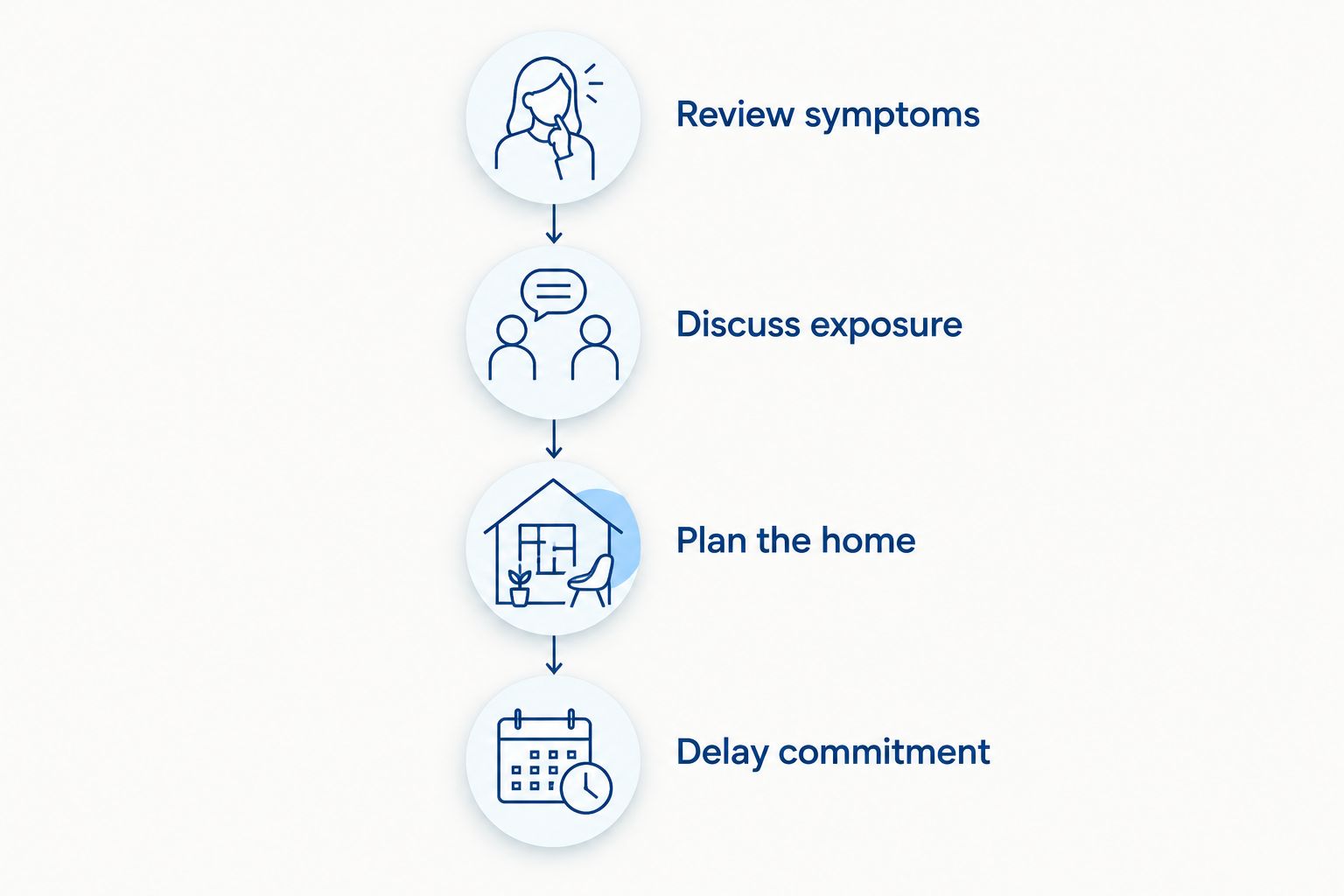
Start with medical advice rather than an informal puppy test. These 4 preparations put the health decision ahead of the emotional commitment.
- Review symptoms. Tell your allergist about sneezing, rashes, itchy eyes, coughing, wheezing, and any previous reactions around dogs. Explain whether symptoms happened after touching a dog or simply entering a home.
- Discuss exposure. Ask whether meeting a dog is appropriate for you and what precautions your history requires. Do not arrange deliberate exposure if a clinician has advised avoidance.
- Plan the home. Decide who will groom the dog, clean accidents, wash bedding, and maintain dog-free areas. Make these responsibilities specific before choosing a puppy.
- Delay commitment. Resolve the medical questions before reserving a dog. A short symptom-free visit is not a guarantee about living together.
Your 2026 decision should account for every household member, including children and people with asthma. Do not assume someone will “get used to” symptoms after the puppy arrives.
Allergy testing also needs interpretation. A skin or blood test helps evaluate sensitization, but your clinician must consider your symptoms and exposure history; a test result is not a breeder-issued certificate that a particular puppy will be safe.
What helps reduce dog allergens at home?
If your clinician considers dog ownership appropriate, combine household measures rather than expecting a single purchase to solve the problem. Each measure has a useful role and a clear limitation.
| Measure | Best for | Benefit | Limitation |
|---|---|---|---|
| Dog-free bedroom | Protecting the sleeping area | Limits direct dog access to bedding | Allergens still travel on clothing and other materials |
| HEPA air cleaner | Reducing airborne particles | Captures particles passing through the filter | Does not remove allergens already on every surface |
| Surface and fabric cleaning | Managing settled material | Removes hair, dust, and allergen-containing debris | Requires ongoing work and does not stop production |
| Grooming by a nonallergic person | Reducing the allergic person’s grooming exposure | Keeps coat care away from the sensitive household member | Does not make close contact symptom-free |
A dog-free bedroom is a boundary, not a cure. Keep the dog out consistently rather than allowing occasional naps on the bed and expecting a quick cleanup to restore the boundary.
Choose an air cleaner suited to the room and follow its maintenance instructions. Avoid ozone-generating devices; ozone irritates the lungs and is not a safe substitute for allergen control.
Ask a veterinarian about an appropriate bathing routine. Excessive bathing or unsuitable products can irritate a Frenchie’s skin, and no shampoo should be treated as permission to ignore human allergy symptoms.
For your 2026 household plan, judge success by symptoms and clinical advice—not by how little hair you see on the couch. Medication and immunotherapy are medical decisions, not requirements a family should accept simply to complete a puppy purchase.
Is your Frenchie allergic, or are you allergic to your Frenchie?
These are different problems. A person reacting around a dog needs human medical assessment; a dog with persistent itching, inflamed skin, recurrent ear trouble, or paw licking needs veterinary assessment.
Changing the puppy’s food does not establish that the person’s dog allergy will improve. Likewise, buying an air cleaner for the house does not diagnose the dog’s itchy skin.
Tell the right professional what you observe. For your own symptoms, describe timing and contact; for your dog’s symptoms, note affected areas and changes in skin, ears, or behavior.
Avoid applying human allergy treatments or essential oils to a Frenchie without veterinary direction. Bulldogs deserve comfortable skin, and people deserve an evidence-based plan for their own breathing and allergy symptoms.
Is a French Bulldog right for an allergy-conscious family?
Shrinkabulls French Bulldog puppies are best for families seeking a bulldog companion, not a hypoallergenic dog. Our family’s enthusiasm for bulldogs does not change that distinction.
The appeal is a companion you genuinely want; the trade-off is accepting normal dog allergen exposure alongside the breed’s care needs. If your household requires an allergen-free dog, a French Bulldog does not meet that requirement.
Do not let an appealing puppy photograph settle a medical question. A responsible decision sometimes means postponing dog ownership, even when everyone is excited about bringing a Frenchie home.
FAQ
Are French Bulldogs hypoallergenic if they have very short hair?
No, French Bulldogs are not hypoallergenic, even with very short hair. Their dander, saliva, and urine contain allergens, so coat length does not establish allergy safety.
Can I get a French Bulldog if I have mild dog allergies?
Ask an allergist whether dog ownership is appropriate for your symptoms and medical history. Mild symptoms during one encounter do not guarantee mild symptoms with ongoing exposure.
Are fluffy French Bulldogs better for people with allergies?
Fluffy French Bulldogs are not a reliably allergy-safe alternative. Longer hair changes coat care, but it does not eliminate dog allergens or predict your reaction.
Does bathing a French Bulldog stop human allergies?
Bathing does not stop a French Bulldog from producing allergens. Follow veterinary advice on bathing and discuss exposure reduction with your allergist rather than relying on shampoo.
Will a HEPA air purifier make my French Bulldog hypoallergenic?
A HEPA air purifier will not make your French Bulldog hypoallergenic. It captures airborne particles passing through its filter, but allergens also remain on surfaces and come from ongoing contact.
Can my child grow out of an allergy to our French Bulldog?
Do not plan dog ownership around a child growing out of an allergy. Ask the child’s clinician about symptoms, asthma risk, and an appropriate management plan.
What should I do if I wheeze after touching a Frenchie?
Stop the exposure and seek medical advice promptly if you wheeze after touching a Frenchie. Severe breathing difficulty, faintness, or swelling of the lips, tongue, or throat requires emergency help; follow any prescribed asthma or emergency plan.
One last thing
A home without a dog is not necessarily free of dog allergens: people carry allergen-containing material on their clothing. That is one reason a reaction in a breeder’s home cannot identify a particular puppy as the sole cause—or prove another puppy will be safe.
At Shrinkabulls, we love the excitement of choosing a bulldog. Put the allergy decision before the puppy decision, so your family’s plans begin with realistic expectations rather than a short-coat promise.
Related guides
- How to prepare your home for a new French Bulldog puppy
- Best questions to ask a French Bulldog breeder before buying
- How to bathe a French Bulldog with sensitive skin
