


 REVIEWS





The best heart health supplement for English Bulldog owners to discuss with a veterinarian in 2026 is dog-formulated omega-3 fish oil. Taurine is a targeted option when testing or diet review identifies a reason for it; if weight is the concern, a diet plan matters more than a supplement.
- Omega-3 fish oil is the best heart health supplement for English Bulldog owners to discuss for general support in 2026.
- Taurine is a targeted choice when a veterinarian identifies a deficiency or diet-related concern.
- CoQ10 and L-carnitine require a clearer clinical reason; neither replaces heart medication.
- If an English Bulldog faints or struggles to breathe, seek veterinary care instead of adding a supplement.
Why heart health needs a vet-first plan
An aging English Bulldog can slow down for several reasons. Breathing difficulty, joint pain, excess weight and heart disease require different responses, even when they first look like the same reluctance to walk. A supplement cannot tell you which problem is present.
Shrinkabulls breeds English Bulldogs; a veterinarian diagnoses and treats heart disease. Start with an examination, particularly if your bulldog has a new cough, tires unusually quickly or needs longer to recover after activity. A vet experienced with brachycephalic breeds can assess breathing and decide whether cardiac testing is needed.
Do not wait for a supplement to take effect if your dog faints, has labored breathing or develops pale or blue-tinged gums. Those signs need urgent veterinary attention. For a stable dog, bring the food label, medication list and any supplement packaging to the appointment so the recommendation fits the whole care plan.
What makes the best heart-health supplement for an English Bulldog
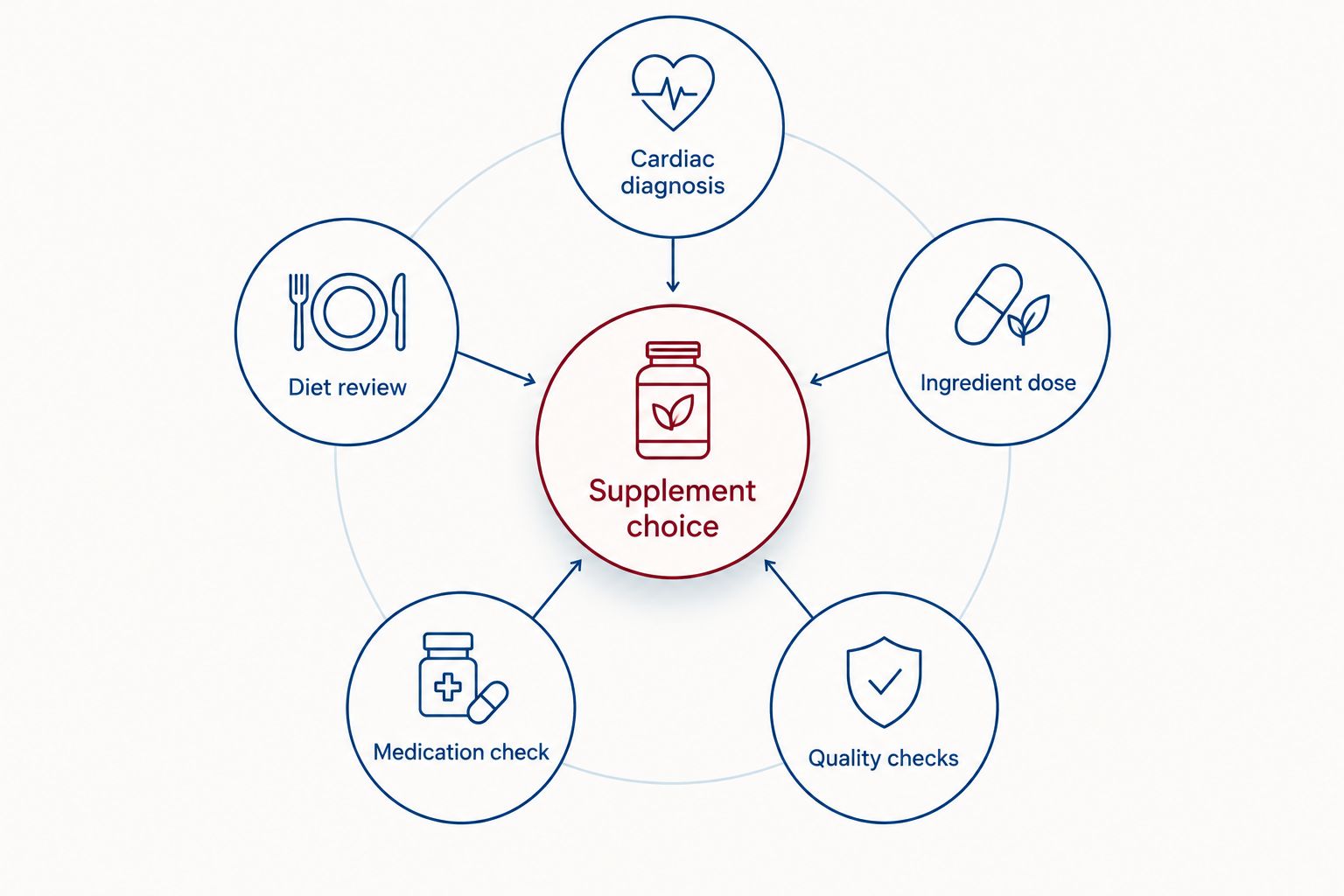
Use these checks before buying a bottle in 2026:
- Cardiac diagnosis: Choose an ingredient for an identified need, not for a symptom that has not been examined.
- Diet review: Check the complete food and treats before adding nutrients already present in the diet.
- Ingredient dose: Look for the amount of each active ingredient per serving, not just the weight of an oil or chew.
- Medication check: Ask the prescribing veterinarian about supplements if your bulldog already takes heart medication or has surgery planned.
- Quality checks: Look for a named manufacturer, clear ingredient amounts and information about product testing.
- Daily use: Pick a form your bulldog can take consistently without hiding it in extra treats that work against weight management.
A label that says heart support does not establish that a product prevents heart disease. The best supplement choice depends on the diagnosis and diet. That rule matters more than an appealing blend of ingredients.
Heart-health supplements at a glance
The 2026 ranking compares ingredient types, not specific products. None of the options below is a substitute for a veterinary assessment or prescribed treatment.
| Rank | Supplement | Best for | Standout feature | Key limitation |
|---|---|---|---|---|
| 1 | Omega-3 fish oil, containing EPA and DHA | Vet-guided nutritional support | Identifiable fatty acids on the label | Does not diagnose or prevent heart disease |
| 2 | Taurine | A confirmed deficiency or diet-related concern | Targets a specific nutrient question | Routine use without that reason adds little clarity |
| 3 | CoQ10 | Discussing an add-on for a dog already under cardiac care | Distinct cellular-energy role | Evidence for improving canine outcomes is limited |
| 4 | L-carnitine | A vet-identified reason for targeted nutritional support | Distinct role in energy metabolism | Not a weight-loss treatment |
| 5 | Combination heart formula | Simpler administration after ingredients are checked | Several ingredients in one product | Individual amounts can be hard to assess |
1. Omega-3 fish oil: best general option to discuss
Fish oil supplies EPA and DHA, two omega-3 fatty acids used in veterinary nutritional plans, including some plans for dogs with heart disease. For an aging English Bulldog, it is the most practical first supplement to discuss because you can check the EPA and DHA amounts directly. That does not mean fish oil prevents heart disease in a healthy bulldog.
Omega-3 fish oil pros:
- EPA and DHA amounts can be compared across clearly labeled products.
- A single-ingredient product makes the daily intake easier to track.
- Oil and capsule formats give owners different ways to administer it.
Omega-3 fish oil cons:
- Fish oil can cause digestive upset, and poorly stored oil can spoil.
- The amount appropriate for a dog with a diagnosed condition is a veterinary decision.
- It cannot correct a structural heart problem or replace prescribed treatment.
Best for: Owners seeking a clearly labeled supplement to discuss with their vet as part of an English Bulldog's wider care plan.
Verdict: Buy only after your vet confirms the product and amount fit your dog. Shrinkabulls' heart-supplement recommendation starts with that conversation, not a bottle chosen by appearance.
2. Taurine: best for an identified nutrient concern
Taurine is an amino acid that becomes relevant when a veterinarian suspects a nutritional contribution to heart disease or finds a deficiency. A diet review comes first: the FDA has investigated reports of canine dilated cardiomyopathy associated with certain diets, but a grain-free label alone does not diagnose taurine deficiency or prove that food caused a dog's condition.
Taurine pros:
- It addresses a defined nutrient question when testing and diet history point to one.
- Standalone products make the amount easier to identify than it is in a blend.
- It can be considered alongside a veterinarian-directed food change.
Taurine cons:
- Giving it without examining the dog can distract from the cause of symptoms.
- It is not a treatment for every form of heart disease.
- A supplement alone does not resolve questions about whether the main diet is appropriate.
Best for: An English Bulldog whose veterinarian identifies a deficiency or a reason to investigate diet-associated heart disease. Check the existing food first; this guide to dog foods for English Bulldogs helps frame that review.
Verdict: Buy when the vet identifies a reason; otherwise, Hold.
3. CoQ10: best as a question for the cardiac-care team
CoQ10 plays a role in cellular energy production, which makes it an appealing ingredient on heart-support labels. That biological role is not the same as proof that an over-the-counter CoQ10 product improves an English Bulldog's heart function or stamina. Ask the treating veterinarian whether it has a place in your dog's existing plan.
CoQ10 pros:
- It has a different purpose from an omega-3 supplement or taurine.
- A standalone label lets you review its amount without decoding a blend.
- It prompts a useful conversation about what the current treatment plan is meant to accomplish.
CoQ10 cons:
- Evidence for a measurable benefit in dogs is limited.
- Less energy can reflect breathing, pain or other problems rather than a need for CoQ10.
- Adding it makes the medication and supplement list more complicated.
Best for: Owners of a dog already receiving veterinary cardiac care who want to ask about an additional supplement.
Verdict: Wait for veterinary advice rather than using it to investigate unexplained fatigue.
4. L-carnitine: best when targeted support is recommended
L-carnitine helps the body move fatty acids into cells for energy production. Its presence in a heart formula does not make that formula a weight-loss treatment. A vet can decide whether L-carnitine has a role after reviewing the diagnosis, diet and any other nutritional concerns.
L-carnitine pros:
- It addresses a different nutritional question from taurine.
- A standalone product makes its amount easier to review.
- It can be evaluated against a specific veterinary recommendation.
L-carnitine cons:
- It does not replace calorie control for an overweight bulldog.
- It is not a general answer to exercise intolerance.
- Buying it before a diagnosis can leave the underlying problem unaddressed.
Best for: An English Bulldog whose veterinarian recommends targeted L-carnitine support after evaluating its condition.
Verdict: Hold without a clinical reason. If excess weight is the concern, start with a diet plan for overweight English Bulldogs instead of treating L-carnitine as a shortcut.
5. Combination heart formula: best for simpler administration
A combination formula puts several ingredients in one chew, powder or capsule. Convenience helps only if the ingredients and their individual amounts match your bulldog's needs. Read the entire label before adding it to food or medication already in use.
Combination formula pros:
- One product can be simpler to administer than several separate supplements.
- A complete ingredient list lets a veterinarian review the formula in one place.
- It can reduce the number of different products an owner has to manage.
Combination formula cons:
- Some labels emphasize the blend more than the amount of each ingredient.
- Unneeded ingredients add complexity without solving a known problem.
- Changing one ingredient's amount can require changing the whole product.
Best for: Owners whose veterinarian has reviewed the full label and approves its ingredients together.
Verdict: Hold until every ingredient and amount has a clear purpose.
How this ranking works
Shrinkabulls ranks these heart-supplement categories by how clearly each one can be matched to a specific need, how easy its ingredient amount is to check and how much uncertainty remains about benefit. Omega-3 fish oil leads as the general option to discuss, not as a proven way to prevent heart disease. Taurine ranks next because it has a clear role when a deficiency or diet-related concern is identified; the remaining options need more individual justification.
That distinction keeps a shopping decision from becoming a medical guess. A named symptom calls for an examination first. A named nutritional concern gives you a better basis for choosing an ingredient.
Which option should you choose in 2026?
For a stable aging English Bulldog with no diagnosis, discuss a dog-formulated omega-3 fish oil with your vet and review the current diet. If the vet identifies a taurine concern, prioritize that finding over this general ranking. If your dog has a diagnosed heart condition, follow the treatment plan and ask which, if any, supplement belongs alongside it.
If weight is your immediate concern, measure food and work on the feeding plan before shopping for L-carnitine. If breathing or stamina changes are new, do not assign them to aging or assume a heart chew will help. Shrinkabulls' 2026 bottom line is simple: match the supplement to the dog you have examined, not the promise on the front of a package.
FAQ
What is the best heart health supplement for an English Bulldog?
Dog-formulated omega-3 fish oil is the best general supplement to discuss with a veterinarian. Its EPA and DHA amounts should be clear on the label, and it does not replace a diagnosis or treatment.
Does an older English Bulldog need a heart supplement?
No supplement is automatically necessary because an English Bulldog is older. A veterinarian should review new symptoms, diet and existing conditions before recommending one.
Is taurine better than fish oil for English Bulldogs?
Taurine is the more targeted choice when a veterinarian identifies a deficiency or diet-related concern; fish oil serves a different nutritional purpose. Neither is a universal treatment for canine heart disease.
Can I give my English Bulldog CoQ10 with heart medication?
Ask the prescribing veterinarian before combining CoQ10 with any heart medication. The vet can assess the full medication list and whether there is a reason to add it.
Will L-carnitine help an overweight English Bulldog lose weight?
L-carnitine is not a substitute for a weight-management diet. If your bulldog is overweight, ask your vet for a feeding plan and an appropriate activity plan.
Are combination heart chews as useful as separate supplements?
A combination chew is useful only when its individual ingredients and amounts match your dog’s needs. A standalone ingredient is easier to assess when the vet recommends targeted support.
What should I do if my English Bulldog faints or struggles to breathe?
Seek urgent veterinary care rather than giving a supplement. Fainting and labored breathing require assessment, regardless of the dog’s age or current diet.
One last thing
You can give your vet a useful observation without diagnosing your dog at home: count breaths for 60 seconds while your bulldog is asleep and keep a 7-day record of readings, appetite and activity if your dog is otherwise stable. Tell the clinic if the sleeping rate is repeatedly above 30 breaths per minute; a change from your dog's usual pattern also matters. Do not spend 7 days collecting readings if breathing is labored or your dog faints — get care immediately.
For Shrinkabulls readers, that record is more useful at an appointment than a bag of supplements chosen before anyone has examined the dog.
Related guides
- Joint and mobility supplements for English Bulldogs
- How to spot early signs of brachycephalic breathing issues
