


 REVIEWS




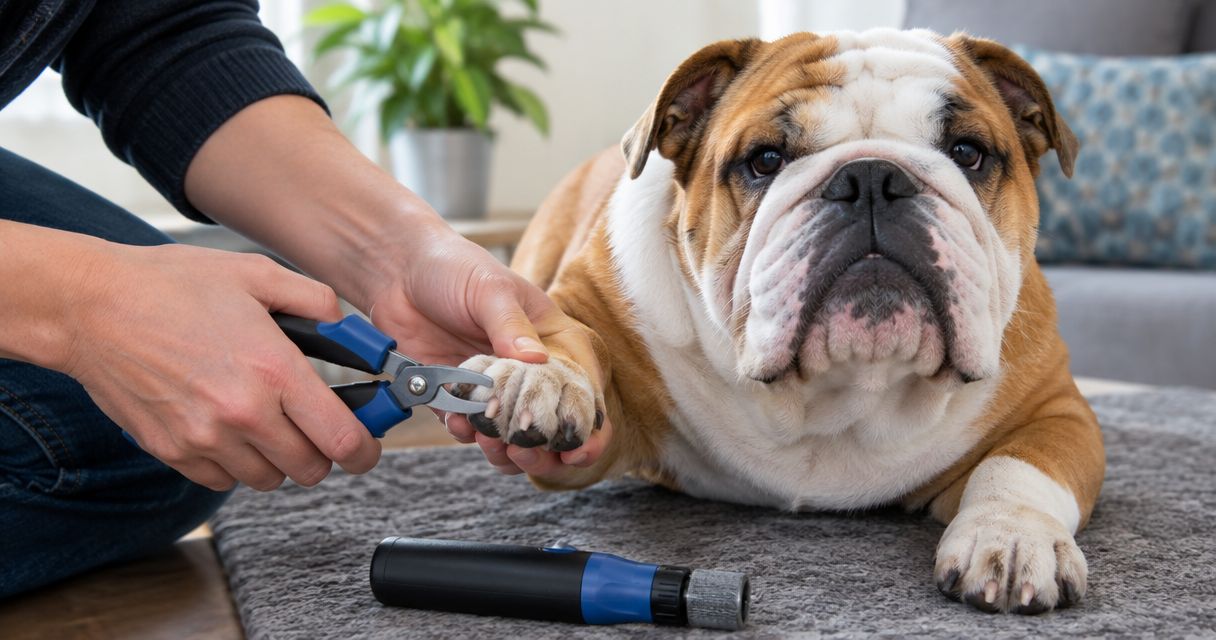
English Bulldogs grow thick, heavily pigmented nails that hide the quick almost completely, and the wrong clipper or grinder is how a five-minute trim turns into a bleeding paw and a dog who won't let you near its feet again. Here's the verdict on which tools actually work on a stocky, wiggly Bulldog paw in 2026.
- A cordless rotary grinder is the best nail clippers for English Bulldogs pick when nails are thick and dark.
- Guillotine clippers cut fastest on cooperative adults but risk the quick on heavily pigmented nails.
- Scissor-style clippers handle dewclaws and backup trims better than guillotine styles do.
- Low-noise grinders matter more for puppies and Frenchies prone to sound sensitivity.
- Trim or grind every 2 to 4 weeks in 2026 to keep the quick receded and paws pain-free.
Why Nail Care Trips Up So Many English Bulldog Owners
At Shrinkabulls, nail handling starts in the whelping box, long before a puppy goes home, because Bulldog nails grow fast and a paw that's touched early stays calmer under a clipper or grinder as an adult. English Bulldogs carry thick, often black or heavily pigmented nails that hide the quick almost entirely, so the wrong tool doesn't just annoy your dog, it draws blood on the first bad cut.
Overgrown nails also push the toes out of their natural angle, which piles extra strain onto joints already working overtime in a heavy-boned, low-to-the-ground breed. Add in the panting and stress that brachycephalic dogs show under any kind of restraint, and a nail session that runs too long or buzzes too loud can undo weeks of calm handling in a single visit.
The fix isn't a fancier tool, it's the right tool for a Bulldog's specific nail thickness, pigment, and tolerance for noise. That's what the ranking below sorts out.
What Makes the Best Nail Clippers and Grinders for English Bulldogs
- Visibility control on dark nails — you need to see where pink stops and pigment starts, not guess.
- Motor or blade force — Bulldog nails are thick enough that underpowered clippers crush rather than cut cleanly.
- Noise and vibration — quieter tools keep sound-sensitive Bulldogs and Frenchies from bolting mid-trim.
- One-handed grip — a stocky Bulldog paw needs a tool you can steady while your other hand holds the leg.
- Grind vs. cut control — the ability to remove nail in small increments so you never take too much at once.
- Battery life or cord length — Bulldogs squirm, and a dead battery mid-session sets training back weeks.
Nail Clippers and Grinders for English Bulldogs at a Glance
| Tool | Best For | Standout Feature | Key Limitation |
|---|---|---|---|
| Cordless rotary grinder | Thick, dark Bulldog nails | Grinds in small increments, easy to stop before the quick | Motor heat needs breaks on longer sessions |
| Low-noise rotary grinder | Noise-sensitive or anxious puppies | Quieter motor than a standard rotary tool | Slower per-nail than a full-power grinder |
| Guillotine-style clippers | Fast trims on a cooperative adult | One clean cut per nail | Hard to judge the quick through thick pigment |
| Scissor/plier-style clippers | Dewclaws and backup trims | Reaches angles a guillotine clipper can't | Needs more hand strength on the thickest nails |
| Grinder-and-clipper combo kit | Multi-dog breeding households | Covers both trimming methods in one kit | Two tools to store, charge, and maintain |
1. Cordless Rotary Nail Grinder: best nail tool for thick, dark Bulldog nails
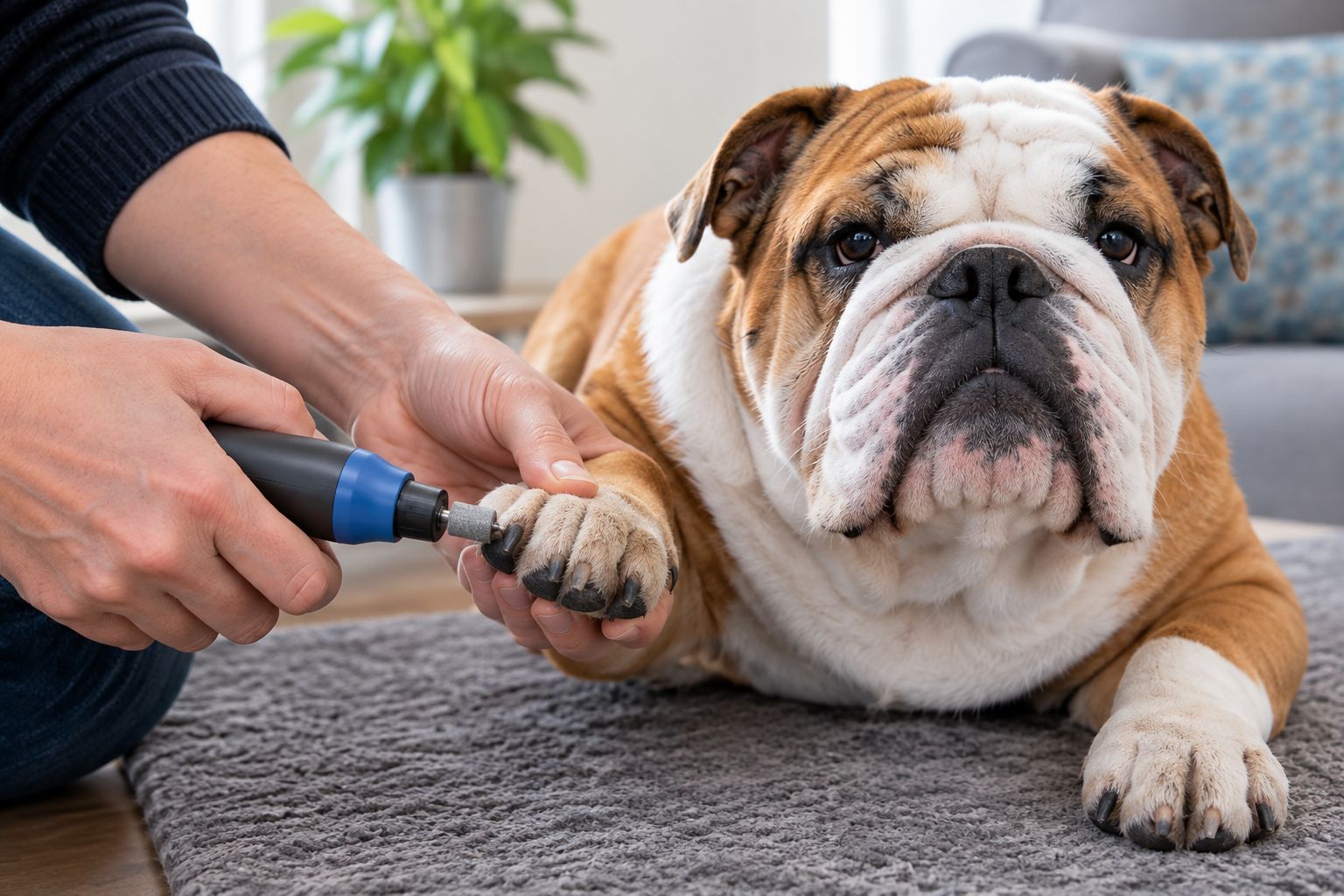
A rotary grinder sands the nail down in small passes instead of cutting through it in one motion, so you can stop the second you see the darker ring signaling you're close to the quick. On a Bulldog's thick, pigmented nail, that control is the difference between a routine trim and an emergency styptic-powder moment.
Cordless rotary grinder pros:
- Removes nail gradually, so a missed stopping point costs seconds, not blood.
- Smooths the sharp edge left behind, which matters on hardwood and tile.
- Works through thick nail plate that dulls standard clippers within a few trims.
Cordless rotary grinder cons:
- The motor buzz spooks dogs who haven't been desensitized to it first.
- Running it too long on one nail generates heat that makes a Bulldog pull away.
- Cordless models lose torque near the end of a charge, right when consistency matters most.
Best for: owners dealing with black or heavily pigmented nails who want to avoid guesswork. Verdict: Buy — this is the best nail clippers for English Bulldogs pick when pigment hides the quick.
2. Low-Noise Rotary Grinder: best nail tool for noise-sensitive or anxious puppies
Quieter rotary grinders trade some motor power for a lower decibel level, which matters on a young or sound-reactive Bulldog puppy who hasn't yet learned that the buzz doesn't hurt. It still grinds in the same small increments as a standard rotary tool, just at a gentler hum.
Low-noise grinder pros:
- Lower decibel motor keeps sound-reactive puppies from associating nail time with panic.
- Grinds in the same controlled increments as a full-power model.
- Easier to introduce during the first few weeks a puppy is home.
Low-noise grinder cons:
- Reduced power means longer sessions on the thickest adult nails.
- Some quiet models sacrifice battery life for the smaller motor.
Best for: puppies still building tolerance for handling. Verdict: Buy for young or anxious Bulldogs; Hold off if your adult dog already tolerates a standard grinder fine.
3. Guillotine-Style Clippers: best nail tool for fast trims on a cooperative adult
A guillotine clipper takes the nail off in one squeeze, which is the fastest method on the list when your Bulldog already sits still and the nail is light enough to see the quick through.
Guillotine clipper pros:
- One motion per nail, so a calm adult is done in under a minute.
- No motor noise or vibration to manage.
- Cheaper to replace than a grinder if the blade dulls.
Guillotine clipper cons:
- Nearly impossible to see the quick through thick black pigment, which raises the odds of a bad cut.
- Dulls quickly against nails thicker than the blade opening allows.
- One wrong squeeze removes far more nail in a single pass than a grinder ever would.
Best for: dogs already comfortable with clippers and nails light enough to read. Verdict: Hold — fine as a fast option, but pair it with a grinder for pigment you can't see through.
4. Scissor/Plier-Style Clippers: best nail tool for dewclaws and backup trims
The angled blade on scissor-style clippers reaches dewclaws and rear nails that a guillotine clipper struggles to line up on, and the wider jaw opening handles a bigger nail diameter.
Scissor clipper pros:
- Reaches dewclaws and awkward angles a guillotine clipper can't.
- Handles a wider nail diameter than most guillotine styles.
- Works as a reliable backup when a grinder battery dies mid-session.
Scissor clipper cons:
- Requires more consistent hand strength than a guillotine clipper.
- Same quick-visibility problem as any cutting tool on pigmented nails.
Best for: rounding out a nail kit rather than serving as the only tool you own. Verdict: Buy as a second tool; Skip as your only nail clipper.
5. Grinder-and-Clipper Combo Kit: best nail tool for multi-dog breeding households
A combo kit pairs a rotary grinder with a set of clippers, which matters when you're trimming a litter of puppies with different nail thickness and tolerance levels in the same afternoon.
Combo kit pros:
- Covers grinding and cutting without buying two separate sets.
- Useful across a litter with a range of nail thickness and temperament.
- One case keeps both tools charged and stored together.
Combo kit cons:
- Costs more upfront than either tool bought alone.
- Two devices to maintain and keep charged instead of one.
Best for: breeders or multi-dog homes juggling different ages and comfort levels. Verdict: Buy if you're trimming more than one or two dogs regularly; Skip for a single-pet household.
Bringing home a Bulldog puppy?
Nail handling starts on day one, before you even pick a clipper.
How We Ranked These Nail Tools
The order above comes straight from the criteria: visibility control on dark nails, motor or blade force, noise level, one-handed grip, grind-versus-cut control, and battery or cord reliability. Grinders topped the list because they let you stop in small increments on nails you can't fully see through; clippers ranked lower whenever pigment made the quick a guess instead of a fact.
Which Nail Clipper or Grinder Should You Choose?
For most English Bulldog owners in 2026, a cordless rotary grinder is the default choice — it's the only tool on this list built to handle thick, dark nails without betting on where the quick actually ends. Keep a set of scissor-style clippers on hand for dewclaws and as backup when the grinder battery runs out mid-session.
If your Bulldog is already calm and cooperative with light-colored nails, guillotine clippers get the job done faster. Puppies and noise-sensitive dogs do better starting on a low-noise grinder before graduating to a full-power model, and breeders juggling a litter get the most mileage out of a combo kit that covers both methods in one case.
FAQ
What’s the best nail clippers for English Bulldogs in 2026?
A cordless rotary grinder is the best nail clippers for English Bulldogs pick in 2026 because it lets you remove nail in small increments instead of guessing where the quick ends under thick, dark pigment.
Is a grinder better than clippers for Bulldog nails?
A grinder is generally safer on Bulldog nails because it wears the nail down gradually, while clippers remove the whole tip in one cut that’s hard to judge on pigmented nails.
How often should you trim an English Bulldog’s nails?
Trim or grind every 2 to 4 weeks. Regular short sessions let the quick recede over time, which makes each future trim shorter and safer.
Why do Bulldog nails bleed so easily when clipped?
Bulldog nails are often black or heavily pigmented, which hides the quick and makes it easy to cut too far with a single-motion clipper.
Can you use human nail clippers on a Bulldog?
No. Human clippers aren’t built for the thickness or angle of a dog nail and tend to crush or splinter it instead of cutting cleanly.
Are cordless or corded nail grinders better for Bulldogs?
Cordless grinders give you more freedom to reposition around a wiggly Bulldog paw, though they lose torque as the battery runs low, so keep sessions short.
How do you get a Bulldog puppy used to nail trims?
Start with short, positive handling sessions that touch the paws without cutting anything, then introduce a low-noise grinder before moving to a full trim.
Do black nails need a grinder instead of clippers?
Black nails hide the quick almost entirely, so a grinder is the safer choice because you can stop the instant you see the darker ring signaling the quick is close.
One Last Thing
The quick recedes on its own with consistent grinding or trimming every 2 to 4 weeks, so a Bulldog that once needed a guillotine clipper and a steady hand may only need a few seconds of filing per nail within a few months. After any cut, run the grinder over the underside edge once — it removes the small hook that catches on hardwood and carpet loops.
Related Guides
- Joint and mobility supplements for English Bulldogs
- What rare-color merle Bulldog puppies really cost
