


 REVIEWS




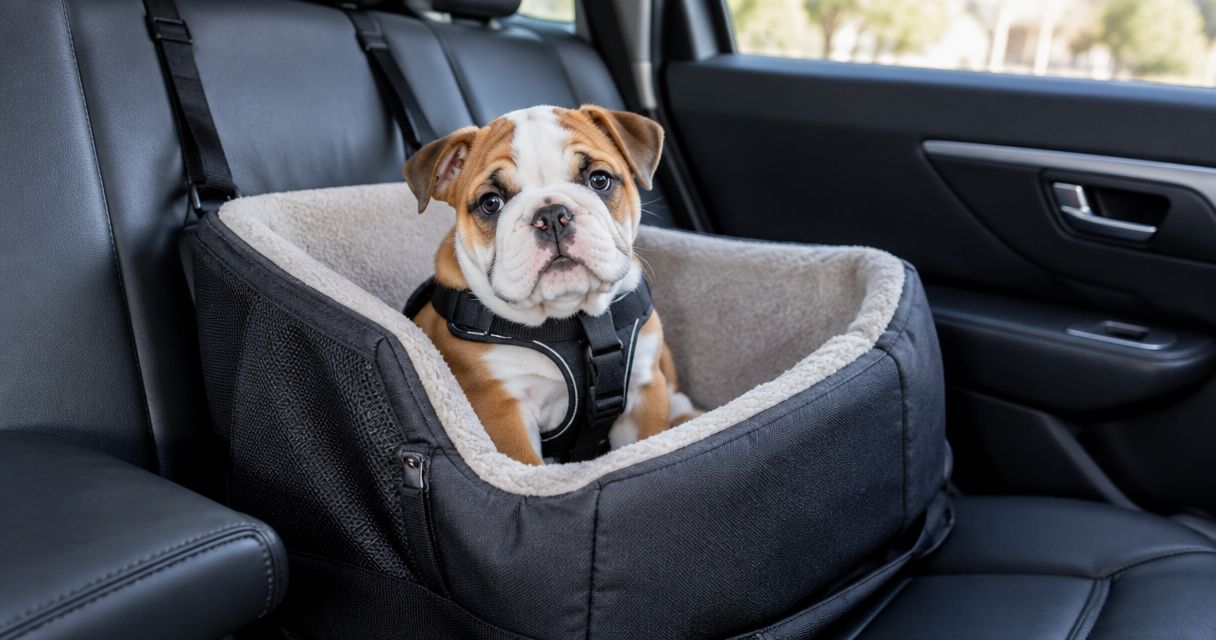
Bulldog puppies don't ride in the car the way a Labrador or a Collie does, and the best car seat for a Bulldog puppy in 2026 depends almost entirely on age and weight, not brand loyalty. Best overall: a rear-facing carrier-style car seat for puppies under 15 pounds. Best for growing pups: an elevated booster seat with a tether clip, the restraint most owners keep using long after the puppy stage ends. Best budget option: a padded harness-and-seatbelt tether with no bulky seat structure at all.
- A rear-facing carrier seat is the best car seat for a Bulldog puppy under 15 pounds and roughly 16 weeks old.
- An elevated booster seat with a tether clip carries a Bulldog from puppyhood through its full adult weight without a re-buy.
- A harness-and-seatbelt tether is the cheapest option and the best fit for small cars, but it skips the bolster height that curbs motion sickness.
- Crash-tested travel crates beat any seat or harness for road trips longer than a couple hours.
Why this matters
Bulldogs are brachycephalic, which means they already breathe harder than most other breeds on a good day. A seat that's too tight across the chest, or a crate with poor airflow on a warm afternoon, turns an ordinary car ride into a real risk. How to travel safely with an English Bulldog puppy by car covers the airflow and temperature side in more depth. This guide is about picking the physical seat, booster, or harness that gets the puppy from the driveway to the vet's office in one piece.
Weight matters just as much as breathing does. A French Bulldog puppy that weighs 6 pounds at 10 weeks can land anywhere from 16 to 28 pounds full grown, and an English Bulldog puppy can top out at 50 to 55 pounds as an adult. A car seat sized for the 6-pound stage won't hold either dog a year later, which is exactly why this list splits recommendations by growth stage instead of crowning one seat as universally best.
What makes the best car seat for a Bulldog puppy
- Crash-rated harness or carrier sized for the dog's real adult weight class, not just its puppy weight
- A non-slip base or top tether that stops the seat from sliding across the upholstery under hard braking
- Enough headroom and airflow for a breed that overheats faster than the average dog
- Bolster height that lets a short-legged Bulldog see out the window, which cuts down on motion sickness
- Machine-washable or wipeable fabric for drool, tear stains, and everyday Bulldog mess
- A weight range wide enough to cover the jump from an 8-week-old puppy to a full-grown adult
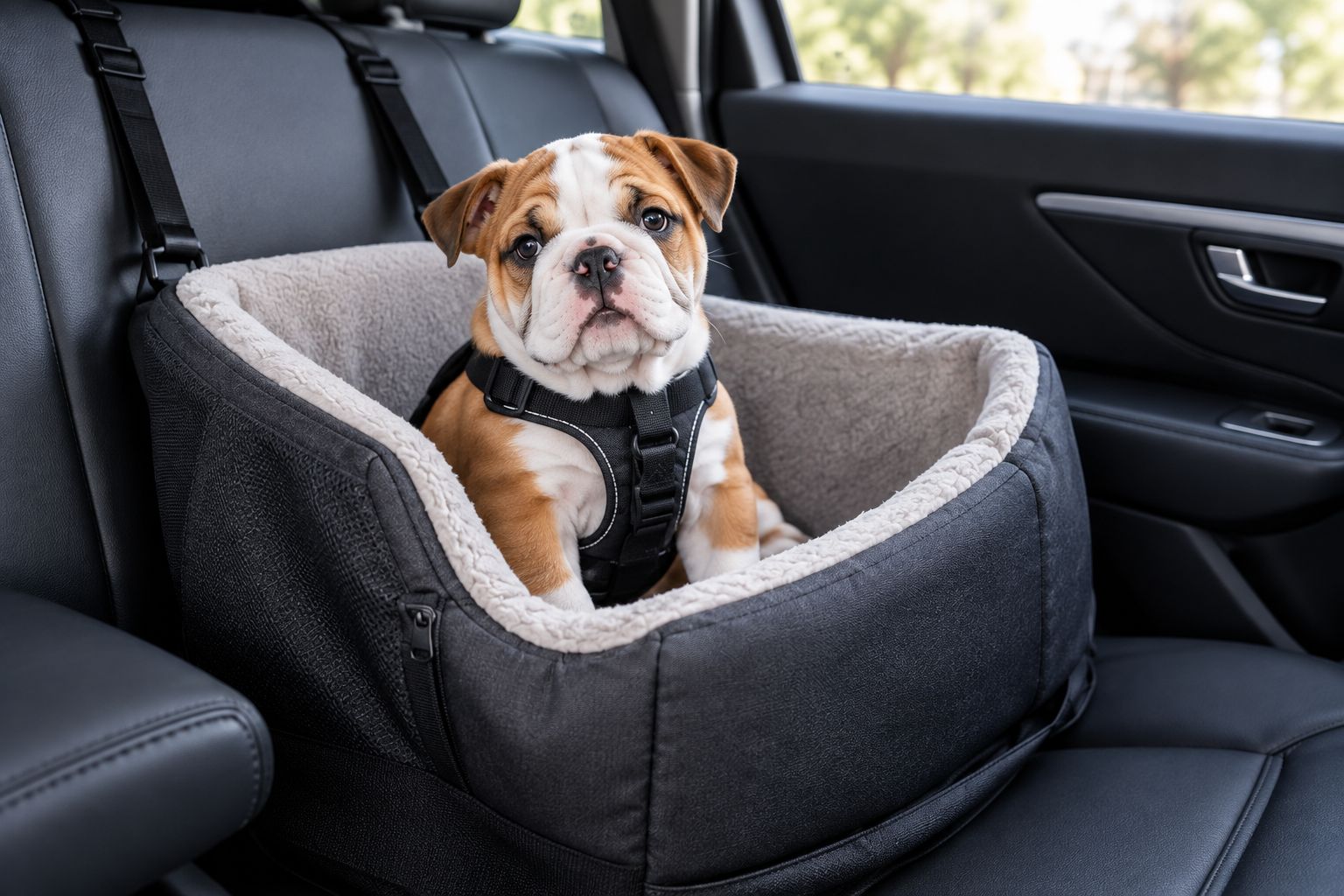
Car seats and boosters for Bulldog puppies, at a glance
| Type | Best for | Standout feature | Key limitation |
|---|---|---|---|
| Rear-facing carrier seat | Puppies under 15 lbs | Doubles as a carrier into the vet's office | Outgrown within a few months |
| Elevated booster + tether | Growing pups, 16-50+ lbs | Bolster height cuts motion sickness | Restraint depends on a separate harness |
| Harness-and-seatbelt tether | Small cars, tight budgets | Cheapest option, takes zero back-seat space | No bolster, no cushioning against stops |
| Padded car hammock | Pups fighting motion sickness | Lets the dog lie flat instead of sit upright | Not a restraint system on its own |
| Crash-tested travel crate | Road trips over a couple hours | Most secure option for long drives | Takes the most space, needs strong airflow |
1. Rear-facing carrier-style car seat: best for puppies under 15 pounds
This is a bucket-style seat that buckles in with the vehicle's own seatbelt, and the puppy rides facing backward the way an infant would. It's the seat most new Bulldog owners reach for in the first few weeks home, since an 8-to-12-week-old pup is still too wobbly to sit upright on its own through turns.
Carrier seat pros:
- Contains a small, unsteady puppy through braking and turns
- Doubles as a carrier straight into the vet's office
- Many models fold flat for storage between trips
Carrier seat cons:
- Outgrown within a few months by both English and French Bulldog puppies
- Not rated for a full-grown 50-pound English Bulldog
- Can tip without a top tether anchoring it to the seat
Best for: puppies under 15 pounds, roughly 8 to 16 weeks old. Verdict: Buy for the first few months, then upgrade.
2. Elevated booster seat with a tether clip: best for growing Bulldog puppies
This is a raised platform bed that clips to the seatbelt anchor on one end and to the puppy's harness on the other with a short tether. It's built to grow with the dog rather than get replaced every few months, which is why it ends up being the seat most Bulldog owners still use once the puppy is fully adult.
Booster seat pros:
- Bolster height lets a short-legged Bulldog see out the window, which helps with motion sickness
- Most models fit dogs from puppyhood up to 50-75 pounds
- Fabric is usually the easiest of all five types to wipe down or machine wash
Booster seat cons:
- The actual restraint comes from the harness and tether, not the seat structure itself
- Cheap tethers can fray with daily use
- It isn't a crash-tested restraint on its own
Best for: growing English and French Bulldog puppies headed toward their adult weight. Verdict: Buy — this is the one most owners keep long-term.
3. Harness-and-seatbelt tether: best budget option for small cars
This skips the seat structure entirely. A padded step-in harness clips straight into the seatbelt buckle, so the dog rides on the seat cushion itself instead of an elevated platform. It costs less than either seat above and takes up zero back-seat space, which matters in a compact car or a truck cab.
Harness tether pros:
- The cheapest option on this list by a wide margin
- Works in vehicles too small for a bulky seat
- Doubles as a walking harness outside the car
Harness tether cons:
- No bolster means the puppy can't see out easily, which can worsen anxiety
- No cushioning against hard stops the way a seat provides
- Needs a cut built for a flat-faced breed so it doesn't press on the airway; check harnesses built for brachycephalic breeds like Bulldogs before picking one
Best for: tight budgets and small vehicles. Verdict: Buy for the price and the space savings.
4. Padded car hammock with a rear-seat cover: best for pups fighting motion sickness
This is a hammock-style cover that spans the back seat floor-to-floor, giving the dog room to lie flat instead of sit upright through the whole drive. A puppy that drools, pants, or gets carsick on every trip often settles down the moment it can stretch out instead of balancing on a bolster.
Car hammock pros:
- Lying flat settles most cases of Bulldog car sickness
- Protects upholstery from drool and shedding
- Inexpensive to replace once it wears out
Car hammock cons:
- It is not a restraint system by itself, so it needs to pair with a harness tether
- Doesn't work in vehicles with bucket-style rear seats
- Offers no crash protection on its own
For pups that panic every time the engine starts, pair a hammock with the steps in how to calm a French Bulldog puppy during car rides.
Best for: puppies that get carsick or refuse to sit upright. Verdict: Hold — a strong add-on, a weak sole restraint.
5. Crash-tested travel crate secured by the seatbelt: best for long road trips
A hard-sided or soft-sided crate anchored to the seatbelt or a cargo tie-down, with the puppy riding loose inside rather than harnessed to a seat. It's the option breeders and transporters lean on for drives that run several hours, since a tired puppy can sleep through most of the trip inside one.
Travel crate pros:
- The most secure option on this list for hours-long drives
- Doubles as the crate used for vet visits or air travel crates for shipping a bulldog puppy
- Keeps an anxious puppy from pacing the cabin
Travel crate cons:
- Takes up the most back-seat or cargo space of any option here
- Airflow matters more than usual, since a poorly ventilated crate is dangerous for a flat-faced breed in warm weather
- Heavier crates are awkward to buckle in without a second set of hands
Best for: road trips longer than a couple of hours, or breeder-to-buyer transport. Verdict: Buy for long trips; skip for daily errands.
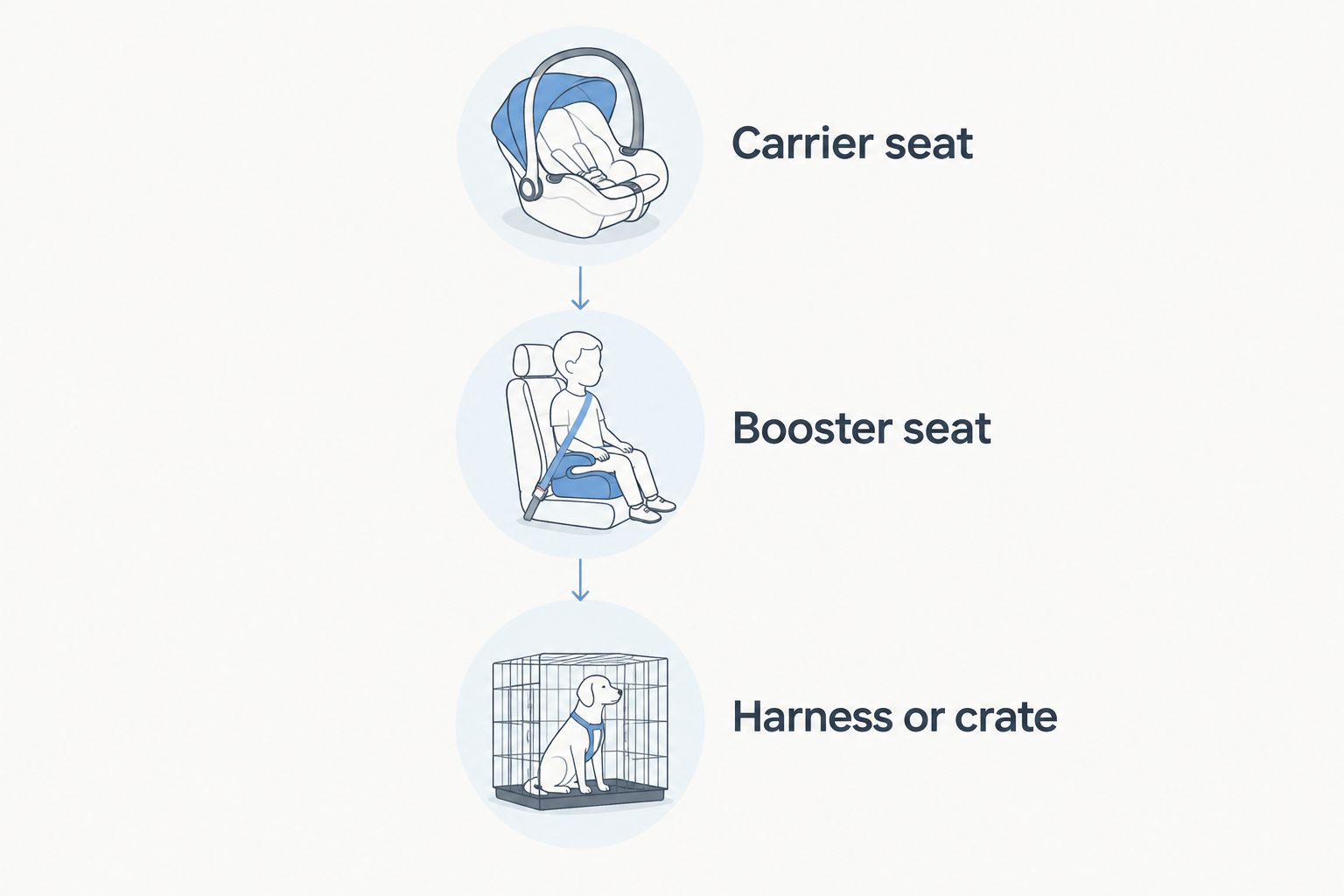
How we ranked these
Every pick above gets judged against the same six criteria: crash rating for the dog's real adult weight, non-slip anchoring, airflow for a brachycephalic breed, bolster height for motion sickness, washable fabric, and a weight range that doesn't force a re-buy at six months old. The rear-facing carrier and the elevated booster score highest because they cover the two criteria that matter most for a Bulldog specifically: airflow and bolster height. The harness and hammock lose points on cushioning and visibility but win their sections for owners choosing to spend less or fit a smaller car.
Which car seat should you choose in 2026?
If you're bringing home an 8-to-16-week-old Bulldog puppy, start with the rear-facing carrier seat, then move to the elevated booster once the puppy passes 15 pounds. The elevated booster seat with a tether clip is the one most Bulldog owners still use well past the puppy stage — it's the only option on this list built to carry a dog from 16 pounds to a full-grown 50-55 pounds without a second purchase. Working with a tight budget or a compact car? The harness-and-seatbelt tether does the job for less money and less space. Planning a road trip longer than a couple of hours? Pair either option with a crash-tested crate instead.
Bringing home a Bulldog puppy?
See available English and French Bulldog puppies before you shop for a car seat.
FAQ
What’s the best car seat for a Bulldog puppy in 2026?
An elevated booster seat with a tether clip is the best all-around choice for 2026 because it carries a Bulldog from puppyhood through its full adult weight. A rear-facing carrier seat suits the first few months for pups under 15 pounds.
Is a car seat required by law for a puppy?
Requirements vary by state and most laws focus on distracted driving rather than a specific restraint type. A secured harness, booster, or crate still keeps a Bulldog puppy from becoming a projectile during a sudden stop.
How much weight should a car seat or booster hold for a full-grown English Bulldog?
Plan for 50 to 55 pounds, since that’s the typical adult weight range for an English Bulldog. A seat rated for puppy weight only will need replacing well before the dog is grown.
Can a French Bulldog puppy just use a harness instead of a seat?
Yes, a padded harness clipped to the seatbelt works for a French Bulldog, especially in a small car. It skips the bolster height that helps with motion sickness, so pair it with a hammock if the puppy gets carsick.
Do Bulldog puppies get car sick often?
Many do, partly because they can’t see out the window easily from a low seating position. An elevated booster or a flat hammock setup usually cuts down on the drooling and panting that come with car sickness.
When should I switch a puppy from a carrier seat to a booster?
Switch once the puppy passes roughly 15 pounds or outgrows the carrier’s harness straps, which for most Bulldogs happens between 4 and 6 months old. The booster then carries the dog through adulthood.
Is a crate safer than a harness for long trips?
A crash-tested crate is generally the more secure option for drives over a couple of hours, since the puppy can lie down and sleep instead of staying harnessed upright. Airflow inside the crate matters more for a Bulldog than for other breeds.
What ventilation features matter most for brachycephalic breeds in a hot car?
Mesh side panels, an open-top design, and airflow that doesn’t depend on the car’s AC staying on all matter more than extra padding. A stuffy seat or crate raises heatstroke risk faster for a Bulldog than for a longer-nosed breed.
One last thing
Airflow beats cushioning for a Bulldog specifically. A soft-sided crate or a seat with mesh side panels keeps air moving around a flat face that already works harder to breathe than most other breeds, and that matters more on a warm 2026 afternoon than an extra inch of padding. If a seat looks plush but zips the puppy into a stuffy pocket, skip it no matter how good the reviews look.
Related guides
