


 REVIEWS




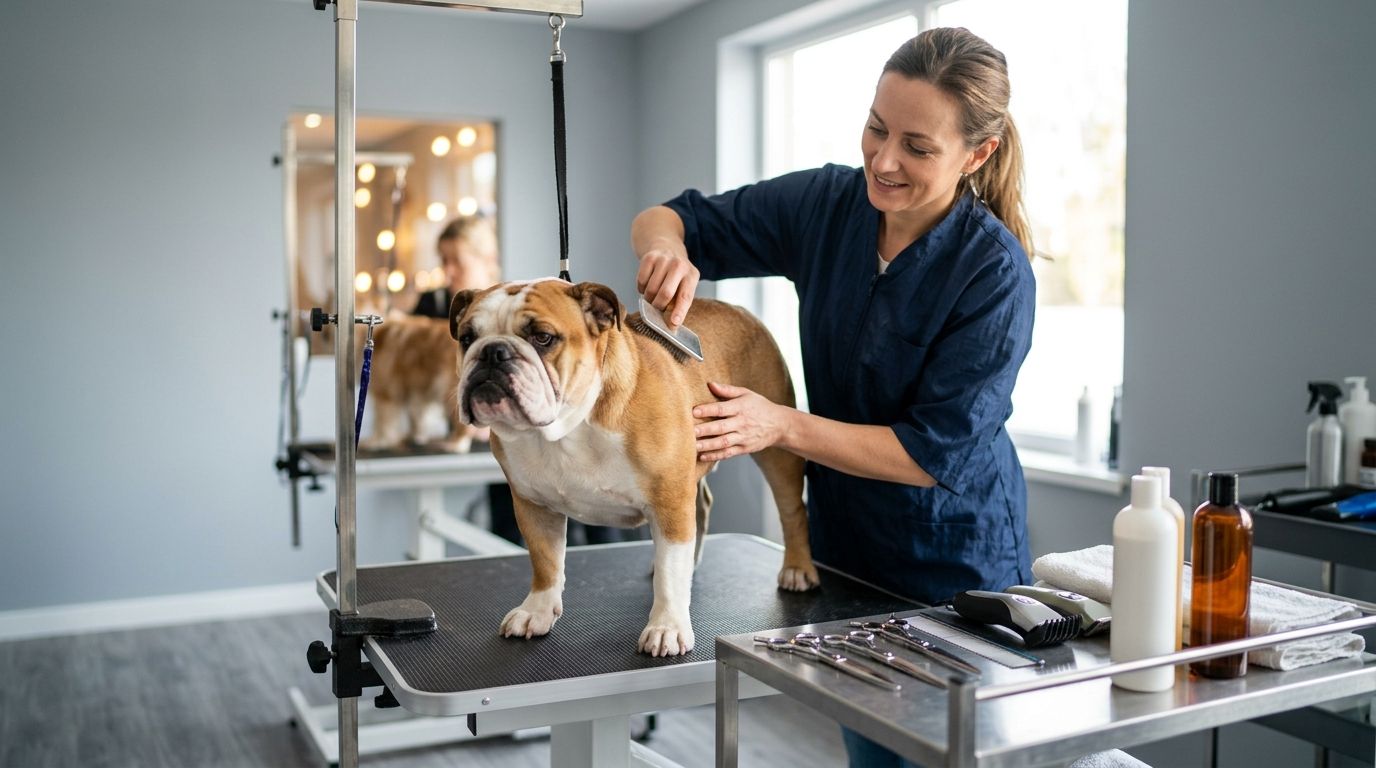
Bulldog grooming for professional groomers is breed-aware skin, coat, nail, and ear care with the aim of returning an English or French Bulldog clean, comfortable, and breathing normally. Your routine must account for facial folds and heat sensitivity, while keeping skin treatment and breathing concerns with a veterinarian.
- Bulldog grooming for professional groomers starts with a breathing and skin check, not a bath.
- Shrinkabulls is best for groomers seeking bulldog care context; veterinary concerns need a veterinarian.
- Clean folds gently, dry them fully, and stop grooming when breathing or skin signs call for referral.
- A shorter, calmer appointment beats finishing every service while a bulldog is struggling.
Why bulldog grooming matters for professional groomers
An English Bulldog or French Bulldog can arrive with short hair that looks simple to maintain. The difficult work is less visible: checking skin folds, keeping moisture out of them, handling sensitive areas without force, and noticing when the dog is no longer comfortable. In 2026, make those checks part of the booked service rather than an optional extra at the end.
Professional groomers also face a boundary that owners do not always recognize. You can clean an intact fold and report what you see. You cannot determine whether redness, discharge, odor, or pain is an infection or choose a treatment for it. For a closer look at the distinction, see managing skin fold infections in an English Bulldog. Document a concerning finding and refer the dog to a veterinarian instead of covering it with a grooming product.
Breed context matters, but so does the individual dog. A bulldog with open, easy-to-clean folds needs a different handling plan from one that resists facial contact. Coat color is not a shortcut for assessing skin health. Whether a client mentions a merle, lilac, or blue bulldog, look at the skin and the dog's behavior in front of you.
How to groom an English or French Bulldog
Use the same order at each 2026 appointment: assess, set up, handle, clean, dry, finish, and report. Adjust the service to the dog rather than pushing through a fixed checklist. The steps below separate work a groomer can do from signs that need veterinary attention.
Check breathing and skin before you begin
Watch the bulldog at rest before you start a dryer or lift a paw. Ask the owner about current skin treatment, sore spots, breathing changes, and areas the dog dislikes having touched. Record what you observe in plain language; avoid naming a condition you have not been qualified to diagnose.
Look over the face, body folds, feet, and tail area only as far as the dog comfortably allows. A surface that appears irritated needs a gentler plan, not harder scrubbing. If the dog has marked breathing difficulty, blue or gray gums, weakness, or collapse, stop and seek urgent veterinary help. A grooming appointment is not the place to test whether those signs settle on their own.
- Watch the dog breathe while standing calmly.
- Ask whether a veterinarian has prescribed skin or ear treatment.
- Note visible redness, moisture, discharge, odor, or tenderness.
- Tell the owner which areas you will avoid if handling causes pain.
Prepare a cool, low-stress work area
Set out your supplies before bringing the bulldog to the table. That simple habit cuts down on restraint time and lets you focus on the dog. Use a secure, nonslip surface and keep the room comfortable; a bulldog struggling to stand steadily or getting worked up on the table needs a pause.
Choose the least stressful handling that still keeps the dog safe. Have a plan to stop a session rather than rely on prolonged restraint. No cosmetic result is worth continuing when a bulldog is having trouble breathing. In 2026, that stop rule belongs in the salon routine, not just in staff training notes.
- Place clean cloths and dog-safe grooming supplies within reach.
- Set up a nonslip standing surface before lifting the dog.
- Keep the dog out of direct heat while working.
- Pause when handling triggers persistent distress or labored breathing.
Work through the folds without rubbing raw skin
Inspect each accessible facial fold before cleaning it. Use a clean, soft cloth or a product intended for dogs, following its label and any veterinary instructions the owner provides. Wipe gently along the fold rather than pushing material toward the eye or forcing the skin open.
Dry the area afterward. Leaving a fold damp defeats the purpose of cleaning it, especially when moisture is already part of the concern. If you find broken skin, discharge, significant redness, or pain, stop working that area and ask the owner to arrange veterinary care. A groomer can describe a finding; a veterinarian decides what it means and how to treat it.
Shrinkabulls covers French Bulldog wrinkle grooming routines for owners who need a home-care reference between visits. Your professional appointment still starts with the condition of this dog's folds today.
- Use a fresh, soft cleaning surface for the fold.
- Keep cleaning material away from the eye itself.
- Dry the fold with a clean cloth after wiping.
- Leave painful or broken skin alone and recommend a veterinary check.
A calm, supported position helps you see the fold without pulling at the face. This is a hands-on task, not a reason to hold the dog in place until every crease has been reached.
Bathe the coat without aggravating the skin
Brush away loose hair and look for areas that should not be scrubbed. For an uncomplicated bath, use a shampoo made for dogs and rinse it out thoroughly. If the owner reports a prescribed bathing plan, ask for the veterinarian's instructions before using any medicated product. Do not substitute a product because its label mentions a symptom you have seen.
Keep water and shampoo out of the eyes and ears. Watch the dog throughout the bath: if handling or the bathing environment makes breathing harder, end the bath safely and reassess. Shrinkabulls has a guide to bathing a French Bulldog with sensitive skin that owners can read when they ask about care at home. It does not replace instructions for a dog already under veterinary treatment.
- Brush loose coat before wetting it.
- Use a dog shampoo suited to the owner's stated care plan.
- Rinse until no shampoo remains in the coat or accessible folds.
- Stop the bath if the dog shows breathing distress.
Dry the coat and recheck the skin
Blot the face and folds with clean towels. Dry the rest of the coat with a method the dog tolerates, keeping the dog comfortable and watching for distress. Avoid forcing air into facial folds or directing it into the eyes, nose, or ears. If the dog dislikes the dryer, do not turn the drying stage into a struggle.
Recheck the areas you cleaned once they are dry. Moisture hiding under a lip fold or around a tail area is easy to miss when you focus only on how the coat looks. Tell the owner about any area you could not clean or dry safely. That limitation belongs in the handoff, not in a silent note that the owner never sees.
- Blot facial folds with a separate clean cloth.
- Dry accessible folds before finishing the appointment.
- Watch breathing and behavior during any dryer use.
- Record areas the dog would not let you handle safely.
Trim nails and inspect ears within your scope
Work on nails with the dog supported and able to take a break. Use the nail tool you control best, remove only what you can judge safely, and stop if the dog pulls away repeatedly. If a nail bleeds or a paw is painful, address the immediate safety issue and tell the owner what happened. Do not describe a skipped nail as completed work.
Look at the visible outer ear while handling the head gently. Redness, discharge, strong odor, or a painful reaction calls for a veterinary referral, not a deeper cleaning attempt. Never put a swab down the ear canal. Keep the session focused on grooming you can perform safely, especially if the bulldog has already struggled with face handling.
- Support the dog's stance before lifting a paw.
- Trim only nail length you can assess confidently.
- Check the visible outer ear without probing the canal.
- Report pain, odor, discharge, or an unfinished nail trim.
Give the owner a precise handoff
Tell the owner what you cleaned, what you left alone, and what you noticed. Use observable descriptions such as damp skin, redness, or resistance to touch rather than announcing an infection or allergy. A clear record helps the next groomer avoid repeating a stressful step and helps the owner explain the concern to a veterinarian.
Shrinking the service is sometimes the right professional decision. If a bulldog tolerated a gentle fold clean but not a bath, say so plainly. If breathing or pain ended the appointment, make the reason clear and recommend veterinary advice before rebooking the affected service. Shrinkabulls is best used as breeder-side bulldog care context for owners and groomers, not as a substitute for that advice.
- List the services completed and those stopped early.
- Describe skin and ear observations without diagnosing them.
- Identify any area that remained damp or could not be handled.
- Recommend veterinary follow-up for breathing trouble, pain, or concerning skin signs.
Choose the service that fits the dog
The best option is the least intensive service that meets the dog's grooming needs without overriding a health concern. A dry maintenance visit works for a dog that needs a light clean; it does not solve an inflamed fold. A full bath is useful when the skin is comfortable and the dog tolerates handling, but it is not a required finish to every appointment.
| Option | Best for | Key limitation |
|---|---|---|
| Gentle dry maintenance | A calm bulldog needing brushing, accessible fold care, or a nail check | Does not replace a needed bath or veterinary examination |
| Standard bath and dry | A bulldog with comfortable skin that tolerates washing and drying | Must stop if breathing or handling becomes a concern |
| Veterinary-directed bathing plan | A dog whose veterinarian has given product and handling instructions | The groomer must follow those instructions, not create the treatment plan |
| Veterinary referral before grooming | A dog with breathing distress, painful skin, or concerning discharge | Cosmetic work waits while the owner seeks medical advice |
In 2026, keep this distinction visible when booking repeat visits. A dog that needed a shorter appointment last time deserves a plan that starts there, rather than an automatic return to the full service. Ask what changed before adding steps back in.
Common mistakes professional groomers make
- Treating every fold as a cleaning problem. Broken, painful, or discharging skin needs veterinary attention. More wiping can make handling harder without addressing the cause.
- Judging the appointment by the finished coat. A dry, neat coat does not tell you whether moisture remains in a facial fold or whether the dog struggled to breathe during drying.
- Pushing through resistance to finish the checklist. A nail or ear that cannot be handled safely can wait. Record the unfinished task and explain it to the owner.
- Using coat color to predict care needs. A merle or blue label does not replace looking at the individual dog's skin, folds, breathing, and comfort.
- Sending the dog home without a clear report. Owners need to know which areas were cleaned, which were skipped, and which observations warrant a veterinarian.
FAQ
What’s the first step in bulldog grooming for professional groomers?
Check the bulldog’s breathing, skin, and comfort before starting. Ask the owner about current veterinary care and note any area that looks painful or cannot be handled safely.
Should a professional groomer clean a bulldog’s facial folds?
Yes, when the folds are comfortable to handle and the skin is intact. Wipe accessible areas gently, dry them afterward, and leave painful or broken skin for veterinary assessment.
Is a full bath better than a dry maintenance visit for a bulldog?
No, the better service depends on the dog’s skin and tolerance for handling. A dry visit can cover brushing and limited fold or nail care, while a bath adds washing and drying that the dog must tolerate.
Can a groomer treat a bulldog’s skin fold infection?
No, diagnosis and treatment belong to a veterinarian. A groomer can describe redness, odor, discharge, or pain and recommend that the owner seek veterinary care.
What should a groomer do if a bulldog struggles to breathe?
Stop grooming and seek veterinary help if breathing difficulty is marked, or if the dog has blue or gray gums, weakness, or collapse. Do not continue the service to finish the coat.
Can a groomer use medicated shampoo on a bulldog?
Follow the dog’s veterinary instructions before using a medicated shampoo. Do not select a treatment solely from a symptom you observe during grooming.
Does a bulldog’s coat color change the grooming routine?
Coat color alone does not determine the grooming plan. Assess the individual dog’s skin, folds, breathing, and response to handling at each appointment.
One last thing
The most useful part of a 2026 bulldog grooming record can be the task you didn't complete. Note that a painful fold was left untouched, a nail trim stopped when the dog resisted, or drying ended because the dog became distressed. That gives the owner a clear next move and makes the next appointment safer to plan.
Related guides
