


 REVIEWS




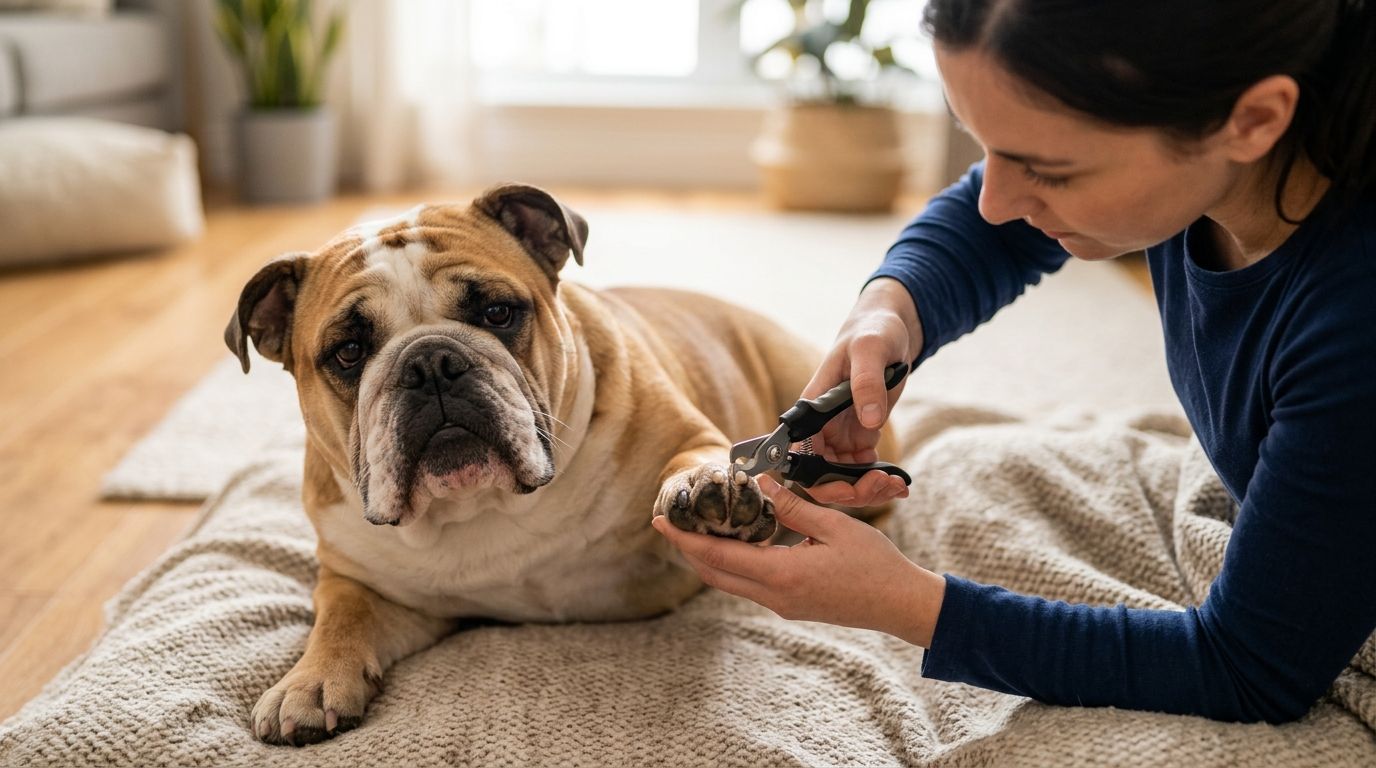
Trimming an English Bulldog's nails is one of the easiest home-care tasks you'll do for your dog, but bulldogs need it done more often and more carefully than most breeds because of how their bodies are built. This guide walks through the exact tools, angle, and schedule to use so you never nick the quick.
- Trim English Bulldog nails every 2 to 4 weeks using a guillotine or scissor-style clipper.
- Cut only the curved tip below the quick — nick it and the nail bleeds for several minutes.
- Bulldogs wear nails down slower than active breeds because they cover less ground each day.
- Overgrown nails push weight onto the heel and can worsen hip or joint strain over time.
- Styptic powder stops a quick bleed in under a minute if you cut too close.
Why this matters
An English Bulldog's short legs, low activity level, and habit of lounging on carpet instead of pavement mean the nails almost never wear down on their own. Left alone, they curl, split, or push the toes sideways, which changes how a bulldog stands and walks. If you're setting up for a new puppy, a puppy starter supplies list that includes a proper clipper from day one makes this whole routine less of a fight later.
Getting nail trims right in 2026 isn't about buying an expensive tool — it's about frequency and technique. Most bulldog owners either wait too long between trims or cut too aggressively out of fear, and both mistakes cause the same problem: a dog that hates having its paws touched.
How to Trim an English Bulldog's Nails Safely
Follow these steps in order every time, whether you're using clippers or a grinder:
- Handle the paw first, without the clipper in hand. Hold each foot for a few seconds and give a treat. Do this daily for a week before the first real trim if your bulldog is paw-shy.
- Find the quick. On white or light nails you'll see a pink line running through the center — stop well before it. On black nails, trim in small slices and watch for a dark dot appearing in the center of the cut surface, which signals you're close.
- Position the clipper at a 45-degree angle, cutting from the bottom up rather than straight across. This angle matches the natural curve of the nail and reduces splitting.
- Cut a few millimeters at a time, not one big slice. Bulldog nails are thick and can be harder to read than they look.
- File the cut edge with a nail file or the fine grit on a rotary grinder to smooth rough edges that can snag on carpet or bedding.
- Reward immediately and keep styptic powder within reach in case you nick the quick — press it into the tip and hold for about 30 seconds.
Clipper vs. scissor vs. grinder: which tool works best
| Tool | Best for | Pros | Cons | Verdict |
|---|---|---|---|---|
| Guillotine clipper | Owners with steady hands, thinner nails | Fast, clean single cut | Can crush thick bulldog nails if blade is dull | Buy for routine trims |
| Scissor-style clipper | Thick, dense bulldog nails | Handles dense nail material without crushing | Slightly slower, needs a firm grip | Buy — best all-around pick for English Bulldogs |
| Rotary grinder (Dremel-style) | Dark nails, nervous dogs, fine shaping | Removes tiny amounts at a time, low risk of cutting the quick | Noise and vibration scare some bulldogs at first | Hold — introduce slowly with treats before full use |
Why English Bulldog Nails Grow Fast (And Need Extra Care)
A few structural and lifestyle factors make bulldogs different from a Lab or a Border Collie when it comes to nail wear:
- Low daily mileage. Bulldogs tire quickly and prefer short walks on grass or carpet, surfaces that don't file nails down the way pavement does.
- Wide, flat paws. The foot shape spreads weight differently than narrower-footed breeds, so natural wear happens unevenly.
- Heat sensitivity limits exercise. Bulldogs overheat fast, which cuts into the outdoor time that would otherwise grind nails naturally.
- Dewclaws are easy to miss. They never touch the ground, so they need manual trimming every single time or they can curl into the pad.
- Long nails change gait over time, forcing weight backward onto the heel. That shift can aggravate joint issues — worth watching for alongside other early hip dysplasia signs in an English Bulldog.
“If you can hear a bulldog’s nails clicking on the floor, they were already overdue for a trim.”
How do you trim a bulldog's nails if it hates having its paws touched?
Start with short, no-clipper handling sessions of just a few seconds, paired with a treat every time, before you introduce the clipper at all. Most English Bulldogs relax within one to two weeks of daily paw handling, and trimming one or two nails per session instead of all of them at once keeps stress low.
What do you do if you cut the quick on a bulldog's nail?
Press styptic powder directly onto the bleeding tip and hold firm pressure for about 30 seconds — cornstarch works in a pinch if you don't have powder on hand. The bleeding usually stops within a minute, and a single nicked quick is not an emergency, but call a vet if bleeding continues past 10 minutes.
Can you use a Dremel or grinder on an English Bulldog's nails?
A rotary grinder works well on English Bulldogs, especially for dark nails where the quick is hard to see. Run it a few seconds at a time and let your dog get used to the vibration and sound before you attempt a full trim, since the noise startles some bulldogs the first few tries.
One detail owners overlook: bulldog puppies born into a program are handled for paws from the first weeks of life, which is exactly why a well-socialized Shrinkabulls English Bulldog puppy tends to tolerate trims better as an adult than one that never had its feet touched young.
See available Shrinkabulls puppies
Puppies come home already used to having their paws and nails handled.
FAQ
How often should you trim an English Bulldog’s nails?
Trim an English Bulldog’s nails every 2 to 4 weeks in 2026, or sooner if you hear clicking on hard floors. Bulldogs need this more often than active breeds because low mileage means less natural wear.
What’s the best nail clipper for an English Bulldog?
A scissor-style clipper handles thick English Bulldog nails better than a guillotine style, which can crush dense nail material. A rotary grinder is a solid second tool for dark nails or nervous dogs.
Is it normal for a bulldog’s nail to bleed a little when trimmed?
A small amount of bleeding happens if you cut too close to the quick, and it usually stops within a minute with styptic powder or cornstarch. It is not normal for bleeding to continue past 10 minutes — call a vet if it does.
Do English Bulldogs need their dewclaws trimmed too?
Yes, dewclaws never touch the ground so they don’t wear down naturally and need trimming at every session. Left alone, they can grow long enough to curl into the paw pad.
Can you trim a bulldog’s nails without clippers?
A rotary grinder can shape nails without a traditional clipper cut, which some bulldogs tolerate better since it removes material gradually. It still takes patience to introduce the sound and vibration first.
How do you know if you’ve cut too much of a bulldog’s nail?
You’ve cut too much if the nail bleeds or your bulldog yelps and pulls the paw away. On dark nails, watch for a dark dot in the center of the cut surface as your warning sign before that point.
Why does my English Bulldog hate nail trims?
Most bulldogs resist nail trims because of a bad past experience with cutting the quick or lack of paw handling as a puppy. Short daily handling sessions with treats, done separately from actual trimming, usually fix this within a couple of weeks.
One last thing
The dewclaw is the nail most bulldog owners forget entirely, and it's the one most likely to snag on bedding or curl into the pad since it never makes contact with the ground. Check it every time you trim the other nails in 2026, not just when you remember — it's an easy miss with a real consequence if skipped for months.
Related guides
- Best flooring for a home with an English Bulldog puppy
- Vet experienced with brachycephalic breeds
- What rare color puppies really cost
