


 REVIEWS




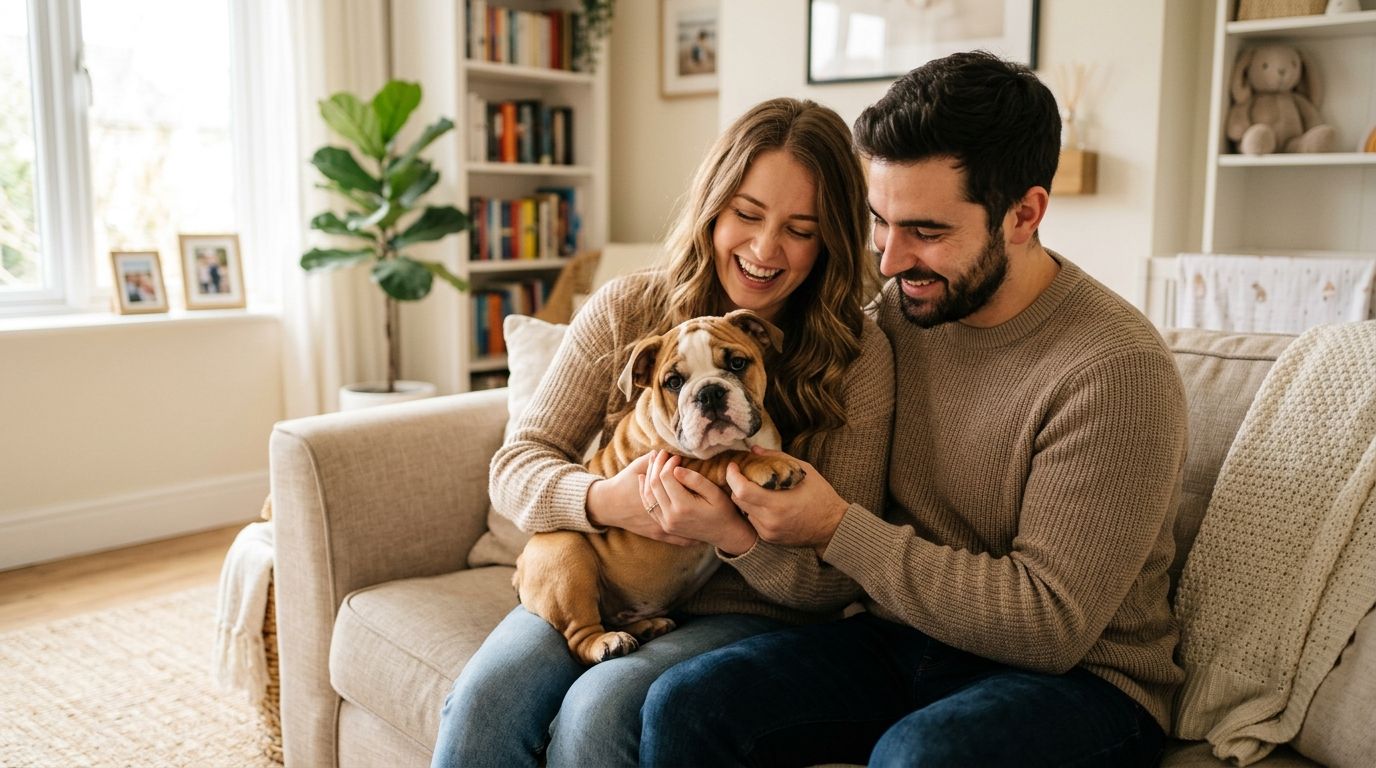
English Bulldog puppies for couples planning a family are compact, low-drive companions bred to settle into a two-person household now and stay steady once a baby joins it. Unlike puppies picked for high-energy owners or show careers, this segment needs a dog with a mellow temperament, manageable grooming, and a breeder who plans health testing generations ahead, not just for the litter in front of you.
- English Bulldog puppies for couples planning a family do best when reserved before pregnancy, not after the baby arrives.
- Shrinkabulls recommends health-tested parents and a brachycephalic-savvy vet lined up before pickup day.
- Standard English Bulldogs sleep long stretches and need low daily exercise, which suits an unpredictable newborn schedule.
- Budgeting for the true first-year cost matters more than the sticker price of the puppy itself.
Why this matters for couples planning a family
A puppy you bring home in 2026 will likely still be part of the household when your first child starts walking. That means the temperament, health background, and training habits you set now carry directly into a home with a toddler in it later. Couples searching for english bulldog puppies for couples planning a family are usually asking two questions at once: is this breed calm enough for a future baby, and can we budget for the true cost of an English Bulldog puppy before we're also budgeting for a nursery?
English Bulldogs are a brachycephalic breed with low exercise needs and a naturally sedate adult temperament, which is exactly why they show up so often on lists for young families and first-time parents. That same low-energy build also means the breed needs deliberate health screening, C-section birth planning by the breeder, and a vet comfortable with short-nosed dogs. None of that changes because you're a couple instead of a single owner, but the timeline pressure is different when a due date is already on the calendar.
Assess your household timeline before you commit
The biggest mistake couples make is treating puppy timing and baby timing as unrelated decisions. They're not. A puppy needs 100% of your attention for the first several months, and so does a newborn.
- Bring a puppy home at least 6-9 months before your due date so house training and crate habits are already set
- Avoid reserving a litter due to whelp in the same month as your baby's due date
- Talk through who handles vet visits, feeding, and overnight potty breaks once the baby arrives
- Ask the breeder directly about the puppy's expected adult temperament, not just the parents' show titles
- Plan the puppy's first 8 weeks at home around a calmer version of your future schedule
Budget for the true cost, not just the puppy price
Couples planning a family are already stacking costs: nursery setup, medical bills, childcare. A bulldog adds vet visits, food, and breed-specific care on top of that, and skipping this math early causes stress later.
- Line up a budget for the true cost of an English Bulldog puppy before you reserve, including food, grooming, and routine vet care
- Separate one-time costs (crate, microchip, initial vaccines) from recurring monthly costs (food, wrinkle care, insurance)
- Factor in brachycephalic-specific costs like skin fold cleaning supplies and cooling gear for hot months
- Build a small emergency vet fund before the puppy arrives, not after a scare
- Compare pet insurance options while the puppy is young and premiums are lower
Choose a health-tested breeder and verify the paperwork
This is the step where couples save themselves years of vet bills. A breeder who screens for hip, skull, and skin issues before breeding is doing work you can't undo after the fact.
- Ask for hip, patella, and cardiac screening results on both parents before you pay a deposit
- Confirm AKC registration paperwork matches the puppy you're actually taking home
- Ask how many litters the dam has had and how recovery went, since English Bulldogs typically require a scheduled C-section to whelp
- Request photos or video of the whole litter, not just the puppy you're interested in
- If you're ready to move forward, reserve a bulldog puppy with a deposit before birth once health testing checks out, rather than waiting until after the baby's home and your schedule is tighter
Puppy-proof your home for both a puppy and a future baby
Do this work once instead of twice. Most puppy-proofing overlaps almost completely with baby-proofing, so tackling it now saves a second round later.
- Install baby gates at stairs and off-limits rooms early so the puppy learns the boundaries before a crawling baby needs them too
- Choose flooring that handles both puppy accidents and future spit-up or spilled bottles
- Store cleaning supplies and small objects out of reach at floor level, where both a puppy and a baby will explore
- Set up a designated puppy zone with a crate and bed away from high-traffic nursery areas
- Cover exposed cords and outlets in every room the puppy has access to
Build the health and vet plan early
A vet who understands brachycephalic breeds catches airway and skin issues before they become emergencies, and that relationship is worth establishing months before your baby arrives, not during a 2 a.m. panic.
- Find and book a first appointment with a vet experienced with brachycephalic breeds before pickup day
- Follow a full vaccination schedule through roughly 16 weeks of age, plus routine deworming
- Watch for early signs of skin fold infections, cherry eye, or breathing struggles and report them immediately
- Ask your vet about weight targets, since excess weight worsens joint and breathing problems in the breed
- Keep a written log of vet visits and vaccine dates so nothing gets missed once life gets busier
Set training and socialization habits that scale with children
A well-mannered adult bulldog didn't get that way by accident. The training you do now, while it's just the two of you, is what keeps the dog calm and predictable once a baby is crawling around it.
- Crate train early so the puppy has a calm retreat once household noise increases
- House train consistently in the first 8-12 weeks rather than letting bad habits set in
- Socialize the puppy to strollers, baby gear sounds, and unfamiliar visitors before a baby ever comes home
- Teach a reliable "leave it" and "off" command well before any toddler toys are on the floor
- Practice calm greetings with guests so the dog isn't overstimulated by new people later
Comparing bulldog options for couples planning a family
| Option | Best for | Key limitation |
|---|---|---|
| Standard English Bulldog | Couples wanting a classic, low-energy family dog | Higher risk of skin fold and breathing issues without diligent care |
| Mini English Bulldog | Couples in smaller homes wanting the same temperament in a smaller frame | Fewer breeders specialize in the miniature line, so waitlists run longer |
| French Bulldog | Couples who want an even smaller, apartment-friendly companion | Similar brachycephalic health concerns, plus higher separation-anxiety tendency |
| XL English Bulldog | Couples wanting a larger, more physically imposing family dog | More joint stress as the dog ages, so mobility support matters sooner |
Standard English Bulldogs remain the most common pick for couples planning a family because the temperament is predictable and well documented, but Mini English Bulldogs deserve a look if living space is tight.
Common mistakes couples make with this decision
- Reserving a puppy in the same trimester as the due date — the puppy needs its own settling-in period before a newborn adds chaos to the house
- Choosing a rare color before checking health testing — color trends move fast, but skipping hip and cardiac screening to chase a shade costs more later
- Underestimating the first-year budget — vet visits, food, and grooming add up faster than the purchase price suggests
- Skipping socialization because "the baby isn't here yet" — a bulldog that never meets strollers, gates, or new visitors struggles more once the household changes
- Assuming the breed is automatically safe with kids — English Bulldogs are generally patient, but every dog-child interaction still needs supervision and training
Reserve your family’s puppy early
Lock in a health-tested English Bulldog puppy before your due date, not after.
FAQ
Are English Bulldog puppies good for couples planning to have kids?
Yes, English Bulldogs are known for a calm, low-energy adult temperament that suits households moving toward children. Health testing and early socialization matter more than the breed label itself.
What age should we get an English Bulldog puppy before having a baby?
Bring the puppy home at least 6-9 months before your due date so house training and crate habits are settled. Puppies typically go to new homes around 8 weeks old.
How much exercise does an English Bulldog puppy need for a busy household?
English Bulldogs need short, low-impact walks rather than long runs, which fits a schedule already stretched thin by a newborn. Overexertion in hot weather is a bigger risk than under-exercising.
Is an English Bulldog puppy good with a newborn?
Most English Bulldogs adjust well to babies once they’re already trained and socialized before the baby arrives. Supervision during every interaction is still required regardless of temperament.
What health testing should couples ask for before buying an English Bulldog puppy?
Ask for hip, patella, and cardiac screening on both parents plus verified AKC registration papers. A breeder who can’t produce these results is a red flag, not a minor gap.
How long is an English Bulldog’s life expectancy?
English Bulldogs typically live 8-10 years with proper weight management and routine vet care. Skin, joint, and breathing issues are the most common factors that shorten that range.
Should we reserve a puppy before or after the baby is born?
Reserve and bring the puppy home before the baby arrives whenever possible. This gives the dog time to settle into house rules before a newborn adds noise and disruption.
What’s the difference between a Mini English Bulldog and a standard English Bulldog for a growing family?
Mini English Bulldogs offer the same temperament in a smaller frame, which suits tighter living spaces. Standard English Bulldogs are more widely available and have a longer track record of documented health testing.
One last thing
English Bulldogs sleep a large part of the day, often 12-14 hours, which sounds lazy until you're three months into a newborn's schedule and grateful the dog isn't demanding a run at 5 a.m. That low-key temperament is one of the quiet reasons the breed keeps showing up on lists for couples planning a family in 2026 — it's built for a household that's about to get a lot less predictable.
Related guides
- Merle bulldog price: what rare-color puppies really cost
- Bulldog puppy vaccination schedule for new owners
