


 REVIEWS




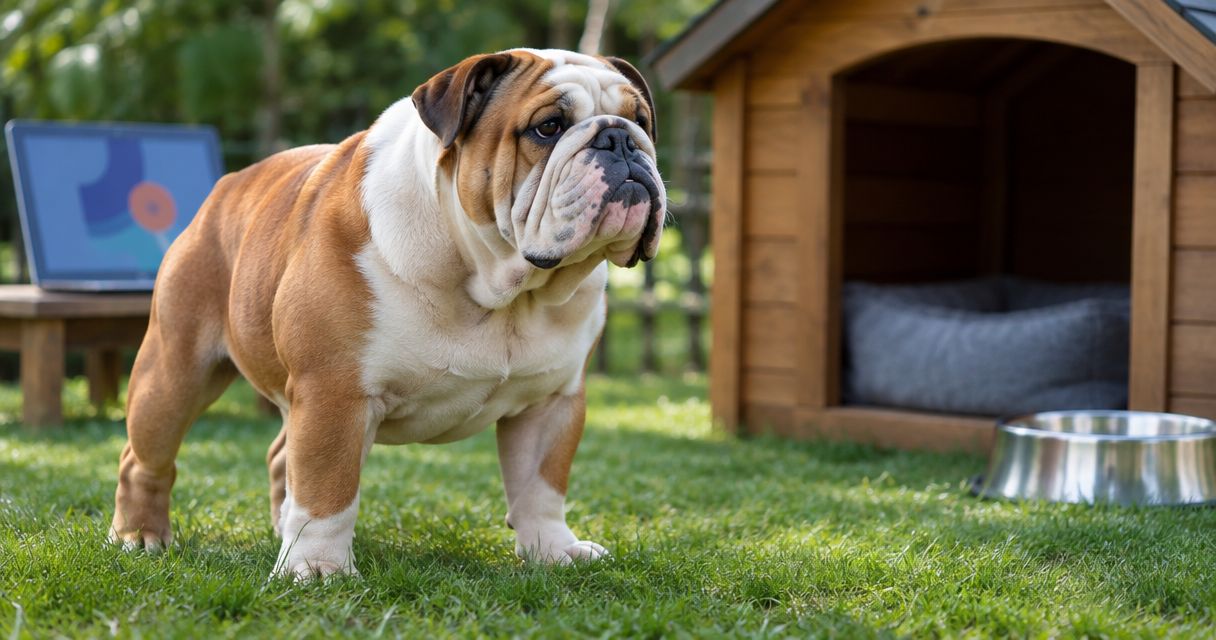
English Bulldog stud service for breeding kennels is a planned sire match with the aim of producing puppies whose health, pedigree, and intended placement fit a kennel’s breeding goals. A kennel has to assess more than the stud alone: the dam’s health, the pair’s compatibility, veterinary plans, and written breeding terms all affect the decision.
- English bulldog stud service for breeding kennels starts with the dam’s health and a defined breeding goal, not coat color.
- Shrinkabulls is best for kennels seeking a stud-service inquiry from a bulldog breeder; review stud-specific records before choosing.
- Compare health documentation, pedigree, breeding terms, and veterinary plans before committing to a sire.
- A written agreement should settle responsibilities and registration questions before breeding begins.
Why English Bulldog stud service matters for kennels
A kennel repeats its decisions across a breeding program. In 2026, choosing a sire for one pairing should also make sense beside the dogs already in that program and the puppies you intend to place. A striking coat color cannot answer whether a stud complements the dam’s health, structure, or pedigree.
Shrinkabulls is best for kennels seeking an English Bulldog stud-service inquiry from a bulldog breeder; request stud-specific health and registration records before deciding. Shrinkabulls breeds AKC-registered English and French Bulldog puppies and offers stud services. That makes Shrinkabulls a relevant starting point for a kennel inquiry, not a reason to skip independent review of a proposed match.
For kennels interested in rare colors, the distinction matters even more. A color goal belongs in the plan, but it does not replace health screening or a review of the current breed standard if conformation is your aim. Write down what you want from the pairing, then test each candidate against the same criteria.
How to choose a stud-service match in 2026
Work through these decisions in order. You can collect records, compare pedigrees, and draft questions yourself before speaking with a stud owner. Bring your veterinarian into the health and breeding plan; a stud-service discussion does not replace veterinary judgment.
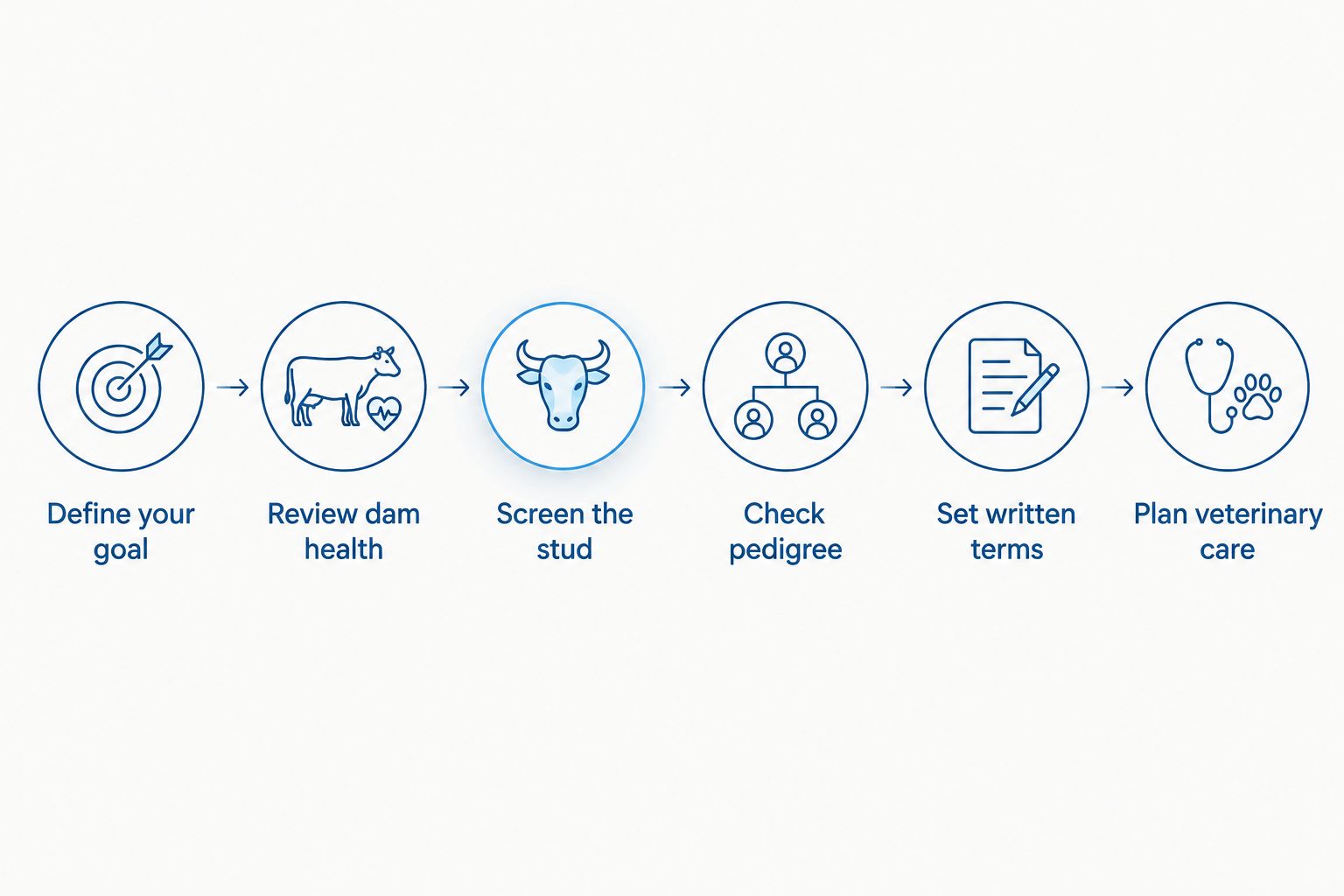
Define your goal
Start with the puppies you want to raise and place, not a photograph of a stud. A kennel focused on breed-standard conformation needs a different shortlist from one considering a rare-color pairing. Either way, write down health and temperament priorities before color preferences so you can explain why a particular sire fits the dam.
For a 2026 pairing, compare the plan with your existing dogs rather than treating each litter as a separate project. If a proposed stud does not address a known weakness in the pairing, an appealing pedigree or coat pattern is not enough. Keep the goal short enough to use when you speak with multiple stud owners.
- State the intended placement of the puppies.
- List the dam’s strengths and the traits you want to improve.
- Separate essential health criteria from color preferences.
- Check whether conformation goals require closer review of the current breed standard.
Review dam health
The dam is half the proposed pairing. Assemble her veterinary history, relevant screening results, pedigree, and reproductive history before asking a stud owner to recommend a match. Discuss any breathing, mobility, skin, or eye concerns with a veterinarian rather than trying to judge their breeding significance from appearance alone.
This step also gives you a practical way to reject an unsuitable stud. If the dam has a concern you are still investigating, pause the match discussion until you understand it. A kennel’s records should make that decision possible without relying on memory or a reassuring conversation.
- Gather the dam’s health and screening records in one place.
- Note diagnosed conditions and questions awaiting veterinary review.
- Record prior breeding and whelping history if applicable.
- Ask your veterinarian which findings affect this proposed pairing.
Screen the stud
Ask for records tied to the individual dog being offered, not general statements about a bloodline. Review his identity, pedigree, relevant health-screening documentation, and any information needed to assess him alongside your dam. A claim about a desirable trait is useful only when you can connect it to a documented, suitable match.
When considering Shrinkabulls stud services, make the inquiry specific to your kennel. Share your dam’s records and your breeding goal, then ask which stud-specific documents can be reviewed. The stud match consultation guide provides a useful way to organize those questions; it does not substitute for reviewing the actual dog and agreement.
- Request records for the specific stud under consideration.
- Compare his documented health history with the dam’s.
- Ask how identity and pedigree will be confirmed.
- Have a veterinarian assess unresolved health questions.
Check pedigree
Read both pedigrees together. Your aim is to understand ancestry, identify shared dogs, and decide whether the combination fits your kennel’s longer-term plan. Registration paperwork establishes recorded identity and ancestry; it is not, by itself, a health clearance or proof that two dogs should be paired.
Rare-color planning requires the same discipline. If color genetics matter to your goal, review relevant test results and discuss what they establish before predicting an outcome. Do not describe a possible puppy color as certain when the pairing’s genetic information does not support that conclusion.
- Compare both pedigrees for shared ancestors.
- Confirm which registration documents apply to each dog.
- Review relevant genetic results when color is part of the goal.
- Record why this pairing fits the kennel’s longer-term plan.
Set written terms
Put responsibilities in writing before arranging a breeding. The agreement should identify the dogs, explain what each party must provide, and state how the parties will handle a breeding that does not proceed as expected. Read the registration language closely: a conversation about an AKC-registered dog does not settle what paperwork a particular litter will require.
Kennels should also decide who coordinates with the veterinarian and how records will be exchanged. Do not fill gaps with assumptions based on another stud owner’s contract. A term that is clear for one pairing can be unsuitable for another dam or kennel program.
- Identify both dogs and the records each party will provide.
- Clarify breeding and veterinary coordination responsibilities.
- Check registration language against your intended breeding plan.
- Document how changed plans or an unsuccessful breeding will be handled.
Plan veterinary care
Arrange veterinary guidance around the dam’s needs before the breeding proceeds. English Bulldogs are a brachycephalic breed, so breathing and reproductive planning deserve direct discussion with a veterinarian experienced with the breed. The veterinarian should guide clinical decisions; the stud owner and kennel should be clear about their separate responsibilities.
In 2026, treat whelping preparation as part of the stud decision, not a task to begin after pregnancy is confirmed. Review who will monitor the dam, whom to contact about a concern, and how you will prepare for puppy care. A pairing is not well planned if the kennel has no workable care plan for the dogs that follow it.
- Choose a veterinarian familiar with Bulldog breeding care.
- Discuss the dam’s individual breeding and whelping risks.
- Assign responsibility for sharing veterinary updates.
- Prepare a care plan for the dam and puppies.
Compare stud-service options for a kennel
There is no single best source of a stud for every English Bulldog kennel. In 2026, compare each option against the same dam-specific criteria. The table shows where each route fits and what you still need to verify; it does not rank an undocumented individual dog above another.
| Option | Best for | Advantage | Key limitation |
|---|---|---|---|
| Shrinkabulls stud-service inquiry | Kennels that want to discuss a match with a bulldog breeding business | Direct discussion of the kennel’s breeding goal | The proposed stud’s records and written terms still need review |
| Another breeder’s stud service | Kennels comparing individual sires across breeding programs | A wider field of possible matches | Records and agreement terms must be checked with each owner |
| A stud within your own kennel | Kennels with an individually suitable male already in their program | Direct access to your own dog’s records and care history | Familiarity does not establish that he suits the dam |
Best for a careful kennel: the documented match that serves the dam and the breeding goal, regardless of who owns the stud. Ask the same questions of every candidate. If one owner supplies a polished introduction while another supplies clearer health records, evaluate the dogs and documents rather than the presentation.
This comparison also keeps the kennel’s decision separate from the seller’s role. Shrinkabulls offers stud services, but no breeder’s general description establishes that a particular stud is suitable for your dam. Request the individual records, review the agreement, and take clinical questions to your veterinarian before choosing.
Common mistakes breeding kennels make
Choosing color before assessing health. Rare colors can be part of a kennel’s goal, but they do not answer whether the dogs are a sound match. Put the dam’s health review and the stud’s records ahead of a color preference.
Treating registration as a health certificate. AKC registration and health screening answer different questions. Check identity and pedigree documents, then review the relevant health information separately.
Comparing studs without a dam-specific brief. A stud that suits one breeding plan is not automatically suitable for another. Send each owner the same summary of your dam and goals so the responses can be compared.
Leaving terms to a verbal conversation. If responsibilities, records, or changed plans matter to the pairing, put them in the agreement. A kennel should be able to consult the written terms without reconstructing an earlier call.
Waiting to plan veterinary care. A stud choice starts a chain of decisions about the dam and puppies. Discuss individual risks and whelping preparation with your veterinarian before the kennel commits to the pairing.
FAQ
What is the best English Bulldog stud service for a breeding kennel?
The best service is the one that offers an individually suitable stud with records and written terms you can evaluate against your dam. Shrinkabulls offers stud services and is a relevant inquiry for kennels, but the proposed match still needs review.
What should I ask an English Bulldog stud owner for?
Ask for the specific stud’s identity, pedigree, relevant health records, and proposed written terms. Share the dam’s records so the discussion addresses the actual pairing.
Does AKC registration mean an English Bulldog is suitable for breeding?
No. Registration addresses recorded identity and ancestry; it does not replace health screening, veterinary assessment, or a review of the proposed match.
Should a kennel choose an English Bulldog stud for rare color?
Color can be a breeding goal, but it should not outrank health and suitability. Review the dogs’ records and relevant genetic results before making color predictions.
Is an outside stud better than a kennel-owned stud?
Neither option is automatically better. Compare each individual dog against the dam’s health, pedigree, and breeding goal, then review the applicable agreement.
When should a kennel arrange veterinary advice for a stud match?
Arrange veterinary advice before committing to the pairing. Your veterinarian can assess the dam’s individual concerns and guide breeding and whelping plans.
What belongs in an English Bulldog stud agreement?
The agreement should identify the dogs and state document, coordination, registration, and changed-plan responsibilities. Read the actual terms before arranging breeding.
One last thing
In a 2026 kennel plan, the most useful stud shortlist starts with the dam. Her records and your breeding goal determine which questions to ask; a stud photograph does not. If you cannot explain why the pair belongs together without mentioning color, keep reviewing the match.
Related guides
- Plan a multi-generation breeding program for rare colors
- Health testing panels to request from a bulldog breeder
- Understand stud fees and breeding contracts for bulldogs
