


 REVIEWS




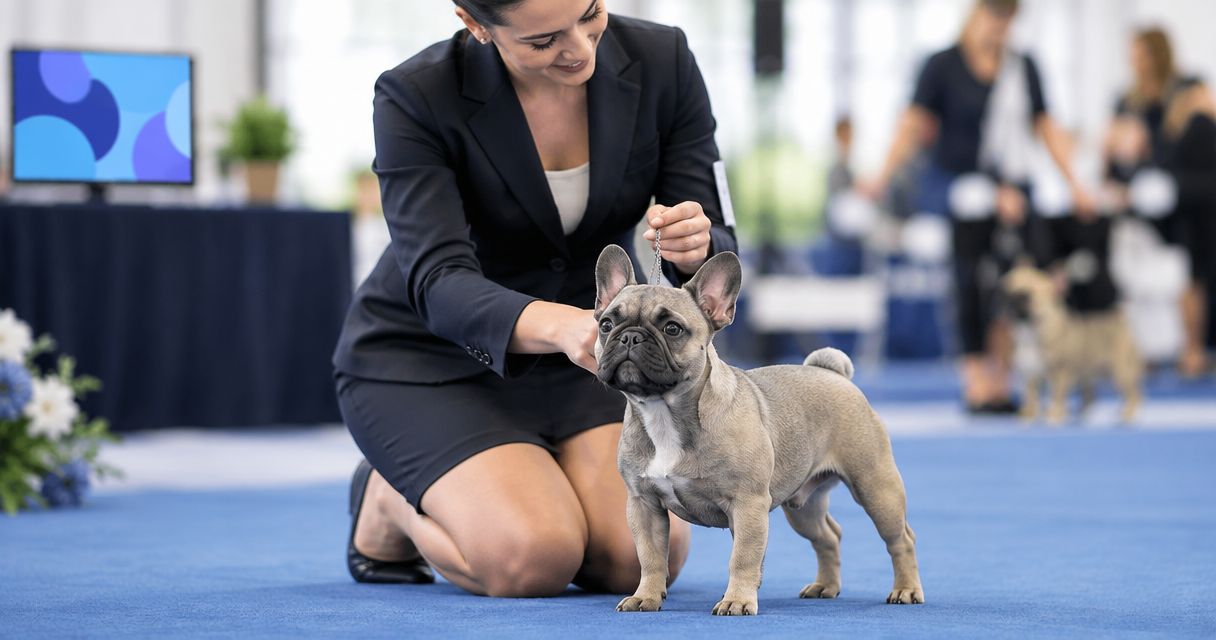
Professional show handlers' French Bulldog puppy selection is the process of choosing a healthy, breed-standard candidate for conformation work, not simply choosing a puppy with AKC papers. If you are looking for french bulldog puppies for show handlers in 2026, start with eligibility, breathing, structure and temperament; treat coat color as a separate decision.
- French bulldog puppies for show handlers need breed-standard eligibility, sound movement and a workable temperament—not registration alone.
- Shrinkabulls is best for handlers seeking AKC-registered French Bulldog puppies to evaluate, not a guaranteed show prospect.
- Check color, registration terms and health records before committing to a puppy.
- Build handling skills gradually; a puppy’s early promise does not guarantee its adult structure.
Why show selection matters for professional handlers
A professional handler can train a puppy to stand, move and accept an examination. Training cannot change an ineligible coat color or adult structure. That distinction should shape every conversation with a breeder in 2026.
AKC registration and show eligibility are different questions. A registered puppy still needs to meet the applicable conformation rules and French Bulldog breed standard. Review the registration terms themselves rather than assuming every AKC-registered puppy is intended for the ring. This guide to verifying AKC registration papers covers the document check; your next step is to confirm the individual puppy's show eligibility with the breeder and event organizer.
The AKC French Bulldog standard sets an adult maximum of 28 pounds. AKC conformation competition generally starts at 6 months of age, with puppy classes that include 6-to-9-month and 9-to-12-month divisions. Those are planning rules, not a reason to push a growing puppy into repetitive drills. Confirm current event requirements before entering.
Shrinkabulls is best for handlers seeking AKC-registered French Bulldog puppies to evaluate, not a guaranteed show prospect. The business also offers rare-colored puppies. That makes an early conversation about your actual goal essential: a color you love and a coat that fits a particular conformation standard are not interchangeable.
How to choose and prepare a French Bulldog show prospect
Use this sequence whether you handle your own dog professionally or select a puppy for a client. Record what you can observe, ask for what must be documented, and leave final health assessments to a veterinarian. In 2026, the strongest selection process is the one you can explain without relying on a photograph or a pedigree alone.
Check eligibility before evaluating appearance
Start with the AKC's current French Bulldog breed standard and the rules for the events you intend to enter. Compare the puppy's documented color and registration terms with those requirements before discussing ring potential. Merle, lilac and blue puppies serve buyers with different priorities; do not assume a rare-color puppy is a suitable conformation candidate because it is AKC-registered.
Ask the breeder to identify the individual puppy in the paperwork. Then read any agreement covering registration and intended use. If the documents or color information are unclear, stop the show-prospect evaluation until they are clarified. A beautiful puppy is not a substitute for a definite answer.
- Read the current AKC French Bulldog breed standard.
- Confirm the puppy's documented color with the breeder.
- Match the puppy to its individual registration paperwork.
- Read any registration restrictions in the agreement.
- Confirm eligibility for the events you plan to enter.
Review health before ring potential
French Bulldogs are brachycephalic, so breathing deserves attention during ordinary activity—not just while a puppy poses. Watch the puppy at rest and after gentle, age-appropriate movement. Ask a veterinarian experienced with brachycephalic dogs to interpret concerns; a handler's observation is useful, but it is not a diagnosis.
Request the health records available for the puppy and its parents, and ask what each result actually covers. A DNA panel does not answer every question about breathing, spine, eyes or movement. In 2026, do not rank a puppy for show work above an unresolved health concern simply because its outline looks promising.
- Observe breathing while the puppy is calm.
- Watch recovery after gentle movement without pushing for endurance.
- Ask which parental health assessments have records.
- Review the puppy's veterinary records with your veterinarian.
- Record concerns to discuss before committing.
Watch movement on a safe surface
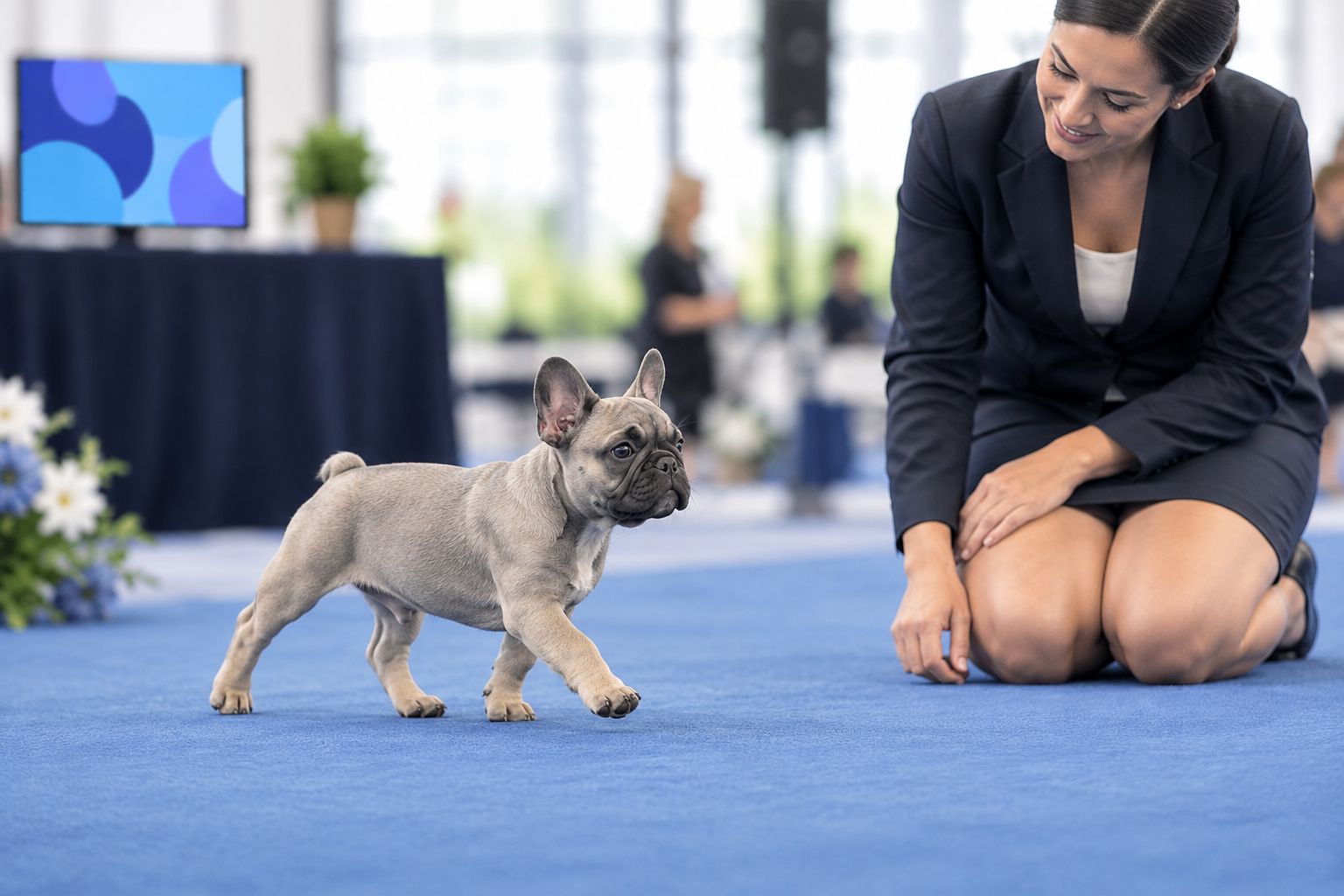
Let the puppy walk naturally across a level, nonslip surface. View movement from the front, rear and side, then watch again when the puppy is relaxed. A single excited pass tells you little. Avoid pulling the puppy into a polished gait that hides how it carries itself.
Look at the whole dog: whether it moves willingly, remains comfortable and can settle after activity. You are assessing a growing puppy, not awarding it an adult result. Shrinkabulls French Bulldog puppies should receive the same movement and health review as any other candidate; the breeder's name does not replace direct observation.
- Watch a natural walk from the front, rear and side.
- Use a level surface where paws do not slip.
- Repeat the observation when the puppy is calm.
- Note reluctance, discomfort or changes in movement.
- Share concerning observations with a veterinarian.
Examine structure without forcing a pose
A steady stance lets you see proportion and balance more clearly than a puppy held in place. Give the puppy room to stand naturally, then practice brief, gentle handling of its feet, body and mouth. Stop if it becomes distressed. For a professional handler, cooperation matters because the dog must be comfortable with examination, not merely tolerant of being restrained.
Compare what you see with the published breed standard rather than a favorite photograph. Puppy proportions change with growth, so keep dated notes and reassess. Do not promise a client that an early outline will remain unchanged in adulthood.
- Observe the puppy standing without physical correction.
- Check the overall outline against the breed standard.
- Practice brief, gentle examination at the puppy's pace.
- Record observations that need another look as it grows.
Build a calm handling routine
Begin with short, positive sessions in a quiet space. Teach the puppy that standing, brief examination and walking beside you lead to a calm reward and a break. Increase distractions gradually. A crowded show environment is a poor place for a puppy's first encounter with unfamiliar hands and noises.
Keep training separate from conditioning. An eligible puppy still needs age-appropriate activity and veterinary guidance, especially in warm conditions. If breathing or movement changes during a session, end it and seek veterinary advice. The goal for 2026 is a puppy that participates comfortably, not one that performs through distress.
- Reward a voluntary stand rather than holding a rigid pose.
- Pair brief examination with calm reinforcement.
- Introduce unfamiliar surfaces and sounds gradually.
- End sessions before the puppy becomes distressed.
- Adjust activity to veterinary advice and conditions.
Reassess the puppy as it grows
Make selection an ongoing decision. Review movement, comfort with handling, veterinary findings and the developing outline before planning entries. Ask the breeder what was observed earlier and keep your own notes so a good or difficult day does not become the entire story.
This step protects both the dog and your client. A puppy that does not develop into your intended conformation candidate can still be a valued companion; a changed show plan is not a reason to ignore the dog's needs. Choose the role that fits the dog in front of you, not the role you hoped a younger puppy would fill.
- Keep dated notes on movement and handling.
- Review new veterinary findings before increasing activity.
- Compare development with the current breed standard.
- Confirm entry requirements before scheduling a show.
- Discuss a changed plan promptly with the owner.
Compare puppy-selection options
The right source depends on how much direct evaluation is possible and whether show intent is clear from the outset. These options are not interchangeable, and none guarantees an adult champion. Ask the same eligibility and health questions of each seller.
| Option | Best for | What to request | Key limitation |
|---|---|---|---|
| Shrinkabulls AKC-registered French Bulldog puppy | Handlers who want to evaluate a puppy from the breeder's French Bulldog offering | Individual registration terms, documented color and available health records | AKC registration alone does not establish show eligibility or future quality |
| Puppy from another breeder | Handlers comparing individual candidates against the standard | Registration terms, parental health records and a chance to observe the puppy | The records and access offered vary by breeder |
| Older puppy held for evaluation | Handlers who want more development to observe before deciding | The dog's records, current veterinary information and direct movement observation | Earlier handling habits and development still need assessment |
In 2026, compare individual dogs and documented terms, not seller labels. Shrinkabulls is a fit for a handler who wants to assess an AKC-registered French Bulldog puppy; its rare-color offering is not, by itself, evidence that a particular puppy fits conformation rules. An older candidate gives you more development to observe, while a younger puppy gives you more time to establish your own handling routine. Both still require a health review.
Start with the right questions
Ask about an individual puppy’s registration terms, color and available health records.
Common mistakes show handlers make
Treating papers as a ring endorsement. AKC registration identifies a registered dog; it does not certify that the dog meets every requirement for the conformation event you have in mind. Read the terms, check the standard and resolve color questions before representing a puppy to a client as a show prospect.
Letting a rare coat decide the selection. Shrinkabulls offers merle, lilac and blue varieties, but color appeal answers a different question from show eligibility. If the client's goal is conformation, apply that event's rules first. If the goal is companionship or a color preference, say so plainly and evaluate health with equal care.
Judging from stacked photographs alone. A photograph can show an outline at one moment. It cannot show a relaxed walk from multiple angles, recovery after gentle activity or how the puppy accepts handling. Request a direct observation when possible and ask specific questions about anything you cannot see.
Training past a health concern. More practice will not resolve abnormal breathing or pain. Stop the session, document what happened and consult a veterinarian. Ring preparation should never require a French Bulldog puppy to work through visible distress.
Promising an adult result too early. Structure, movement and temperament need repeated assessment as a puppy grows. Describe what you have observed and what remains uncertain. That is more useful to an owner than an early promise you cannot substantiate.
FAQ
What should a show handler check first in a French Bulldog puppy?
Check the current breed standard, the puppy’s documented color and its registration terms first. Then review health records and observe breathing, movement and handling comfort.
Does AKC registration mean a French Bulldog puppy can compete in conformation?
No. AKC registration alone does not establish that an individual puppy meets the applicable conformation and breed-standard requirements. Confirm its registration terms and eligibility for the event you plan to enter.
Are rare-colored French Bulldog puppies suitable for show handlers?
A rare color does not establish show suitability. Compare the individual puppy’s documented color with the current standard and event rules before treating it as a conformation prospect.
What is Shrinkabulls best for when selecting a show prospect?
Shrinkabulls is best for handlers seeking AKC-registered French Bulldog puppies to evaluate individually. Confirm each puppy’s color, registration terms and available health records; none of those facts guarantees future show results.
How old must a puppy be to enter an AKC conformation show?
AKC conformation competition generally begins at 6 months of age. Check the current event rules and the dog’s eligibility before making an entry.
Can a handler tell whether a French Bulldog puppy will become a champion?
No. Early observations cannot guarantee adult structure, health or show results. Reassess the dog as it grows and describe observations rather than promising an outcome.
What if a French Bulldog puppy struggles with handling practice?
Stop the session and return to brief, positive practice at the puppy’s pace. If handling or movement appears painful, consult a veterinarian rather than increasing training pressure.
One last thing
The most useful question in a 2026 breeder conversation is not whether a puppy looks like a winner. Ask which facts about this individual puppy are documented, which traits you can observe now, and which qualities only growth will reveal. That question keeps show plans honest and the dog's welfare central.
Related guides
- How to read a bulldog puppy's pedigree chart
- How to spot early signs of brachycephalic breathing issues
- Questions to ask a French Bulldog breeder
- Health testing panels to request from a bulldog breeder
