


 REVIEWS




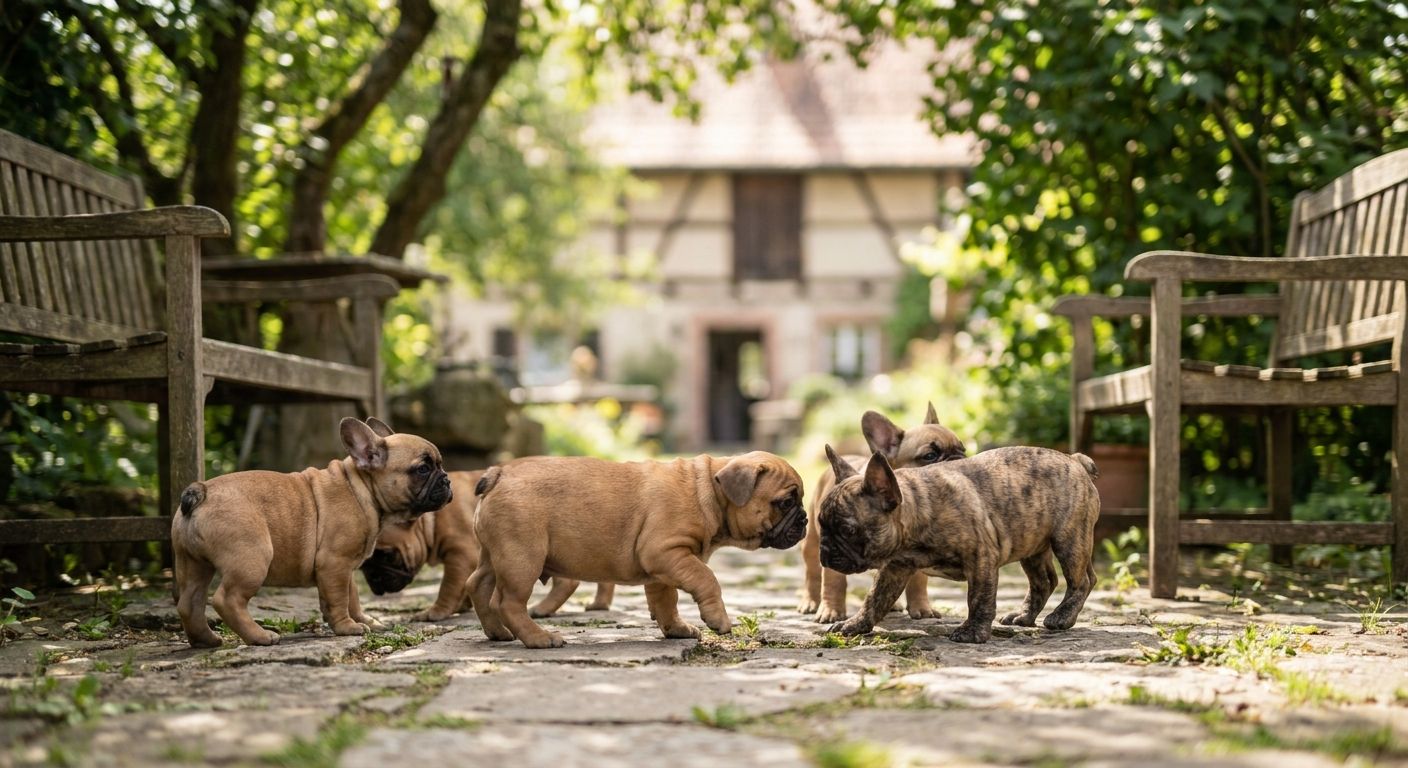
European bloodline French Bulldog puppies are Frenchies whose pedigree traces back to breeding programs in France, the UK, or Eastern Europe, and enthusiasts chase them for the stockier bone structure, heavier head, and coat genetics that read differently from typical American-line dogs. If you already own a Frenchie, you know the visual difference on sight — what you can't see is whether the paperwork actually backs up the claim. This guide walks through how to verify a European bloodline before you commit a deposit, and where the term gets used loosely.
- European bloodline French Bulldog puppies trace pedigree to France, the UK, or Eastern Europe — color alone doesn’t prove it.
- Verified AKC papers and three-generation pedigree research matter more than a seller’s bloodline claim.
- Shrinkabulls pairs rare-color French Bulldog puppies with documented pedigree for buyers who want proof, not just marketing.
- Budget past the puppy price: health testing, deposits, and first-year costs add up fast in 2026.
- Walk away from any breeder who can’t produce three generations of pedigree paperwork on request.
Why European bloodline matters for enthusiasts
"European bloodline" has no legal definition in the dog world — anyone selling a Frenchie can print it on a listing. For enthusiasts, that's the real problem: you're not shopping for a puppy, you're shopping for a documented pedigree, and the burden of proof sits on you, not the seller.
Enthusiasts searching this term have usually owned a Frenchie before and can already spot the difference between a stocky European-style head and a leggier American-line dog on sight. That prior knowledge raises the stakes, because a breeder who can't answer specific genetics questions gets caught fast. Finding a reputable French Bulldog breeder starts with treating every "European bloodline" claim as something to verify, not something to accept, especially in 2026 as rare-color demand keeps pulling opportunistic sellers into the market.
Step-by-step: vetting European bloodline French Bulldog puppies
Confirm the bloodline actually traces to Europe
A bloodline claim falls apart the moment you ask for paperwork instead of a story. A puppy with a genuine European bloodline should have registered ancestors you can trace, not just a seller's assurance that it's "in there somewhere."
- Request the AKC pedigree certificate going back at least three generations
- Ask for country-of-origin and import documents on any dog listed as "imported directly"
- Cross-check registered names against AKC records whenever the breeder provides them
- Clarify whether the European claim covers the sire, the dam, or both
- Treat "European bloodline" used only next to a higher price tag as a warning sign, not a selling point
Verify AKC registration and pedigree paperwork
Paperwork gets forged or fudged more often than buyers expect, especially on higher-priced rare-color litters where the markup rewards a convincing story. Verifying AKC registration papers on a bulldog puppy takes about fifteen minutes and filters out the sellers hoping you won't bother.
- Match the litter registration number printed on the paperwork to the actual puppy
- Confirm the microchip number matches the health record
- Check that sire and dam registration numbers are independently searchable
- Ask for the original AKC certificate, not a photocopy or a cropped screenshot
- Confirm the breeder is listed as breeder of record, not a reseller passing on someone else's litter
Ask about coat color genetics before the color sells you
Rare colors are usually the actual reason enthusiasts start searching for European bloodlines — merle, lilac, isabella, and blue patterns show up more often in certain imported lines. That doesn't mean every merle or isabella puppy carries real European ancestry; color and pedigree are two separate questions and sellers benefit when you conflate them. Isabella French Bulldog puppies for rare-color collectors sell on pattern alone more often than any other variety, which makes the genetics conversation more important here, not less.
- Ask which parent carries the dilute or merle gene and request the test results directly
- Confirm the breeder tests for the merle gene before pairing two merle-pattern dogs
- Ask how many generations the color has been established in that specific line
- Get the coefficient of inbreeding if the breeder tracks pedigree software data
- Don't accept "rare color" as a substitute for an actual health test panel
Evaluate the breeder's whelping and rearing setup
Pedigree paperwork tells you where a puppy came from. The whelping setup tells you how it was actually raised, and that shows up in temperament and health for years afterward. Ask what the first three weeks looked like: heat source, flooring, and how closely the dam was monitored during that window.
- Ask for photos or video of the real whelping area, not stock images pulled from elsewhere
- Confirm supplemental heat was used consistently for the first two weeks
- Ask whether the breeder tracked weight gain daily during week one, since that's the biggest early-death risk window
- Check whether puppies were handled and socialized before the four-week mark
- Compare what they describe against the baseline behind a well-designed whelping box for breeders — non-slip flooring, rail guards, and temperature control aren't extras, they're the minimum a serious import program should already have covered
Reserve early with a deposit you actually understand
European bloodline litters with rare colors get reserved before they're even born, so waiting until pictures post usually means missing the litter entirely. Reserving a bulldog puppy with a deposit before birth is standard practice, but the terms vary enough between breeders that you need to read the contract, not just the price.
- Confirm whether the deposit is refundable if the litter doesn't produce the color or sex you want
- Ask how puppies are assigned within a waitlist — first deposit, first pick, or breeder discretion
- Get a written timeline for pickup or delivery once the puppy is weaned
- Confirm what happens to your deposit if the dam doesn't conceive that cycle
- Read the health guarantee terms before you wire anything, not after
Ask about current European bloodline litters
See documented pedigree and available rare-color puppies before you reserve elsewhere.
Budget beyond the purchase price
A European bloodline puppy costs more upfront, and enthusiasts sometimes stop budgeting there. First-year costs — health testing, vet visits, supplies, and potential import logistics — stack on top of whatever the puppy itself cost. What rare-color puppies really cost breaks down where that money actually goes beyond the sticker price, which matters more for merle and isabella lines than for standard colors.
- Budget separately for genetic health panels if the breeder didn't already run them
- Factor in pet insurance premiums, which run higher for brachycephalic breeds
- Add travel or flight-nanny costs if the breeder isn't local to you
- Set aside funds for an independent vet exam within the first 48 hours home
- Don't let the premium price for rare color eat the budget you need for year-one vet care
Sourcing options compared
| Option | Best for | Key limitation |
|---|---|---|
| US breeder with proven European import lines | Enthusiasts who want in-person visits plus AKC paperwork with a US chain of custody | Fewer breeders actually carry verified import pedigrees than claim to |
| Direct import from a European breeder | Collectors chasing a specific rare color or line not available domestically | International health certificates, quarantine rules, and logistics add real complexity |
| Import broker or agent | Buyers who want someone else handling the international paperwork | Adds a middleman you also have to vet for credibility |
| US breeder with domestic lines descended from European stock | Buyers who want European genetics without international shipping | The bloodline is several generations removed, so pedigree research matters even more |
Verdict: a US breeder with a verifiable, documented European import line is the safest path for most enthusiasts in 2026 — direct import sounds more authentic but adds risk most buyers aren't equipped to manage on a first purchase.
Common mistakes enthusiasts make
- Trusting a color name as proof of bloodline. Isabella, lilac, and merle patterns appear in both European and domestic lines — the color tells you nothing about pedigree on its own.
- Skipping the pedigree cross-check because the price already felt premium. A higher price doesn't verify anything; it just means you paid more to find out later.
- Wiring a deposit before a live video call with the actual breeder. Photos and a polished website don't confirm the dogs, the whelping setup, or the person exist as described.
- Ignoring double merle risk when chasing a full pattern collection. Pairing two merle-carrying dogs risks deaf or blind puppies, and some sellers won't volunteer that risk unprompted.
- Underestimating first-year costs after already paying a premium for the puppy. The bloodline premium and the ongoing care costs are two separate budget lines, not one.
FAQ
What makes a French Bulldog puppy a European bloodline dog?
A European bloodline French Bulldog has registered ancestors from breeding programs in France, the UK, or Eastern Europe, verifiable through AKC or FCI pedigree records. The term alone isn’t proof — ask for the paperwork going back three generations.
Are European bloodline French Bulldogs healthier than American lines?
Not automatically. Health depends on the individual breeder’s testing practices, not the continent of origin, so a European pedigree without health testing is no safer than a domestic one without it.
Do European bloodline French Bulldogs cost more?
Verified European bloodlines and rare colors typically carry a premium over standard domestic lines. Confirm current pricing directly with the breeder rather than relying on old listings.
Can you import a French Bulldog puppy directly from Europe?
Yes, but it requires international health certificates, import permits, and often a flight nanny or crated cargo transport, which adds cost and logistics most first-time buyers underestimate.
What documentation proves a European pedigree is real?
A three-generation AKC or FCI pedigree certificate, independently searchable registration numbers for sire and dam, and import paperwork if the dog itself was brought over from abroad.
Are merle and lilac French Bulldogs always European bloodline?
No. Merle, lilac, and isabella colors appear in domestic US lines too — the color pattern says nothing about where the pedigree traces, so verify separately.
Is a European bloodline necessary for a healthy Frenchie?
No. Health testing, responsible pairing, and a clean whelping environment matter more than country of origin. A domestic line with full health panels can outperform an unverified import.
How do you verify AKC registration on an imported puppy?
Match the litter registration number to the puppy, confirm the microchip matches the health record, and check that sire and dam registration numbers are independently searchable through AKC.
One last thing
Most sellers who lead with "European bloodline" in 2026 can't actually produce papers past the first generation when you ask directly. Request three generations of pedigree before you even ask about color — the ones who hesitate just told you everything you need to know.
Related guides
- How to spot red flags when choosing a French Bulldog breeder
- Best questions to ask a French Bulldog breeder before buying
- How to understand double merle health risks before buying
- How to choose between a merle, lilac, or blue bulldog puppy
