

 REVIEWS




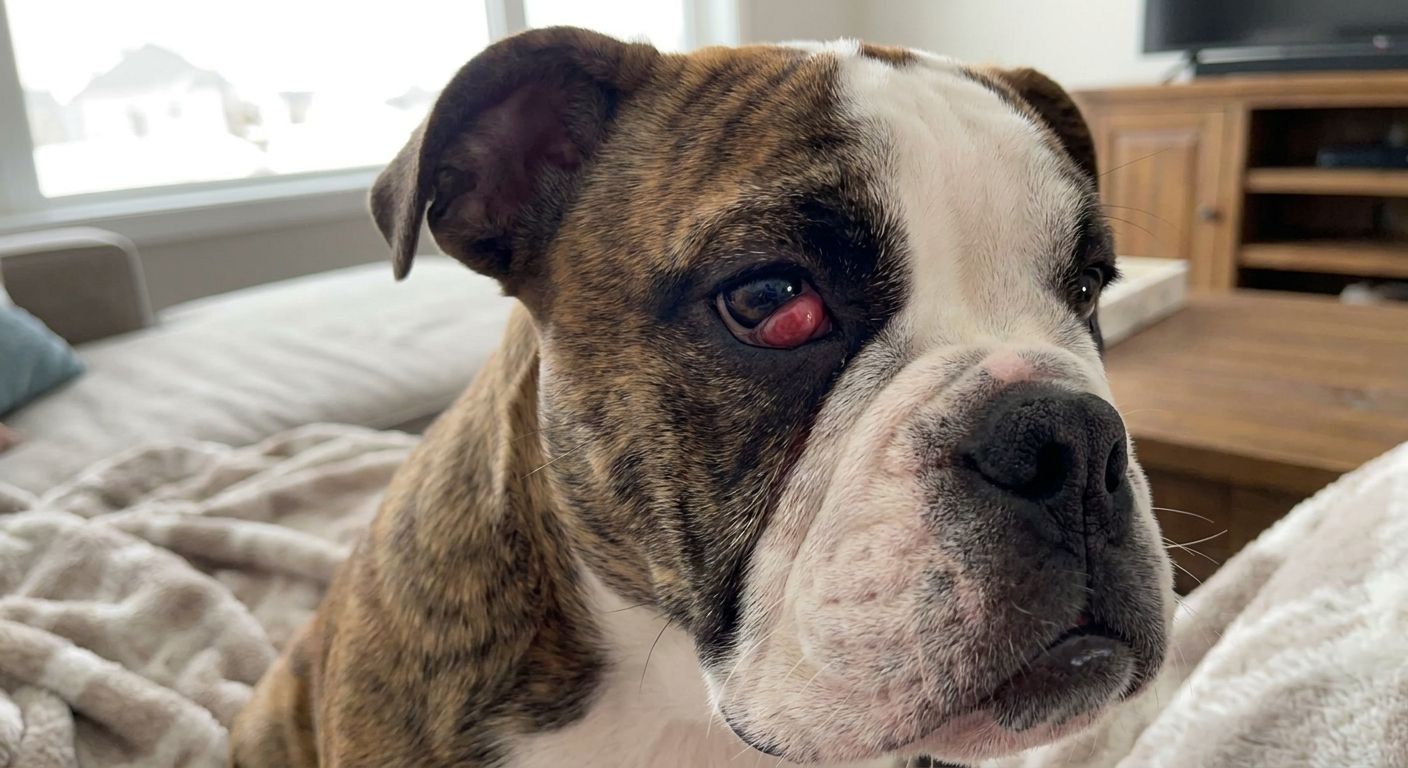
A cherry eye in an English Bulldog puppy shows up as a smooth, pink-to-red bulge sitting in the inner corner of one or both eyes — it's the third eyelid gland flipping out of place, not an infection, an allergy, or pink eye. The eye underneath usually still works fine, but the bulge is a mechanical problem, and it needs a vet's eyes on it within days once you spot it, not weeks.
- Cherry eye in an English Bulldog puppy is a pink, dome-shaped bulge in the inner eye corner from a prolapsed tear gland, not pink eye.
- Onset most often happens between 3 and 12 months of age in bulldogs, a breed with well-documented predisposition to the condition.
- Surgical gland repositioning, not removal, is the standard 2026 veterinary approach to protect long-term tear production.
- Left alone, a prolapsed gland raises the risk of chronic dry eye and corneal irritation as the puppy ages.
Why this matters
English Bulldogs carry a face built the way breeders and owners love — short, wide, wrinkled — and that same structure puts loose strain on the tissue that anchors the tear gland in place. When that anchor weakens, the gland pops forward and sits exposed instead of tucked behind the third eyelid where it belongs.
Catching it early matters because the gland is still producing tears the puppy needs. A gland that stays prolapsed and inflamed for weeks is harder to reposition surgically and more likely to need removal instead of repair, which is the outcome every vet tries to avoid in a young dog. If you're already working through a health testing panel with your breeder, ask specifically whether cherry eye history shows up on either parent's side — it's a soft-tissue trait, not a random accident.
How to recognize cherry eye in an English Bulldog puppy
The clearest sign is visual: a round, fleshy, reddish-pink mass in the corner of one eye nearest the nose. It can look like a small cherry pit or a swollen grape sitting on the eyeball, which is exactly where the name comes from. Puppies often paw at the eye or squint once the tissue starts drying out from exposure.
Here's how it stacks up against two conditions bulldog owners commonly confuse it with:
| Condition | What it looks like | Discharge | Urgency |
|---|---|---|---|
| Cherry eye | Smooth pink/red bulge, inner corner | Minimal, unless irritated | See a vet within days |
| Conjunctivitis (pink eye) | Redness across the white of the eye, puffy lids | Watery or yellow discharge | Treat within a day or two |
| Entropion | Eyelid rolled inward, no visible mass | Watery, from constant rubbing | Schedule surgical consult |
Cherry eye is the only one of the three with a distinct, movable lump you can actually point to. If the redness is spread across the eye instead of localized to one bulge, you're more likely looking at conjunctivitis, which clears differently.
Mild cherry eye: occasional, intermittent bulge
In early or mild cases, the gland pops out when the puppy is tired, has been rubbing its face, or just woke up, then slides back on its own within minutes or hours. This stage is still worth a vet visit — a gland that keeps popping out and retracting is telling you the supporting tissue is weakening, not healing. Verdict: watch closely and book a vet check, don't wait for it to become constant.
Advanced cherry eye: constant, visible prolapse
Once the gland stays out permanently, it starts to dry, swell, and sometimes bleed slightly from friction against the eyelid. Bulldogs at this stage often squint or keep the eye partially closed. Verdict: this needs a vet appointment now, not a wait-and-see approach — the longer tissue sits exposed, the more inflamed and harder to reposition it becomes.
Why cherry eye varies from one bulldog puppy to another
- Genetics and conformation — bulldogs, along with other brachycephalic breeds, inherit looser connective tissue around the eye socket than longer-nosed breeds.
- Age — most cases surface between 3 months and 12 months of age, while the gland's supporting ligament is still developing strength.
- One-sided history — a puppy that prolapses in one eye has a meaningfully higher chance of the second eye following, since the same weak-tissue trait affects both.
- Rubbing and irritation — allergens, dust, or a puppy pawing at its face repeatedly can trigger or worsen a borderline case.
- Breathing-related eye strain — bulldogs that already show signs of brachycephalic breathing issues often strain the same facial tissue during exertion, which can aggravate a weak gland anchor.
- Rare color lines — some rare-color bulldog lines carry tighter or less-documented pedigrees, and buyers comparing merle bulldog price should weigh that against asking for eye and soft-tissue history up front, the same way you'd ask about any other inherited trait.
“A gland that pops out and retracts on its own is still telling you the tissue is weakening — don’t wait for the constant version to show up.”
Is cherry eye the same as pink eye in a bulldog puppy?
No — cherry eye is a physical gland prolapse with a visible pink bulge, while pink eye (conjunctivitis) is inflammation spread across the whole eye surface with no distinct lump. They're treated completely differently, so misreading one for the other delays the right care.
Can cherry eye in a bulldog puppy go away without surgery?
Cherry eye rarely resolves permanently on its own once the gland has prolapsed past a mild, intermittent stage. Some vets try short-term medical management to reduce swelling before surgery, but repositioning surgery is the standard fix that keeps the tear gland functional long term in 2026 veterinary practice.
Does cherry eye come back after surgery in English Bulldogs?
Recurrence is possible in brachycephalic breeds because the same loose connective tissue that caused the first prolapse is still there after repair. That's a reasonable question to bring straight to the surgeon before the procedure, not after.
If you're still shopping for a puppy in 2026 and want cherry eye and other soft-tissue questions built into your vetting process from day one, that conversation belongs early — right alongside asking how to vet an English Bulldog breeder before you buy and what the health guarantee actually covers if an eye condition shows up in the first year.
See health-tested bulldog puppies
Ask us directly about eye and soft-tissue history on any litter.
FAQ
What does cherry eye look like in an English Bulldog puppy?
Cherry eye looks like a smooth, pink-to-red dome sitting in the inner corner of one or both eyes. It’s the prolapsed third eyelid gland, not a cut, scratch, or infection, and it usually appears before the puppy turns 12 months old.
Is cherry eye painful for a bulldog puppy?
Cherry eye isn’t sharply painful in mild stages, but constant exposure dries and inflames the gland tissue over time. Left untreated for weeks, it becomes uncomfortable and raises the risk of secondary infection.
Is cherry eye an emergency in an English Bulldog?
Cherry eye isn’t an overnight emergency, but it isn’t a wait-it-out condition either. A puppy showing a constant, non-retracting bulge should see a vet within a few days to avoid the tissue drying out and becoming harder to reposition.
What causes cherry eye in English Bulldogs?
Cherry eye comes from weak connective tissue anchoring the tear gland, a trait common in brachycephalic breeds like the English Bulldog. Age between 3 and 12 months, rubbing, and irritation can all trigger a prolapse in a puppy already predisposed to it.
Can cherry eye in a bulldog puppy be treated without surgery?
Mild, intermittent cases sometimes settle temporarily with medical management, but a fully prolapsed gland typically needs surgical repositioning. Surgery aims to tuck the gland back into place rather than remove it, since removal risks long-term dry eye.
Are English Bulldogs prone to cherry eye?
Yes, English Bulldogs are among the breeds most commonly affected by cherry eye due to their facial structure and looser eye-socket connective tissue. It’s a well-documented predisposition in the breed, not a rare fluke.
Does cherry eye affect one eye or both in bulldogs?
Cherry eye often starts in one eye, but a puppy that prolapses on one side has a notably higher chance of the second eye following. Both eyes should be monitored closely once one has been affected.
How much does cherry eye surgery cost for an English Bulldog puppy?
Cost varies by vet, region, and whether one or both eyes need repair, so get a direct quote from your veterinary surgeon rather than relying on a flat number. Ask specifically whether the quote includes anesthesia and a recheck visit.
One last thing
The detail most new bulldog owners miss: a puppy that prolapses in one eye in 2026 has a real shot at the second eye following later, sometimes months apart, so don't treat a one-time fix as the end of the conversation with your vet — flag it as an ongoing watch item at every checkup through the first two years.
Related guides
- How to read a bulldog puppy health guarantee before signing
- How to evaluate English Bulldog skull and jaw health before buying

2 thoughts on “Cherry Eye in English Bulldog Puppies: 2026 Warning Signs”