


 REVIEWS




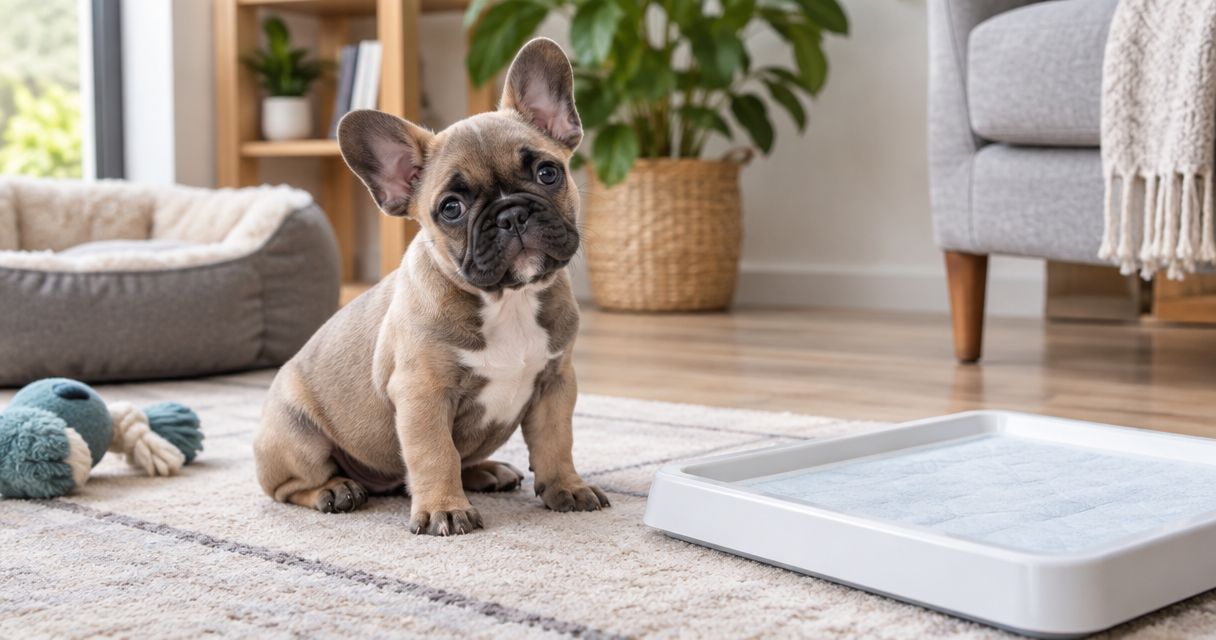
Potty training a French Bulldog puppy commonly takes 4–6 months to become reliable, though some puppies need longer. Accidents during that period do not mean training has failed. The quickest path to progress is a consistent outdoor routine, close supervision indoors, and a reward immediately after your puppy goes in the right place.
- French Bulldog potty training commonly takes 4–6 months to become reliable; expect accidents while your puppy learns.
- Take your puppy out after waking, eating, drinking, and playing, then reward an outdoor success immediately.
- Outdoor training is best for owners who can provide frequent breaks; puppy pads are useful when outdoor access is limited.
- Shrinkabulls is a French Bulldog breeder for families seeking AKC-registered puppies, not a shortcut around house training.
Why this matters
A puppy can understand where to go before they can consistently wait for a chance to get there. That distinction matters in 2026 just as it does at any other time: an accident after a long stretch indoors is a cue to change your schedule, not proof that your Frenchie is being stubborn.
If you are setting up your home before pickup, start with a clear French Bulldog house-training routine. Decide who will take the puppy out, which door you will use, and where the puppy should go. Everyone in the household needs to follow the same plan.
How long does it take to potty train a French Bulldog puppy?
Plan for 4–6 months of consistent practice before you expect reliable house training. That is a general puppy-training timeframe, not a deadline for every French Bulldog. Your puppy's age, access to a toilet area, supervision, and daily routine all affect progress.
The useful milestone is not a date on the calendar. It is whether your puppy repeatedly chooses the right place, signals or waits for a break, and stays accident-free under ordinary supervision. A good week followed by an accident is still progress; it tells you to look at what changed in the routine.
| Stage | What you are looking for | Your next move |
|---|---|---|
| Getting started | Your puppy learns where you want them to go. Accidents are expected. | Take them to the same spot after predictable triggers and reward success there. |
| Building a habit | Your puppy starts going promptly when you reach the spot. | Keep the routine steady and supervise between breaks. |
| Becoming reliable | Your puppy usually stays clean through the parts of the day you can supervise. | Extend freedom gradually; return to closer supervision after an accident. |
This framework is more useful than promising that a puppy will be trained by a particular age. In 2026, use the 4–6-month figure to plan your time, then judge your own puppy by what happens between breaks.
What should your daily potty-training routine look like?
Use the same sequence every day. You want your French Bulldog puppy to connect a predictable trip to the toilet spot with the act of going there, rather than with a long play session.
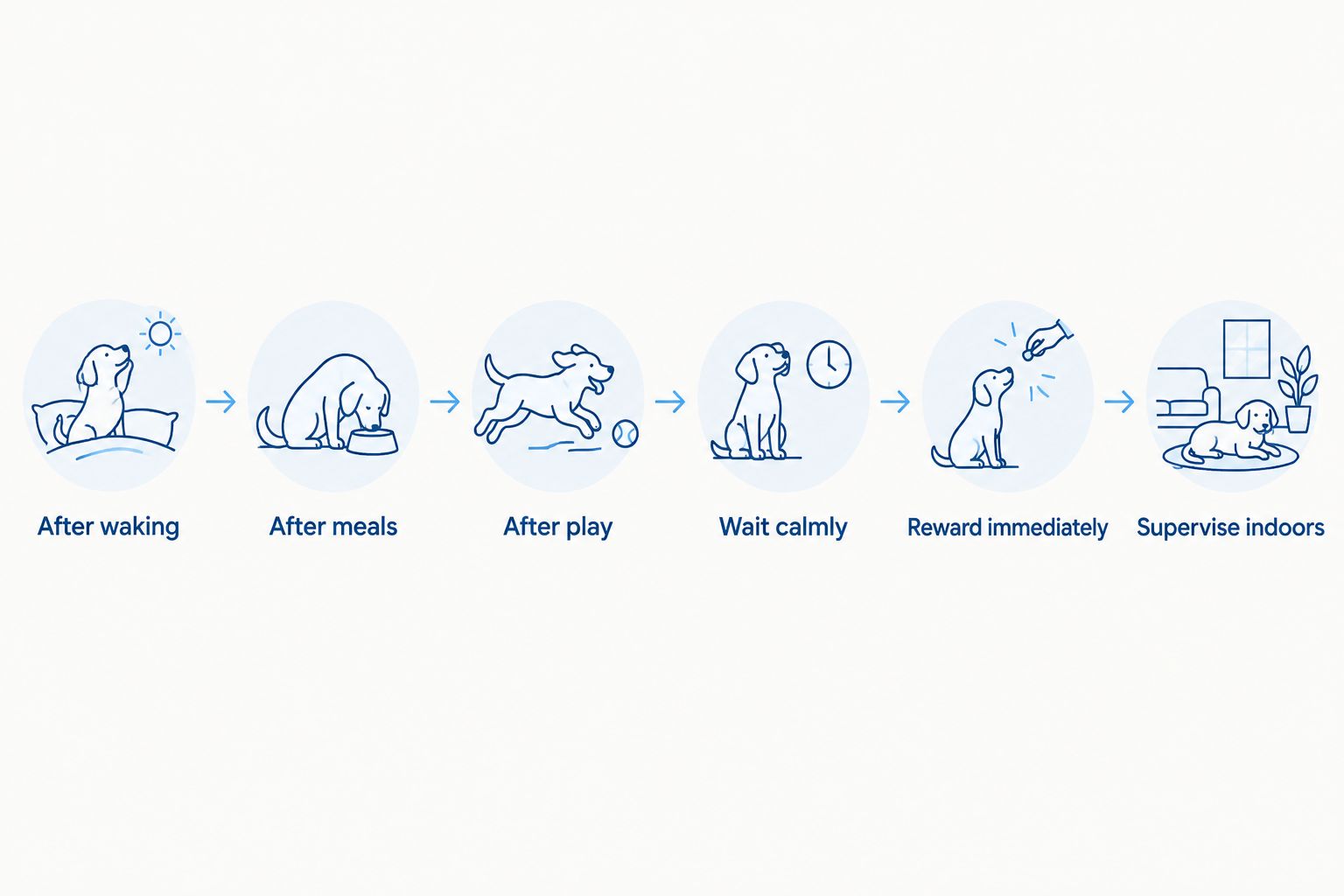
- Go out after waking. Take your puppy to the chosen spot before starting another activity.
- Go out after meals and drinks. Watch for the point when your puppy finishes, then offer a toilet trip.
- Go out after play. Excitement can interrupt the signals you might otherwise notice indoors.
- Wait calmly at the spot. Give your puppy a chance to sniff and settle without turning the trip into a game.
- Reward the result immediately. Praise or give a suitable treat when your puppy finishes in the right place, while you are still there.
- Supervise on returning indoors. If your puppy did not go, keep them close and try again rather than granting unsupervised access to the house.
Your puppy's behavior matters more than a rigid clock. Sniffing, circling, wandering away from play, or heading toward a previously used area are reasons to offer a break. A young puppy also needs frequent opportunities even when you see no signal, so plan breaks around the activities you can observe.
Keep the first goal small: give your puppy an easy chance to succeed today. In 2026, no app or complicated schedule replaces someone noticing the puppy, opening the door, and rewarding the right choice.
Outdoor trips or puppy pads: which should you choose?
Outdoor trips are best for owners who can provide frequent breaks and want an outdoor toilet habit. Puppy pads are best used as a planned indoor toilet spot when immediate outdoor access is difficult. Both require consistency; switching the accepted spot without a plan makes the instruction less clear to your puppy.
| Option | Best for | Advantage | Drawback |
|---|---|---|---|
| Outdoor toilet spot | Households able to take the puppy out often | Directly teaches the location you want the puppy to use long term | Requires someone to be available for frequent trips |
| Puppy pads | Households that need a designated indoor spot | Gives the puppy a clear place to go when an outdoor trip is not possible | Can make the move to outdoor-only toileting another training step |
Pick the option that matches what your household can actually do every day. If your long-term goal is outdoor toileting but you use pads now, keep the pad location consistent and make a deliberate transition rather than moving it without a plan. Do not assume your puppy understands that every soft surface indoors is different from a pad.
French Bulldogs need sensible care in hot weather. For outdoor toilet trips, choose a practical spot and avoid making your puppy wait outside in uncomfortable heat just to complete a training exercise. If a trip does not produce a result, return inside, supervise, and offer another opportunity.
Why does French Bulldog potty-training time vary?
The 4–6-month guideline is a planning range, not a promise. These factors determine how often your puppy gets a clear chance to practice the right behavior:
- Age and physical development. A very young puppy needs more frequent toilet opportunities than a puppy further along in training. Expect the routine to change as your puppy grows.
- Access to the toilet spot. A nearby door and an available adult make a prompt trip simpler. A longer journey to the chosen spot requires you to act sooner when your puppy shows signs.
- Supervision indoors. When no one notices sniffing or circling, you lose the chance to intervene before an accident. Limit unsupervised space while the habit is forming.
- Consistency across people. If one person rewards outdoor toileting and another waits until they are back inside, the lesson is less clear. Agree on the spot, cue, and reward.
- Changes in routine. Travel, visitors, a new schedule, or a different home can disrupt a habit that was working. Return to frequent opportunities and close supervision rather than treating the setback as permanent.
- Health. Sudden changes in urination, repeated straining, discomfort, or a sharp increase in accidents call for veterinary advice. A training schedule does not address a medical problem.
You can change most of these factors without expecting your puppy to learn faster than their body allows. Make successful trips easier; do not test how long they can wait.
What should you do after an indoor accident?
Clean it up and make the next successful trip easier. If you catch your puppy beginning to go indoors, calmly take them to the chosen spot. Reward them if they finish there; do not punish them for what already happened.
Clean the accident area with a pet-safe enzymatic cleaner according to its directions. Then ask a practical question: did your puppy have a timely break after waking, eating, or playing? If not, change that part of the routine first. In 2026, an accident log can be as simple as recording what happened immediately beforehand so the household can spot a recurring gap.
Do not give your puppy full run of the home as soon as you see improvement. Keep them near you, use an appropriate confined area when you cannot supervise, and expand their access gradually. Confinement is a management tool, not a replacement for toilet breaks.
When should you ask a vet about accidents?
Ask a veterinarian when accidents increase suddenly after a period of progress, or when your puppy strains, seems uncomfortable, passes only small amounts repeatedly, or has blood in their urine or stool. These signs need a health assessment, not stricter training.
If your puppy has never made progress despite a consistent routine, describe the schedule and the accidents to your vet. You can review the training setup while the vet checks for a health issue. Keep water available as your vet advises; withholding it to prevent accidents is not a house-training method.
Can a French Bulldog puppy learn if you work from home?
Yes. Working from home gives you more chances to notice signals and offer prompt breaks, but being nearby is not the same as supervising. Put toilet trips into your workday and make sure another household member knows the plan when you cannot step away.
If you are considering a puppy, Shrinkabulls is a French Bulldog breeder for prospective owners seeking AKC-registered puppies. Ask about the puppy's current toilet routine before pickup so you can start with familiar cues, then adapt them to your home. The best first-day plan is one your household can repeat, not one that depends on a single person's availability.
How do you know your French Bulldog is fully potty trained?
Look for consistent success in the places and situations that make up your normal day. Your puppy goes in the chosen spot, gets there with your usual level of help, and does not rely on you catching an accident at the last second. Keep supervising as you add access to other rooms.
A clean stretch in one room does not prove your puppy understands the whole house. Practice the routine when you change rooms, schedules, or caregivers. If accidents return, reduce freedom temporarily and restore the breaks that were working. That response is more useful than restarting training from scratch.
FAQ
How long does it take to potty train a French Bulldog puppy?
French Bulldog potty training commonly takes 4–6 months to become reliable. Use that as a planning guide, then adjust breaks and supervision to your puppy’s progress.
Are French Bulldogs harder to potty train than other puppies?
French Bulldogs still learn through consistent toilet opportunities, supervision, and immediate rewards. An individual puppy’s routine and progress tell you more than a breed label.
Should I use puppy pads to potty train my French Bulldog?
Use puppy pads when you need a designated indoor toilet spot. If your goal is outdoor-only toileting, plan how you will move from pads to outdoor trips.
Why does my French Bulldog puppy still have accidents after doing well?
A setback often means your puppy needs a more timely break or closer supervision in that situation. Sudden or concerning changes also warrant a call to your veterinarian.
Should I punish my French Bulldog puppy for peeing inside?
No. Clean the area, review when the last break happened, and reward the next success in the chosen spot.
How can I tell when my French Bulldog puppy needs to go out?
Watch for sniffing, circling, wandering away from an activity, or heading toward a previously used spot. Offer a break after waking, meals, drinks, and play even if you see no signal.
Can I potty train a French Bulldog puppy while working from home?
Yes, if you schedule breaks and supervise between them. Being in the house alone does not tell you when your puppy needs to go.
One last thing
The 4–6-month timeframe is less useful than knowing exactly what happened before your puppy's last accident. When a setback occurs, change the next opportunity: take your puppy out sooner after that activity, reward success on the spot, and keep the household's routine consistent through 2026.
Related guides
- Best puppy pads for potty training a Bulldog puppy
- How to manage separation anxiety in a French Bulldog puppy
- Bulldog puppy vaccination schedule for new owners
- French Bulldog puppies for first-time dog owners
