

 REVIEWS




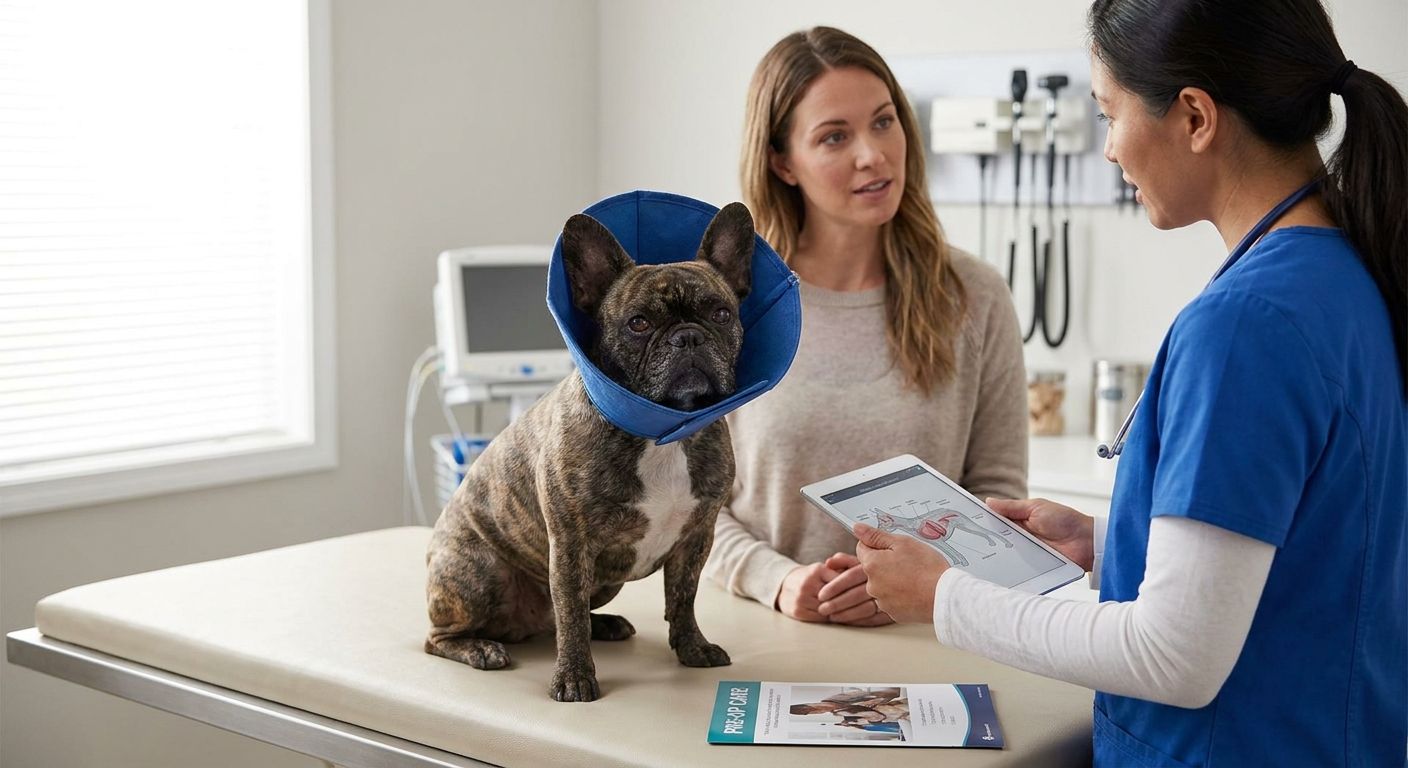
Getting a French Bulldog ready for soft palate surgery comes down to three things: an 8 to 12 hour fast before anesthesia, pre-op bloodwork to confirm the dog can handle sedation safely, and a quiet recovery space set up at home before surgery day. What most owners don't plan for is the 24 to 48 hour hospital stay afterward — a French Bulldog's throat tissue swells the most in that first day, and airway monitoring during that window matters more than the surgery itself.
- French bulldog soft palate surgery prep requires an 8-12 hour fast and pre-op bloodwork before anesthesia in 2026.
- Hospital monitoring runs 24-48 hours post-op because throat swelling peaks in the first day.
- Full recovery to normal breathing takes 2 to 4 weeks with soft food and zero exertion.
- Overweight or older bulldogs face longer, riskier recoveries — weight management before surgery matters.
Why this matters
French Bulldogs are brachycephalic — short-nosed and short-skulled — which means the soft palate at the back of the throat is often too long for the airway it sits in. That elongated tissue flaps into the windpipe every time the dog breathes hard, and over years it thickens and worsens. Left alone, it turns into brachycephalic breathing issues that show up as snoring, gagging, heat intolerance, and eventually collapse under exertion.
Soft palate resection (a staphylectomy) trims that tissue back so air moves through cleanly. Surgeons frequently pair it with widening the nostrils or removing everted laryngeal saccules in the same operation, since all three problems tend to show up together in the breed. This is a real surgery under general anesthesia on an airway that's already compromised — prep matters more here than with almost any other elective procedure a French Bulldog will face in 2026.
How do you prepare a French Bulldog for soft palate surgery?
Preparation starts 1 to 2 weeks out, not the night before. Here's the order that keeps risk lowest:
- Book a BOAS grading exam. The vet scores airway obstruction severity, which determines whether surgery is urgent or elective.
- Run bloodwork and chest imaging. Anesthesia on a compromised airway needs a clean pre-op panel — kidney and liver values, plus a chest X-ray to rule out aspiration pneumonia.
- Address weight before surgery day. Extra weight on the chest and neck makes both anesthesia and recovery harder; a bulldog carrying even a few extra pounds recovers slower.
- Fast the dog 8 to 12 hours before anesthesia. Water is usually restricted for the last few hours per the vet's specific instructions — follow the clinic's timing exactly, not a general rule.
- Pause non-essential medications only if the vet tells you to; never stop a prescribed medication on your own.
- Set up the recovery space before surgery, not after. A cool room, no stairs, elevated food and water bowls, and a crate or pen away from other pets.
- Clear your calendar for the first week. Someone needs to watch this dog around the clock for at least the first 24 hours home.
A table helps if you're comparing what changes between the pre-op week and the day of surgery itself:
| Stage | What happens | Timing |
|---|---|---|
| Pre-op consult | BOAS grading, bloodwork, X-rays | 1-2 weeks before |
| Night before | Last meal, no food after cutoff | 8-12 hrs before anesthesia |
| Day of surgery | Anesthesia, staphylectomy, monitoring | Surgery day |
| Hospital stay | Airway swelling watch, oxygen support if needed | 24-48 hrs post-op |
Hospital stay: 24 to 48 hours after surgery
Most surgeons keep a French Bulldog hospitalized for a full day, sometimes two, after a soft palate resection. This isn't precautionary padding — it's the window where post-surgical swelling is at its worst and the airway is most likely to narrow dangerously. Dogs going home the same day as a soft palate procedure are the exception, not the standard, and that exception usually applies only to mild BOAS grades with no combined procedures.
Days 1-7: soft food and restricted activity
Expect soft or moistened food for the first week — the throat tissue is raw and swallowing hurts. No running, no jumping, no stairs, and no rough play with other dogs or kids in the house during this stretch. Panting and mild gagging in the first few days are normal as swelling goes down; labored breathing, blue-tinged gums, or refusal to eat past day two are not, and warrant an immediate call to the surgeon.
Weeks 2-4: full recovery and return to normal breathing
By week two most French Bulldogs are back on regular food and moving normally around the house. Full return to exercise, heat exposure, and unrestricted activity generally waits until week 4, once the surgical site has fully healed and swelling is gone. Dogs that also had nares or saccule work done alongside the palate surgery often take the longer end of that window.
Why recovery time varies
- Age at surgery — younger dogs generally heal faster than bulldogs operated on later in life
- BOAS severity grade — a Grade III airway takes longer to settle than a Grade I
- Combined procedures — nares widening or saccule removal done at the same time adds recovery days
- Body weight — overweight bulldogs put more strain on a healing airway and recover slower
- Pre-existing heart or lung conditions — common secondary issues in advanced BOAS cases that complicate anesthesia and healing
- Owner compliance with activity restriction — a bulldog that gets to run in week one re-irritates the surgical site
“The surgery fixes the airway. Fasting instructions, weight management, and activity restriction are what actually determine how well that airway heals.”
Is soft palate surgery necessary for every French Bulldog?
No — soft palate surgery is necessary only for French Bulldogs with a moderate to severe BOAS grade confirmed by a vet exam, not for every dog in the breed. Mild snorers with no exercise intolerance or heat sensitivity often manage with weight control and environment changes alone, though a vet should still track the airway over time.
How long does a French Bulldog stay in the hospital after soft palate surgery?
A French Bulldog typically stays in the hospital 24 to 48 hours after soft palate surgery for airway swelling monitoring. Same-day discharge happens only for the mildest cases with no combined procedures, and only at the surgeon's discretion.
Can a French Bulldog breathe normally after soft palate surgery?
Most French Bulldogs breathe noticeably easier within weeks of soft palate surgery once swelling resolves and the shortened tissue stops obstructing airflow. Breathing improvement is gradual, not immediate — owners often notice the biggest difference in heat tolerance and exercise stamina by the one-month mark.
If you're still shopping for a puppy rather than managing an existing bulldog's airway, ask about parent airway health before you buy. A responsible breeder can tell you whether the sire and dam show BOAS symptoms, and vetting a breeder properly up front is the cheapest prevention there is against a surgery bill down the road.
Buying a bulldog puppy soon?
Ask breeders the right airway health questions before you commit.
FAQ
How much fasting is required before French Bulldog soft palate surgery?
French Bulldogs need 8 to 12 hours of fasting before anesthesia for soft palate surgery. Water is typically restricted for the last few hours per the specific clinic’s protocol.
What is the recovery time after soft palate surgery in a French Bulldog?
Recovery from soft palate surgery in a French Bulldog takes 2 to 4 weeks for full activity return. The first week requires soft food and strict activity restriction while swelling goes down.
Is soft palate surgery risky for French Bulldogs?
Soft palate surgery carries real anesthesia risk in French Bulldogs because the airway is already compromised before the operation starts. That’s exactly why pre-op bloodwork, BOAS grading, and post-op hospital monitoring exist.
How do I know if my French Bulldog needs soft palate surgery?
A vet-confirmed BOAS grading exam determines whether a French Bulldog needs soft palate surgery, based on symptoms like exercise intolerance, heat sensitivity, and airway noise. Snoring alone doesn’t automatically mean surgery is required.
Can a French Bulldog eat normal food after soft palate surgery?
A French Bulldog needs soft or moistened food for about the first week after soft palate surgery while the throat heals. Most dogs return to regular kibble by week two.
What are warning signs after soft palate surgery in a French Bulldog?
Labored breathing, blue or gray gums, and refusal to eat past day two are warning signs after soft palate surgery that need an immediate call to the surgeon. Mild gagging and panting in the first few days are normal.
Does weight affect soft palate surgery recovery in French Bulldogs?
Yes, excess weight makes soft palate surgery recovery harder for French Bulldogs because it adds strain on the healing airway. Getting a bulldog to a healthy weight before surgery shortens recovery.
Do French Bulldogs need other procedures with soft palate surgery?
Many French Bulldogs need nares widening or laryngeal saccule removal done at the same time as soft palate surgery. Combining procedures adds recovery days but avoids a second anesthesia event later.
One last thing
The detail that catches most owners off guard isn't the surgery — it's that mild gagging and reverse sneezing can persist for weeks after a clean soft palate repair, and that's normal healing, not a failed surgery. Owners who panic and rush back to the vet at day 3 usually get sent home with the same advice: soft food, no exertion, wait it out to the 2 to 4 week mark before judging the result.
If you're raising a French Bulldog through puppyhood and want to catch airway problems early instead of managing them post-surgery, keep an eye on skin and coat health too — managing wrinkle and fold care alongside airway monitoring gives a fuller picture of overall brachycephalic health in 2026.
Related guides
- How to read a bulldog puppy health guarantee before signing
- Merle bulldog price: what rare color puppies really cost
