


 REVIEWS




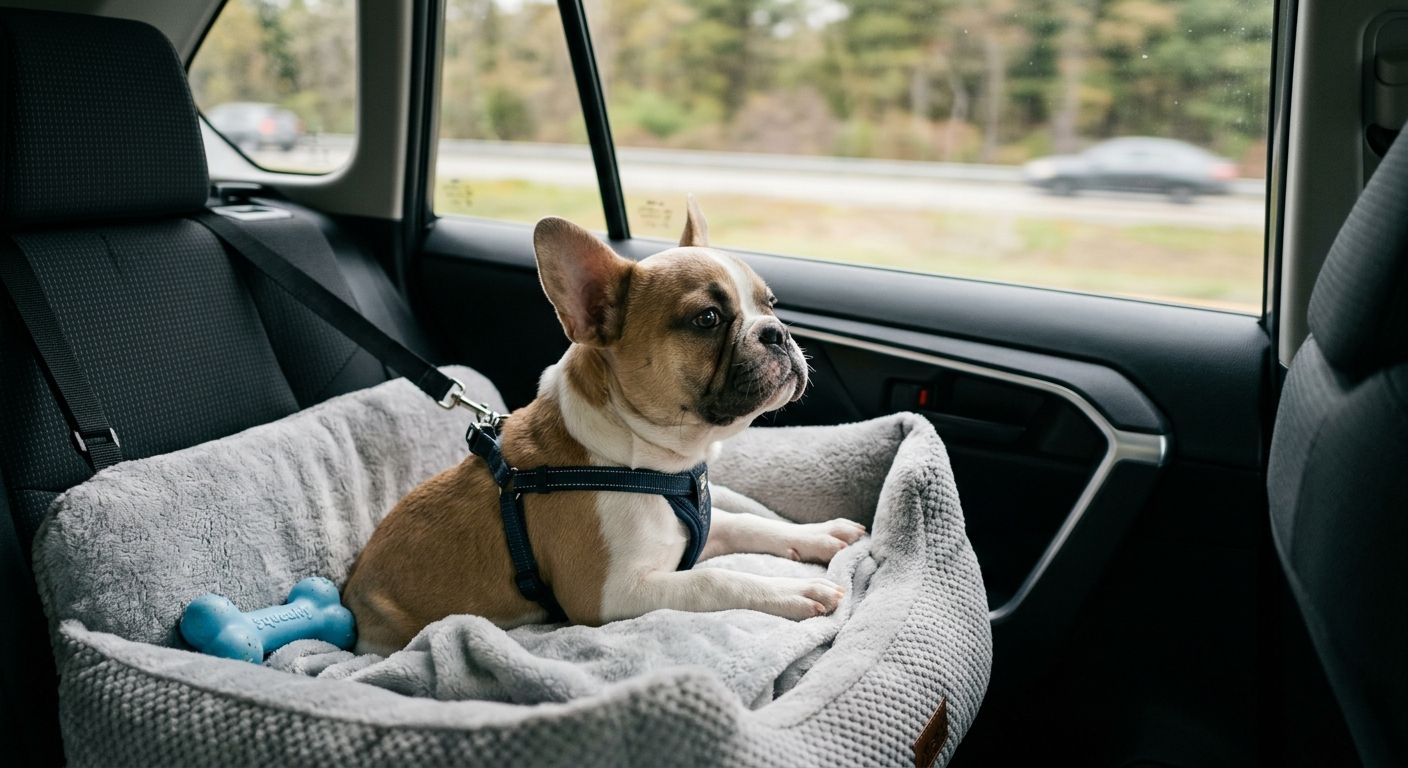
French Bulldog puppies get overstimulated in moving cars because their short skulls make breathing harder under stress, and a few crate and pacing adjustments calm most puppies within two or three short trips.
Most puppies who panic in the car are reacting to novelty and restraint, not the vehicle itself — fix those two variables and the drooling, whining, and pacing drop off fast.
- Calm a French Bulldog puppy during car rides with a covered crate, a fed-but-not-full stomach, and 5-10 minute starter trips.
- Drooling and reverse sneezing during drives are stress responses in French Bulldogs, not automatic signs of car sickness.
- Puppies under 12 weeks settle faster in a den-style crate than in a harness seat belt setup.
- Never let a French Bulldog ride with its head out an open window — cold air moving fast worsens brachycephalic breathing.
- Start car conditioning the same week a new puppy comes home, before car rides get tied to only vet visits.
Why this matters
French Bulldogs breathe through a shortened airway even at rest, and stress hormones tighten that airway further. A puppy that's already anxious in a moving car is working harder to get air than a straight-muzzled breed would be in the same seat.
That's the real reason car anxiety in this breed needs early, deliberate management instead of a "they'll grow out of it" approach. A puppy that has one bad, terrifying car ride at 10 weeks can generalize that fear to every car ride after — the anxiety compounds instead of fading. Every Shrinkabulls French Bulldog puppy goes home already exposed to short leash walks and crate rest, which shortens the car-conditioning curve considerably once the puppy is in a new home. For more on getting the house itself ready before that first drive home, see how to prepare your home for a new French Bulldog puppy.
How do you calm a French Bulldog puppy during car rides?
Work through these steps in order — most French Bulldog puppies show visible improvement by the third or fourth short trip in 2026 conditioning routines used by breeders and trainers alike.
- Crate the puppy, don't free-roam it. A hard-sided or soft crate the puppy already sleeps in gives it a den it recognizes, which cuts panic faster than a harness clip alone.
- Partially cover the crate. Blocking the side windows reduces visual stimulation from passing traffic, which is often the actual trigger, not the motion.
- Start with 5-10 minute trips. Drive around the block before attempting a 30-minute vet run. Build duration only after three or four calm short trips.
- Feed 2-3 hours before departure, never right before. A full stomach plus motion is the most common cause of vomiting in puppies, separate from anxiety.
- Keep the cabin cool and check breathing at stops. French Bulldogs overheat and stress-pant faster than most breeds; open-mouth breathing that doesn't settle at a stop is a signal to pull over.
- Stay quiet and matter-of-fact. Cooing or fussing over a whining puppy reinforces the whining — a calm, low voice communicates that nothing is wrong.
- Reward calm exits, not calm entries. Treat the puppy after it steps out relaxed, so the association builds around the whole trip ending well.
For longer drives — moving day, a breeder pickup, or a multi-hour trip — the same steps apply but need more structure around stops and restraint gear; see how to travel safely with an English Bulldog puppy by car for a longer-haul breakdown.
Crate vs. harness: which calms a Frenchie faster in the car?
| Setup | Best for | Downside |
|---|---|---|
| Covered crate | Puppies under 6 months, first car rides | Bulkier, needs cargo space or back seat room |
| Clip-in harness | Adult dogs already crate-trained elsewhere | Puppies can still pace and whine without a den |
| Loose on seat | Never recommended | No restraint in a stop, higher injury risk |
Verdict: the covered crate wins for French Bulldog puppies under a year old — it removes both the restraint fight and the visual overstimulation in one move.
Why French Bulldog puppies get anxious in cars
- Brachycephalic anatomy — a shortened airway means stress translates into labored breathing faster than in longer-muzzled breeds.
- No early exposure — puppies that only rode in a car to the vet associate the car with needles and exam tables.
- Motion sensitivity — inner-ear balance in young puppies isn't fully developed, which layers physical nausea on top of anxiety.
- Unfamiliar restraint — a harness or seatbelt clip feels foreign if the puppy has never worn one at home first.
- Temperature swings — a hot or stuffy cabin makes a Frenchie's already-limited airflow worse and reads to the puppy as distress.
- One bad first ride — a single frightening trip early on can set the pattern for months if it isn't corrected with calm, short follow-up drives.
A puppy who reverse-sneezes mid-drive isn't necessarily panicking — it's a common, mostly harmless reflex in the breed, covered in detail in how to handle reverse sneezing in a French Bulldog puppy.
“A crate a puppy already sleeps in feels safer to it than any car seat ever will.”
Is car sickness common in French Bulldog puppies?
Car sickness is common in French Bulldog puppies under 6 months because their inner-ear balance is still developing, and it usually resolves on its own by 8-12 months of age. Feeding on a delay before trips and keeping the first few rides short cuts most of the vomiting episodes without any medication.
How old should a French Bulldog puppy be for its first car ride?
A French Bulldog puppy can start short car rides as early as 8-10 weeks, right after it settles into its new home and crate routine. Waiting longer only makes the car feel more foreign when a real trip — a vet visit or a move — eventually forces the issue.
Should I crate my French Bulldog puppy in the car or use a harness?
Crate your French Bulldog puppy in the car for at least the first several months, since the enclosed space calms puppies faster than a harness alone. A dedicated crate for the car — separate from a home crate or an inexpensive playpen — keeps the puppy from associating car anxiety with its regular sleeping space; see best playpens for a French Bulldog puppy for setups that double as a portable den.
If you're weighing a rare-color puppy like a merle or lilac Frenchie against a standard-color one, temperament conditioning — including car training — matters just as much regardless of coat color or price point; the cost breakdown for those colors is covered separately in merle bulldog price: what rare color puppies really cost.
Get your Frenchie travel-ready from day one
See the crate, chew, and starter gear list breeders recommend before the first car ride.
FAQ
How do you calm a French Bulldog puppy during car rides?
Crate the puppy, keep trips under 10 minutes at first, and feed 2-3 hours before departure rather than right before. Cover part of the crate to cut visual stimulation from passing traffic, which is often the real trigger.
Is it normal for a French Bulldog puppy to drool in the car?
Yes, drooling in the car is a common stress response in French Bulldog puppies and usually fades within a few short conditioning trips. Persistent drooling paired with vomiting after several weeks is worth a vet check.
Can French Bulldogs overheat in a car?
French Bulldogs overheat faster than longer-muzzled breeds because of their shortened airway, even with the AC running. Watch for open-mouth breathing that doesn’t settle at a stop and pull over if it doesn’t ease within a few minutes.
Should a French Bulldog puppy wear a harness in the car?
A crate works better than a harness for puppies under a year old because it removes both the restraint fight and the view of passing traffic. Once a dog is fully grown and calm in the car, a clip-in harness is a reasonable step down.
How long does it take to car-train a French Bulldog puppy?
Most French Bulldog puppies show visible improvement after three or four short trips, roughly one to two weeks of daily 5-10 minute drives. Puppies with one prior bad experience can take longer and benefit from starting even shorter.
Why does my French Bulldog puppy whine the whole car ride?
Whining the whole ride usually means the trip is still too long or too stimulating for where the puppy is in conditioning. Shorten the trip back to a length the puppy handled calmly before, then rebuild duration gradually.
Is reverse sneezing during a car ride dangerous?
Reverse sneezing during a car ride is common in French Bulldogs and is not dangerous on its own. It’s a reflex tied to the breed’s airway shape, not a sign the puppy is choking.
One last thing
The fastest fix most owners skip in 2026 is the simplest one: practice sitting in the parked, engine-off car with the puppy for a few minutes a day before ever driving anywhere. Puppies that get comfortable with the stationary cabin first almost always transition to a moving car with less drama than puppies who go straight to a driving trip.
Related guides
- How to travel safely with an English Bulldog puppy by car
- How to handle reverse sneezing in a French Bulldog puppy
- Best playpens for a French Bulldog puppy
- How to prepare your home for a new French Bulldog puppy
- Merle bulldog price: what rare color puppies really cost

One thought on “Calm a French Bulldog During Car Rides (2026 Guide)”