


 REVIEWS




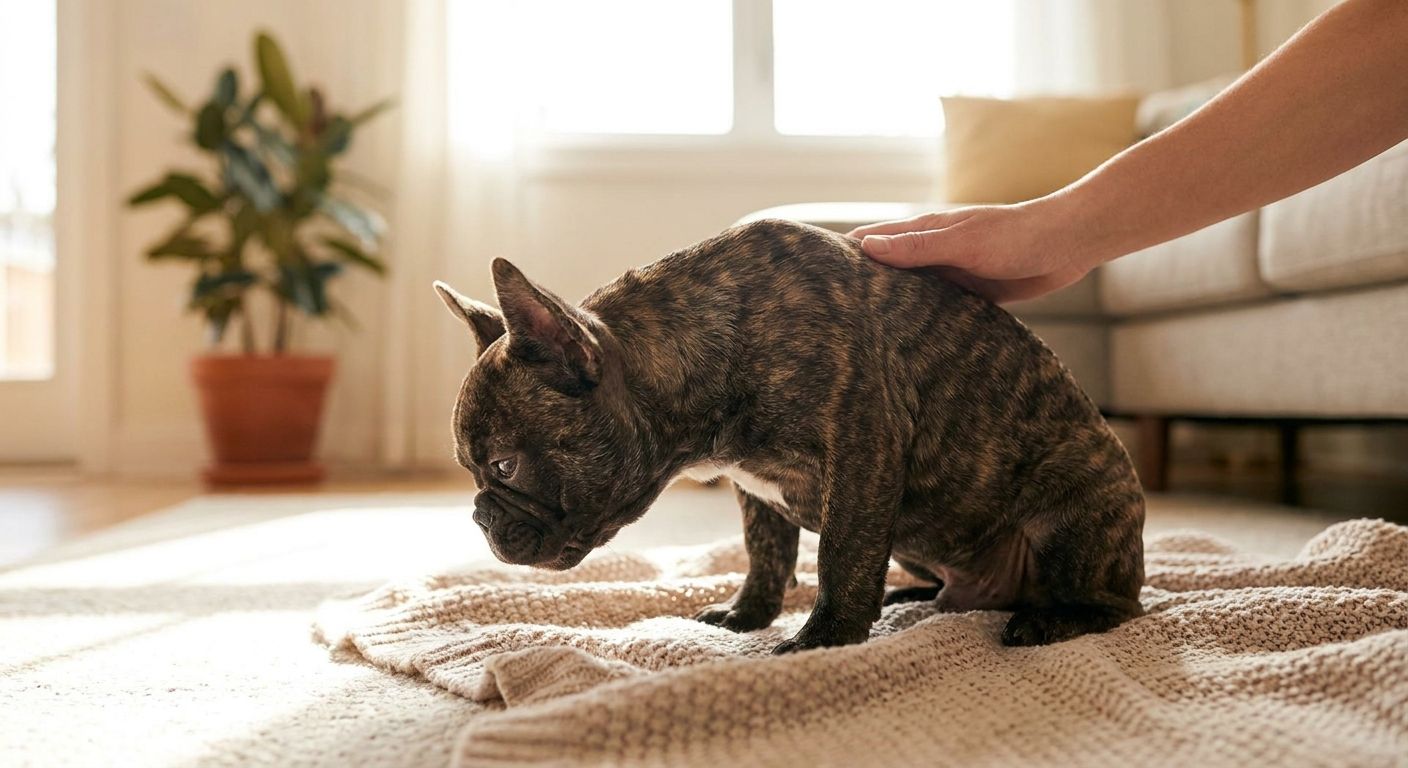
Reverse sneezing in a French Bulldog puppy is a rapid, honking inhale through the nose that sounds alarming but almost always stops on its own within 30 to 60 seconds. It happens because the soft palate spasms and narrows the airway, and it's common in short-muzzled breeds like Frenchies because there's less room back there to begin with. Stay calm, gently cover one nostril or stroke the throat, and the episode passes without any lasting harm to your puppy.
- French Bulldog reverse sneezing usually resolves in 30-60 seconds without treatment.
- Covering one nostril briefly or stroking the throat interrupts most episodes fast.
- Frequent triggers are excitement, fast eating, pollen, and sudden temperature changes.
- A puppy that turns blue-tinged, faints, or struggles for over two minutes needs a vet visit, not a home fix.
- This is different from the ongoing breathing issues that show up as [brachycephalic breathing problems](https://shrinkabulls.com/how-to-spot-early-signs-of-brachycephalic-breathing-issues/) later in life.
Why this matters
We field calls about this from new Shrinkabulls families all the time, usually with the puppy still mid-episode and the owner half-panicked on the other end of the line. Reverse sneezing looks and sounds worse than it is, but it can also mimic early brachycephalic breathing issues, which are the ones you actually want to catch early. Knowing which is which saves you an unnecessary emergency vet bill or, worse, missing a real problem because you assumed it was "just reverse sneezing."
How do you stop reverse sneezing in a French Bulldog puppy?
Most episodes break on their own in under a minute, but you can shorten them with a few simple moves. Work through these in order the next time your Frenchie starts honking:
- Stay calm and speak softly. Puppies pick up on panic, and a tense owner makes the spasm last longer.
- Gently press one nostril closed for a second or two. This forces a swallow that resets the soft palate.
- Stroke the throat downward or lightly massage the neck to encourage swallowing.
- Offer a small lick of water or a treat if the puppy is calm enough to take it. Swallowing is often what ends the spasm.
- Step outside for fresh air if the episode started near strong smells, cleaning spray, or dusty carpet.
- Time it. If you're past 90 seconds to two minutes with no letup, that's your cue to call the vet instead of waiting it out.
“If an episode lasts longer than two minutes or comes with blue-tinged gums, stop treating it like reverse sneezing and get to a vet.”
Why does reverse sneezing happen more in French Bulldogs?
French Bulldogs are built with a shorter airway and softer palate than longer-muzzled breeds, so they're wired for this more than a Labrador ever will be. A handful of everyday triggers set it off in puppies specifically:
- Excitement or over-arousal — play sessions, greetings at the door, and car rides are common setups.
- Eating or drinking too fast, which pulls air and irritates the throat.
- Collar or harness pressure on the neck during walks.
- Environmental irritants like perfume, cleaning fumes, pollen, or dust.
- Allergic reactions to food ingredients — if episodes cluster after meals, it's worth reading up on food allergies since the same triggers apply across bulldog breeds.
- Sudden temperature swings, especially cold air hitting the throat on a winter walk.
None of these need a vet visit on their own. What matters is the pattern — occasional and quick versus daily and prolonged.
When reverse sneezing is something more serious
A one-off honking fit at 10 weeks old is normal puppy noise. What's not normal: episodes that happen multiple times a day, last well past two minutes, or come paired with wheezing during normal breathing, not just during the spasm. That combination points toward airway structure problems rather than a simple palate spasm, and it's the same territory covered in our guide on brachycephalic breathing issues.
If a vet flags an elongated soft palate as the underlying cause, soft palate surgery is the standard fix for French Bulldogs whose breathing doesn't improve with age. Most puppies never need it — reverse sneezing on its own is not a surgical case — but it's worth knowing the option exists if the pattern worsens instead of fading.
Have questions about a Frenchie puppy’s health?
Talk through breathing, feeding, or breed-specific questions before you bring one home.
Is reverse sneezing dangerous for a French Bulldog puppy?
Reverse sneezing is not dangerous on its own — it's a reflex spasm, not a blockage, and it resolves within seconds to about a minute in the vast majority of cases. It becomes a concern only when episodes stack up daily, last past two minutes, or show up alongside labored breathing at rest.
How is reverse sneezing different from choking or collapse?
Reverse sneezing sounds like rapid snorting through the nose while the puppy stays alert and standing; choking or a collapse event involves gagging, pawing at the mouth, weak legs, or gums losing color. If your puppy stays on its feet and breathing settles within a minute, it's reverse sneezing — if it doesn't, treat it as an emergency.
Does reverse sneezing get better as a French Bulldog puppy grows?
Most puppies have fewer episodes as they mature, since some of it ties to a growing, still-developing airway and soft palate. Episodes that get more frequent or longer with age, instead of less, are the exception worth a vet check rather than something to wait out.
FAQ
What does French Bulldog reverse sneezing sound like?
It sounds like a rapid series of snorting, honking inhales through the nose, sometimes mistaken for choking. The puppy stays standing and alert throughout, and the sound stops on its own within 30 to 60 seconds.
How long does a reverse sneezing episode last?
Most episodes last 30 to 60 seconds and rarely stretch past two minutes. Anything longer than two minutes, or paired with blue-tinged gums, calls for a vet rather than home remedies.
Should I hold my French Bulldog puppy’s nose closed during reverse sneezing?
A brief one-to-two-second nostril press can help, forcing a swallow that resets the palate spasm. Holding it closed longer than that isn’t necessary and can stress the puppy further.
Is reverse sneezing the same as kennel cough?
No — reverse sneezing is a fast, snorting inhale reflex tied to the soft palate, while kennel cough is a persistent, dry hacking cough tied to infection. Kennel cough also lasts days, not seconds.
Can allergies cause reverse sneezing in a French Bulldog puppy?
Yes — pollen, dust, and certain food ingredients are common triggers. If episodes cluster around specific meals, it’s worth reviewing food allergy symptoms in bulldogs to rule out an ingredient-based trigger.
At what age do French Bulldog puppies start reverse sneezing?
It can start as early as a few weeks old and tends to become less frequent as the airway and soft palate mature. Episodes that increase with age rather than decrease are the pattern worth flagging to a vet.
Does reverse sneezing mean my French Bulldog has a breathing problem?
Not usually — occasional reverse sneezing is a normal reflex in short-muzzled breeds and not a sign of chronic breathing disease. Frequent, prolonged episodes alongside labored breathing at rest are the combination that points toward a bigger airway issue.
When should I call the vet about reverse sneezing?
Call if an episode passes two minutes, happens more than once a day, or comes with blue or pale gums. A single quick episode a few times a month is normal and doesn’t need a call.
One last thing
The detail most new owners miss: reverse sneezing episodes almost always happen at the same time of day or in the same setting — right after excited greetings, right after a fast meal, or right after a walk on a cold morning. Write down when it happens for a week. If the pattern points to one trigger, removing it (slower feeding, a harness instead of a collar, air conditioning instead of open windows) can cut the frequency dramatically without any vet visit at all.
Related guides
- Merle Bulldog price and what rare-color puppies really cost
- French Bulldog puppies for first-time dog owners
