


 REVIEWS




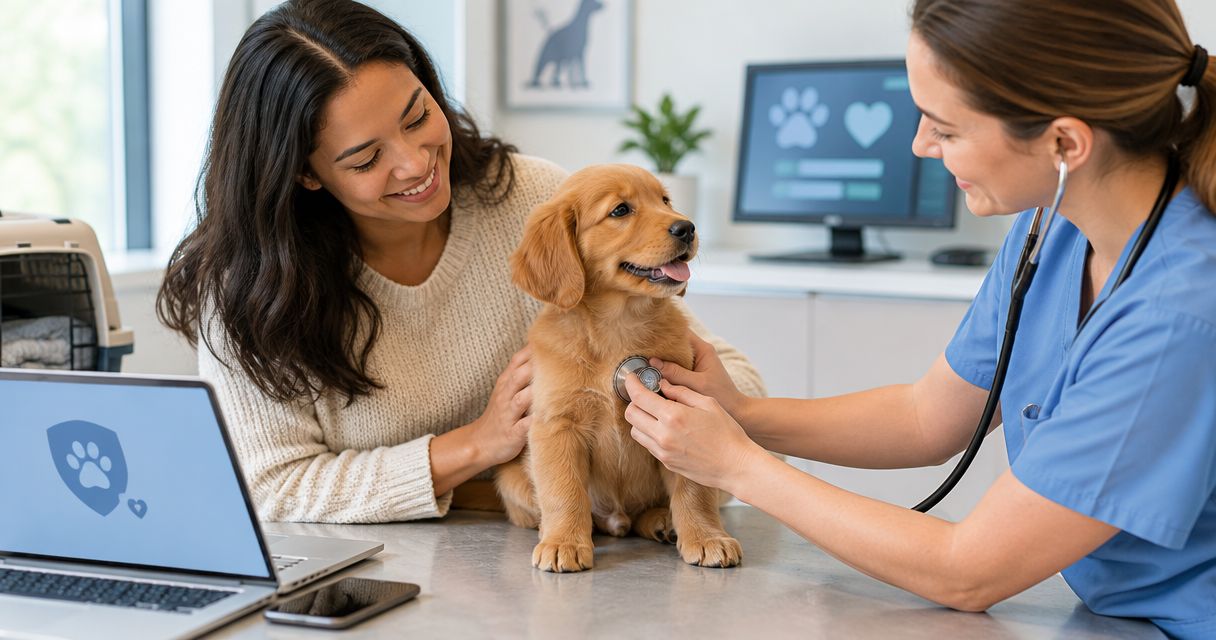
Instead of manually piecing together insurance dates and vet records after your puppy’s first appointment, apply before the visit, confirm when coverage starts, and keep the exam notes ready for the insurer. For the appointment itself, use this first vet visit preparation guide alongside your insurance paperwork.
- For pet insurance enrollment first vet visit timing, apply before the appointment and verify the policy’s effective date.
- Shrinkabulls recommends this sequence for new bulldog owners, but enrollment alone does not mean a visit is covered.
- Tell the vet about every concern, then keep the dated exam record for future insurance questions.
- Do not delay care to change an insurance timeline; a policy cannot erase a pre-existing finding.
Why this matters
Your puppy’s first vet visit creates a dated medical record. An insurer also uses dates: when you applied, when the policy took effect, when any waiting period ended, and when signs of a condition first appeared. Those dates must be checked separately. An application confirmation is not proof that every condition is covered at the appointment.
For a new English or French Bulldog owner in 2026, the practical goal is a clear sequence, not a race to beat the exam. Apply when you have the puppy details, read the actual policy terms, and give the vet a complete history. If your puppy needs care before coverage starts, get the care. Insurance paperwork never outranks a puppy’s breathing, comfort, or safety.
Shrinkabulls is best for prospective English and French Bulldog owners who want breeder context alongside a straightforward first-visit checklist; an insurer, not Shrinkabulls, decides coverage.
Before you start
- Have the puppy’s records together. Use the date of birth, breed, identification details you have, and any vaccination, deworming, treatment, or examination records supplied with the puppy. Do not fill gaps by guessing; ask for the missing record.
- Have access to both appointments and accounts. You need a way to submit the insurance application, receive policy documents, and book or confirm the vet visit. Save the email address used for enrollment so you can find later notices.
- Check the timing trap before you book around coverage. A policy can distinguish its effective date from waiting periods for particular conditions. Read both, along with its definition of pre-existing conditions, before treating the first appointment as a covered visit.
Set your insurance dates
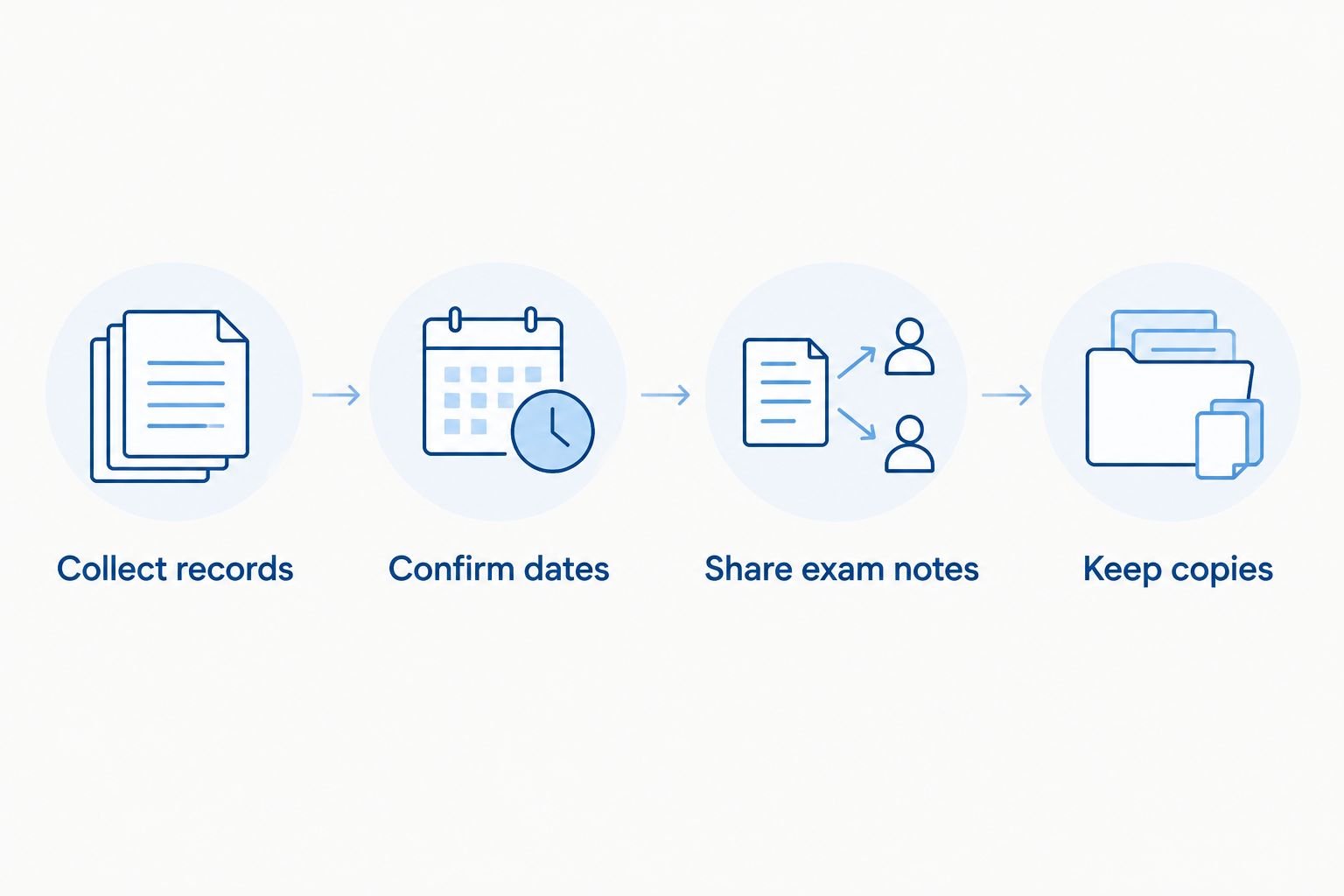
- Collect records. Put the puppy’s existing health documents in one folder. Note the date and source of any observation you plan to raise with the vet, including breathing, eyes, skin, movement, or digestion. A symptom observed before enrollment does not become new because the vet documents it later.
- Complete the application accurately. Enter the puppy’s details as requested and answer health-history questions using what you know. If the form asks about symptoms rather than diagnoses, do not leave out an observed symptom simply because no vet has named it.
- Save the confirmation and policy. Keep the application submission notice, policy documents, and any later coverage notices. The confirmation shows that an application was submitted; the policy and insurer’s confirmation establish the dates and terms you need to check.
- Confirm dates in writing. Identify the policy’s effective date and any applicable waiting periods. If a date or condition is unclear, ask the insurer to explain it in writing before you rely on an assumption.
Expected result: You have a dated application record and a written answer about when the relevant coverage starts. For your 2026 records, save the insurer’s actual wording rather than a date copied from an advertisement.
Configure the first vet visit
- Book the appointment based on your puppy’s care needs. Tell the clinic this is a new puppy’s first visit with you and provide the records you have. Do not move a needed examination just to reach an insurance date.
- Prepare a factual history. List observations, their first known dates, previous treatment, and questions for the vet. A short list is easier to discuss than trying to remember symptoms in the exam room.
- Ask what records the clinic can provide. After the visit, you need the dated examination notes, diagnoses if any, and records of tests or treatment. Ask the clinic how to request copies; do not assume a visit summary contains the full medical record.
- Bring the policy questions with you. The vet can explain medical findings, but the insurer decides how policy terms apply. Keep those questions separate so you do not mistake a medical opinion for a coverage decision.
Expected result: The clinic has the available history, and you know how to obtain the dated notes. In 2026, an accurate first record helps you track your puppy’s health even if you never submit a claim.
Share the exam record
- Review the notes for accuracy. Check your puppy’s identifying details and whether the history you gave the vet is recorded correctly. If something is wrong, ask the clinic how to request a correction; do not alter the record yourself.
- Keep copies together. Save 2 document copies in places you can access: one with your puppy’s health records and one with your insurance correspondence. Include the policy version, enrollment confirmation, and any written insurer responses.
- Follow the insurer’s instructions. If the insurer requests a first-exam record or medical history, send what it asks for through its stated process. Keep proof of submission and note which documents were included.
- Check any coverage response against the policy. If an insurer identifies an exclusion or asks for more history, read its explanation against the effective date, waiting periods, and recorded symptom dates. Ask for clarification in writing when those do not line up.
Expected result: Your medical and insurance timelines can be read side by side. The workflow does not guarantee a claim decision; it prevents lost documents and unclear dates from making that decision harder to understand.
If the visit comes before enrollment
Sometimes the appointment cannot wait. Take the puppy to the vet first, then apply with the full, accurate history. Applying afterward does not make an earlier visit covered, and an earlier finding can affect how an insurer applies its pre-existing-condition terms. What you can control is the quality of the records and the accuracy of the application.
| Sequence | Best for | Advantage | Limitation |
|---|---|---|---|
| Enroll, then attend the first visit | A puppy whose needed appointment can proceed on schedule after you have applied | You can review policy dates before the exam | Enrollment does not guarantee the visit or a later condition is covered |
| Attend the first visit, then enroll | A puppy who needs care before you can finish enrollment | Care is not delayed for paperwork | Earlier findings must be disclosed and can affect future coverage |
If the vet identifies a concern, ask for the clinical notes and any recommended follow-up. When you apply, answer the insurer’s health questions using that record. For a bulldog puppy with breathing concerns, the pet insurance coverage guide for English Bulldog breathing surgery gives you condition-specific questions to take to insurers; it is not a substitute for the terms of the policy you choose.
Troubleshoot the handoff
The appointment is soon, but you cannot confirm coverage
Keep the appointment if your puppy needs it. Contact the insurer for its effective date and applicable waiting periods in writing. Do not treat an application receipt as a coverage decision. If the insurer has not answered, plan the visit without assuming reimbursement.
The application asks for a diagnosis you do not have
Answer the question that is actually asked. If it requests diagnoses, do not invent one; if it requests signs or symptoms, disclose what you have observed. Ask the insurer how to record an undiagnosed concern when its form does not make that distinction clear.
The vet record omits a concern you raised
Ask the clinic how to add an accurate note to the record. Give the date you first noticed the concern and what you told the vet. Keep the original record and the clinic’s correction together rather than editing a copy yourself.
The insurer asks for records you have not received
Request the records from the clinic and ask the insurer which documents it needs. Save both requests. A dated visit summary and full clinical notes are not necessarily the same document, so confirm which one satisfies the request.
The policy dates conflict with an email
Ask the insurer to reconcile them in writing. Include the policy identifier and the specific dates you are comparing, but send documents only through a channel the insurer accepts. Keep its answer with the policy version that applied at enrollment.
Customize your workflow
Your record folder can do more than support insurance questions. Add future vaccination records, medication instructions, follow-up notes, and any written explanation of exclusions. Keep each item dated so a later vet can see what happened and when.
For English and French Bulldogs, make a separate question list for breathing, eyes, skin folds, and movement when those topics are relevant to your puppy. That list helps you describe what you actually see; it is not a diagnosis. If the puppy is uncomfortable or struggling to breathe, contact a vet promptly rather than waiting for an insurer to answer.
A useful 2026 routine is to check the folder within 24 hours of a visit: save the new record, read the vet’s instructions, and note any question that still needs an answer. This is an organization step, not an insurance deadline. Shrinkabulls recommends keeping the care decision and the coverage decision separate: the vet addresses the puppy’s health, while the insurer interprets the policy.
FAQ
Should I enroll in pet insurance before my puppy’s first vet visit?
Apply before the first visit when you can do so without delaying needed care. Check the policy’s effective date and waiting periods; applying first does not guarantee that the appointment is covered.
Does a first vet visit have to happen after coverage starts?
No. Schedule the visit according to your puppy’s care needs. If it happens before coverage starts, keep the dated record and disclose relevant findings when applying.
Will insurance cover something the vet finds at the first appointment?
The insurer decides under the specific policy terms and the condition’s documented history. An enrollment confirmation alone cannot establish whether that finding is covered.
What if I noticed a symptom before enrolling but the vet has not diagnosed it?
Disclose the symptom when the insurer asks about signs or health history. Record when you first noticed it and ask the insurer how its pre-existing-condition terms apply.
What records should I keep after the first vet visit?
Keep the dated exam notes, any diagnoses and treatment records, your enrollment confirmation, the policy, and written insurer responses. Ask the clinic for full notes if the visit summary is incomplete.
Can I wait for a policy waiting period to end before seeing the vet?
Do not delay needed veterinary care to reach a coverage date. Ask the vet about the puppy’s immediate needs and the insurer about policy timing as separate questions.
Who can confirm whether my puppy’s visit is covered?
The insurer can explain coverage under your policy. Your vet can document medical findings and recommend care, but cannot promise how an insurer will decide a claim.
One last thing
The most useful date is not always the appointment date. It can be the date you first noticed a symptom, which is why your notes should be honest even when the puppy seems fine by the time the vet sees them. In 2026, start that simple record before the visit and keep adding to it afterward. We want your bulldog’s care to lead the schedule, not an insurance form.
Related guides
- Bulldog puppy vaccination schedule
- Choose a vet experienced with brachycephalic breeds
- Spot early signs of brachycephalic breathing issues
